
23 June 2026 The Future is the Product of the Past

Middle Ages living space uncovered at an altitude of 1,800 meters in eastern Turkey

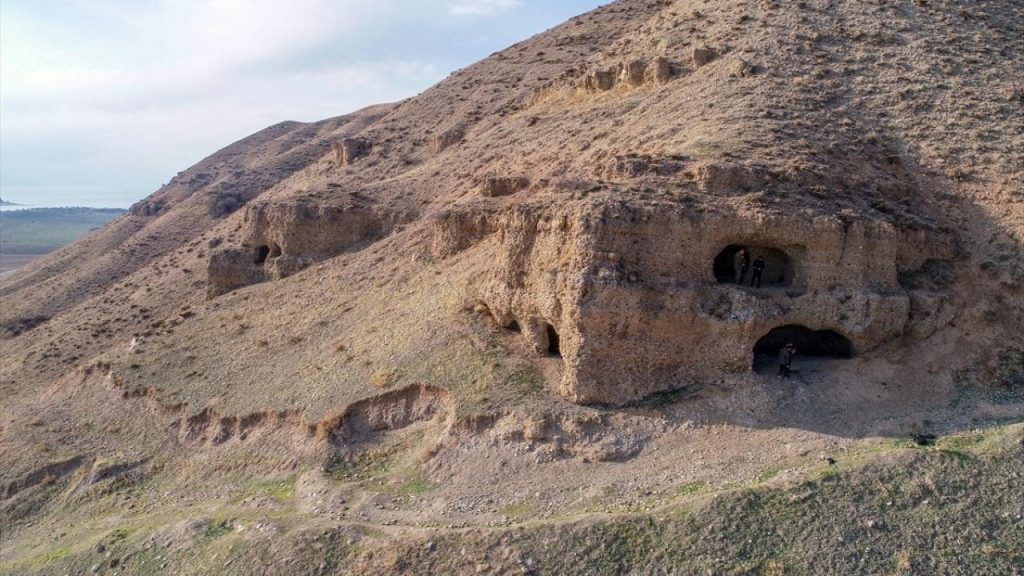
A living space carved into a bedrock considered to belong to the Middle Ages was found at a point overlooking Lake Van in the Çitören District of the Tusba district of Van province in eastern Turkey.

Tusba, also known as Thusba, was the capital of the Urartian kingdom in the 9th century BC.

The excavation team headed by Professor Rafet Çavuşoğlu, Head of the Archeology Department of the Faculty of Letters of Van Yüzüncü Yıl University (YYÜ), continues their work to record the historical structures in Van.

In this context, work was carried out in a hilly area with an altitude of 1800, opposite Çarpanak Island in Çitören District, 30 kilometers from the district.
Efforts are carried out in a mountainous area at an altitude of 1,800 meters (5,905 feet), opposing Carpanak Island in Citoren that is 30 kilometers (19 miles) from Tusba district.
Efforts are carried out in a mountainous area at an altitude of 1,800 meters (5,905 feet), opposing Carpanak Island in Citoren that is 30 kilometers (19 miles) from Tusba district. Photo: AA

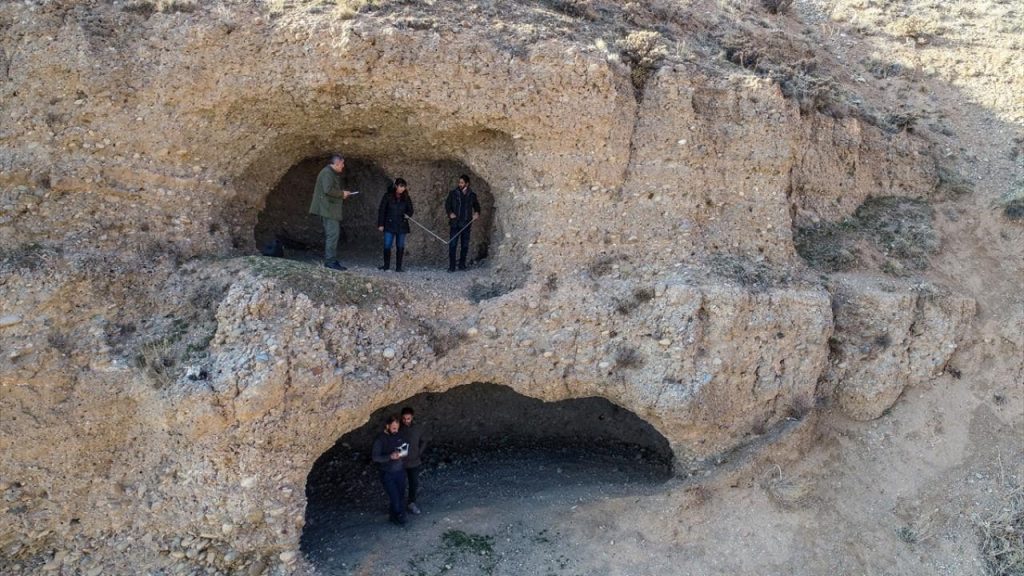
The team, which detected a 3-room living space carved into the bedrock in an area close to the area where two Urartian rock tombs were previously identified, started an investigation in the area.


📣 Our WhatsApp channel is now LIVE! Stay up-to-date with the latest news and updates, just click here to follow us on WhatsApp and never miss a thing!!


Earlier, ruins of a castle dating 2,800 years ago were discovered during an excavation project in a nearby area.

Remains of pottery were found in the living area with a length of 6 meters (20 feet) and a diameter of 3 meters (10 feet) carved into the bedrock, which was determined not to be registered in the inventory of cultural assets.
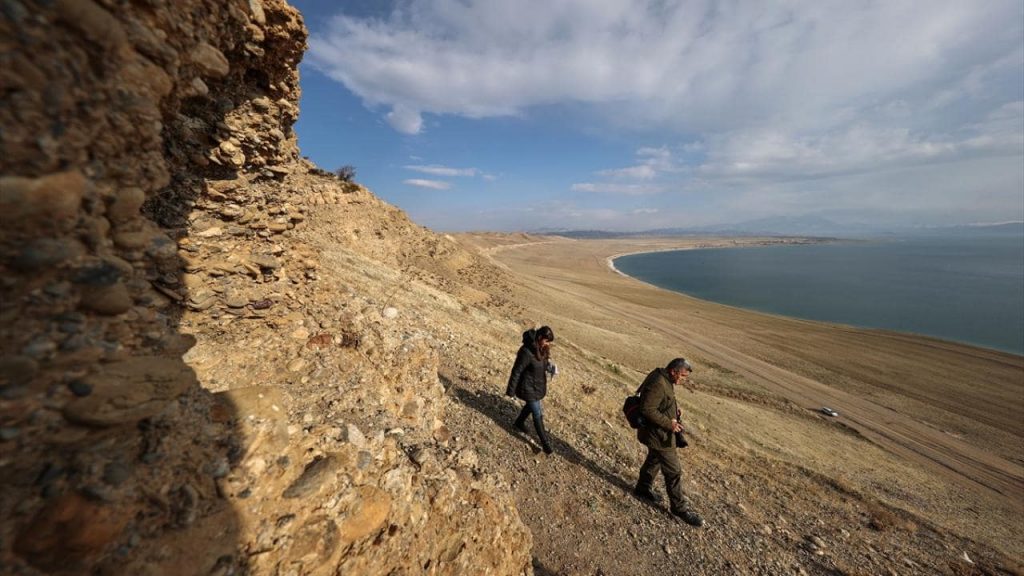
The space was established in a very strategic area that oversees historical trade routes.
The space was established in a very strategic area that oversees historical trade routes. Photo: AA

“We understand from the pottery and potsherds that this was a settlement used in the Middle Ages. One of the most important features of this place is that it is located at a very dominant point,” Çavuşoğlu told Anadolu Agency (AA).

He said the space was established strategically and oversaw historical trade routes.
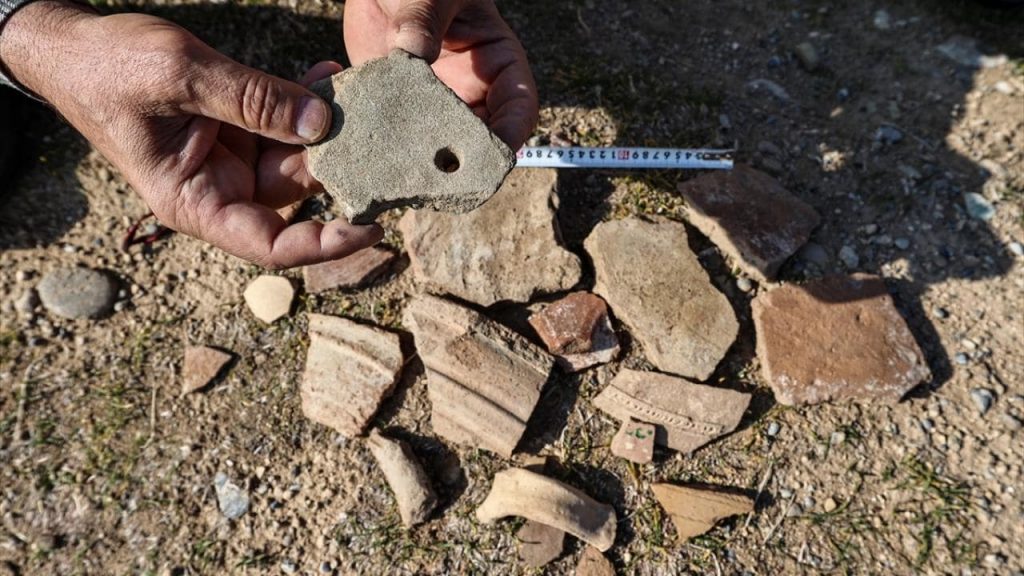
Remains of pottery were found in the living area with a length of 6 meters (20 feet) and a diameter of 3 meters (10 feet) carved into the bedrock.
Remains of pottery were found in the living area with a length of 6 meters (20 feet) and a diameter of 3 meters (10 feet) carved into the bedrock. Photo: AA

“The ancient road route passed by the edge of Lake Van,” he said. “This place is located at a point where you can see all these routes. The eastern part of the settlement has been destroyed. It was arranged on two floors. This feature is used in both the early and Middle Ages.”

The remains in the area, which is located at a point overlooking Lake Van and determined to be used by different civilizations in the Middle Ages, will be examined in detail by archaeologists.

Related Articles

China Discovers 2,200-Year-Old Imperial Road, the Ancestor of Today’s 4-lane Highways

22 December 2025

22 December 2025

Chinese archaeologists have uncovered a remarkably preserved section of an ancient imperial highway built more than 2,200 years ago—an infrastructure...

Earliest Direct Evidence of Psychoactive Plant Use in Iron Age Arabia Identified in Tomb at Qurayyah

25 May 2025

25 May 2025

In a remarkable archaeological breakthrough, scientists have uncovered the earliest known use of the psychoactive plant Peganum harmala—commonly known as...

A Large Roman Building Discovered on the Limmat

13 April 2024

13 April 2024

In the Steinacher area (Canton of Aargau) on the Limmat there was a Roman settlement that was significantly larger than...

5,500-year-old Menhir discovered in Portugal

28 August 2023

28 August 2023

A 5,500-year-old (that is around 3500 BC) menhir has been discovered in the town of São Brás de Alportel in...

Bujeok: Korea’s Ancient Magic That Still Shapes Modern Beliefs

4 October 2025

4 October 2025

How centuries-old talismans bridge archaeology, shamanism, and digital life in one of the world’s most advanced nations. South Korea, a...

Stone Age Swiss Army Knife? Experimental Archaeology Reveals Surprising Use of Bone Tools at Estonia Site

22 May 2025

22 May 2025

A groundbreaking new study published in February 2025 has revealed that mysterious bone tools discovered at Estonia’s oldest known human...

Divine Punishment or Human Theft? 4,000-Year-Old Relief Missing from Egypt’s ‘Cursed’ Tomb

9 October 2025

9 October 2025

A haunting mystery is unfolding in Egypt’s Saqqara necropolis, where a 4,000-year-old limestone relief has vanished from one of the...

The 9,000-Year-Old Bad Dürrenberg Shaman Reveals New Clues to Europe’s Earliest Ritual Traditions

12 December 2025

12 December 2025

On a quiet rise above the Saale River, long before agriculture reshaped the landscapes of Europe, a woman was laid...

Archaeologists Discover Rare 3,800-Year-Old Clay Figurine of Frogs at Peru’s Vichama Site

31 August 2025

31 August 2025

Archaeologists in Peru have announced a remarkable discovery: a 3,800-year-old Clay figurine depicting two frogs, unearthed at the Vichama archaeological...

Pandemics Determined the Fate of Wars in Ancient Times

7 April 2021

7 April 2021

Epidemics have been one of the factors affecting the fate of wars throughout history. Epidemics have sometimes turned the fate...

1000-year-old Cats and Babies mummies of Turkey’s

30 March 2022

30 March 2022

Cat, baby, and adult mummies in Aksaray, which took its place in history as Cappadocia’s gateway to the west on...

The first settlement of the Cimmerians in Anatolia may be Büklükale

7 June 2022

7 June 2022

Archaeologists estimated that the first settlement in Anatolia of the Cimmerians, who left Southern Ukraine before Christ (about 8th century...

Scientists Reconstruct Face Of 16th Century Italian ‘Vampire’ Buried With Brick In Mouth

23 March 2024

23 March 2024

A 16th-century ‘vampire‘ who was buried with a stone brick jammed in her mouth over fears she would feed on...

A Roman Votive Monument Discovered During Excavations at the Roman Open-Air Museum Hechingen-Stein

1 November 2024

1 November 2024

During recent excavations by the State Office for Monument Preservation (LAD) in the Stuttgart Regional Council and the Association for...

9th-Century Game Board in Moroccan Hammam May Be North Africa’s Earliest Tab/Sig Evidence

17 June 2026

17 June 2026

A row of small holes carved into a bathhouse step in Morocco has opened an unexpected window onto leisure, waiting,...