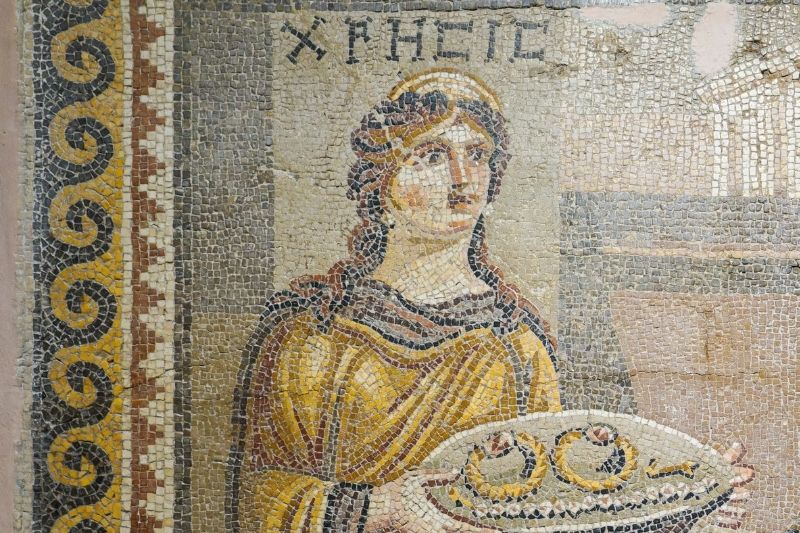
The Khresis Mosaic, one of the most remarkable archaeological discoveries in southern Türkiye, continues to draw attention for its historical depth and symbolic meaning. Dating back to the early 4th century AD, the mosaic was uncovered in the Daphne (Harbiye) Ancient City, specifically within the House of the Triumph of Dionysos.
Today, the artwork is exhibited at the Hatay Necmi Asfuroğlu Archaeology Museum, where it is considered one of the most popular and significant pieces in the museum’s extensive collection. The site attracts visitors interested in ancient art, mythology, and cultural heritage.
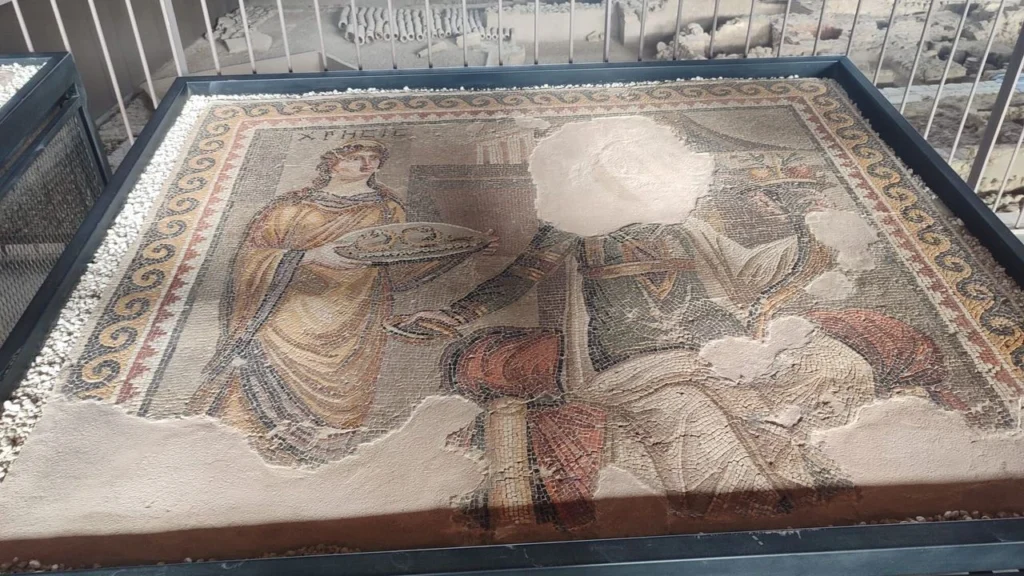
At the center of the mosaic is a female figure identified as Khresis, a name derived from Ancient Greek meaning “acquired wealth.” Scholars interpret this figure as the personification of the riches taken from the ancient city of Troy. According to mythological narratives, Khresis is believed to be the daughter of a priest of Apollo and a captive of King Agamemnon during the Trojan War.
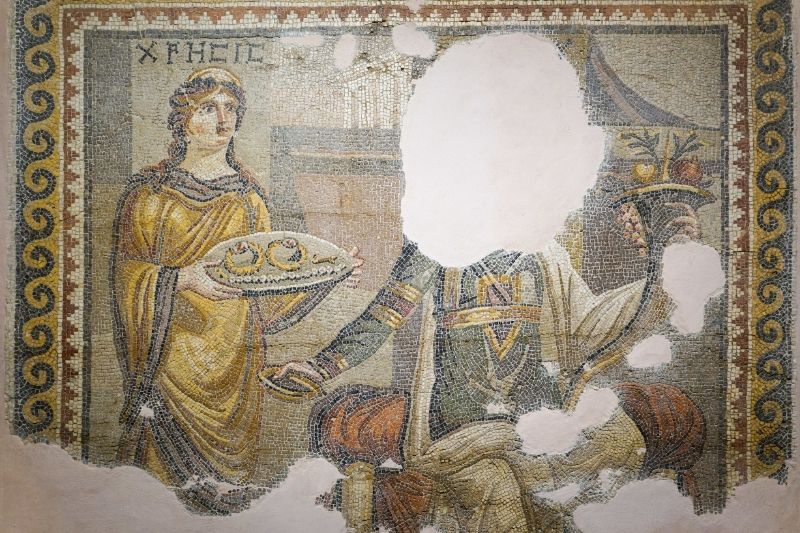
The scene depicts Khresis holding a tray filled with valuable jewelry, including gold bracelets set with large stones, a pearl necklace, and a golden clasp. She extends the tray toward a seated figure beside her. Although the face of this figure is largely damaged, it is shown holding a cornucopia filled with fruits and grape clusters, symbolizing abundance, and offering a golden bowl toward Khresis.
Above the female figure, the inscription “KRESIS” appears, emphasizing the concept of wealth gained through acquisition or conquest. Together, the two figures symbolize prosperity and the transfer of riches, reflecting the legendary wealth associated with Troy.
📣 Our WhatsApp channel is now LIVE! Stay up-to-date with the latest news and updates, just click here to follow us on WhatsApp and never miss a thing!!
The mosaic was uncovered during excavations in Hatay’s Defne district, an area known for its rich archaeological heritage. Despite partial damage, the artwork remains well-preserved and continues to provide valuable insight into the artistic traditions and symbolic storytelling of Late Antiquity.
As cultural tourism continues to grow, the Khresis Mosaic stands out as a key attraction, highlighting Hatay’s historical significance and its enduring connection to ancient civilizations.
Image Credits: Hatay Archaeology Museum