11 January 2026 The Future is the Product of the Past

Iznik Archaeology Museum reveals 2,500-year-old love letter

İznik is an ancient habitation that hosts various civilizations due to its fertile lands, trade routes, and many other reasons.

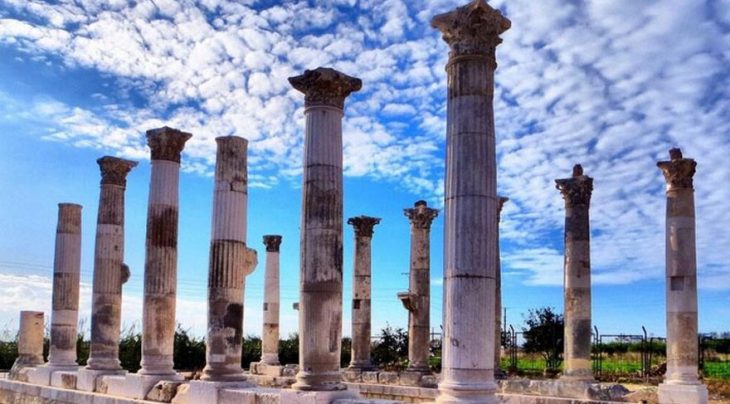
Ancient Nicaea, now called İznik, is a farming town surrounded by massive medieval walls set on the shore of a broad lake 39 miles (63 km) southeast of Yalova. Two Christian ecumenical councils were held here, the 1st in 325, and the 7th in 787.  The seventh council took place at the Hagia Sophia Church, which is located in the heart of the city.

The historical city of Iznik, which has been the capital of four civilizations and a contender for UNESCO’s preservation list, is getting ready to open its Iznik Archaeology Museum and host special exhibitions of priceless antiquities.

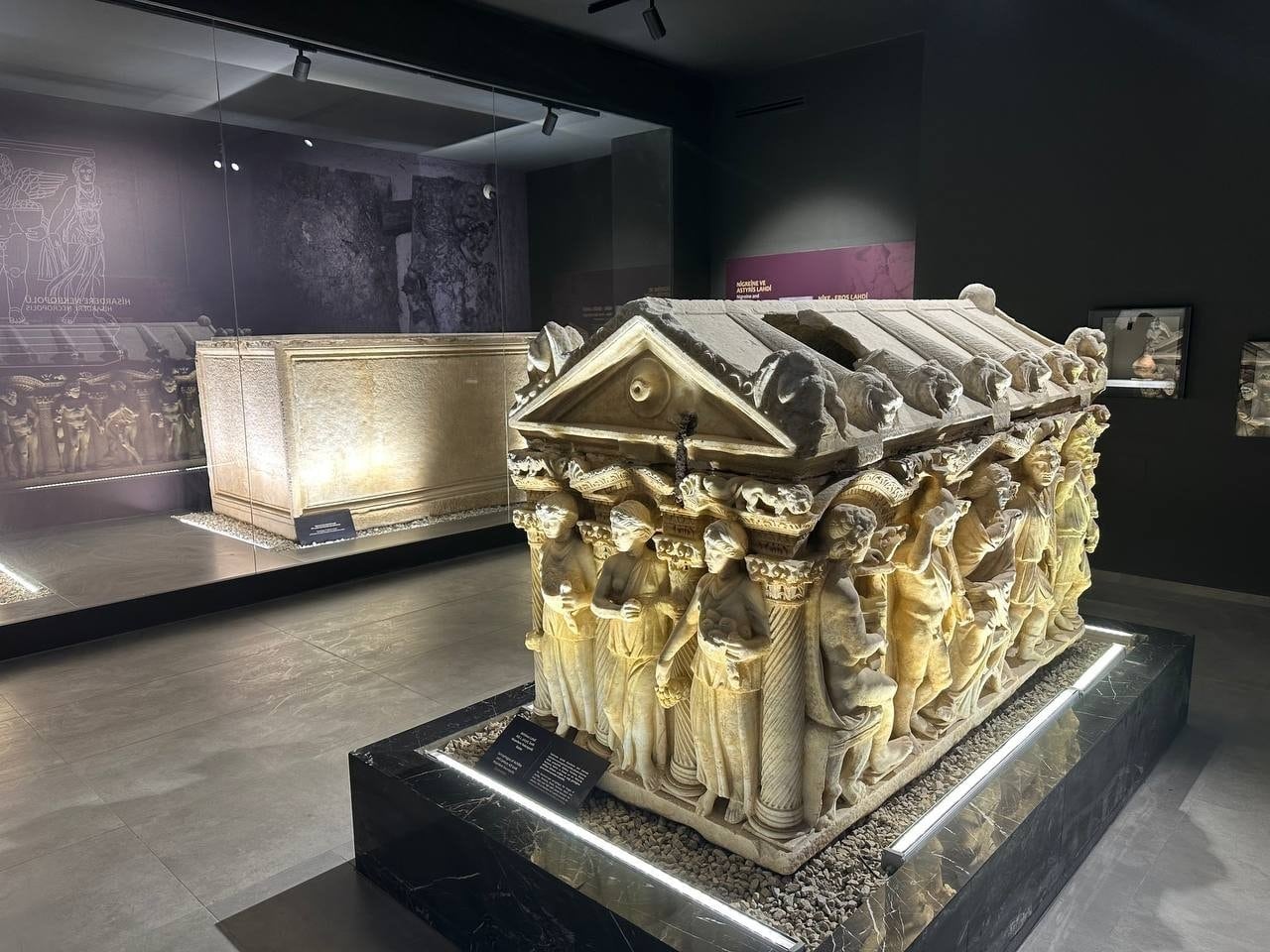
The museum has attracted the attention of many local and foreign tourists with its artifacts spanning a 5,000-year-old history. In particular, an ancient message engraved on the sarcophagus of Antigonus I, one of the generals of Alexander the Great, has aroused particular interest around the world.

The emotional 2,500-year-old message, translated by expert archaeologists, reveals the grief over Antigonos I’s death.


📣 Our WhatsApp channel is now LIVE! Stay up-to-date with the latest news and updates, just click here to follow us on WhatsApp and never miss a thing!!


“I, the sad Arete, cry out with all body and soul from the tomb of Antigonos. I pull my hair out from grief and I express myself by crying. This ill luck, the death, has captured me instead of emancipating this precious man,” the engraving reads.
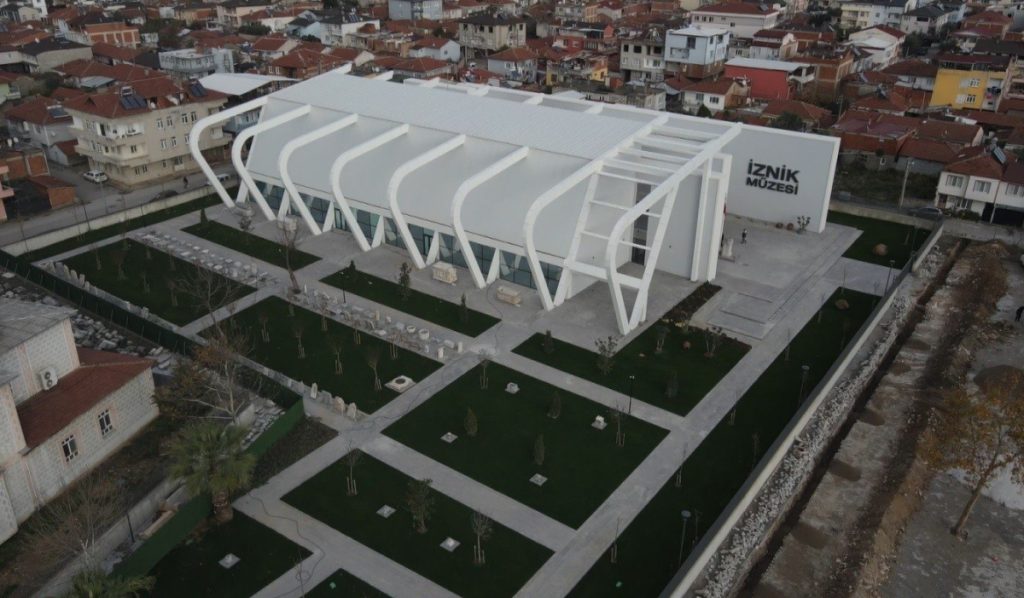
İznik Museum
Iznik Archaeology Museum. Photo: İHA

Unsurpassed museum

The foundation of the Iznik Archaeology Museum was laid in 2020. With the completion of the construction, the museum’s inauguration ceremony is scheduled to take place shortly and surely will be one of the prominent museums of Europe with its rich data and ancient artifacts dating back to the Neolithic Age.

Speaking to Ihlas News Agency (IHA), former museum director and archaeologist Taylan Sevil said: “The new museum contains quite significant movable cultural assets. There are artifacts of many civilizations from prehistoric times to the present. In that sense, the museum fills a huge gap here. It invites people to witness world civilization.”

The museum also has a marble board game from the Roman era, a sarcophagus of the Greek hero Achilles with spectacular engravings, and sarcophagi of Antigonos I and noble families with dazzling engravings.

Cover Photo: A sarcophagus displayed in the Iznik Archaeology Museum, Bursa, Türkiye. IHA Photo
Related Articles

The Mystery of the Hekatompedon: An Ancient Shepherd’s Graffiti Sheds New Light on the Mystery of the Acropolis’ Lost Temple

13 June 2024

13 June 2024

The Acropolis of Athens and its monuments, the greatest architectural and artistic complex bequeathed to the world by ancient Greece,...

Unearthing the Origins of Carnival: Evidence of Ancient Summer Festivals in Pre-Colonial Brazil

11 February 2025

11 February 2025

A new study suggests that pre-colonial people in Brazil gathered during the summer months to feast on migratory fish and...

Turkey’s Urartian Altıntepe Castle transforms into open museum

25 May 2022

25 May 2022

Altıntepe Castle, one of the most important centers of the Urartians and the Eastern Roman Empire, is now set to...

The Earliest Evidence of Christianity on Bulgarian Territory Found in Roman city of Deultum

13 July 2024

13 July 2024

A silver amulet was discovered during excavations of the Deultum-Debelt National Archaeological Reserve, near the village of Debelt in the...

Sensational Discovery in Salzburg: 1,800-Year-Old Roman Ship’s Bow Unearthed During Renovation

11 September 2025

11 September 2025

Archaeologists conducting excavations amid the renovation of the Neue Residenz in Salzburg’s Old Town have discovered a Roman ship’s bow...

The First Native Americans were Among the First Metal Miners in the World

20 March 2021

20 March 2021

An arrowhead made of pure copper 8,500 years ago dates the history of the copper age to an earlier period,...

A new Indo-European Language discovered in the Hittite capital Hattusa

21 September 2023

21 September 2023

The Çorum Provincial Directorate of Culture and Tourism announced in a written statement that a new Indo-European language was discovered...

Ancient Three Fortresses: Layered Defense on Egypt’s Eastern Border at Tell Abu Saifi

11 May 2025

11 May 2025

Archaeological excavations at the strategically significant Tell Abu Saifi site in North Sinai have unearthed compelling evidence of Egypt’s long-standing...

Ancient Hawaiian Petroglyphs Reappear on Oahu’s Shoreline After Years Beneath the Sand

25 July 2025

25 July 2025

A remarkable piece of Hawaii’s cultural legacy has resurfaced this month, as ancient Hawaiian petroglyphs were once again exposed along...

Magnificent Romanesque and Peasant war fury in the lost Kaltenborn monastery near Allstedt

18 August 2023

18 August 2023

From the 12th to the 16th century, the Kaltenborn monastery near Allstedt was a religious, cultural, and economic center of...

Copious Copper Supplies Made Cyprus a Trading Center in the Bronze Age

23 March 2023

23 March 2023

Cyprus was a surprisingly busy trading hub during the early period of international trade in the Mediterranean region. Its awe-inspiring...

New Discovery at Karahan Tepe: The Figure of a Running Wild Donkey Carved on Stone

31 August 2024

31 August 2024

The figure of a running wild donkey carved on a stone was discovered during excavations at Karahan Tepe, a Pre-Pottery...

A Roman statue unearthed on the site of St Polyeuctus’ church, which once Constantinople’s largest church

5 April 2023

5 April 2023

At Saraçhane Archaeology Park, where the Church of St. Polyeuctus is situated, excavation work by Istanbul Metropolitan Municipality (IBB) teams...

A Remarkably Rich Roman-Era Funeral Pyre Discovered in Southwestern France

26 November 2025

26 November 2025

A remarkably rich Roman-era funeral pyre was discovered in Dordogne, France, revealing a rare 1st–2nd century cremation structure with luxury...

Archaeologists have discovered a 2800-year-old Urartian Castle in eastern Turkey

17 June 2021

17 June 2021

Archaeologists discovered the ruins of a castle going back 2,800 years on a mountain 2,500 meters (8,200 feet) above sea...