
A new epigraphic breakthrough has unveiled the identity of Ix Ch’ak Ch’een, a female ruler who governed the ancient Maya city of Cobá in present-day Quintana Roo, Mexico, during the 6th century AD. The discovery, made through the interpretation of inscriptions on the Foundation Rock—a large limestone monument found near a natural reservoir in the Nohoch Mul Group—offers fresh insight into the role of women in Maya political and religious life.
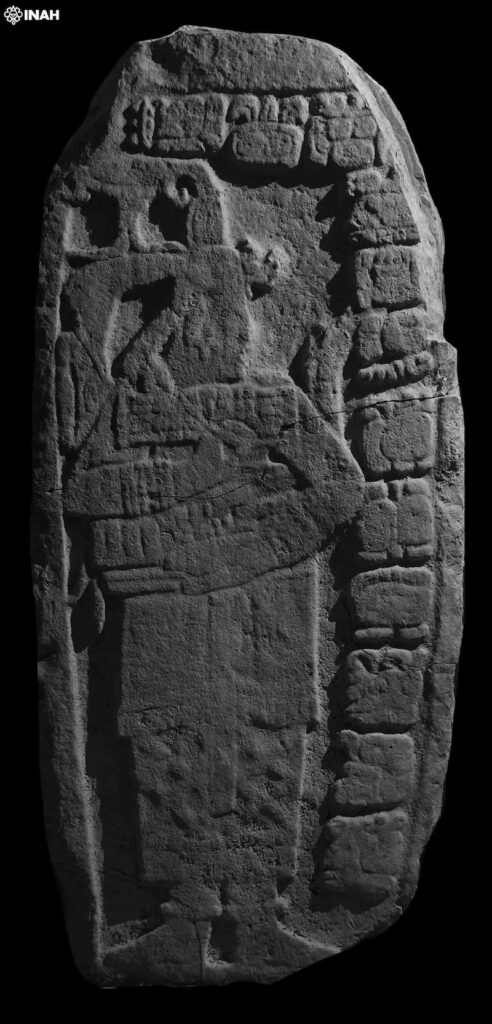
Researchers from Mexico’s National Institute of Anthropology and History (INAH) and international collaborators have confirmed that the inscriptions correspond to the same queen mentioned in Panel 7 and Stelae 26 and 30 of Cobá. These findings not only reshape the understanding of Cobá’s dynastic history but also highlight the active participation of women in governance and diplomacy within the Classic Maya world.
Decoding the Foundation Rock
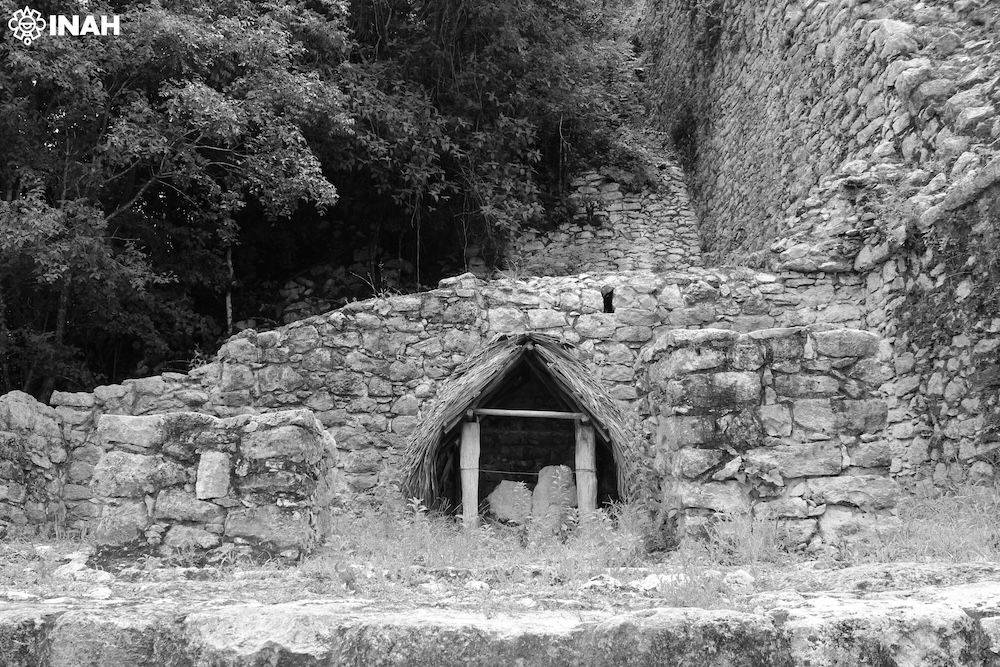
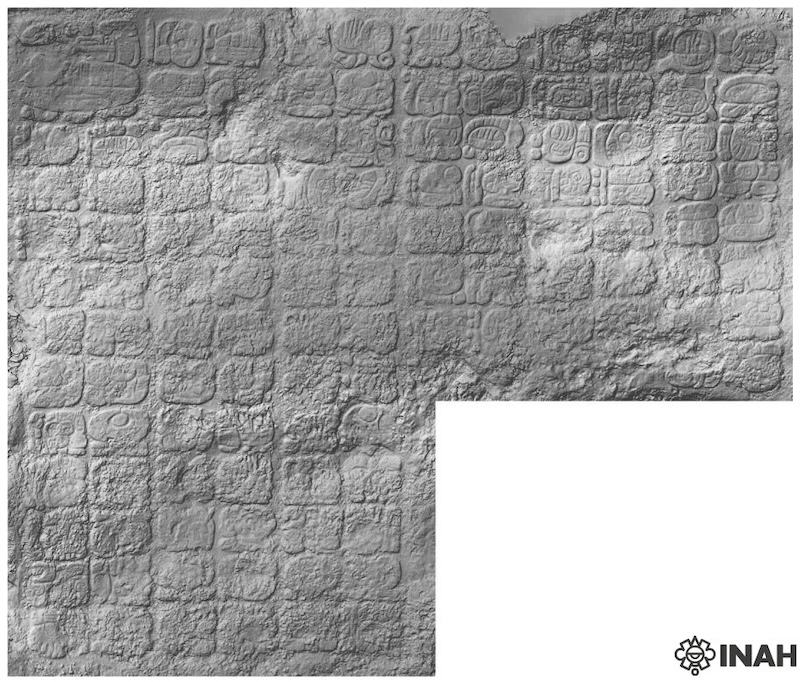
The Foundation Rock was unearthed just over a year ago by the Promeza Cobá Project, part of Mexico’s nationwide effort to preserve and enhance archaeological zones. Situated at the edge of a natural aguada, or water body, the monument measures among the largest found at Cobá and preserves a rare and extensive hieroglyphic text. Despite areas of erosion, conservation led by Eunice Corazón Peralta has enabled scholars David Stuart (University of Texas at Austin) and Octavio Esparza Olguín (National Autonomous University of Mexico) to make significant progress in deciphering its content.
Their analysis identifies Ix Ch’ak Ch’een as a central figure in Cobá’s political narrative. According to the epigraphic record, a key date—9.6.15.6.9 in the Maya Long Count (May 12, 569 AD)—marks the establishment of the kaloomte’ institution at a site called Kehwitznal, “the Place of the Mountain of the Deer.” This event likely refers to the founding of Cobá’s most monumental district, Nohoch Mul, where the largest pyramids still dominate the jungle landscape.
A Sovereign Between Heaven and Earth
Ix Ch’ak Ch’een’s name appears in several variants, including Ix Ch’ak Ch’een Yopaat and in association with the deity K’awiil, symbol of royal power and divine lightning. Such titles indicate her divine legitimacy and military authority, equivalent to that of a kaloomte’, the highest political office in the Maya hierarchy.
The Foundation Rock also narrates the queen’s enthronement ceremony and her relationship with protective deities such as Bolon Tz’akab Ajaw, “Lord of Innumerable Generations,” a figure linked to Cobá’s mythical origins. This association suggests that her reign was both spiritually sanctioned and politically central to maintaining cosmic balance—a defining aspect of Maya rulership.
Epigrapher Esparza notes that the monument’s placement beside a sacred body of water was no coincidence: “The water, the stone, and the text form a triad of power. By carving her name directly onto the bedrock, Ix Ch’ak Ch’een inscribed her authority into the landscape itself.”
The Serpent and the Sacred Landscape
Beyond royal titles, the inscriptions refer to the serpent witz’, a supernatural entity tied to water and fertility. The serpent’s presence on the monument connects Cobá’s rulers to divine forces that governed both nature and political legitimacy. This fusion of geography, theology, and authority was a hallmark of Maya civilization, where rulers acted as mediators between earthly and celestial realms.
Cobá’s rulers thus not only managed cities and trade networks but also maintained cosmological order, ensuring the flow of both water and divine favor across their territories.
Ties with the Snake Kingdom
Comparative studies with nearby sites—particularly Okop (Yo’okop)—suggest diplomatic connections between Ix Ch’ak Ch’een and Sky Witness, a dominant ruler of the Kaanul (Snake) dynasty, one of the most powerful political entities in Classic Maya history. The Kaanul kingdom extended its influence across the Yucatán and Guatemala through alliances, warfare, and intermarriage.
Although the exact nature of their relationship remains uncertain, references in the Foundation Rock imply that Cobá’s queen operated within this regional power network, possibly as an ally or tributary. Such ties reveal the complex web of female-led diplomacy that helped maintain balance among rival Maya city-states.
A City of Roads and Power
At its zenith, Cobá spanned nearly 80 square kilometers and supported a population of around 50,000 inhabitants. Its sacbeob, or white causeways, connected distant sectors of the city and extended to other Maya centers, symbolizing both physical and political connectivity. Under Ix Ch’ak Ch’een’s leadership, Cobá likely flourished as a hub of commerce, ritual, and regional influence.
Her reign is also linked to major public works, including the construction of the Group D ballcourt and the completion of the seventh k’atun cycle in 573 AD, marking important milestones in the city’s ceremonial calendar.
Women of Power in the Maya World
The identification of Ix Ch’ak Ch’een reinforces the growing understanding that Maya women could hold supreme authority. While most inscriptions celebrate male kings, increasing evidence—from Palenque’s Yohl Ik’nal to El Perú-Waka’s Lady K’abel—demonstrates that women were not only consorts or regents but strategists, warriors, and sovereigns.
Ix Ch’ak Ch’een’s legacy strengthens this narrative, showing that female leadership was integral to the political, religious, and cultural fabric of the ancient Maya world. Her example challenges earlier assumptions that leadership in the Classic Period was exclusively male.
Continuing the Story of Cobá
Research into the Foundation Rock continues under INAH’s Promeza Cobá Project, directed by archaeologist Manuel Pérez Rivas. Further excavation and conservation may reveal additional inscriptions that expand our knowledge of Cobá’s dynastic sequence and the broader geopolitical landscape of the 6th century.
As Octavio Esparza remarks, “Each new glyph we decipher brings us closer to understanding how Maya cities like Cobá were governed—not just by men, but by remarkable women whose names are finally being restored to history.”
Cover Image Credit: Quarto – View of Stela 30. Octavio Esparza -INAH
