27 January 2026 The Future is the Product of the Past

Göbeklitepe Monolith will be Exhibited in the United Nations

A copy of one of the famous ruins of Göbeklitepe, known as the oldest temple in the world, will be gifted to the UN.

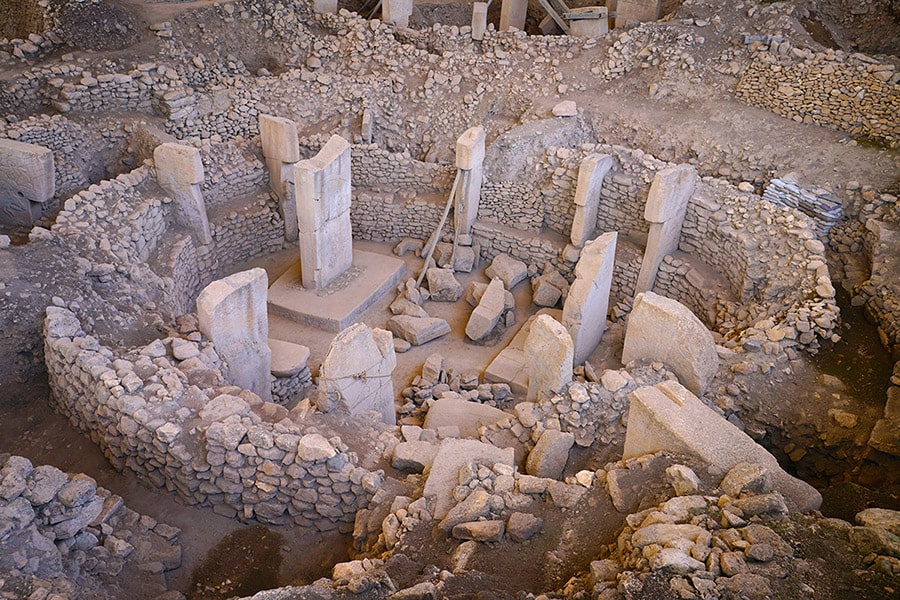
A copy of a work from Göbeklitepe, which is described as “zero points of human history’” with its 12.000-year-old of history in Sanliurfa, will be exhibited at the United Nations Headquarters in New York.

A copy of the “P18” numbered obelisk (stele) with a height of 5.5 meters, located in the section called D structure of Göbeklitepe, which is a world cultural heritage, will be made from hard limestone and will be presented to the United Nations as an official art gift.

The monolith of Göbeklitepe, which was in the spotlight worldwide in 2019, designated the Year of Gobeklitepe, will be the second Anatolian artifact exhibited at UN headquarters in Manhattan and is set to be on permanent display to help introduce the universal cultural heritage of the cradle of civilizations. 

An enlarged copper copy of the Egyptian-Hittite peace treaty known as the Treaty of Kadesh – one of the world’s oldest examples of diplomatic texts, dating back to around 1280 BC – had presented to U Thant, then UN secretary-general, in 1970.


📣 Our WhatsApp channel is now LIVE! Stay up-to-date with the latest news and updates, just click here to follow us on WhatsApp and never miss a thing!!


In 2019, preliminary contacts were made by the officials of the Ministry of Foreign Affairs of the Republic of Turkey to present a copy of a work belonging to Göbeklitepe as a second work from Turkey to the UN exhibition.
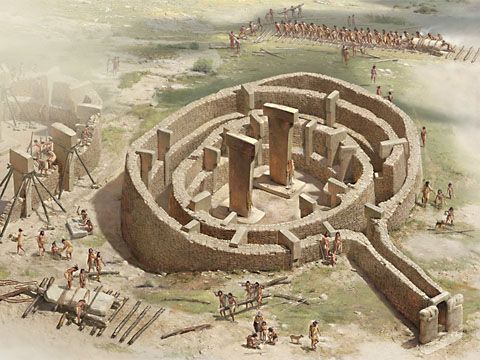
Göbeklitepe Reconstruction

The World’s First Temple

Göbeklitepe dates from the Neolithic era. It is estimated that the site dates back 12,000 years. It is also older than Stonehenge, Egypt’s Pyramids, and Malta’s circa-3600 BC Megalithic temples. The oldest known temple on the planet is Göbeklitepe! While several sources believe Göbeklitepe to be a village, research suggests that the site may have been a meeting point constructed according to hunter-gatherer belief systems, a point built for hunting and trade – a critical need at the time.

Göbeklitepe was discovered in 1963 when researchers from Istanbul and Chicago universities were working at the site.

Turkey’s Culture and Tourism Ministry designated the site as a 1st Degree Archaeological Site in 2005, and it was added to the UNESCO World Heritage Temporary List in April 2011. With the act of the Committee convened in Bahrain in July 2018, Göbeklitepe, which had been on the applicant list for seven years and reshaped history, was qualified to join the UNESCO World Heritage List.

Related Articles

Archaeologists discover bones of a woman who lived 14,000 years ago at a site in The Iberian Peninsula

13 August 2021

13 August 2021

Archaeologists have discovered the bones of a lady who lived 14,000 years ago, the earliest traces of a modern burial...

Researchers Suggest That the 5,000-Year-Old Boat-Shaped Mound May Be Fossilized Remains of Noah’s Ark

16 March 2025

16 March 2025

A recent discovery in Türkiye has ignited interest among experts who believe they may have found the fossilized remains of...

Archaeologists Unearthed a Rare Hoard of Hasmonean Coins in Jordan Valley

31 December 2024

31 December 2024

A team of archaeologists from the University of Haifa discovered a rare hoard of approximately 160 coins during an excavation...

Early Iron Age cremation burial containing bronze jewelry and rare textile fragments found in Austria

9 July 2023

9 July 2023

Archeologists from the Vienna Natural History Museum (NHM), a cremation burial containing bronze jewelry and rare surviving textile fragments have...

How Evolutionary Biology Is Reshaping Our Understanding of the New Testament: The Case of the Missing ‘Son of God

5 August 2025

5 August 2025

In the remote wilderness of Egypt’s Sinai Peninsula, a forgotten room revealed one of the most significant biblical manuscript discoveries...

A Major Etruscan Medical School Emerges at the Sacred Springs of San Casciano dei Bagni

24 December 2025

24 December 2025

New results from the 2025 excavation season at the Bagno Grande Sanctuary in San Casciano dei Bagni are reshaping how...

From Justinian’s Glory to Ruin: The Last Stand of Montenegro Triconch Church

10 August 2025

10 August 2025

In the heart of Bar, just off the bustling Ulica Maršala Tita, lie the weathered remains of the Triconch Church...

Exceptional Iron Age Artifacts Discovered at Celtic Necropolis in France

18 April 2025

18 April 2025

An archaeological excavation in Creuzier-le-Neuf, a small town located six miles north of Vichy, has unveiled a remarkable Celtic necropolis,...

1,400-year-old coins found in a piggy bank in ancient city of Hadrianopolis

3 January 2024

3 January 2024

Archaeologists unearthed a collection of 10 coins believed to date back nearly 1,400 years, retrieved from what appears to be...

Unusual construction material may be linked to the Tower of Babel

5 November 2021

5 November 2021

Archaeologists have recently discovered bitumen and mortar plastered onto a brick dating back to the Babylonian King Nebuchadnezzar II. This...

2,700-year-old bronze figurine found in Germany’s Tollence River: goddess or weight?

9 April 2022

9 April 2022

A Bronze Age female figurine discovered in the Tollense River in northern Germany may have been a goddess, part of...

Archaeologists discovered a sunken prehistoric fort in Clew Bay island

1 April 2024

1 April 2024

A sunken prehistoric fort has been discovered on Clew Bay island off the north Mayo coast, Ireland. It has been...

Bone tools for bleeding cows discovered in a 7,000-year-old cemetery in Sudan

24 March 2023

24 March 2023

During excavations in the Letti basin in northern Sudan, archaeologists have unearthed 7,000-year-old bone tools used to bleed cows. Explorers...

Failed Mongol fleet may actually land in Japan after 800 years

18 July 2023

18 July 2023

A  recent shipwreck was found off the coast of Japan this year and identified as part of a Mongol fleet...

Ancient Humans Used Indigo Plant 34,000 Years Ago: First Evidence of Non-Food Plant Processing Found in Georgia

3 September 2025

3 September 2025

34,000-year-old indigo plant residues found in Georgia’s Dzudzuana Cave reveal that prehistoric humans processed plants for more than just food....