15 March 2026 The Future is the Product of the Past

First-Ever Painted Depiction of Celtic God Sucellus Discovered at Gallo-Roman Sanctuary

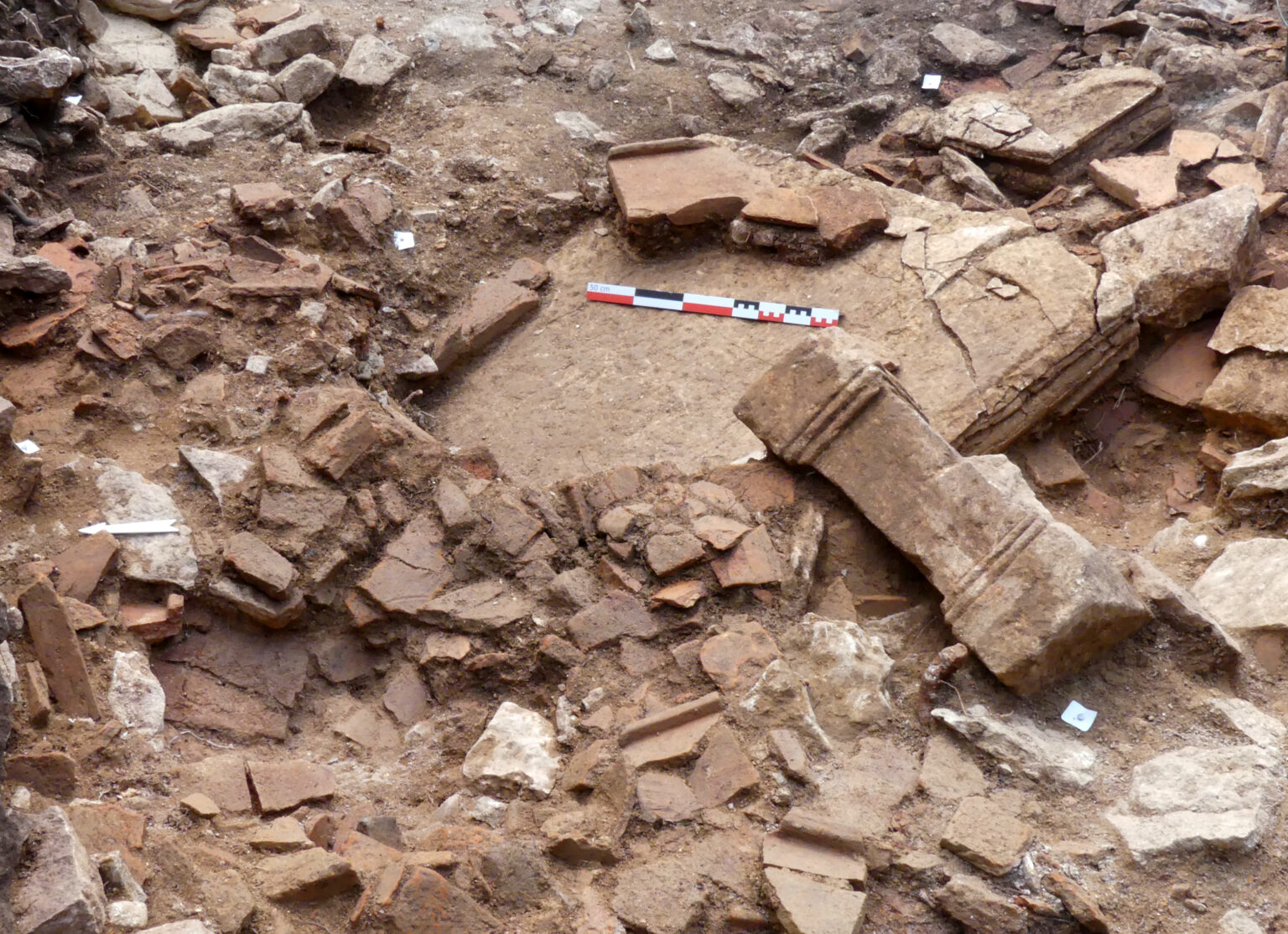
Archaeologists excavating a hilltop sanctuary in eastern France have uncovered a remarkable painted altar block depicting Sucellus, a powerful Celtic deity associated with prosperity, forests, and agriculture. The discovery was made at the Gallo-Roman sanctuary of Mancey in Burgundy’s Saône-et-Loire region and may represent the only known painted depiction of the god ever found.

The sanctuary, located on a forested ridge overlooking the Tournugeois landscape near the town of Tournus, has been under systematic investigation since 2023. Excavations during the 2025 field season revealed a sprawling ritual complex that remained active for nearly five centuries, from the late Iron Age through the final centuries of the Roman Empire.

The painted altar block emerged from the ruins of a temple identified by archaeologists as Monument M3, where evidence suggests that ceremonial banquets and elite gatherings once took place. The temple floor contained thousands of remains from ritual feasts—including bones of pigs, birds, and fish—along with drinking vessels, jewelry, coins, and votive objects.
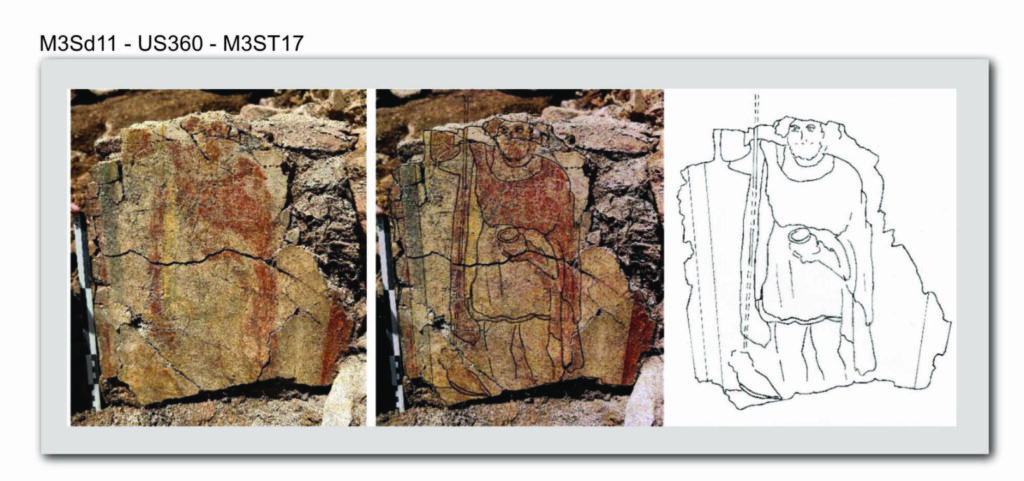
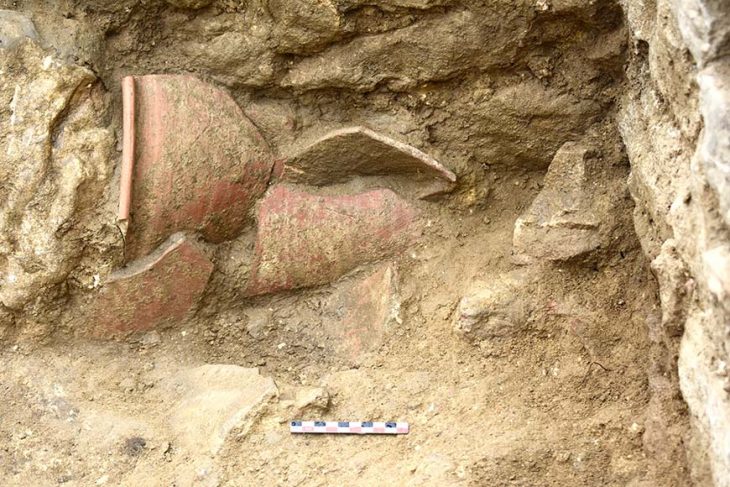
Masonry block depicting the god Sucellus from Temple M3.Credit: Grégory Compagnon (2026), Le Fil d’ArAr

The Hammer-Bearing God of Prosperity

Sucellus was one of the most widely worshipped gods in Roman Gaul, often depicted carrying a long-handled hammer or mallet and accompanied by a wine jar or barrel, symbols linked to fertility, abundance, and protection of rural life. In inscriptions and sculptures found across Gaul, he sometimes appears alongside the goddess Nantosuelta, forming a divine pair connected with prosperity and the natural world.

Although dozens of stone sculptures of Sucellus are known from sites across France, Germany, and Luxembourg, painted representations of the god are extremely rare. If the identification of the Mancey altar is confirmed, it could provide a unique glimpse into the visual culture of Celtic religious worship during the Roman period.


📣 Our WhatsApp channel is now LIVE! Stay up-to-date with the latest news and updates, just click here to follow us on WhatsApp and never miss a thing!!
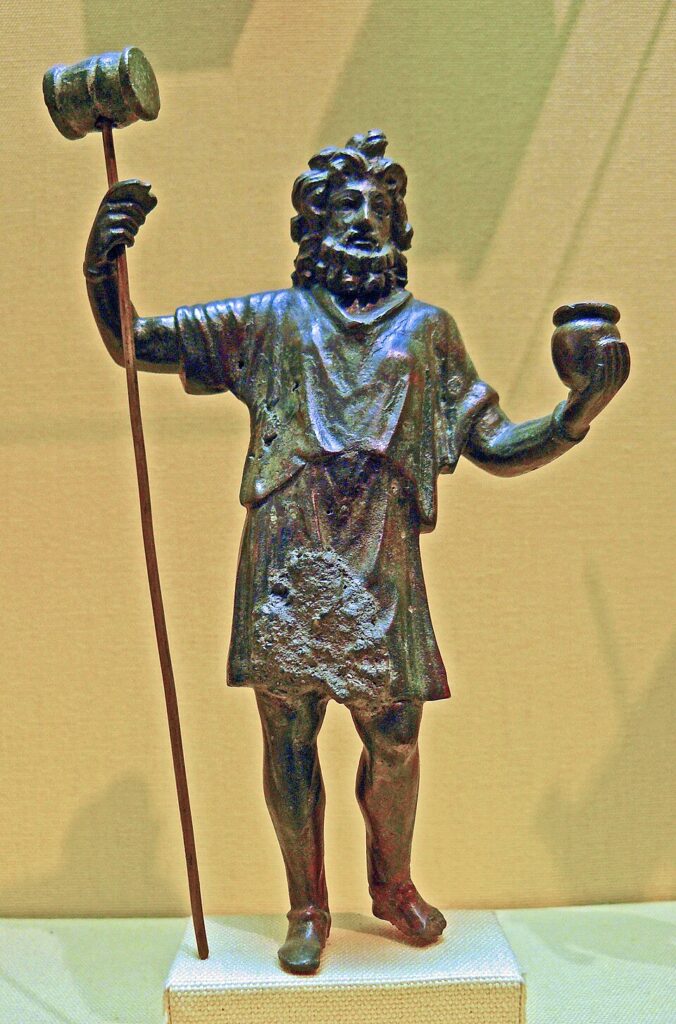


The Celtic god Sucellus with his characteristic hammer and olla. Musee d'Archéologie National. Credit: Public Domain
The Celtic god Sucellus with his characteristic hammer and olla. Musee d’Archéologie National. Credit: Public Domain

Ritual Life on a Sacred Hill

Archaeologists believe the sanctuary covered roughly one hectare and included two temples, gathering areas, and spaces used for ritual meals and offerings. Thousands of artifacts recovered from the site suggest it attracted large numbers of visitors and may have served as an important regional cult center.

Even after the temples collapsed in the late fourth century AD, people continued to visit the sacred hill, leaving coins, figurines, and offerings among the ruins.

Grégory Compagnon (March 12, 2026). The Ancient Sanctuary of Mancey: Results of the 2025 Excavation Campaign. Le Fil d’ArAr. Accessed March 15, 2026, at https://doi.org/10.58079/15v3y

Cover Image Credit: Grégory Compagnon (2026), Le Fil d’ArAr

Related Articles

An ancient structure of unknown purpose discovered in northeastern Italy

25 March 2023

25 March 2023

A mysterious structure of unknown purpose has been unearthed in the Friuli Venezia Giulia region in northeastern Italy. The discovery...

A Unique 2000-Year-Old Oil Lamp Found in Israel

5 May 2021

5 May 2021

Archaeologists have discovered a rare 2,000-year-old oil lamp in David, Jerusalem. Archaeologists have discovered a rare oil lamp, shaped like...

Evidence of Early Forms of Pottery Production and 8,000-Year-Old Buildings Belonging to the Elite of the Time Discovered in Iraqi Kurdistan

9 January 2025

9 January 2025

Archaeologists from the University of Udine have uncovered two ancient human settlements in the Rovia sub-district of Dohuk province in...

Małopolskie Region Reveals Oldest Evidence of Metal Mining in Poland, Dating Back 1,000 Years Earlier Than Previously Thought

16 February 2025

16 February 2025

Researchers have uncovered the oldest confirmed evidence of metal ore mining and metallurgy in Poland through the study of lead...

2,600-Year-Old Scythian Noble Warrior’s Tomb Unearthed in Siberia: Rare Battle Axe, Bronze Mirror, and More

24 August 2025

24 August 2025

Burial includes ornate belt, ram-headed buckle, bronze mirror, and horse harness elements, revealing the elite status of the Scythian Noble...

Two Deep Ritual Wells Sealed with 3100-year-old Calcium Carbonate Discovered on Greek Island

6 August 2024

6 August 2024

Aerial photographs of the “Kotroni” Lakithra region, strategically located on the island of Cephalonia, west of the Greek mainland, revealed...

Human remains found at prison sewer site are 4,500 years old in East Yorkshire

26 March 2024

26 March 2024

Archaeologists investigating the site of a new sewer to serve a jail being built at Full Sutton in East Yorkshire,...

New Findings from 3,000-year-old Uluburun shipwreck: Uzbekistan Nomads Supplied a Third of the Bronze Used Across Ancient Mediterranean

5 December 2022

5 December 2022

A new study of the 3,o00 years old Uluburun shipwreck revealed a complex ancient trading network during the late bronze...

Luxurious 2,200-year-old King Tomb Discovered in China

3 May 2024

3 May 2024

Archaeologists have unearthed a luxurious 2,200-year-old tomb in eastern China, the largest, highest-ranking, and most structurally complex ever unearthed, which...

After 150 years, Schliemann’s destruction in Troy was repaired

8 August 2021

8 August 2021

Heinrich Schliemann, a German businessman, excavated the ancient city of Troy in northwest Canakkale province 150 years ago. Archaeologists are...

Neolithic Shell Trumpets Reveal Iberia’s Oldest Long-Distance Communication System

3 December 2025

3 December 2025

New research reveals that Neolithic shell trumpets from Catalonia served as the earliest long-distance communication system in the Iberian Peninsula....

Intact Bodies of Catalan Nobles Discovered in Santes Creus Monastery

11 March 2024

11 March 2024

A team of archaeologists and anthropologists found the human remains of a dozen members of the Catalan nobility dating back...

60-million-year-old Snail Fossil Found in southern Turkey

22 May 2021

22 May 2021

A snail fossil dating to the age of 60 million was found in Mersin’s Toroslar district. The snail fossil discovered...

Urartian graves in eastern Turkey pointing out novel burial traditions

21 September 2021

21 September 2021

The excavations in Cavuştepe castle continue with the excavations in the necropolis this year. Two new tombs from the Urartian...

Key Silla Kingdom Palace Site Found in South Korea After Decade-Long Probe

11 February 2025

11 February 2025

A decade-long investigation conducted by the Korea Heritage Service has uncovered a crucial palace site of the Silla Kingdom (57...

Comments
Leave a Reply

Your email address will not be published. Required fields are marked *