Chinese archaeologists have uncovered a remarkably preserved section of an ancient imperial highway built more than 2,200 years ago—an infrastructure marvel now being hailed as the ancestor of modern expressways. The discovery sheds new light on the extraordinary engineering capabilities of the Qin Dynasty, the empire that unified China for the first time in history.
The newly identified 13-kilometer stretch is part of the legendary Qin Imperial Road, a vast transportation corridor that once extended nearly 900 kilometers across northern China. Researchers announced the find on December 9 following fieldwork led by the Yulin Institute of Cultural Heritage Protection in Shaanxi Province, according to reports from South China Morning Post.
Engineering Far Ahead of Its Time
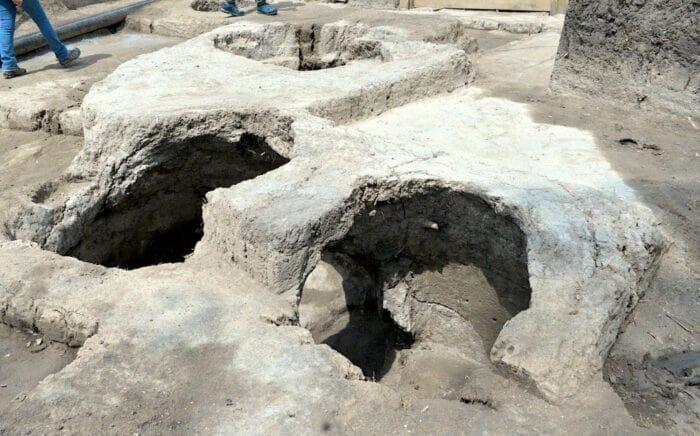
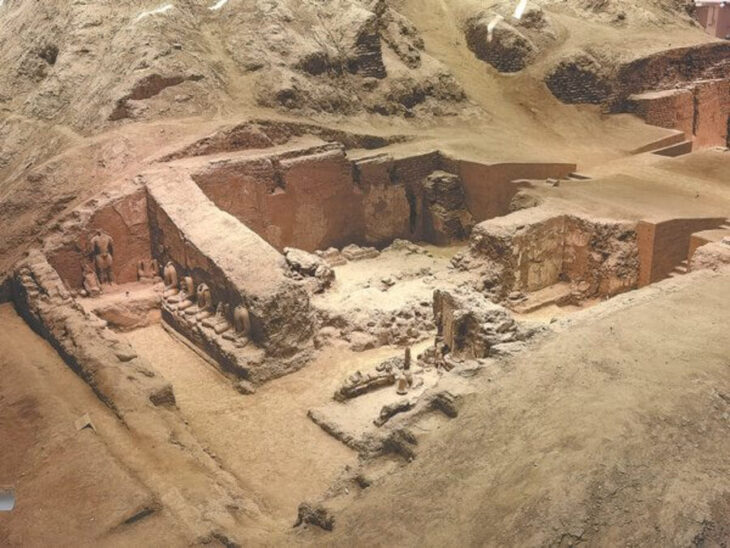
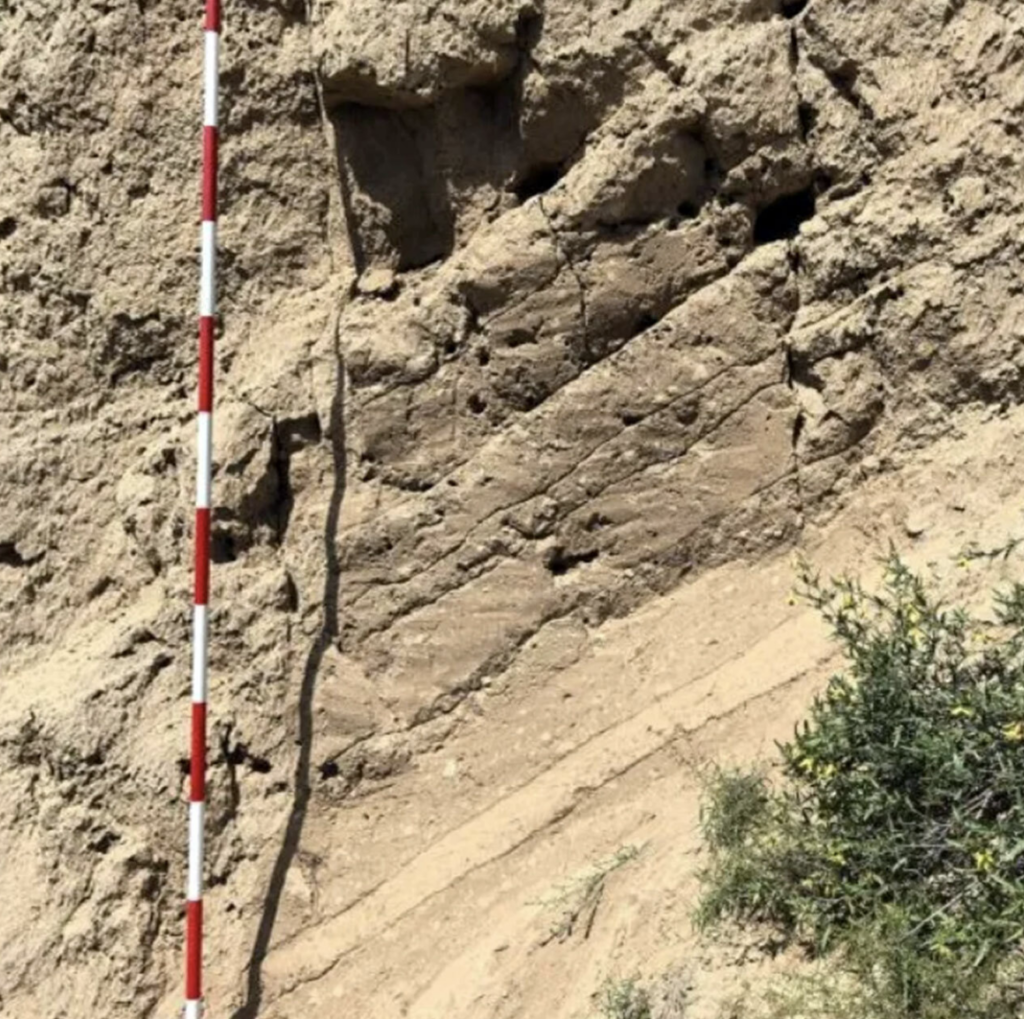
Excavations revealed surprisingly advanced construction techniques. Archaeologists identified straight-cut trenches, rammed-earth slope reinforcements, compacted roadbeds, and even entire valleys filled in to maintain a direct route. The average width of the road—around 40 meters, expanding up to 60 meters in some sections—would be wide enough for four lanes of modern traffic.
Ancient records describe how Qin engineers “filled valleys and cut through mountains” to create a straight north–south artery linking Xianyang, the Qin capital (near modern Xi’an), with Jiuyuan (present-day Baotou in Inner Mongolia). This route allowed the imperial army to rapidly deploy troops against incursions by the Xiongnu nomads, a constant threat to China’s northern frontier.
Built by Order of China’s First Emperor
Historical chronicles attribute the road’s construction to Qin Shi Huang, China’s first emperor, who ruled from 221 to 210 BCE. Astonishingly, the project took only five years to complete—an incredible feat considering the scale, terrain, and technology of the era.
📣 Our WhatsApp channel is now LIVE! Stay up-to-date with the latest news and updates, just click here to follow us on WhatsApp and never miss a thing!!
The famous historian Sima Qian, author of Records of the Grand Historian, personally traveled the road and documented its construction. He noted that work began in 212 BCE, during the 35th year of Qin Shi Huang’s reign, and continued until 207 BCE, when the project was completed under his successor, Er Shi Huang.
More Than a Road: A Military Lifeline
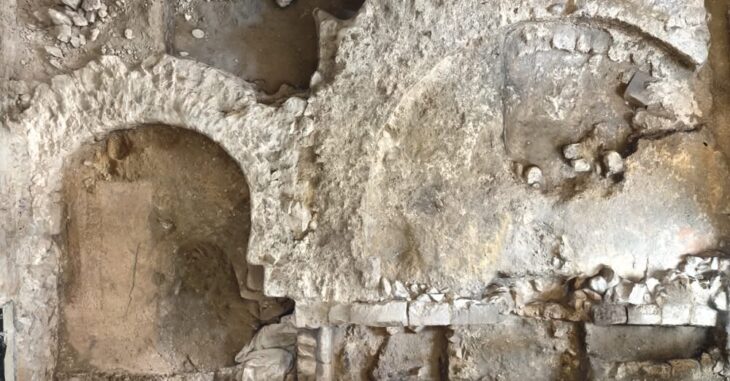
Nearby, archaeologists also uncovered a small settlement believed to have functioned as a postal relay station, active during both the Qin and subsequent Han Dynasty. Pottery fragments found at the site helped confirm its age and purpose, highlighting how the road supported not only military logistics but also communication, governance, and trade.
China Cultural Heritage News has described the Qin Imperial Road as the second most important defensive project of ancient China, surpassed only by the Great Wall. While the Wall served as a static barrier, the road was a dynamic lifeline, enabling fast troop movement, supply transport, and administrative control over vast territories.
A Glimpse Into Qin Dynasty Power
The discovery reinforces the idea that pre-industrial China built one of the world’s earliest long-distance land transport networks. The Qin Dynasty, though short-lived (221–207 BCE), left an outsized legacy. Beyond roads and walls, the Qin standardized weights, measures, coinage, axle widths, and even written script, laying the foundation for Chinese civilization for centuries to come.
Ironically, after the fall of the Qin, the same road designed to repel invaders sometimes made it easier for hostile forces to penetrate deep into China’s heartland. Over time, natural erosion, human activity, and shifting landscapes caused large portions of the highway to disappear.
Rediscovered From Space
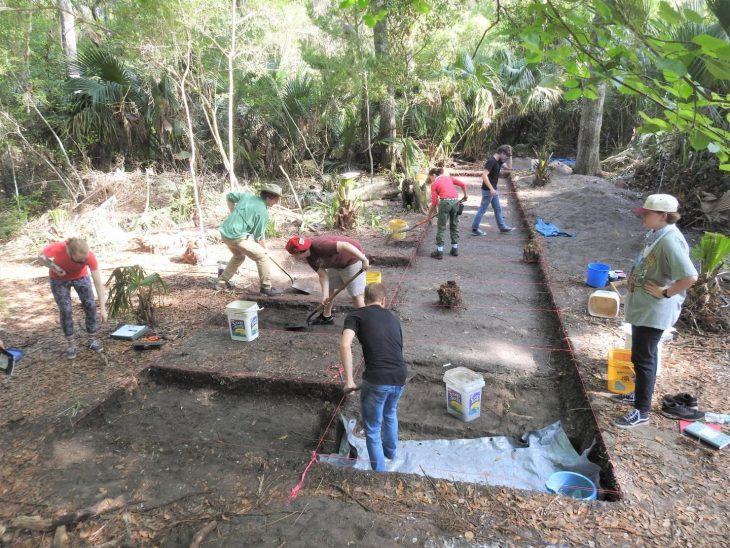
Modern archaeologists used satellite imagery and remote sensing technologies to trace faint linear patterns across reforested desert areas. On the ground, they uncovered nine straight trench segments, compacted earth layers, hardened traffic surfaces, and filled valleys—clear physical proof of the ancient texts.
Although parts of the Qin Imperial Road were first rediscovered in 1974, much of its route remained a mystery. In 2009, a section in Fuxian County, Shaanxi, was named one of China’s Top 10 Archaeological Discoveries. This latest find brings scholars closer than ever to fully understanding the scale of the project.
The Legacy of the World’s First Superhighway
Today, archaeologists see the Qin Imperial Road not just as an ancient relic, but as a symbol of state power, engineering ambition, and centralized governance. More than two millennia later, it stands as a reminder that the concept of high-speed, long-distance connectivity is far older than we ever imagined.
Cover Image Credit: A section of the 2,200-year-old Qin Imperial Road, regarded as the ancestor of modern highways. Official Website of Shaanxi Province