7 December 2025 The Future is the Product of the Past

Artifacts for sale offered at a Dutch auction house returned to Peru

The Dutch government announced in a press release today that the artifacts that were put up for sale at an auction house were returned to Peru after the examination.

Arjen Uijterlinde, the Dutch Ambassador for International Cultural Cooperation, delivered a collection of privately held archaeological items to Peruvian Ambassador Marisol Agüero today.

The 28-piece collection was revealed when it was put up for sale at an auction house in the Netherlands.

The Dutch Information and Heritage Inspectorate investigated the items’ origins, after which the owner voluntarily returned them, in view of their importance to Peru’s cultural heritage.

The Peruvian government stated in its request for the artifacts’ repatriation that the pieces came from archaeological sites or excavations that were not authorized by Peruvian authorities. After receiving notification that numerous artifacts were being offered for sale at an auction house, the Inspectorate launched an inquiry, which found that the pieces had been purchased in the 1970s by the present owner’s father.


📣 Our WhatsApp channel is now LIVE! Stay up-to-date with the latest news and updates, just click here to follow us on WhatsApp and never miss a thing!!


cultura-chimú
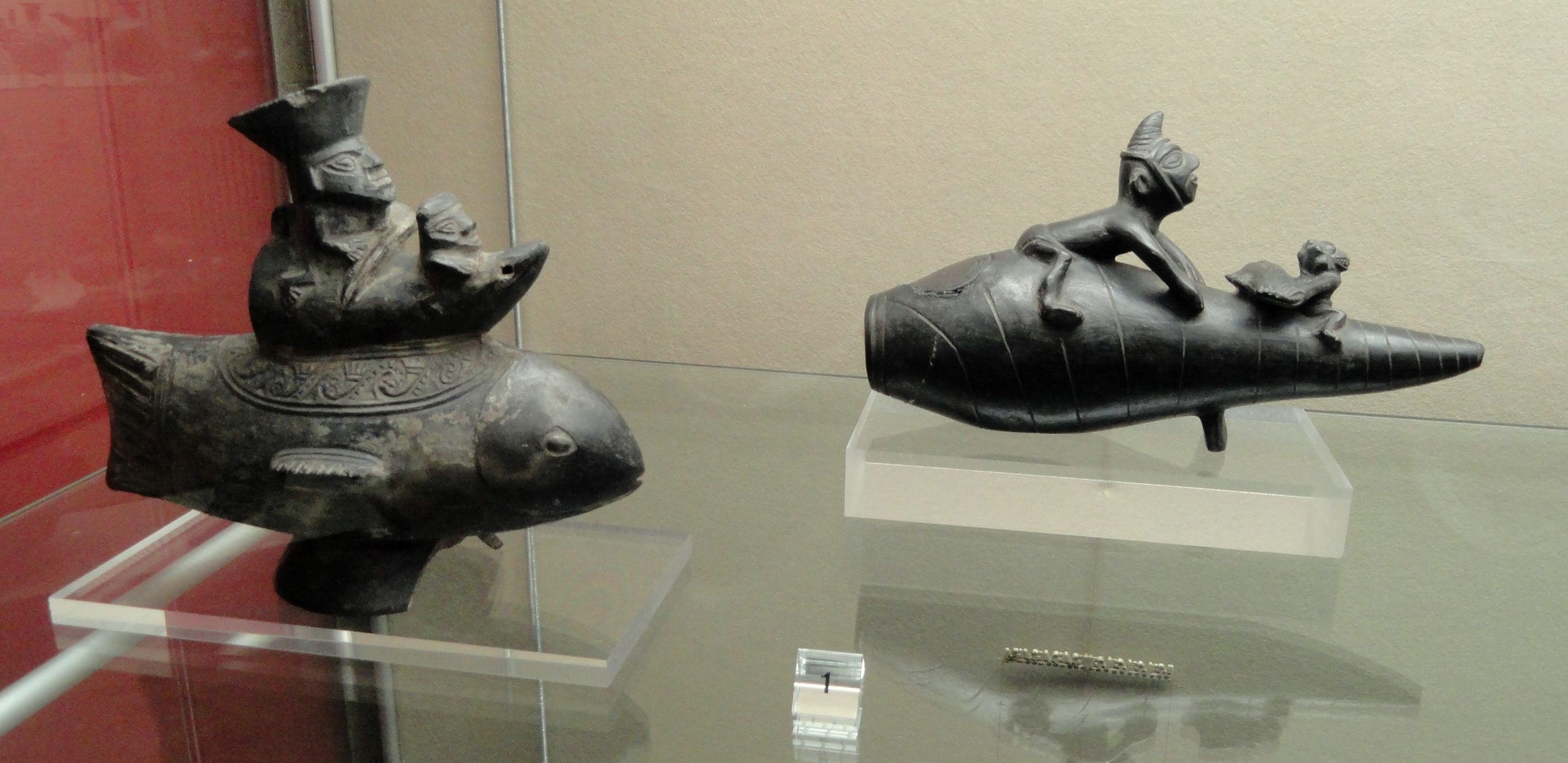
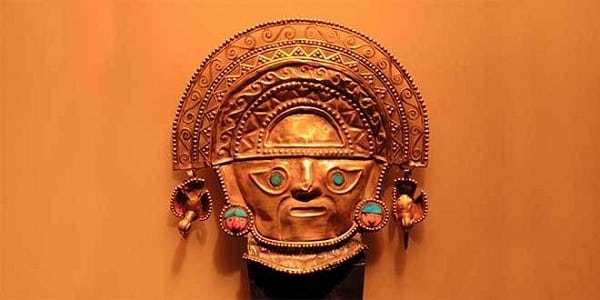
The photographs are examples from the Chimu culture.

Following Peru’s request and the Inspectorate’s inquiry, the owner willingly gave up the artifacts, allowing them to be included in the country’s cultural heritage collection once more. During the handover ceremony, Peruvian officials expressed their gratitude for the return of these cultural items, which would be publicly displayed once they are returned to Peru.

The 28 objects, dated between 200 BC and 1,500 AD, come from various cultures. The artifacts belong to the pre-Columbian cultures: Chimú, Chancay, Moche, Wari, and Vicús.

The collection consists mainly of pottery pieces, including decorative jugs and figurines in the form of humans and animals. A number of colorful decorative textile fragments were also returned, as well as a collection of seeds.

The return of this collection to Peru was carried out in the spirit of the UNESCO Convention on the Means of Prohibiting and Preventing the Illicit Import, Export, and Transfer of Ownership of Cultural Property.

Photos are representative.

Related Articles

Bom Jesus: The Oldest and Most Valuable Shipwreck Found in the Namibian Desert

20 March 2025

20 March 2025

In a remarkable archaeological discovery, the Bom Jesus (The Good Jesus), a Portuguese ship that sank over 500 years ago,...

The ruins found in Nara could be the Imperial House of Female Emperor Koken

1 July 2021

1 July 2021

Archaeologists unearthed one of the largest building remains ever found at the former site of the Heijokyu palace in the...

Baptismal font from the Ottonian period discovered: Oldest evidence of a quatrefoil-shaped basin north of the Alps

19 March 2024

19 March 2024

The site of a font of the medieval Ottonian dynasty, from the tenth century, has been discovered in the crypt...

Name of Iranian city identified on 1800-year-old Sassanid clay seal

9 April 2024

9 April 2024

In a stunning archaeological find, the name “Shiraz” was identified on a clay sealing from the Sassanid era written in...

Bronze Age women’s jewelry set discovered in Güttingen carrot field, Swiss

17 October 2023

17 October 2023

A set of Bronze Age women’s jewelry was discovered by archaeologists in Güttingen, Thurgau canton, northeastern Switzerland, in a freshly...

In northern Iran, a hand-dug passageway was discovered used for military purposes during the Qajar era

1 August 2021

1 August 2021

A hand-dug underground passage dating from the Qajar era (1794-1925), once believed to have served military purposes, has been discovered...

Archaeologists discovered how wine was cooled in Roman legions on the Danube

15 September 2023

15 September 2023

Lead archaeologist Piotr Dyczek, a professor at the Center for Research on Antiquities of Southeastern Europe at the University of...

Winter Solstice Solar Alignment in Kastas Monument: Alexander the Great’s Tribute to Hephaestion

27 May 2025

27 May 2025

A revolutionary study combining archaeology and solar modeling has revealed that the Kastas Monument—the largest funerary structure of ancient Greece—was...

Dog Kajtuś uncovers Poland’s biggest treasure of the past 100 years

21 April 2022

21 April 2022

A dog named Kajtuś discovered the biggest treasure found in Poland in the last 100 years. The treasure was found...

Archaeologists have found a mysterious prehistoric site, believed to be a 6,500-year-old Stone Age cemetery, near the Arctic Circle

4 December 2023

4 December 2023

Archaeologists have found a mysterious prehistoric site believed to be a 6,500-year-old Stone Age cemetery just 50 miles (80 kilometers)...

Washi papers discovered inside a 675-year-old Buddhist statue in Japan

3 February 2024

3 February 2024

The carved head of an ancient Buddhist statue hidden in the Myooin temple in Fukuyama, Hiroshima, Japan, has revealed pages...

New Study: Middle Paleolithic Human Diet was More Diverse than Previously Thought

30 November 2023

30 November 2023

In a newly published study, archaeologists from the Senckenberg Centre for Human Evolution and Paleoenvironment at the University of Tübingen...

Neolithic village discovered in northeastern France after 150 years of research

29 August 2023

29 August 2023

Archaeologists have uncovered traces of a permanent settlement in the vast Neolithic site of the Marais de Saint-Gond in northeastern...

Middle Ages living space uncovered at an altitude of 1,800 meters in eastern Turkey

20 December 2021

20 December 2021

A living space carved into a bedrock considered to belong to the Middle Ages was found at a point overlooking...

Study refutes previous assumptions, DNA evidence rewrites story of people buried in Pompeii eruption

8 November 2024

8 November 2024

Researchers from the University of Florence, Harvard University, and the Max Planck Institute for Evolutionary Anthropology in Leipzig analyzed the...