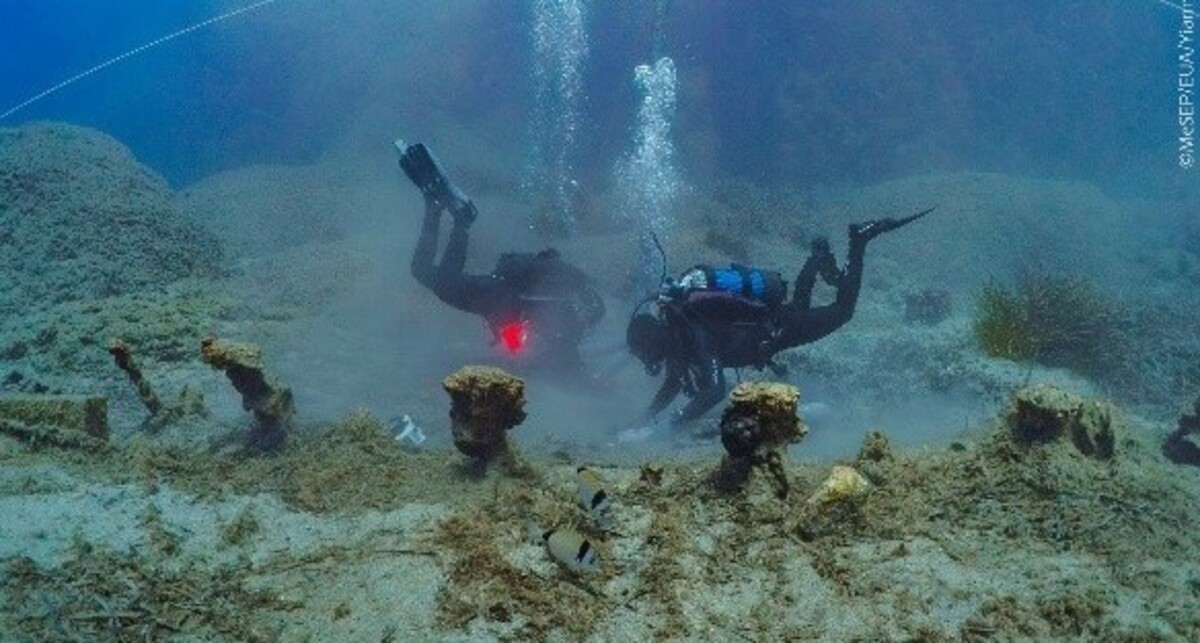
Archaeologists uncover the first marble fragment linked to the Parthenon Marbles at Lord Elgin’s ‘Mentor’ shipwreck.
Beneath the clear waters off Kythera, where currents sweep across a rugged seabed, a centuries-old story is quietly resurfacing. In the summer of 2025, Greek underwater archaeologists returned once more to the wreck of the Mentor, a modest two-masted brig whose final voyage became entangled in one of history’s most enduring cultural controversies. What they found this season, however small in size, may prove unusually powerful in meaning.
Though modest in size, the find may offer one of the clearest archaeological links yet between the wreck and the removal of sculptural elements from the Parthenon.
The Ship Behind the Controversy
The Mentor, a two-masted brig owned by Thomas Bruce, 7th Earl of Elgin, sank in September 1802 while transporting antiquities destined for Britain. These objects, later known as the “Elgin Marbles,” remain at the center of an ongoing cultural and political dispute between Greece and the United Kingdom.
Historical records describe how the ship went down during a storm, sending its valuable cargo to the seabed. Recovery efforts began almost immediately, led by Elgin’s secretary, William Hamilton. Sponge divers managed to retrieve much of the cargo, but their methods—cutting into the hull to access the hold—contributed significantly to the ship’s rapid structural collapse.
📣 Our WhatsApp channel is now LIVE! Stay up-to-date with the latest news and updates, just click here to follow us on WhatsApp and never miss a thing!!
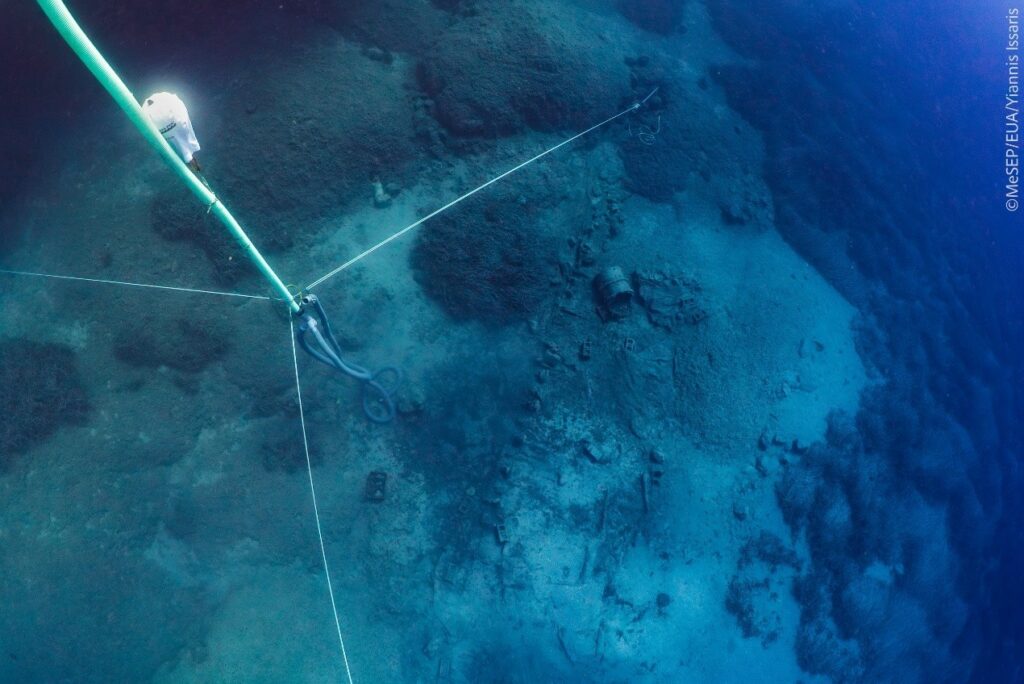
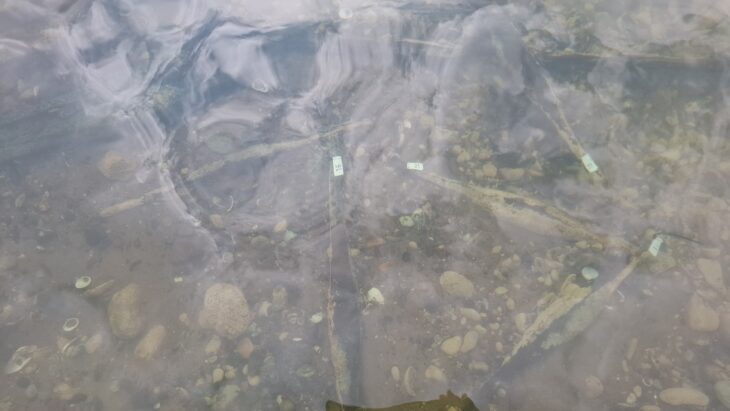
General view of the Mentor’s hull and the excavation area of Trench 2/2025. Credit: Ministry of Culture of Greece
Excavating What Remains
Modern archaeological work at the wreck is being conducted by the Greek Ephorate of Underwater Antiquities under the direction of Dr Dimitrios Kourkoumelis-Rodostamos. The 2025 campaign focused on areas just beyond the surviving keel, where researchers opened excavation trenches to investigate whether remnants of the hull or cargo had spread across the seabed.
The absence of wooden remains confirmed long-standing assumptions: the exposed structure of the Mentor likely deteriorated quickly after sinking, further weakened by early salvage operations. What survives today is not the ship itself, but a scattered field of material traces.
Among these were fragments of copper sheathing that once protected the vessel’s hull, along with evidence of lead reinforcement along its lower sections. Everyday objects and rigging components were also recovered, offering glimpses into the ship’s final voyage. A fragment of clay slab, likely used to insulate the ship’s hearth, hints at the daily routines of the crew before disaster struck.
A Marble Fragment with Far-Reaching Implications
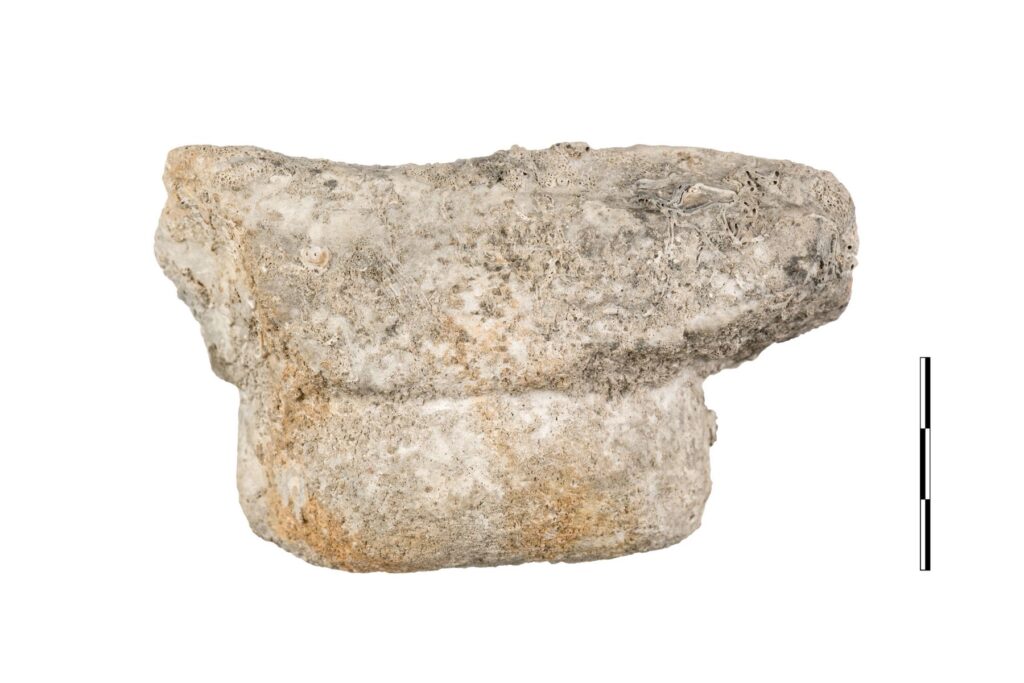
The most compelling discovery of the season is a small decorative marble fragment. Measuring just 9.3 by 4.7 centimeters, it features a carved droplet motif associated with classical architectural ornamentation.
Preliminary analysis suggests the piece may have belonged to an epistyle or cornice. Its dimensions closely correspond to those documented by Anastasios Orlandos in his studies of Parthenon decoration. If confirmed, this would mark the first time that a fragment of the Mentor’s sculptural cargo has been directly identified at the wreck site.
Such a find carries weight not because of its size, but because of its context. Until now, the connection between the wreck and its cargo has relied largely on historical documentation. This fragment provides a rare material link between the shipwreck and the antiquities it once carried.
A Story Still Unfolding Underwater
The marble fragment is currently undergoing conservation and detailed laboratory analysis. Researchers hope that further testing will determine its precise origin within the architectural complex of the Acropolis.
Meanwhile, the seabed off Kythera continues to hold untapped potential. Each excavation season adds new layers to a story that bridges archaeology, history, and modern cultural debate.
More than 200 years after the Mentor sank, its legacy remains far from settled. Beneath the waters of the Aegean, fragments of the past continue to emerge—quietly reshaping the narrative of one of the world’s most discussed cultural treasures.
Cover Image Credit: Ministry of Culture of Greece