4 December 2025 The Future is the Product of the Past

Ancient Egyptian silos and administrative buildings uncovered at Kom Ombo in Egypt’s Aswan

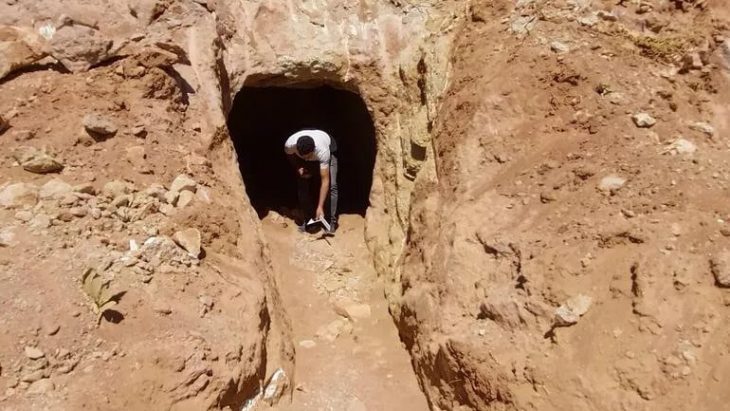
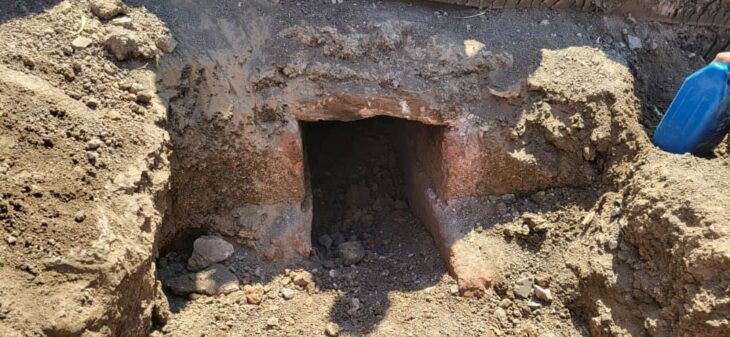
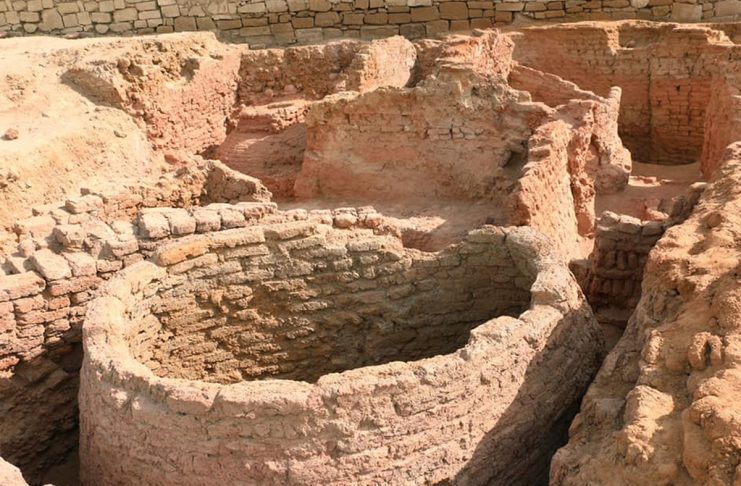
The Egyptian-Austrian archaeological mission working in the Temple of Kom Ombo in Egypt’s southern province of Aswan unearthed an administrative facility that dates back to the First Intermediate Period spanning from 2181 BC to 2050 BC.

Kom Ombo was once known as Nubt (meaning “Golden City”) and was famed for the Temple of Kom Ombo, which was devoted to the crocodile deity Sobek, the falcon god Haroeris, Tasenetnofret, and Panebtawy. In 2017, the Austrian Archaeological Institute launched a project with the Ministry of Tourism and Antiquities to examine the ancient city and its surroundings.

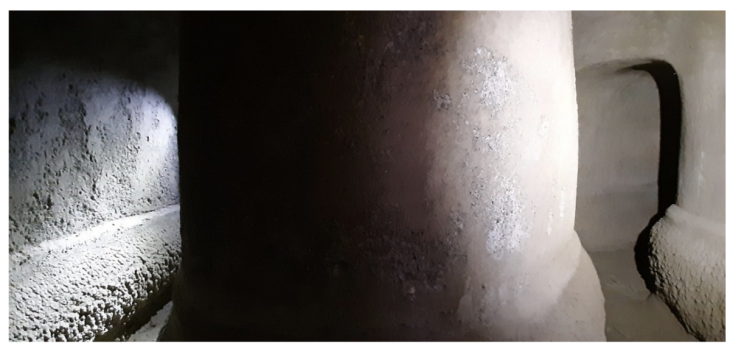
More than 20 conical silos were discovered in the large administrative facility probably used for piling and distributing grain, said Mostafa Waziri, secretary-general of Egypt’s Supreme Council of Antiquities, in a statement.
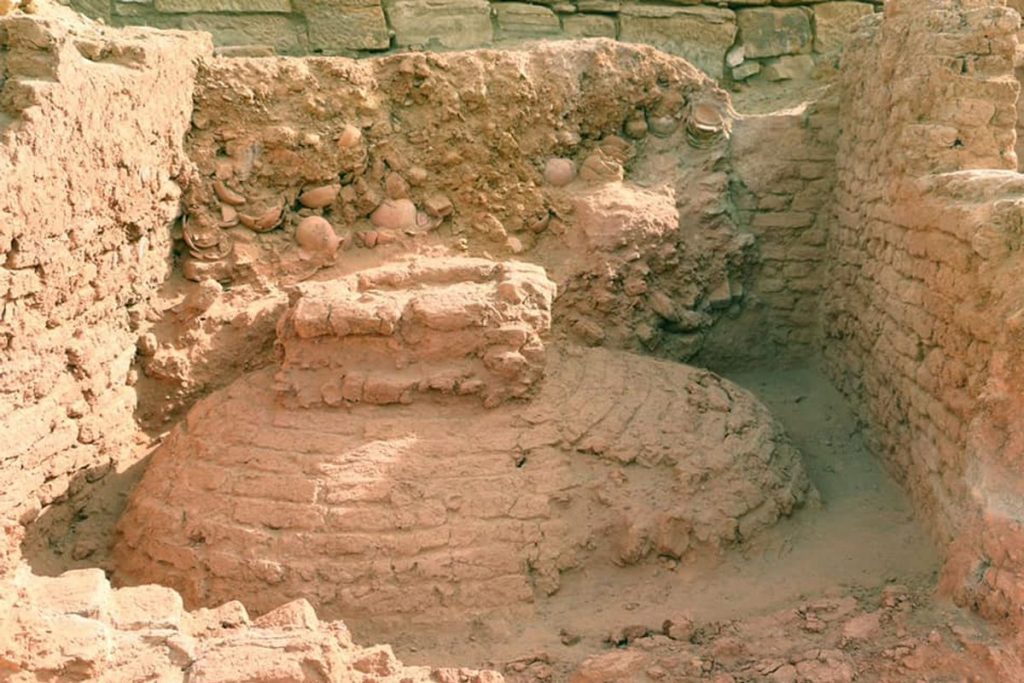
Image Credit: Ministry of Tourism and Antiquities

During the First Intermediate Period, Kom Ombo was a known center for agriculture and commercial activity, evidenced now by the latest discovery for the administration and distribution of the region’s agricultural industry.

Describing the discovery as “unique,” Waziri said it reflects the importance of Kom Ombo city during the First Intermediate Period as an agricultural and commercial center and that the city was inhabited by a large number of people.”


📣 Our WhatsApp channel is now LIVE! Stay up-to-date with the latest news and updates, just click here to follow us on WhatsApp and never miss a thing!!


The architectural elements of the two-meter-deep silos, domes, ladders, and storage rooms are in good condition, according to the statement.

Dr. Abd El-Moniem (Director of Aswan and Nubia antiquities) told the Luxor Times: “The architectural elements of the silos are very well preserved and some of the silo’s walls are standing two meters in height. The existence of rat bones and feces proves vermin infestation in the storage rooms.”

Ministry of Tourism and Antiquities

Image Credit : Ministry of Tourism and Antiquities
Related Articles

Grave Goods Show Gendered Roles for Neolithic Age

16 April 2021

16 April 2021

Grave goods, such as stone tools, have revealed that Neolithic farmers had different work-related activities for men and women. Researchers...

The Lady of the Inverted Diadem (7th Century BC): A Fallen Aristocrat Unearthed in Boeotia, Greece

29 November 2025

29 November 2025

An archaeological discovery in Boeotia uncovers the 7th-century BC Lady of the Inverted Diadem, revealing elite burials, rare artifacts, and...

Remains of a 3,700-year-old domed oven were discovered in the ancient city of Troy

10 September 2022

10 September 2022

Remains of a 3,700-year-old domed oven were found in the ancient city of Troy, located in the Tevfikiye district of Çanakkale...

3,000-year-old ‘charioteer belt’ discovered in Siberia

21 July 2023

21 July 2023

Russian archaeologists uncovered the grave of a Late Bronze Age man buried wearing a “charioteer’s belt”, a flat bronze plate...

Drought Unveils Lost Hellenistic-Era City and Cemetery Beneath Mosul Dam

30 August 2025

30 August 2025

Severe drought conditions in northern Iraq have uncovered a remarkable archaeological treasure. The discovery, revealed as water levels at the...

Bosnia and Herzegovina Unearths Europe’s Largest Hoard of 2,000-Year-Old Bipyramidal Ingots from the Sava River

7 August 2025

7 August 2025

Previously recognized for its exhibitions on medieval manuscripts and regional folklore, the Franciscan Monastery Museum “Vrata Bosne” in Tolisa is...

1700-year-old weaving workshop discovered in southeast Turkey

4 December 2021

4 December 2021

Excavations carried out in the ancient city of Perre in the southeastern province of Adıyaman have unearthed a 1,700-year-old weaving...

Symbol of Eternal Loyalty Found on Rare Medieval Sword in the Netherlands

14 June 2025

14 June 2025

A remarkable medieval sword, dating back nearly 1,000 years, has been discovered in the Dutch province of Utrecht bearing a...

The first time in Anatolia, a legionnaires’ cemetery belonging to the Roman Empire unearthed

18 November 2022

18 November 2022

In the ancient city of Satala, in the Kelkit district of GĂĽmĂĽĹźhane in the Eastern Black Sea region of Turkey,...

Medieval Hub of Arts & Crafts Center discovered in Nola: The discovery could rewrite the history of early medieval Nola

23 August 2023

23 August 2023

On the outskirts of Nola, a district from the early Middle Ages has been discovered. According to the Soprintendenza Archeologia,...

Archaeologists Discovered 1,500-Year-Old Maya Palace in Mexico

25 September 2023

25 September 2023

Mexican National Institute of Anthropology and History (INAH) archaeologists have discovered a palace at an ancient Maya city in southeastern...

A Mysterious Deity’s Ancient Gold Gift was Discovered at Georgia’s Gonio-Apsaros Roman Fort

25 October 2024

25 October 2024

During excavations at the Roman fortress of Apsaros in Georgia, archaeologists discovered a unique gold votive plaque presented to Jupiter...

A 3,400-year-old Pyramid from the Scythian-Saka period found in Karaganda region of Kazakhstan

2 November 2023

2 November 2023

A pyramid belonging to the Scythian-Saka period was found in the Karaganda region of Kazakhstan. Experts announced that the Karajartas...

Turkish researchers use Artificial Intelligence to read cuneatic Hittite tablets

9 January 2023

9 January 2023

Thanks to a project implemented in TĂĽrkiye, 1,954 ancient Hittite tablets are being read for the first time using artificial...

“Mosaic of the Wine Harvest” mosaic to be exhibited in November in Turkey’s Hatay

26 October 2021

26 October 2021

The mosaic depicting the grape harvest, which is considered to date from the Late Roman period, equivalent to the 5th...