2 March 2026 The Future is the Product of the Past

A 2700-year-old collection of more than 60 bronze and iron objects found in Bükk in northwestern Hungary

An excavation project led by a university team specializing in the Bronze and Iron Ages in Bükk in northwestern Hungary, with the participation of volunteers and students, has uncovered a rich collection of extremely interesting artifacts, including more than 60 bronze and iron objects.

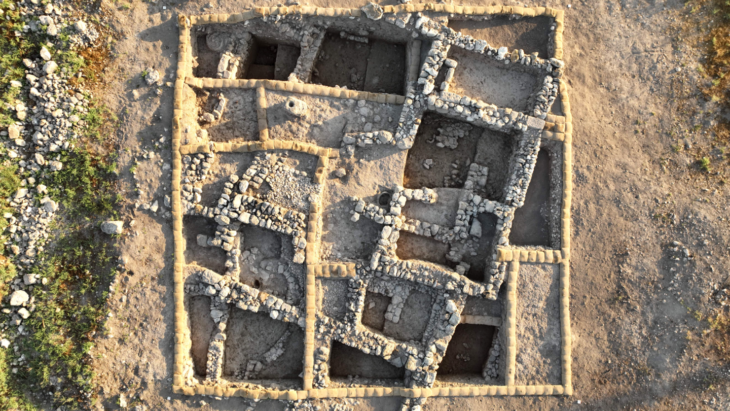
The research centers on an ancient village located at the top of the Verebce-bérc mountain. Before it was destroyed by an attack, this village flourished in the seventh and sixth centuries BC. This year is the sixth year of field research and the third season of excavations.

In three research events this year, the team identified buildings burnt down during the previous siege and continued to search the area with metal detector equipment.

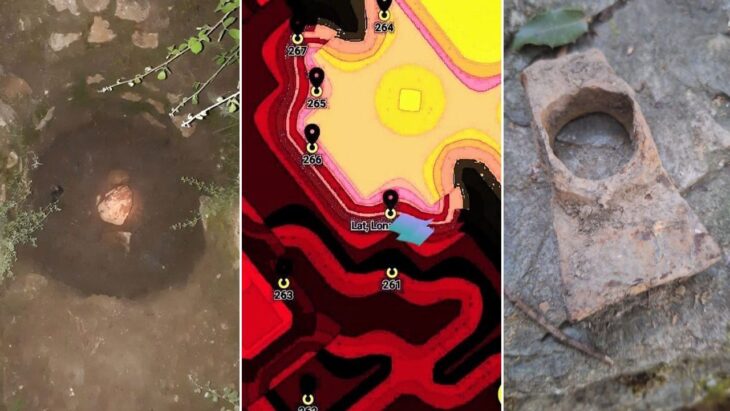
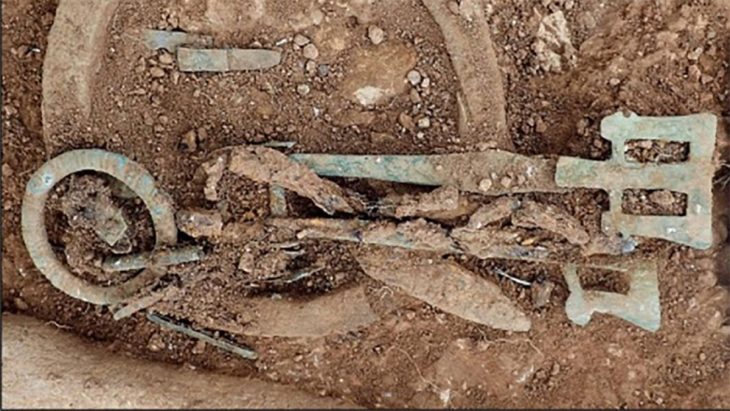
Metal detector surveys in the area have revealed an astonishing array of metal artifacts that offer new insights into cultural ties in this region. The most outstanding discovery is a collection of more than 60 bronze and iron objects, mostly jewellery and horse harnesses, which were probably buried during the siege.
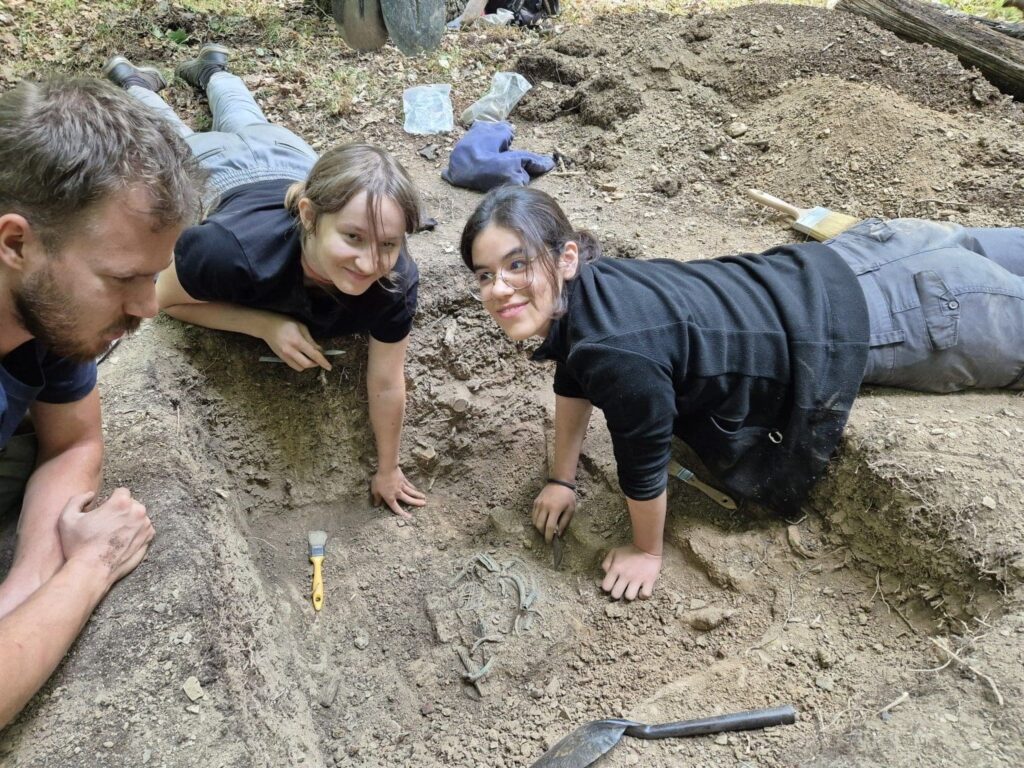
Péter Mogyorós PhD student, Nikolett Dienes, and Angéla Farkas archaeology students. Photo: ELTE BTK Régészettudományi Intézet blogja (ELTE BTK Archaeological Institute blog)

This treasure is particularly noteworthy because of its ties to the cultures of Southeast Europe, especially the Balkan region. Researchers believe that this assemblage was buried to fend off attack, making it an invaluable document of the village’s past wars, trade and cross-cultural exchange.


📣 Our WhatsApp channel is now LIVE! Stay up-to-date with the latest news and updates, just click here to follow us on WhatsApp and never miss a thing!!


Numerous distinguished experts from different universities participated in the project and worked together on various aspects, including research and logistics. Berlin-based archaeologist Bernhard Heeb and University of Olomouc professor Martin Golec are among the guests. The staff of the Bükk National Park also assisted the team with the help of experts such as Bartha Attila, Ézsöl Tibor, and Holló Sándor. Members of the National Research Institute of the Hungarian National Museum provided support, including Fullár Zoltán and Bakos Gábor.
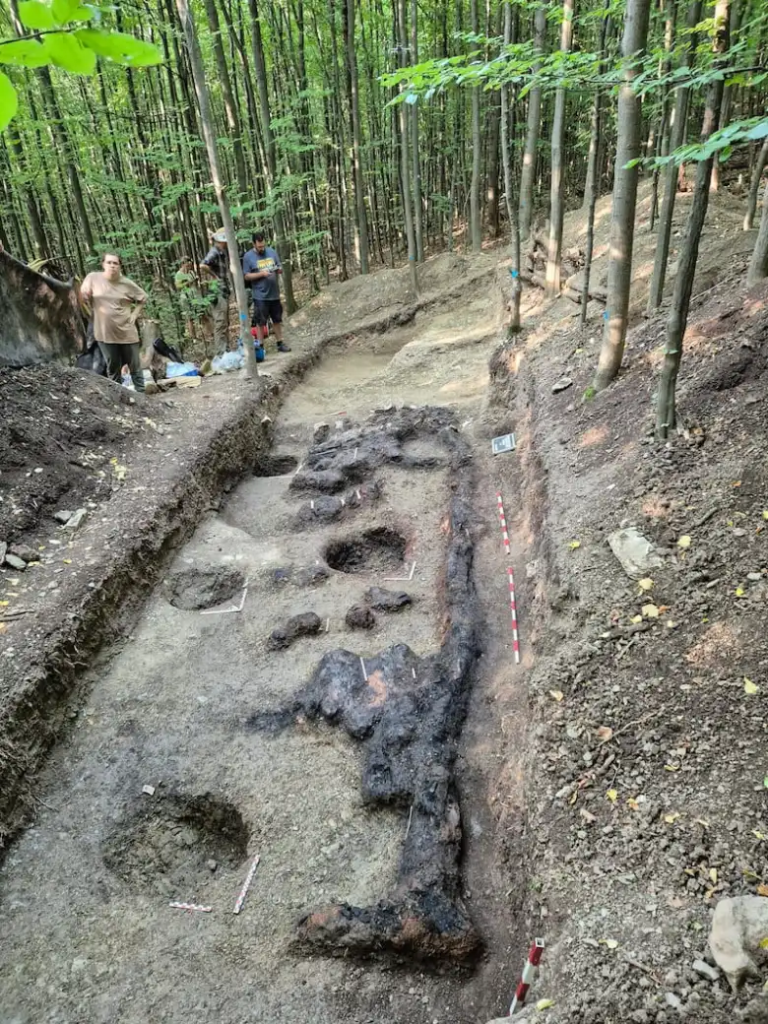
 Excavations at the discovery site. Photo: ELTE BTK Régészettudományi Intézet blogja (ELTE BTK Archaeological Institute blog)
Excavations at the discovery site. Photo: ELTE BTK Régészettudományi Intézet blogja (ELTE BTK Archaeological Institute blog)

National Archaeological Institute (National Museum of Hungary)

Cover Image: ELTE BTK (Institute of Archaeology Blog)
Related Articles

Freshwater and marine shells used as ornaments 30,000 years ago discovered in Spain

7 June 2023

7 June 2023

In Malaga’s Cueva de Ardales, up to 13 freshwater and marine shells that were carefully transformed by humans between 25,000...

Largest ever Roman silver hoard in Germany found in Augsburg

12 November 2021

12 November 2021

Archaeologists in Augsburg, Germany, revealed unearthed a historical hoard including 15 kg of silver coins from the Roman Empire’s era....

Ancient Pottery Find at Megiddo May Corroborate Biblical Battle and Hint at “Gog and Magog” Narrative

27 April 2025

27 April 2025

Archaeological excavations at the ancient site of Megiddo in northern Israel, also known as “Armageddon,” have unearthed a significant amount...

Danish museum says Vikings had stained glass Windows

15 October 2023

15 October 2023

New research shows that  Viking Age windows were created using stained glass in the 9th century, contrary to popular belief...

Turkey’s Urartian Altıntepe Castle transforms into open museum

25 May 2022

25 May 2022

Altıntepe Castle, one of the most important centers of the Urartians and the Eastern Roman Empire, is now set to...

Archaeologists found gold coins from the time of Justinian the Great in Northern Bulgaria

3 September 2024

3 September 2024

Archaeologists have discovered five gold coins dating from the reign of Justinian the Great (483-565) in Debnevo, the largest village...

Ancient Cymbals Unearthed in Oman Reveal Shared Musical Traditions Across Bronze Age Cultures

8 April 2025

8 April 2025

Recent archaeological discoveries in Oman have unveiled significant insights into the musical practices of Bronze Age societies, suggesting a rich...

A Rare Roman-Era Bronze Filter Discovered in Hadrianopolis, Türkiye

11 February 2025

11 February 2025

Archaeologists excavating at Hadrianopolis in Karabük, Türkiye, have unearthed a 5th-century AD bronze filter used in Roman and Byzantine times...

The Walking Giants of Easter Island: How Physics Solved an 800-Year-Old Mystery

10 October 2025

10 October 2025

For centuries, the massive stone statues of Easter Island—known as the moai—have stood as one of archaeology’s greatest enigmas. How...

The 2,200-year-old Agora of Aigai ancient city comes to light

19 August 2024

19 August 2024

Archaeologists have uncovered an agora (city square) during excavations in the ancient city of Aigai, west of Manisa. Aigai, located...

Excavations at Sheffield Castle Reveal the First Surviving Examples of 17th-Century Civil War Abatis

9 March 2025

9 March 2025

Excavations at Sheffield Castle, part of the Castlegate regeneration project by Sheffield City Council, have revealed the first known surviving...

Ancient eggshell in the Northern Cape hiding 300,000 years of history

12 July 2021

12 July 2021

Evidence from an ancient eggshell has revealed important new information about the extreme climate change faced by human early ancestors....

Gruesome Evidence of Prehistoric Cannibalism: Child Decapitated 850,000 Years Ago at Atapuerca

28 July 2025

28 July 2025

In a chilling archaeological discovery, researchers have uncovered direct evidence that a child was decapitated and cannibalized approximately 850,000 years...

Remains of a 12-year-old boy wearing a bronze warrior belt found in Pontecagnano

6 July 2021

6 July 2021

The remains of a 12-year-old boy wearing a bronze warrior belt were found at Pontecagnano, an outpost of the pre-Roman...

Unique Gems found in Claterna, known as the ‘Pompeii of the North’

18 November 2023

18 November 2023

Italian archaeologists have unearthed 50 unique jewels during ongoing excavations at Claterna, the ancient Roman site known as the ‘Pompeii...