31 January 2026 The Future is the Product of the Past

Nearly 1,000-year-old Native American canoe recovered from Lake Waccamaw

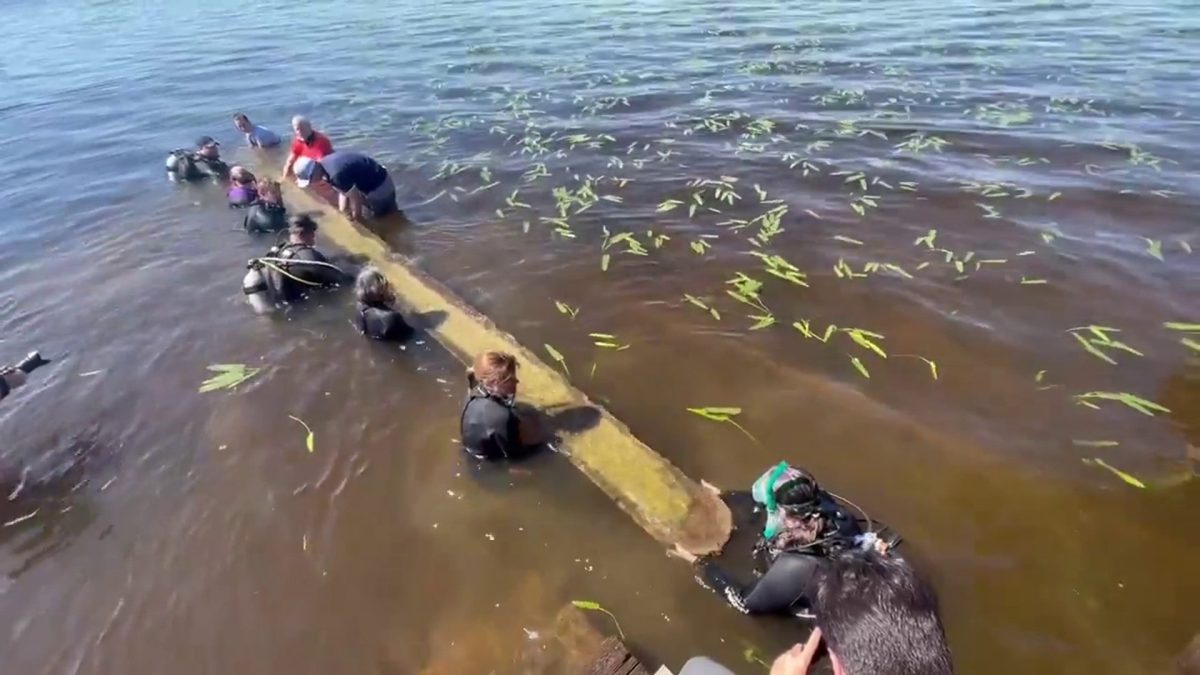
A 1,000-year-old Waccamaw Indian dug canoe was retrieved from Lake Waccamaw near Wilmington, North Carolina after it was discovered by three teenagers having a fun day out.

The North Carolina Office of State Archaeology and the Waccamaw Siouan Tribe worked together to retrieve a 930-year-old canoe from Lake Waccamaw.

Canoes have long held a special place in the traditions of the Americas’ indigenous tribes, particularly in the northern half. Canoes of various shapes, sizes, and forms were the primary mode of transportation throughout the Pacific Northwest until long after European colonization.

A statement from the North Carolina American Indian Heritage Commission said it was found on the lakebed and underneath a private dock.

The chief of the Waccamaw Siouan tribe, Michael Jacobs, said it’s rare to find pieces of history like this one. The canoe is a symbol of nearly 1,000 years of Native American culture in southeastern North Carolina.


📣 Our WhatsApp channel is now LIVE! Stay up-to-date with the latest news and updates, just click here to follow us on WhatsApp and never miss a thing!!


A 1,000 year old Waccamaw Indian dug-out canoe was pulled from Lake Waccamaw near Wilmington.

“That canoe at 28 feet long would have carried many a brave. We feel like in our heart, it’s a history that we’re still exploring and understanding because this is the first time we’ve had access,” Chief Jacobs said in an interview with local new station WECT.

According to Wilmington, North Carolina CBS affiliate WWAY, the canoe was discovered two years ago by three boys swimming in the lake. Tribe and state authorities were contacted and its location was marked until it could be safely removed, the station said.

The report said that the canoe was touched and prayed over by descendants of those who lived there long ago before it was placed in a protective container.

State archaeologist John Mintz said Hill’s discovery led to a lengthy removal process, but it was worth it in the end.

“This canoe is about 1000 years old, and it’s a Southeastern Indian canoe, and it’s originated from this area. So, we wanted the local Indian group to be part of it and share it with the agency of it,” Mintz said.

The canoe will be transported to a lab in Greenville to be preserved and studied, with the hope that it will reveal its secrets.


Related Articles

3,500-Year-Old Hittite Linen Fabric Exhibited for the First Time

10 March 2025

10 March 2025

A remarkable artifact, a piece of Hittite linen fabric dating back 3,500 years, has been publicly exhibited for the first...

Archeological park to be built at suburban Shanghai ancient ruins site in China

20 October 2021

20 October 2021

An archeological park will be built at the Qinglong Town ruins site of Baihe in Qingpu District as part of...

Rare Roman Soldier’s Sun Hat Rediscovered After More Than a Century

12 August 2025

12 August 2025

Bolton Museum has unveiled a rare and fascinating artifact—a Roman sun hat worn by a soldier in Ancient Egypt nearly...

Drought Unveils Lost Hellenistic-Era City and Cemetery Beneath Mosul Dam

30 August 2025

30 August 2025

Severe drought conditions in northern Iraq have uncovered a remarkable archaeological treasure. The discovery, revealed as water levels at the...

Archaeologists Find Rare Ancient African Figurines in Christian Graves in Negev Desert

2 June 2025

2 June 2025

Researchers have uncovered five miniature figurines, including intricately carved African heads, in 1,500-year-old graves in Israel’s Negev Desert. These rare...

USF team discovers 2,000-year-old Roman house during excavation in Malta

8 August 2023

8 August 2023

A team of researchers and students unearthed a 2,000-year-old Roman house in Malta, complete with a waste disposal system and...

Evidence of Intentional Roman Use of Narcotic Seeds, Found in Bone Vessel in the Netherlands

8 February 2024

8 February 2024

Archaeologists have discovered the first conclusive evidence of the existence of a hallucinogenic and poisonous plant thought to have been...

Archaeologists discover bones of a woman who lived 14,000 years ago at a site in The Iberian Peninsula

13 August 2021

13 August 2021

Archaeologists have discovered the bones of a lady who lived 14,000 years ago, the earliest traces of a modern burial...

Ancient objects found in Jerusalem could be hand grenades used 1000 years ago, New study says

27 April 2022

27 April 2022

New analysis into the residue inside ancient ceramic pots from 11th–12th century Jerusalem has found that they were potentially used...

Rare Anglo-Saxon Gold and Garnet Artifacts Discovered in Wiltshire

12 May 2025

12 May 2025

A breathtaking discovery in the southwestern English county of Wiltshire has captivated archaeologists and metal detecting enthusiasts alike. Two detectorists,...

Scientists Find Aztec ‘Death Whistles’ do Weird Things to the Listeners’ Brains

18 November 2024

18 November 2024

New research reveals that one of the Aztecs’ most chilling artefacts, clay death whistles, which resemble a human skull and...

Archaeologists Unearth 78,000-Year Oldest Human Burial

5 May 2021

5 May 2021

A 78,000-year-old group of bones discovered at the mouth of a Kenyan coastal cave constitutes the oldest recorded formal human...

The Discovery of a Unique Pre-Viking Helmet Fragment in Lejre, Denmark

23 January 2025

23 January 2025

In Lejre, the northwestern part of the island of Zealand in eastern Denmark, detectorists have uncovered an exceptionally rare fragment...

Excavations at Sheffield Castle Reveal the First Surviving Examples of 17th-Century Civil War Abatis

9 March 2025

9 March 2025

Excavations at Sheffield Castle, part of the Castlegate regeneration project by Sheffield City Council, have revealed the first known surviving...

New Insights From Researchers About The World’s Longest Aqueduct

11 May 2021

11 May 2021

The Roman Empire’s aqueducts are magnificent specimens of the art of architecture. Although centuries have passed since these aqueducts were...