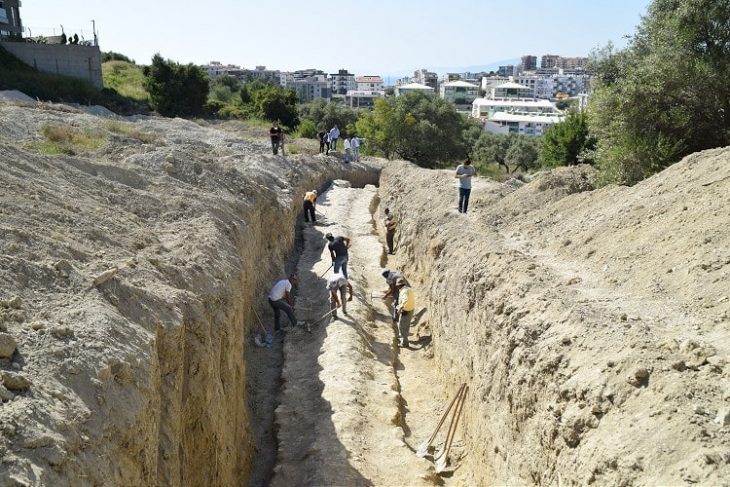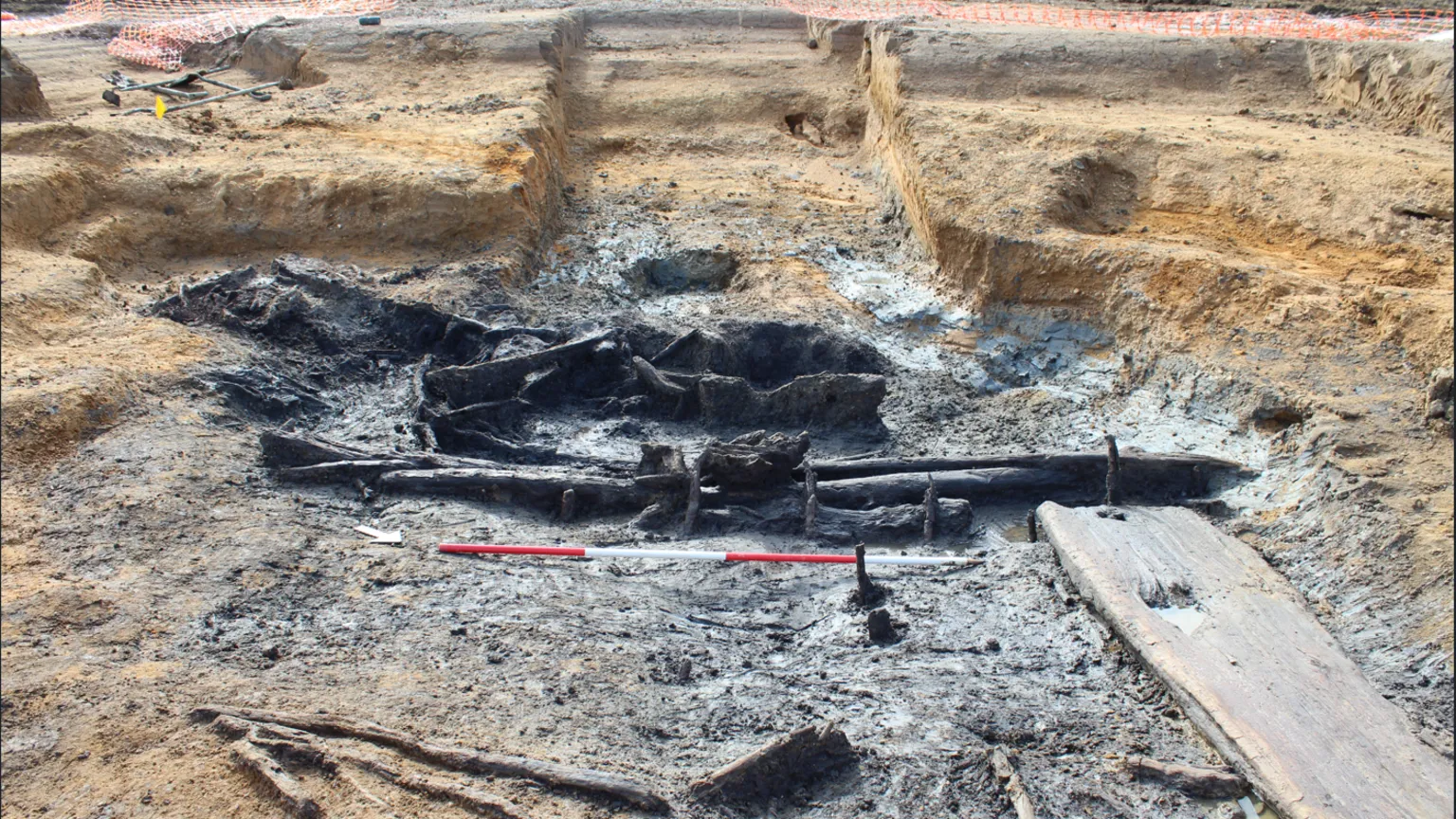
A routine excavation ahead of a housing development in southwest England has led to a striking discovery: a 3,500-year-old wooden well, preserved in remarkable condition and offering an unusually intimate look at daily life during the Middle Bronze Age.
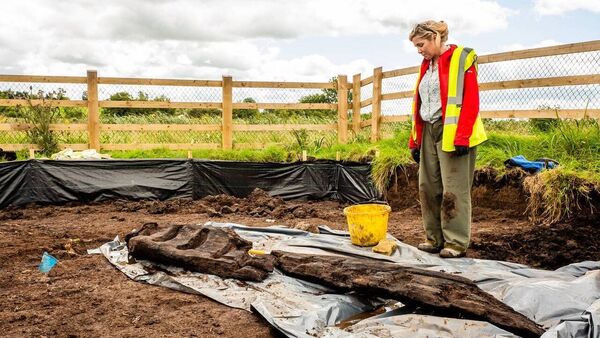
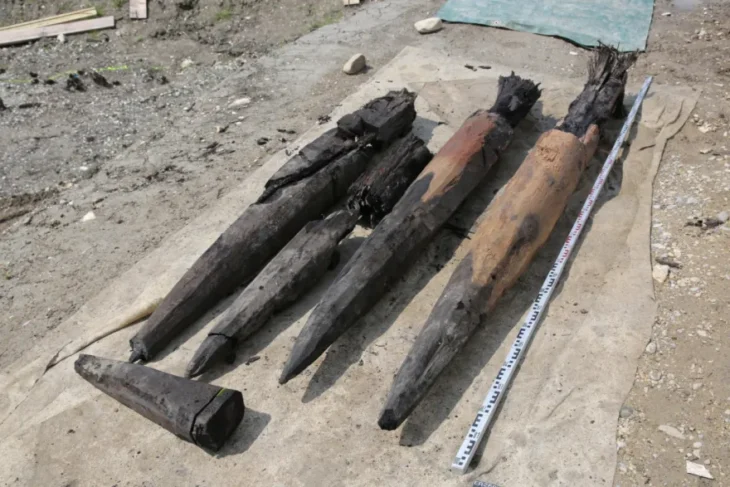
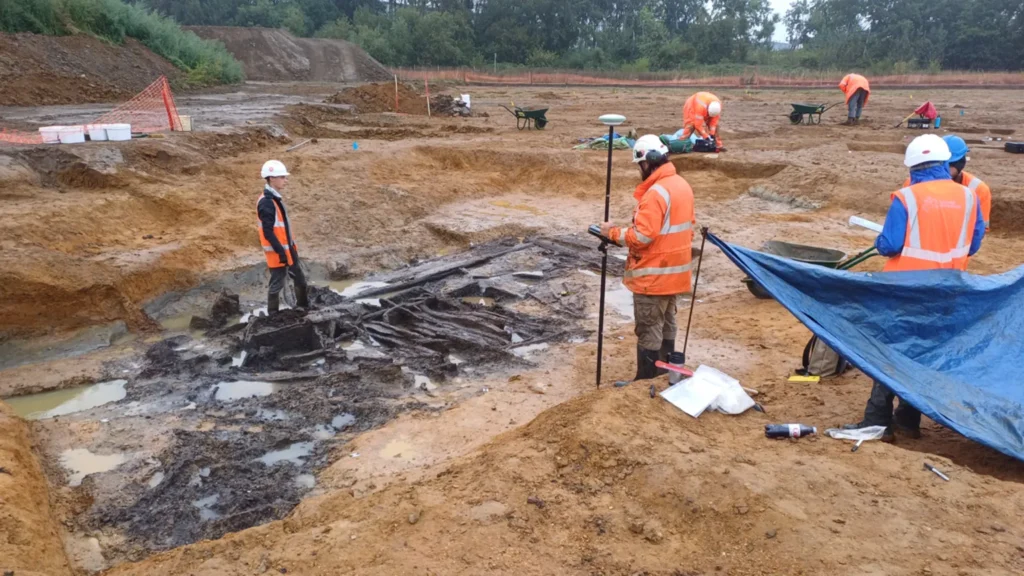
Unearthed just south of Gloucester, the structure initially appeared as scattered fragments of timber buried in saturated soil. But as archaeologists from Cotswold Archaeology began to expose the site more carefully, a far more complex picture emerged—one of deliberate engineering, environmental adaptation, and long-forgotten resource management.
A Rare Survival of Organic Architecture
Finds made from organic materials such as wood rarely survive for millennia, making this discovery particularly significant. The well owes its exceptional state of preservation to the waterlogged conditions of the surrounding soil, which effectively sealed the timber from oxygen and slowed decomposition.
“This kind of preservation is incredibly uncommon,” said Paolo Guarino, post-excavation manager at Cotswold Archaeology. “We don’t often encounter wooden structures of this age in such a complete state. Waterlogged environments are among the few conditions where organic materials like timber can endure.”
The structure itself reveals a carefully designed system. At ground level, archaeologists identified a platform constructed from fitted planks and rounded wooden beams. From this platform, a ladder—also made of timber—descends into a lower chamber where water would have been collected and stored.
📣 Our WhatsApp channel is now LIVE! Stay up-to-date with the latest news and updates, just click here to follow us on WhatsApp and never miss a thing!!
Why Build a Well in a Water-Rich Landscape?
One of the most intriguing aspects of the discovery is its location. Today, the surrounding region is rich in natural water sources, including streams and rivers. This raises a key question: why would Bronze Age communities invest effort into building a well here?
Researchers believe the answer may lie in ancient climate conditions. Pollen analysis from the site indicates that the region experienced a period of warming during the Middle Bronze Age. This shift likely altered local water availability, making it less reliable than it appears today.
According to reporting by the BBC, archaeologists interpret the find as evidence that communities were actively adapting to environmental pressures by constructing wells close to their settlements, ensuring a stable and controlled water supply.
Guarino notes that similar features have been identified elsewhere in Britain, suggesting this was not an isolated solution but part of a broader pattern of environmental adaptation. “We are beginning to see that these communities were far more responsive to climate fluctuations than we once assumed,” he explained.
Preservation Through Irony
There is a certain irony in the well’s survival. The same high groundwater levels that may have developed long after the well fell out of use ultimately created the conditions that preserved it. Over time, the rising water table sealed the structure in a protective, oxygen-poor environment, allowing it to remain intact for more than three millennia.
What Happens Next?
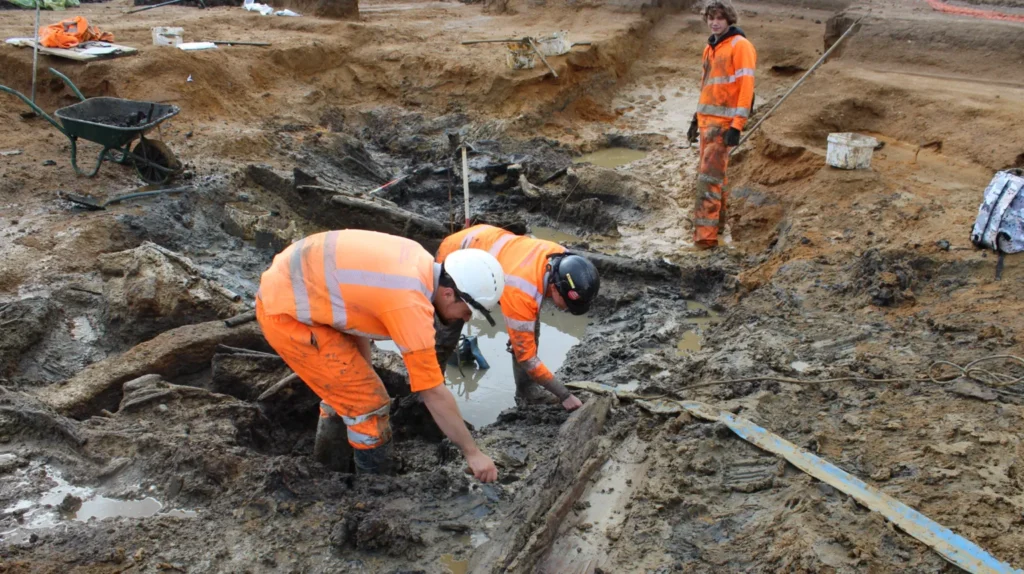
Fieldwork at the site has now been completed, and the findings have been shared with local authorities and development planners. Meanwhile, the recovered timbers are undergoing detailed analysis by specialists. Some pieces have already been selected for long-term conservation, ensuring that this rare glimpse into Bronze Age life will be preserved for future study.
The discovery may also have wider implications. The area around Gloucester is already known for its Roman and Anglo-Saxon heritage, but this well adds a much earlier chapter to the region’s history. Archaeologists believe it could prompt further investigations, potentially revealing additional evidence of prehistoric settlement and infrastructure.
For now, the wooden well stands as a quiet but powerful reminder: even in landscapes that seem familiar today, the past often tells a very different story—one shaped by changing climates, practical ingenuity, and the enduring human need for water.
Cover Image Credit: Cotswold Archaeology