
15 February 2026 The Future is the Product of the Past

2,600-Year-Old Tandoor Discovered at Oluz Höyük Reveals Deep Roots of Anatolian Culinary Traditions

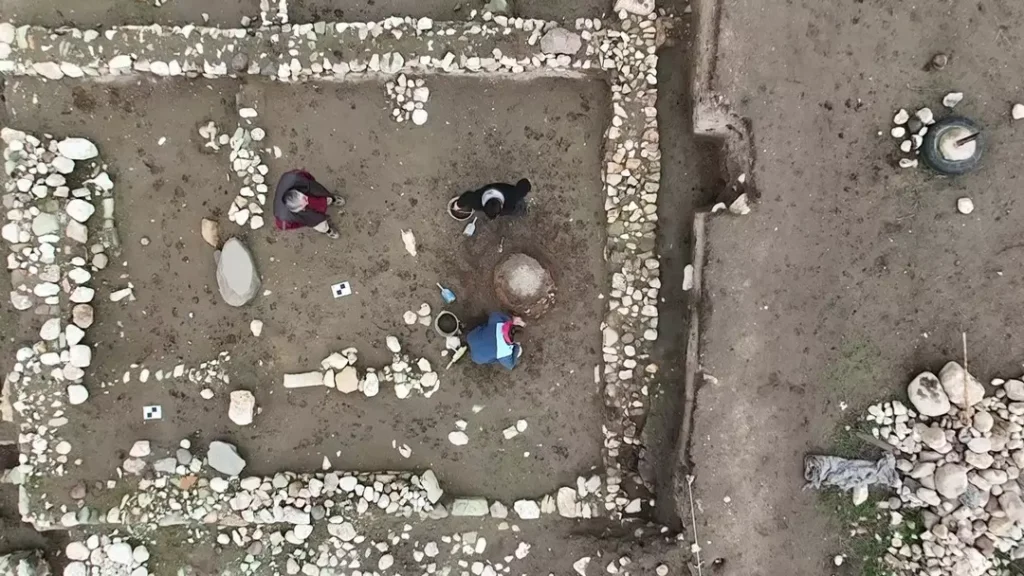
Archaeologists working at the ancient settlement of Oluz Höyük in northern Turkey have uncovered a remarkably well-preserved 2,600-year-old tandoor oven dating back to the Persian (Achaemenid) period, offering rare insight into the continuity of Anatolia’s culinary traditions.

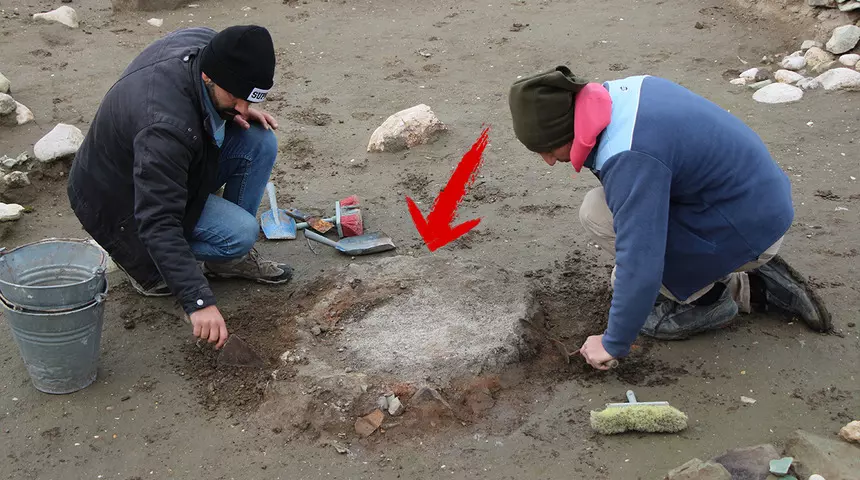
The discovery was made during the 19th excavation season at Oluz Höyük, located near the city of Amasya, under the direction of Prof. Dr. Şevket Dönmez from Istanbul University’s Department of Archaeology. According to Prof. Dönmez, the tandoor—crafted from fired clay and embedded beneath the ground—is visually almost identical to the traditional tandoors still used across Anatolia today.

“This tandoor is practically the same as those used in modern Anatolian villages,” said Prof. Dönmez. “The only difference is that this one is 2,600 years old.”

A Window into Ancient Daily Life

The tandoor was discovered alongside a stone workbench believed to have been used for kneading dough or grinding wheat, indicating that the area functioned as a domestic food preparation space. This finding strengthens the idea that bread-making and communal cooking practices were already well established in Anatolia during the Persian era.

Experts emphasize that oven-like cooking installations have existed in the region since the Neolithic period, but the Oluz Höyük tandoor stands out due to its advanced design and exceptional preservation.


📣 Our WhatsApp channel is now LIVE! Stay up-to-date with the latest news and updates, just click here to follow us on WhatsApp and never miss a thing!!


“This discovery shows just how deeply rooted Anatolia’s cooking technologies and traditions truly are,” Prof. Dönmez noted.
Credit: İHA

Earlier Discovery: Evidence of Keşkek

The newly uncovered tandoor also connects to a significant find made two years earlier at the same site. Archaeologists discovered a large clay pot in what is believed to be a Persian palace kitchen, containing animal bone fragments and cereal grains. Scientific analysis confirmed that the vessel had been used to prepare keşkek, one of Anatolia’s most ancient ceremonial dishes.

Keşkek is a traditional dish made by slow-cooking wheat (or barley) with meat, usually lamb or chicken, until it reaches a thick, porridge-like consistency. The dish is still prepared today for weddings, religious festivals, and communal celebrations, particularly in rural Anatolia. In 2011, keşkek was even recognized by UNESCO as an Intangible Cultural Heritage of Humanity.

“Keşkek was most likely cooked using these tandoors,” Prof. Dönmez explained. “This shows a direct cultural line from the Persian period to modern Anatolian cuisine.”

Oluz Höyük: A Multicultural Ancient Settlement

Oluz Höyük is considered one of the most important archaeological sites in the Central Black Sea region. The mound reveals uninterrupted settlement layers from the Late Bronze Age through the Hellenistic period, including a unique phase associated with Zoroastrian beliefs, making it one of the earliest known centers of Persian religious influence in Anatolia.

The site has yielded evidence of Persian administrative structures, ritual spaces, and domestic architecture, suggesting that Oluz Höyük played a significant role as a regional center during the Achaemenid Empire.

Living Traditions, Ancient Origins

The discovery of the tandoor not only enriches academic understanding of ancient Persian domestic life but also highlights the astonishing continuity of Anatolian food culture. From bread baked on tandoor walls to keşkek simmered for hours, these practices have endured for millennia with little change.

As excavations continue, researchers believe Oluz Höyük will provide even more answers about how ancient societies lived, cooked, and celebrated—proving that in Anatolia, the past is still very much alive at the table.

Cover Image Credit: İHA

Related Articles

Archaeologists have unearthed an incredible hoard of over 300 Iron Age ‘potins’ in West London

17 July 2021

17 July 2021

Archaeologists at an HS2 construction site in Hillingdon, West London discovered an astonishing treasure of over 300 Iron Age ‘potins”....

Between Shamans, Gods and Spirits: A Journey into Bulgaria’s Mysterious Central Asian Origins

2 July 2025

2 July 2025

Long before modern borders were drawn, ancient spiritual traditions — led by shamans and rooted in communion with the unseen...

Excavations in Haldensleben, Germany Reveal A Lost Settlement

9 November 2024

9 November 2024

Excavations at Haldensleben in the German state of Saxony-Anhalt provide important information about a lost settlement. Since May 2024, the...

2000-year-old Genuine Pompeii marble relief installed in a wall lining the staircase leading down to the basement in a Belgium home

22 December 2023

22 December 2023

An important marble relief depicting the earthquake of 62 AD, stolen from the ruins of ancient Pompeii in Italy in...

Archaeologists Found 1,600-year-old Burials of Noble Women and Gold Jewelry in the Mountains of Crimea

4 December 2024

4 December 2024

Archaeologists found burials of noble women filled with gold and silver jewelry in the Crimean mountains in the Bakhchisaray region...

“Last Rhodes shipwreck” of Roman period found in Turkey’s Fethiye

5 March 2022

5 March 2022

Turkish researchers, a Rhodes shipwreck from the third century A.D. was discovered in the depths of the Gulf of Fethiye...

Denmark’s Earliest Iron Weapons: 2,800-Year-Old Gold-Decorated Spears Discovered

5 December 2025

5 December 2025

Archaeologists in Denmark have uncovered two gold-decorated iron spears—the country’s earliest iron—deposited at a Bronze Age sacred spring in Boeslunde,...

A 2,000-Year-Old Mystery Unlocked: Scholar Cracks the “Cryptic B” Writing of the Dead Sea Scrolls

13 December 2025

13 December 2025

For over seventy years, one of the last undeciphered writing systems of the Dead Sea Scrolls—known as Cryptic B—has puzzled...

Researchers decipher enigmatic ancient ‘Unknown Kushan Script’

13 July 2023

13 July 2023

A research team at the University of Cologne’s Department of Linguistics deciphered a writing system belonging to the Kushan Empire,...

‘Proof of biblical kings’, Israel deciphers 8th century BC Hezekiah inscription after a decade of research

17 December 2022

17 December 2022

Israeli archeologists have deciphered an 8th-century BC inscription discovered on a palm-sized stone tablet after a decade of research.  The...

The Celts’ Astronomical Secrets: The Chão de Lamas Lunula and the Coligny Calendar Connection

2 March 2025

2 March 2025

A groundbreaking study published in the journal Palaeohispanica has shed light on the ancient timekeeping practices of the Celts, centering...

Monte Sierpe: Peru’s Mysterious ‘Band of Holes’ May Have Been an Ancient Marketplace

11 November 2025

11 November 2025

High in the arid foothills of southern Peru, thousands of mysterious holes carved into a rocky ridge have puzzled archaeologists...

They Worshipped the Olympian Gods Until the 9th Century — DNA Reveals the Hidden Descendants of Ancient Hellenes

5 February 2026

5 February 2026

A new Oxford-led DNA study reveals that the isolated Deep Mani Greeks preserved ancient Hellenic ancestry and continued pagan Olympian...

Huge funerary building and Fayoum portraits discovered in Egypt Fayoum

4 December 2022

4 December 2022

The Egyptian archaeological mission working in the Gerza archaeological site in Fayoum revealed a huge funerary building from the Ptolemaic...

Ancient Egyptian Kohl recipes more diversified than previously thought

28 April 2022

28 April 2022

Researchers analyzed the contents of 11 kohl containers from the Petrie Museum collection in London and have revealed that the...