
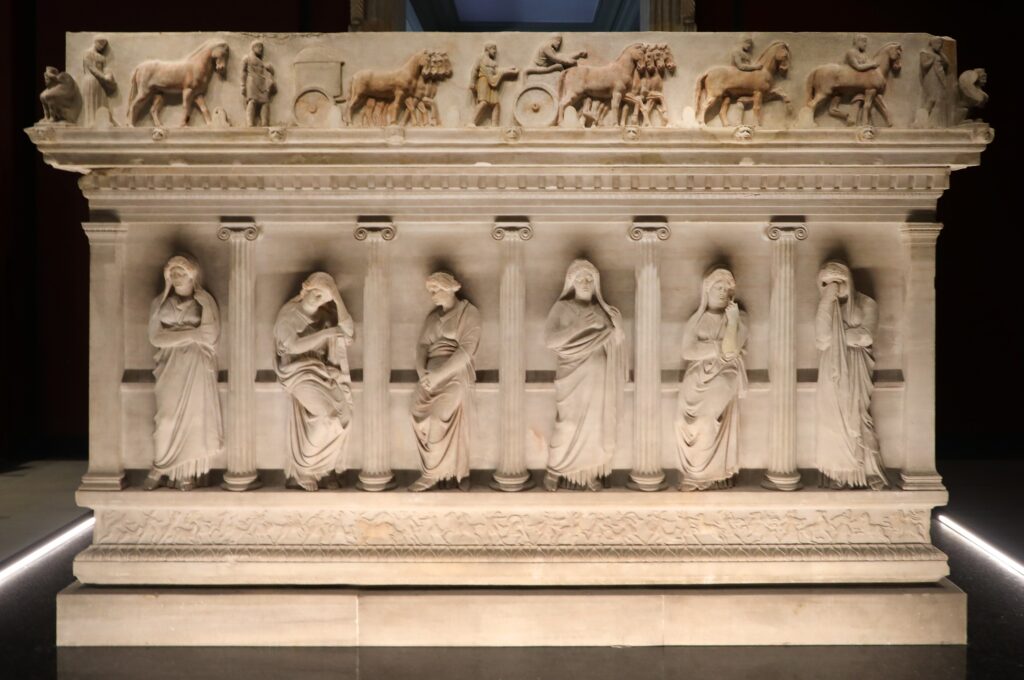
There are moments when life becomes difficult to bear. The loss of someone we love, a long illness, loneliness, or the exhaustion of facing one hardship after another can leave even the strongest people struggling to find their way forward. These experiences are often discussed as distinctly modern concerns, yet the feelings behind them are as old as human history.
Nearly 2,000 years ago, the Romans had a name for one form of this exhaustion: taedium vitae, or weariness of life. It was more than a philosophical expression. Roman jurists considered it when examining certain cases of suicide, while funerary inscriptions preserved the stories of people whose grief had become inseparable from their desire to live. Yet Roman society also imposed moral judgments, religious expectations and, in some circumstances, restrictions on burial.
One of those stories belongs to Telesina Crispinella, a Roman woman who spent 38 years and three months with her husband. When their son died, the loss transformed her life so profoundly that her husband later recorded how she had come to despise living. Just 15 days after her son’s death, Telesina was dead too. Her epitaph does not explicitly describe suicide, but its words preserve the anguish of a mother whose grief her husband wanted future generations to understand.
When the Gods Held the Power Over Life
Long before Roman jurists considered the consequences of suicide, Greek philosophers had questioned whether human beings possessed the authority to determine their own deaths. In Plato’s Phaedo, Socrates describes an ancient religious belief according to which people live under the guardianship of the gods. To leave life without divine permission, he suggests, could resemble abandoning a position entrusted to someone or destroying something belonging to a higher authority. The argument places an individual’s suffering in conflict with an obligation that might continue regardless of how unbearable life had become.
Plato developed this idea further in his Laws, proposing dishonorable, unmarked burial for certain people who died by suicide. His proposed restrictions were not absolute, however, and he recognized circumstances involving unavoidable suffering, overwhelming disgrace, or a death required by the state. These were philosophical prescriptions rather than evidence of a universal burial law, but they demonstrate how the manner of death could become a matter of religious and moral judgment.
The Romans inherited and adapted many Greek philosophical traditions, yet their beliefs about death remained diverse. Some thinkers viewed suicide as a rejection of duty, while Stoic philosophy allowed circumstances in which a reasoned departure from life could be considered appropriate. Seneca, writing under the Roman Empire, argued that the quality of existence mattered more than its duration, without suggesting that every moment of unhappiness justified death.
The result was not a straightforward division between those who approved of suicide and those who condemned it. Ancient thinkers disagreed about whether death represented an escape, a moral failure, an obligation, or a final expression of freedom. These disagreements mattered because the consequences of a person’s death could continue long after the moment itself.
The Dead Who Could Be Excluded
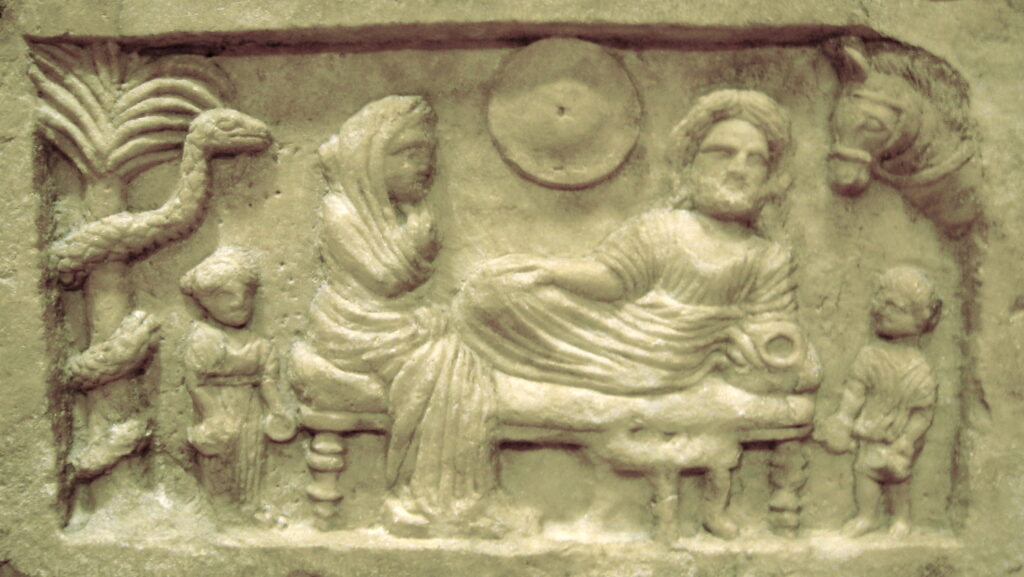
In the Italian town of Sarsina, a wealthy benefactor named Horatius Balbus provided land for a cemetery, giving members of the community somewhere to bury their dead. His generosity, however, came with conditions preserved in a Latin inscription. Among those excluded from the burial ground were people who had died by hanging, alongside contracted gladiators and individuals associated with occupations considered disreputable. The inscription provides concrete evidence that certain deaths could carry social stigma severe enough to determine where a person could be buried.
The restriction did not mean that all Romans who died by suicide were denied burial, nor that every cemetery followed the same rules. It shows that the method of death could influence social judgment, even in a society that sometimes celebrated men who deliberately chose to die. Roman attitudes toward hanging were particularly negative, and surviving literary and funerary evidence suggests that it could be associated with shame and dishonor.
Another revealing document comes from Lanuvium, near Rome, where a burial association dedicated to Diana and Antinous established detailed rules for its members in AD 136. Members contributed money to a common fund intended to help provide funerals, an arrangement that offered practical security to people concerned about how they would be buried. Yet the association’s regulations declared that a member who ended their own life, regardless of the reason, would not receive the funeral benefits normally provided by the group.
These rules reveal an uncomfortable reality of Roman society. The same community that organized financial support to ensure a dignified funeral could withdraw that support because of the circumstances of death. For surviving relatives, the consequences were practical as well as emotional, potentially leaving them responsible for arrangements that the deceased had paid into a fund to secure.
When Grief Became a Matter of Law
Roman law also distinguished between different reasons for suicide, sometimes with remarkable attention to personal circumstances. In the Digest, a compilation of Roman legal writings preserved under Emperor Justinian, the jurist Marcian discusses cases in which the property of someone who took their own life could be confiscated. These provisions concerned particular legal circumstances, especially people facing serious criminal accusations, rather than imposing a general punishment on everyone who died by suicide.
The distinction became crucial when a person acted because of taedium vitae or an inability to endure suffering. Marcian records an imperial ruling allowing inheritance to pass to the deceased’s successors in such circumstances. The law therefore recognized that a death associated with exhaustion or pain was not necessarily equivalent to one intended to evade the consequences of a criminal prosecution.
One particularly revealing case involved a father accused of killing his son. According to a ruling attributed to Emperor Hadrian, the father’s suicide was understood as arising from grief over the loss of his child rather than as an admission of guilt, and his property was not to be confiscated. The surviving account does not allow historians to reconstruct every detail of the family’s tragedy, but its legal significance is unmistakable: Roman authorities could consider sorrow itself when deciding the consequences of a person’s death.
Such decisions were not expressions of modern mental health policy or recognition of an unrestricted right to die. They belonged to a legal system concerned with inheritance, criminal responsibility and the interests of the Roman state. Nevertheless, they reveal an awareness that a person’s reasons for ending their life mattered, even when the law could offer no remedy for the suffering that preceded it.
The Lives Remembered on Stone
While Roman legal texts explain how authorities classified different deaths, funerary inscriptions reveal how families chose to remember them. At ancient Carthago Nova, modern Cartagena in Spain, an epitaph commemorates Sicinia Secunda and her daughter, who died before her. The inscription describes the mother’s grief after losing her child and records that she subsequently surrendered her life amid mourning. Whether this means she deliberately ended her life or died under the weight of bereavement remains uncertain.
Such ambiguity is important because ancient funerary language was frequently poetic, emotional, and shaped by conventions of remembrance. Expressions of despair do not automatically prove suicide, and a family’s description of a death cannot be treated as a clinical account of what happened. Yet the inscriptions remain unusually intimate historical documents, preserving experiences that rarely appear in narratives dominated by emperors, wars and political conflicts.
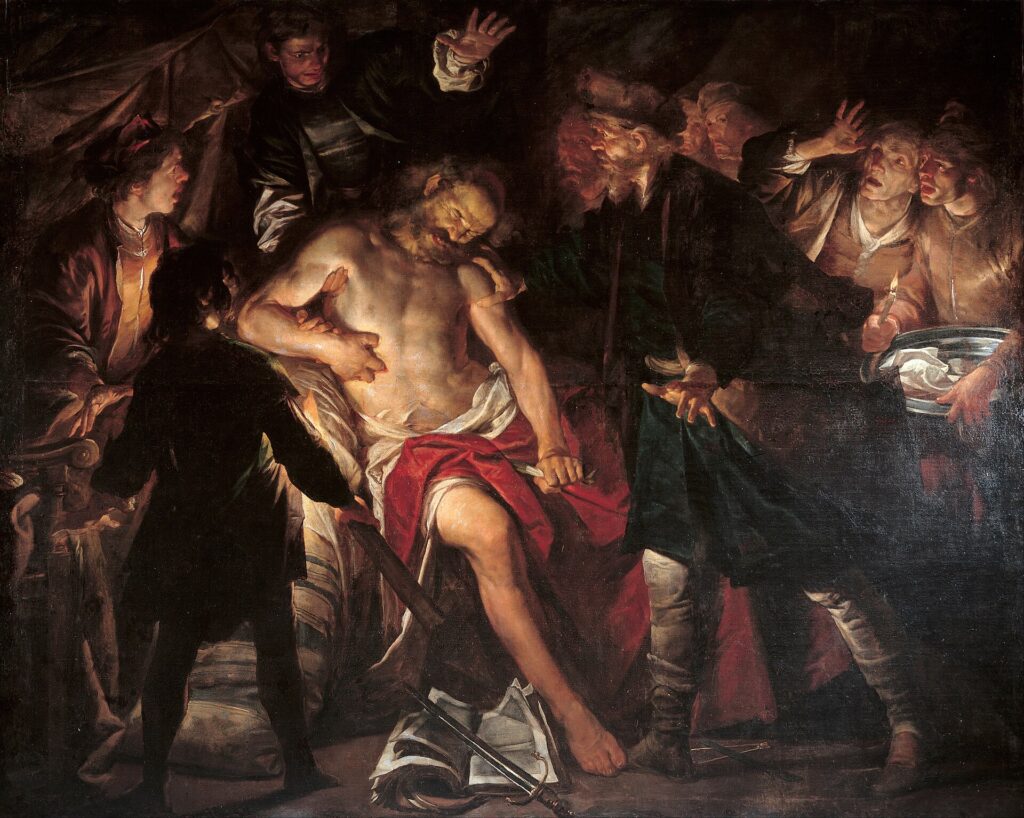
The contrast with famous Roman suicides is particularly revealing. Cato the Younger, who died at Utica in 46 BC rather than submit to Julius Caesar’s victory, became a celebrated example of political resistance in later Roman literature. His death could be interpreted as an act of principle, while the deaths of less prominent people might be judged through entirely different expectations concerning duty, reputation and acceptable behavior.
Ancient Rome therefore offers no single answer to whether suicide was honorable, forbidden or shameful. Philosophers disagreed, legal rulings distinguished between motives, and local burial regulations could impose restrictions that reflected particular religious or social attitudes. What the surviving evidence does show is that people who had grown weary of life lived within a society capable of sympathy in one circumstance and condemnation in another.
Beyond the Judgment of Death
The ancient Roman world offers no single answer to the question of suicide. Philosophers debated whether taking one’s own life could be justified, religious ideas raised questions about humanity’s obligations to the gods, and legal authorities distinguished between different motives. Yet these discussions often concerned something other than the suffering itself: moral duty, divine authority, social reputation, or the consequences for those left behind.
Two thousand years later, the language surrounding suicide has changed, but the difficulty of understanding another person’s suffering remains. Religious convictions, ethical principles, legal considerations, and personal experiences continue to shape how societies respond to such deaths. These perspectives may help explain why people reach different judgments, but none can fully reconstruct what another human being endured.
The inscription of Telesina Crispinella offers a different perspective. Her husband did not preserve a philosophical defense of her death or an argument against those who might condemn it. He recorded the loss of their son, her overwhelming grief, and the 38 years they had shared. His words remind us that behind the ancient debates about whether death could be chosen were individuals whose lives cannot be reduced to the circumstances in which they ended.
Perhaps that is the most important distinction these Roman inscriptions invite us to consider: understanding suffering is not the same as approving of every response to it. We can examine the beliefs and judgments of the past without allowing them to obscure the people whose experiences gave rise to those debates. What survives on these stones is not simply evidence of how ancient Rome regarded suicide, but also a record of how families tried to make sense of loss.
Sources
Ledán M. István — Representations of Suicide in Latin Sepulchral Inscriptions and Epigrams (2024)
Plato — Phaedo, 62b–62c
Roman Law — Digest 48.21.3
Regulations of the Worshippers of Diana and Antinous — Lanuvium, AD 136
Sicinia Secunda — Roman Funerary Inscription
Horatius Balbus — Sarsina Burial Restrictions
