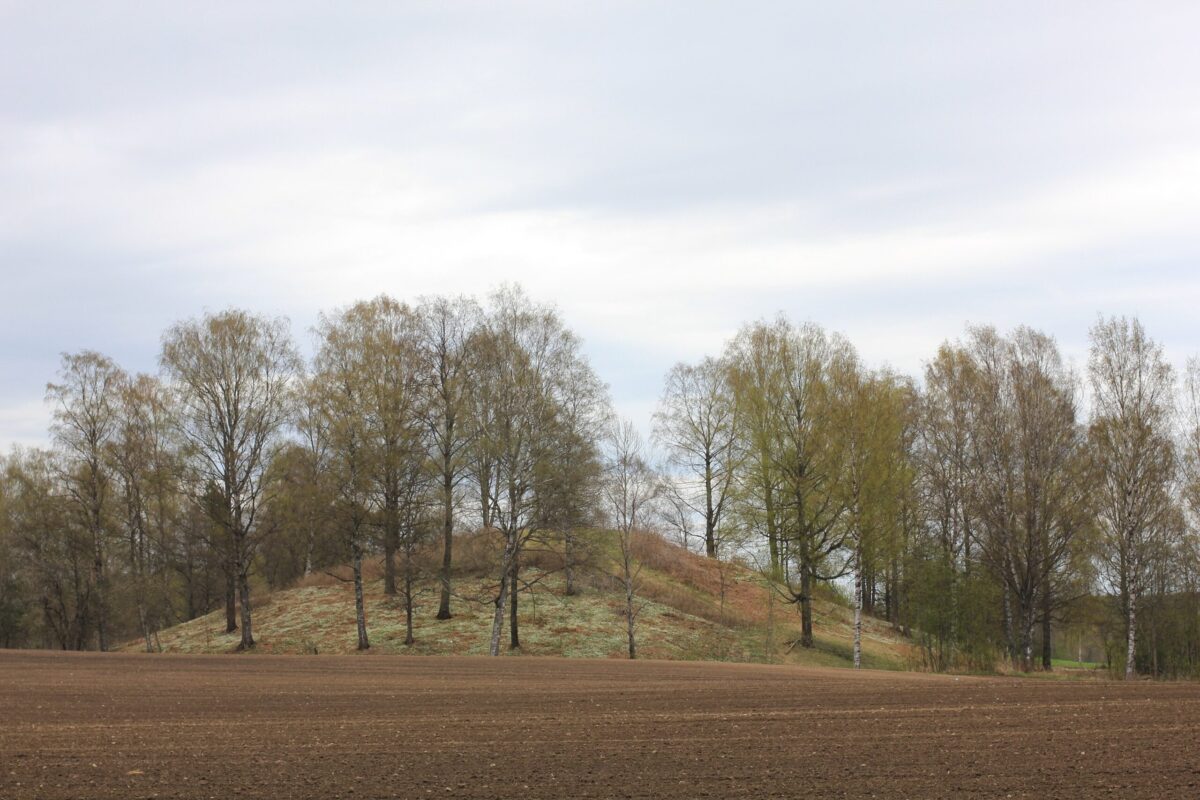
For more than a century, a colossal mound rising from the Norwegian landscape has been treated as a monument to power—a presumed grave for a long-lost king. But what if it was never about a king at all?
What if it was built in fear?
New archaeological evidence is forcing a dramatic rethink of Raknehaugen, Scandinavia’s largest prehistoric mound. Rather than a symbol of royal authority, researchers now suggest it may be the physical imprint of a disaster—an enormous ritual response to a collapsing world in the sixth century.
At the heart of this reinterpretation lies a simple but unsettling truth: despite generations of excavation, no burial has ever been convincingly found.
Instead, what emerges from the soil is something far stranger—a vast, layered construction of earth and timber, assembled with urgency, imprecision, and purpose that defies traditional explanations. Combined with new LiDAR data revealing a massive ancient landslide scar nearby, the evidence points toward a moment when the ground itself may have given way, reshaping both the landscape and the beliefs of those who lived through it.
Now, archaeologists are asking a different question: not who was buried here—but what happened here.
📣 Our WhatsApp channel is now LIVE! Stay up-to-date with the latest news and updates, just click here to follow us on WhatsApp and never miss a thing!!
A Monument That Defies Its Own Story
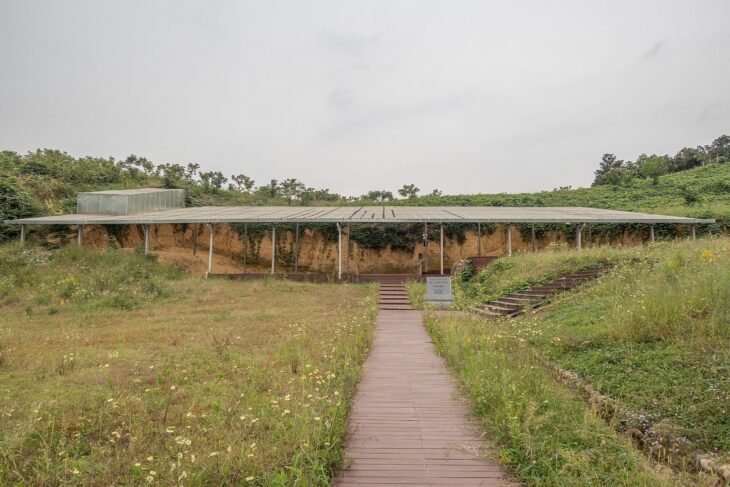
Raknehaugen stands about 40 kilometers northeast of Oslo, once rising roughly 15 meters high and stretching over 77 meters across. Its scale alone seemed to demand a royal explanation. In Iron Age Scandinavia, monuments of this size were typically reserved for the elite—powerful individuals whose status in life was immortalized in earth and stone.
But Raknehaugen has always been different.
Excavations in 1869 and 1870 reached the mound’s base without uncovering a central grave. Decades later, further investigations confirmed the structure’s unusual composition, yet again failed to reveal any burial chamber.
Even the discovery of cremated bones did not resolve the mystery. Radiocarbon dating showed that these remains belonged to an individual who lived more than a thousand years before the mound was constructed—suggesting they were deliberately placed within the soil rather than buried as part of a funerary rite.
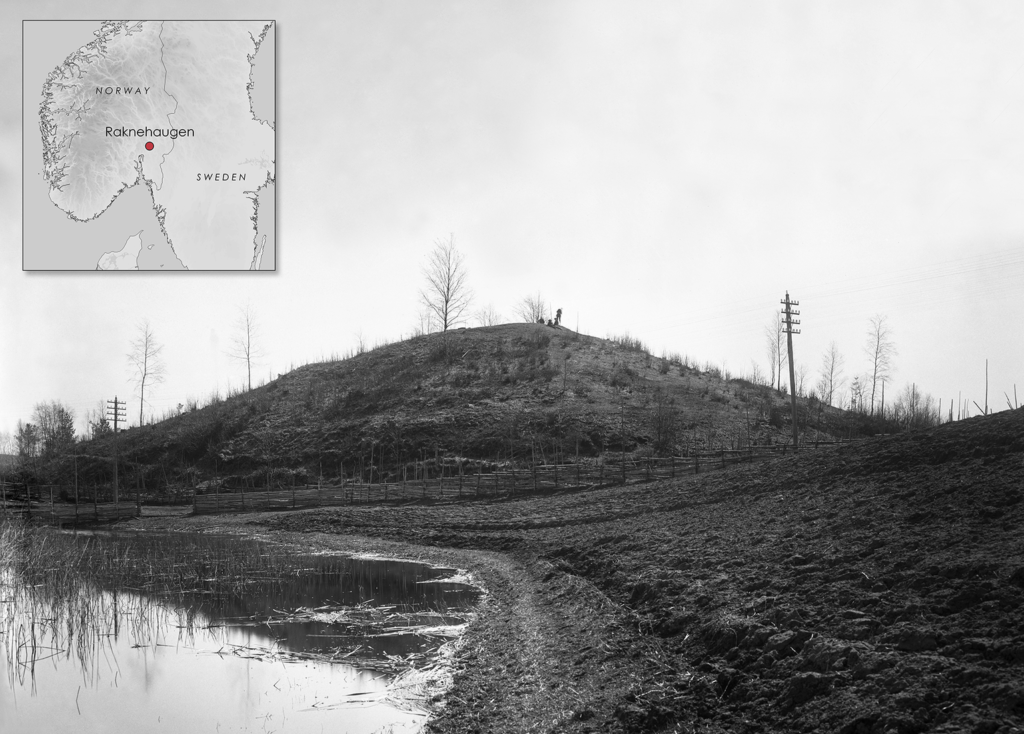
Built in Urgency, Not Elegance
If not a tomb, then what explains such a massive undertaking?
The answer may lie in how the mound was built. Raknehaugen’s internal structure is unlike any other in Scandinavia. It consists of carefully layered deposits of sand and clay, interwoven with three distinct phases of timber construction.
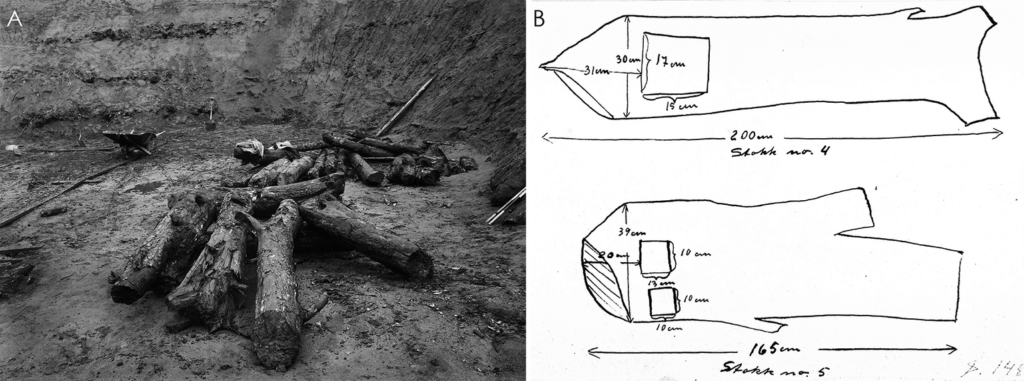
The wood itself tells a striking story. Many of the logs were crudely handled—some broken rather than cut, others uprooted with roots still attached. Entire sections of timber appear to have been gathered rapidly, with little effort to refine or shape them. Researchers have described the construction as rough, even chaotic.
Yet it was also highly organized.
Dendrochronological analysis shows that most of the trees used in the mound were felled within a very short time frame, around the mid-sixth century—likely within a single year. The scale of the project suggests a workforce of hundreds, mobilized quickly and working with urgency.
This was not slow, ceremonial construction. It was something else.
A World in Crisis
The timing is critical.
Around AD 536, the Northern Hemisphere experienced a dramatic climatic event, often referred to as the “Dust Veil Event.” Triggered by major volcanic eruptions, it led to a significant drop in temperatures, reduced sunlight, and widespread crop failures.
For communities in Scandinavia, the consequences would have been severe: famine, disease, and social instability.
Tree-ring evidence from Raknehaugen supports this timeline. Many of the timbers show signs of disrupted growth roughly 15 years before they were cut—consistent with environmental stress linked to this climatic crisis.
As conditions worsened, local populations appear to have shifted from farming to grazing, stripping the land of vegetation that once stabilized the soil. Combined with increased rainfall and colder temperatures, the region became increasingly vulnerable to environmental collapse.
The Hidden Scar in the Landscape
The most compelling clue, however, lies not inside the mound—but in the land around it.
Using advanced LiDAR technology, researchers identified a massive ancient landslide scar near Raknehaugen. Stretching approximately 3.8 kilometers in length, the feature is barely visible at ground level but becomes clear in high-resolution terrain models.
The mound itself sits at a critical boundary—between stable sandy plains to the north and unstable, clay-rich soils to the south and west. These clay soils, when saturated, can transform into a near-liquid state, triggering catastrophic landslides.
It is precisely in this volatile zone that Raknehaugen was built.
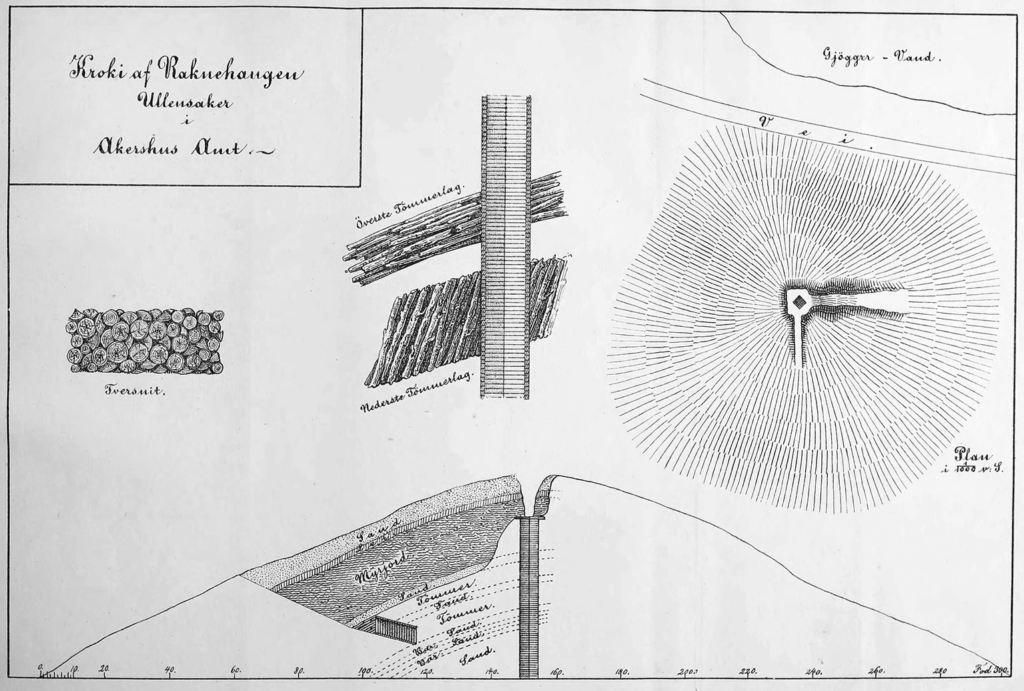
Lorange’s (Reference Lorange1871) drawing of Raknehaugen. Credit: Gustavsen L, 2026, European Journal of Archaeology
A Ritual Response to Disaster
Taken together, the evidence points toward a powerful new interpretation.
Rather than a burial mound, Raknehaugen may have been constructed as a collective response to a catastrophic landslide—an event that reshaped the landscape and threatened the survival of local communities.
The materials used in the mound reinforce this idea. Many of the timbers appear to have been snapped, uprooted, or otherwise damaged in ways consistent with natural forces rather than deliberate cutting. Some may have been gathered directly from the debris of the landslide itself.
In this light, the mound becomes more than a structure—it becomes an act.
A communal effort to restore order, to make sense of destruction, and perhaps to contain or appease forces perceived as dangerous or supernatural.
Similar responses have been documented in other parts of the world, where large monuments were built following epidemics or natural disasters as part of ritual attempts to protect communities from further harm.
Rethinking the Meaning of Mounds
Raknehaugen now stands at the center of a broader shift in archaeological thinking.
For decades, large mounds have been interpreted primarily as symbols of elite power—monuments to individuals. But this new research suggests they may also reflect collective experiences: fear, crisis, and the human need to respond to a world that suddenly feels unstable.
“There are plenty of mounds without clear burials in Scandinavia,” the study notes, “but Raknehaugen is quite unique.”
Its true significance may not lie in who was buried there—but in what the people who built it were trying to survive.
A Monument to Survival
If this reinterpretation is correct, Raknehaugen is not a tomb at all.
It is a monument to a moment when the earth itself gave way—when climate, landscape, and human lives were thrown into crisis.
And in response, a community came together to build something immense, not to honor the dead, but to protect the living.
In that sense, Raknehaugen may be even more powerful than a king’s grave. It may be the memory of a disaster—preserved in earth, timber, and silence.
Gustavsen L. The Late Iron Age Mound Raknehaugen in Norway: A Ritual Response to the Sixth-Century Crisis. European Journal of Archaeology. Published online 2026:1-21. doi:10.1017/eaa.2025.10026
Cover Image Credit: Tommy Øyvind Holmstad – Public Domain