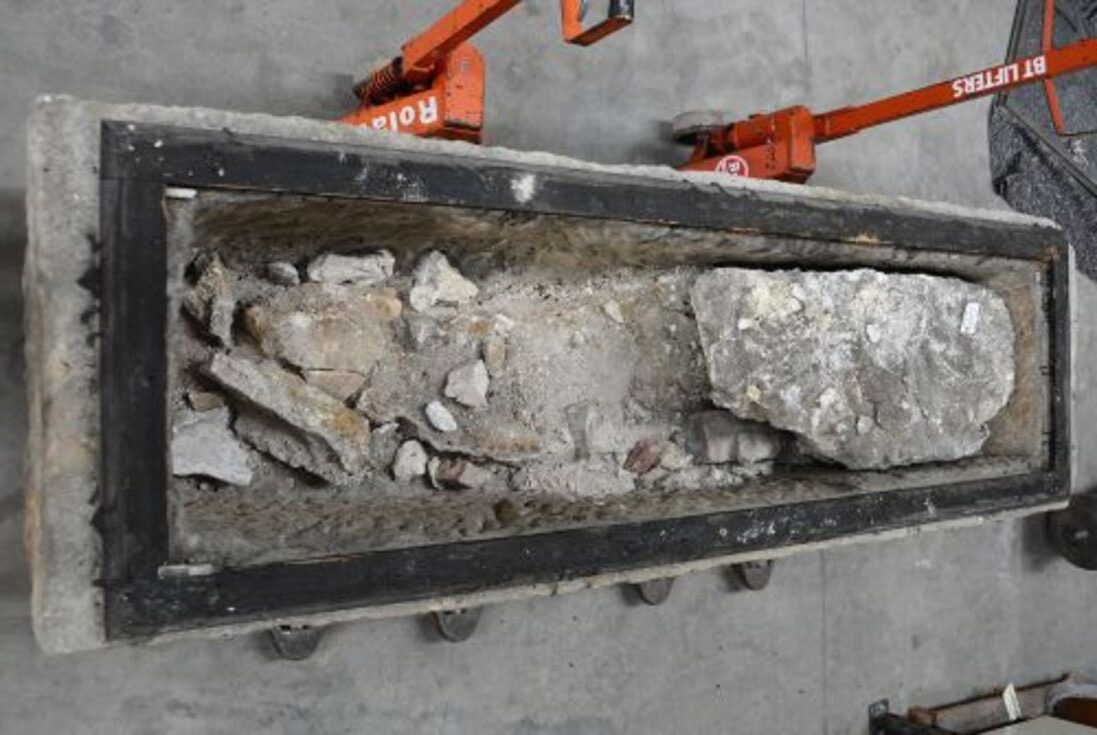
Archaeologists in England have uncovered extraordinary evidence of intimate Roman burial practices after re-examining a rare gypsum-filled stone sarcophagus discovered in York. The burial, dating back nearly 2,000 years, has revealed well-preserved textile impressions, possible hand and finger marks left in soft gypsum, and materials that may even contain trace DNA—offering unprecedented insight into how Romans treated their dead.
The discovery is part of the Seeing the Dead research project, which focuses on Roman funerary rituals and material remains. The sarcophagus, catalogued as YORYM: 2010.1219 and held by York Museums Trust, was first unearthed in 1877 during construction work for York Railway Station. Although known to scholars for more than a century and intermittently displayed in museums, the burial had never undergone a full scientific excavation using modern archaeological techniques until now.
A Rare and Unusual Roman Burial Practice
What makes this burial exceptional is the method used to inter the deceased. After the body was laid inside a stone sarcophagus, liquid or semi-liquid gypsum—a processed mineral material—was applied around the lower half of the body. As it hardened, the gypsum formed a solid casing that captured fine details of the body and its surroundings.
This practice is extremely rare in Roman Britain. Archaeologists believe the gypsum acted both as a protective seal and a means of preserving organic materials that would normally decay. The method bears similarities to the famous plaster casts from Pompeii, where voids left by decomposed bodies were filled to create detailed impressions of the victims of the Vesuvius eruption.
Handprints Preserved in Stone
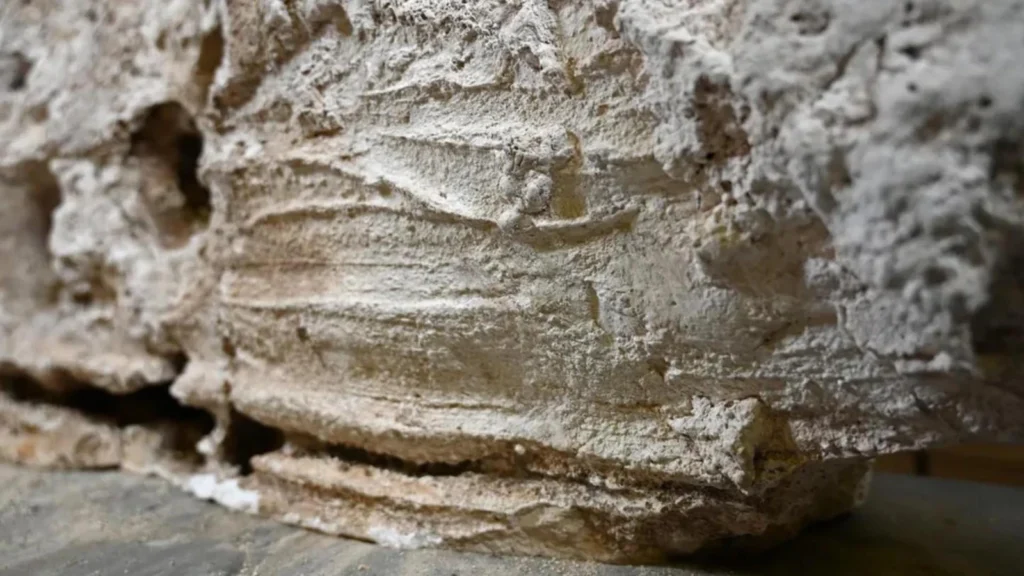
One of the most striking discoveries was the presence of what appear to be finger and hand impressions on the outer surface of the gypsum casing. These marks challenge earlier assumptions that gypsum used in Roman burials was poured at very high temperatures. Instead, researchers now believe the mixture had the consistency of a thick paste and was applied by hand.
📣 Our WhatsApp channel is now LIVE! Stay up-to-date with the latest news and updates, just click here to follow us on WhatsApp and never miss a thing!!
According to Roman archaeologist Dr. Maureen Carroll of the University of York, the impressions suggest a deeply personal moment in the burial ritual. The act of touching and shaping the gypsum by hand may reflect a close emotional connection between mourners and the deceased—an aspect of Roman funerary culture that is rarely preserved in the archaeological record.
Exceptionally Preserved Textiles
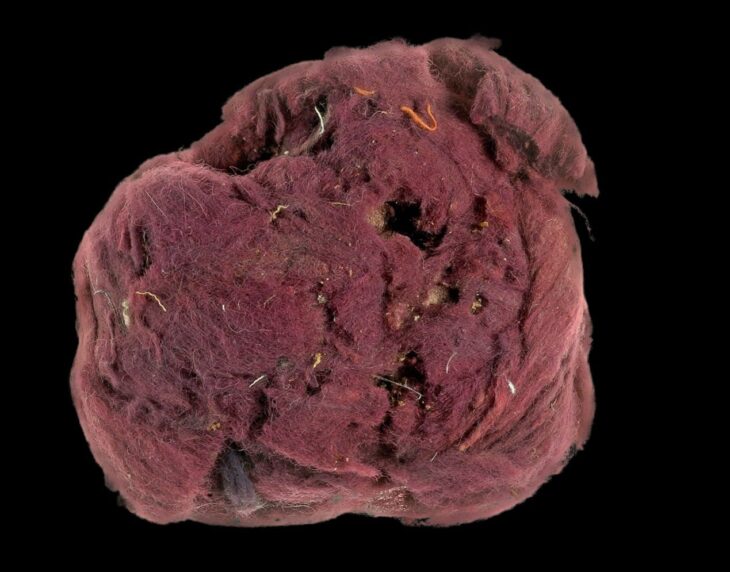
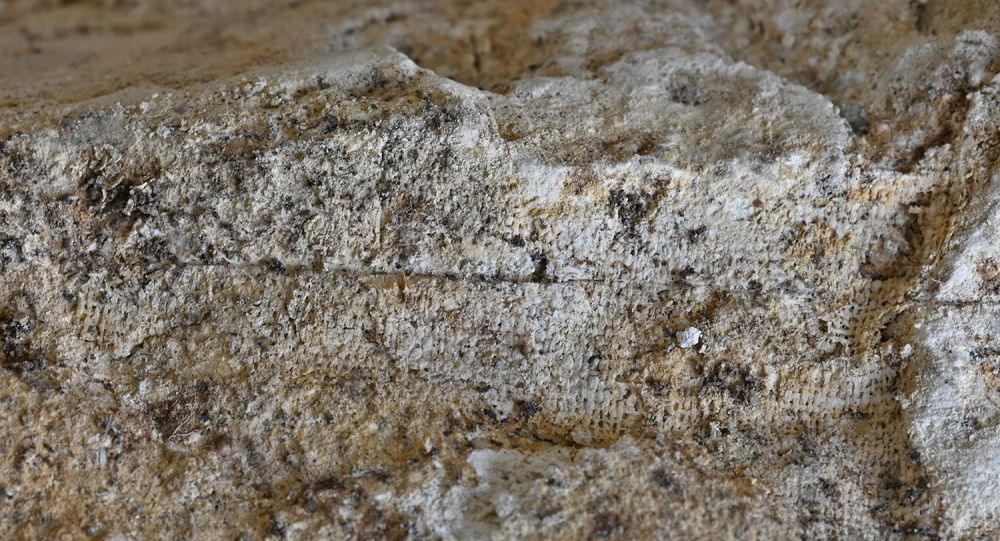
Equally remarkable were the textile impressions found on the inner surface of the gypsum casing. Clear patterns indicate that the individual was wrapped in clothing or a burial shroud at the time of interment. Even more unusually, small fragments of actual textile fibres were discovered embedded within the hardened gypsum beneath the body.
Textile preservation of this kind is extremely rare in Roman archaeology. Researchers believe the gypsum soaked into the fabric while still wet, hardening around the fibres and protecting them for centuries. Why textiles survived in this burial but not in others remains unclear and is now a key focus of ongoing scientific analysis.
Scientific Sampling and DNA Potential
To ensure precise documentation, archaeologists removed gypsum dust and debris using a carefully planned grid system, allowing samples to be traced back to specific areas of the body, such as the head, hands, and feet. This meticulous approach increases the chances of identifying meaningful biological and material evidence.
The preserved gypsum and textile remains may contain trace DNA, potentially allowing researchers to determine the biological sex of the deceased or gain insight into the individuals involved in preparing the burial. While such results are not guaranteed, the possibility alone represents a significant advance in the study of Roman funerary practices.
Digital Reconstruction and Ongoing Research
Before and after excavation, the sarcophagus and its fragments were recorded using high-resolution 3D scanning, capturing sub-millimetre detail. This allows researchers to digitally reconstruct the burial in its original state and ensures long-term preservation of the data for future study.
Despite contamination from later materials—such as fragments of historic display cases and pest control substances introduced during museum storage—the excavation has yielded exceptional results. Protective equipment was required, but the scientific value of the findings far outweighed the challenges.
As laboratory analyses continue, this rare Roman gypsum burial in England is expected to provide new insights into ancient craftsmanship, burial rituals, and the emotional bonds between the living and the dead. More than a century after its discovery, the sarcophagus is finally revealing its secrets—one handprint at a time.
Seeing the Dead Research Project
Cover Image Credit: An overview showing the gypsum sarcophagus burial known as YORYM 2010.1219. Seeing the Dead Project