The stone walls of Pompeii have long preserved the echoes of catastrophe—but now they may also preserve the mechanics of war. New research suggests that during the Roman siege of the city in 89 BC, attackers deployed a remarkably advanced weapon: a rapid-fire, repeating artillery system known as the polybolos—often described as the ancient world’s closest equivalent to a machine gun.
The claim is not based on recovered weapons, but on something more subtle and arguably more compelling: the scars left behind.
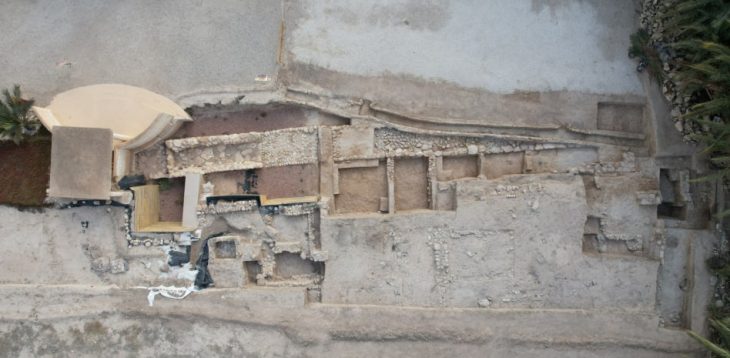
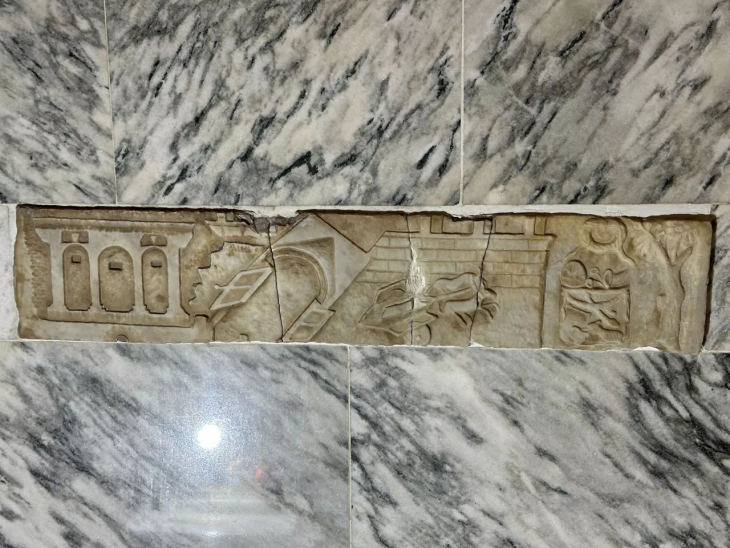
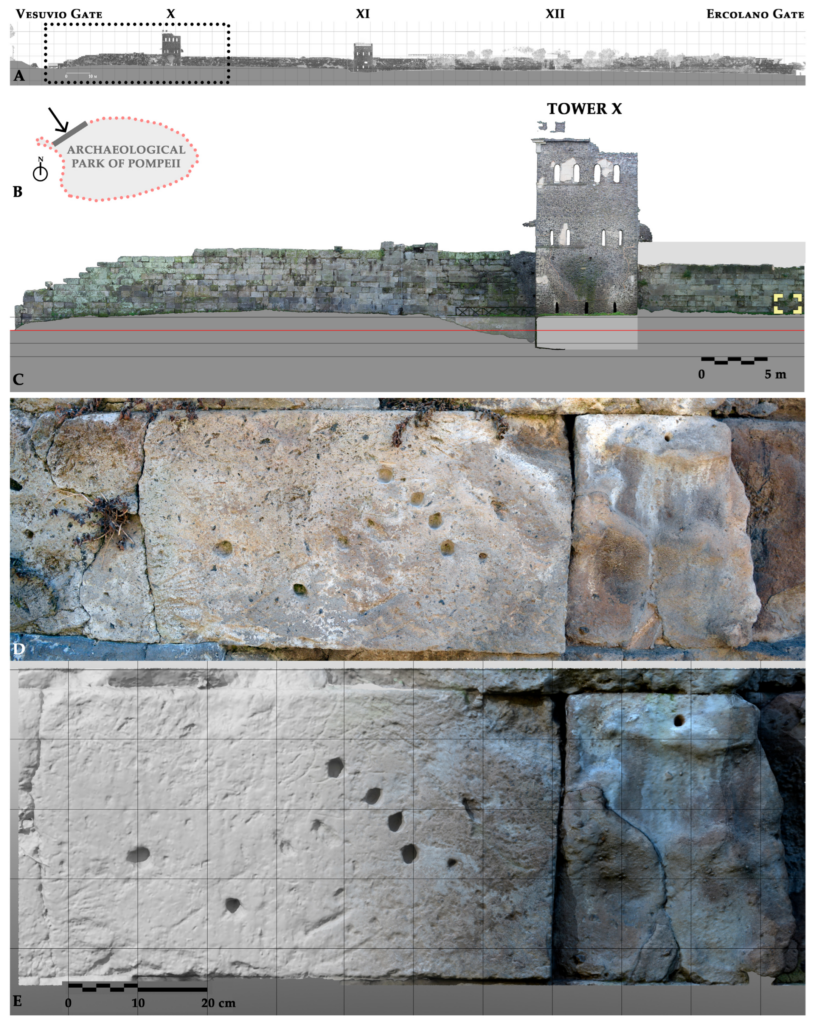
A multidisciplinary team led by Adriana Rossi of the University of Campania has identified distinct clusters of impact marks along Pompeii’s northern defensive walls. These marks, preserved beneath centuries of volcanic ash after the eruption of Mount Vesuvius in AD 79, reveal patterns that do not match conventional Roman artillery such as catapults and ballistae.
Instead, they align with descriptions of a rare and sophisticated weapon previously known only from ancient texts.
Unusual Impact Patterns Tell a Different Story
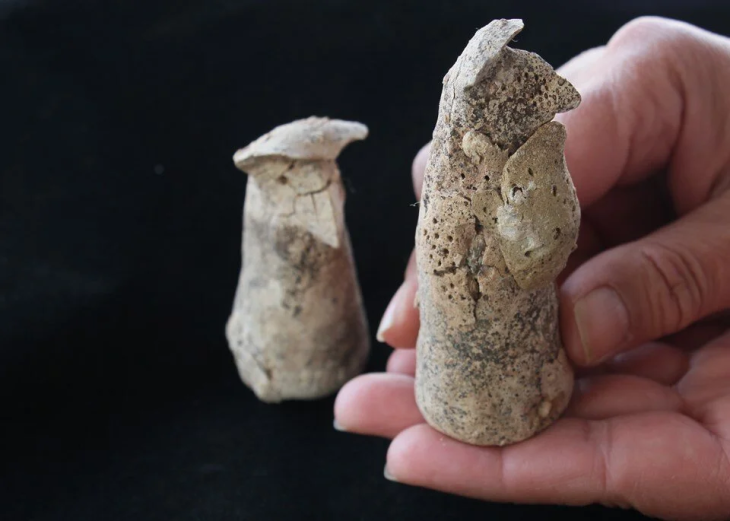
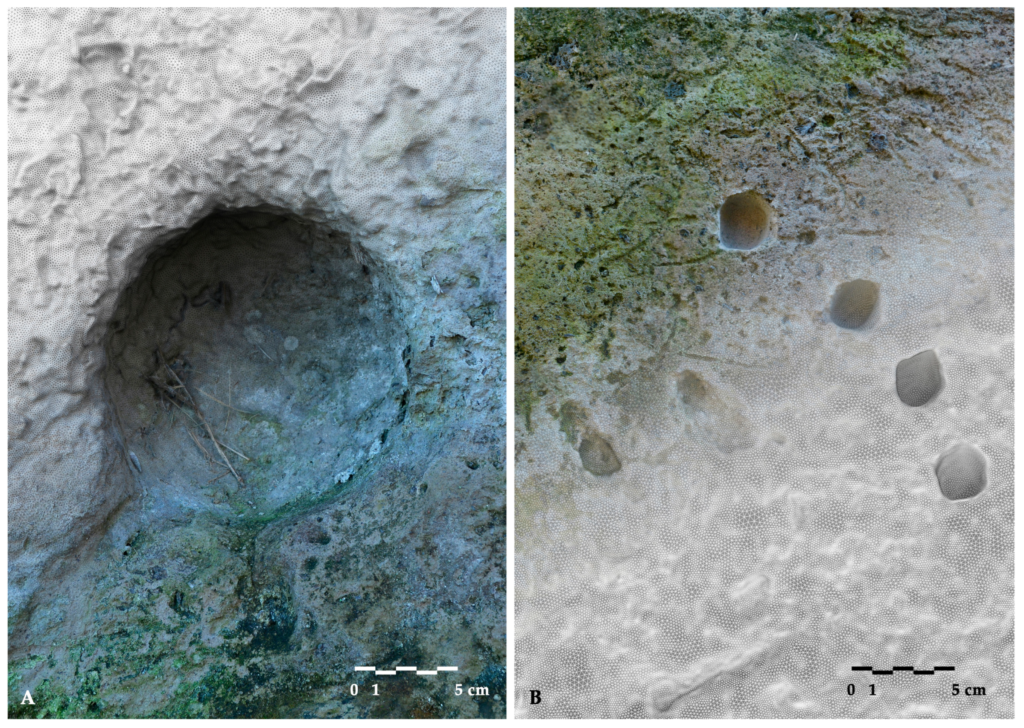
Unlike the circular dents typically caused by stone projectiles launched from ballistae, the newly analyzed marks display a different geometry. They are small, quadrangular cavities arranged in tight, fan-shaped groupings, often following curved trajectories across the stone surface.
📣 Our WhatsApp channel is now LIVE! Stay up-to-date with the latest news and updates, just click here to follow us on WhatsApp and never miss a thing!!
This pattern is critical.
According to the study, these clusters indicate repeated, rapid strikes from projectiles fired in quick succession along a narrowly controlled trajectory.
Traditional siege engines could not produce such precision at such speed. The spacing, alignment, and morphology of the marks suggest a weapon capable of automatic or semi-automatic firing—a technological leap far beyond what is typically associated with Roman warfare.
The Polybolos: A Weapon Ahead of Its Time
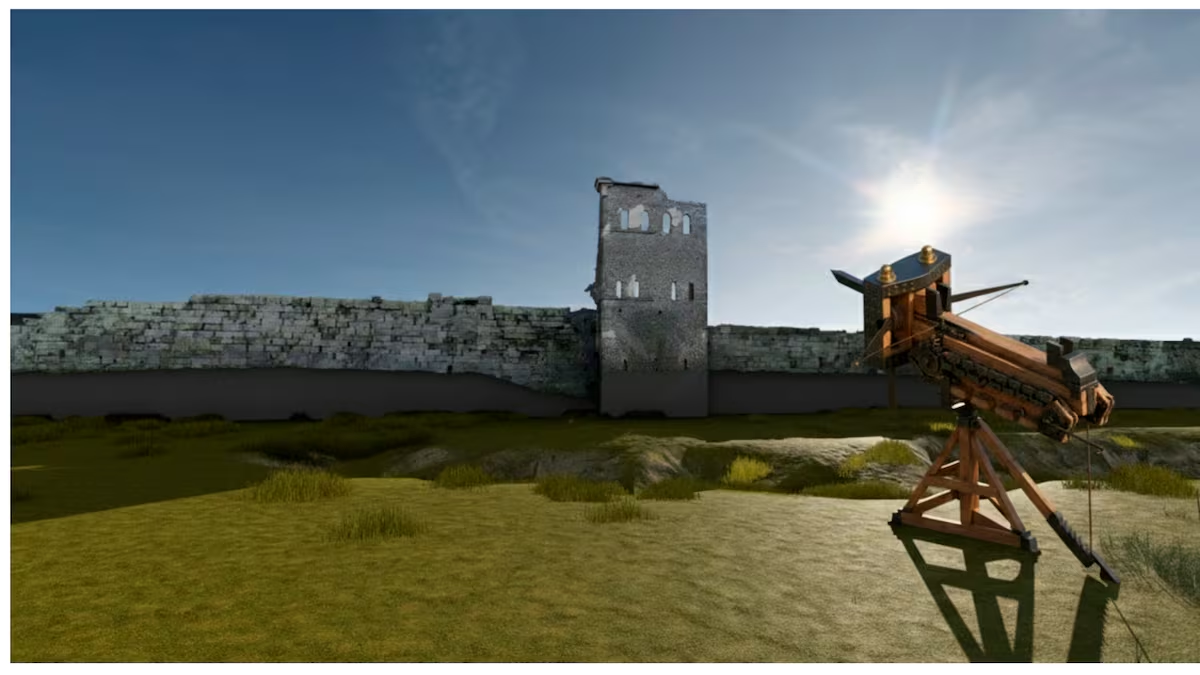
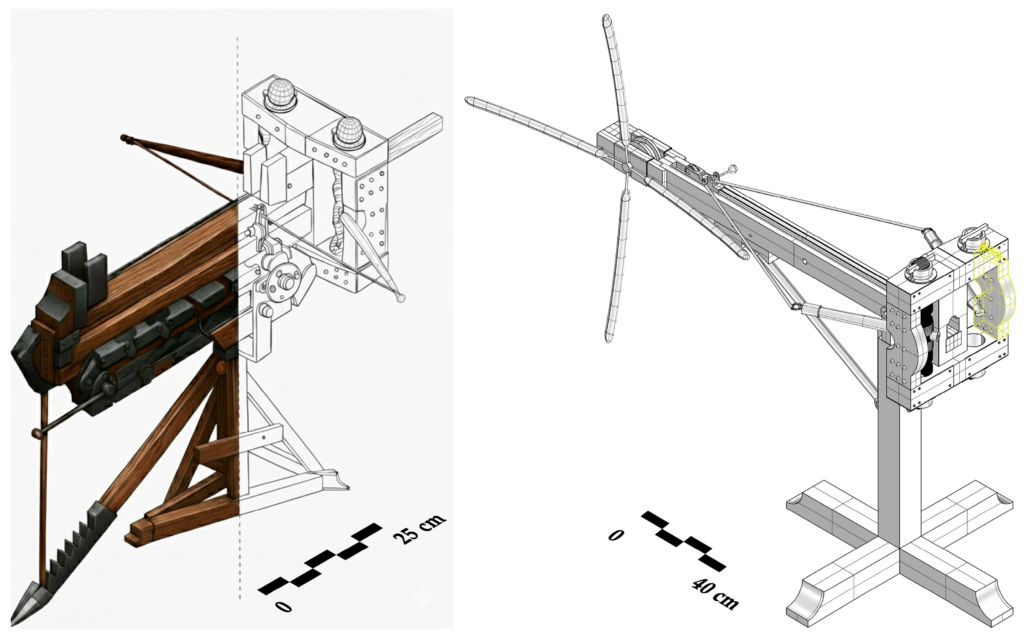
The likely culprit is the polybolos, a Greek invention attributed to the engineer Dionysius of Alexandria in the 3rd century BC. Unlike standard torsion-powered catapults, the polybolos used a mechanical system of gears, chains, and a magazine to load and fire bolts continuously.
Ancient engineer Philo of Byzantium described the device as a “repeating catapult” capable of launching multiple darts without manual reloading. Until now, however, its existence remained largely theoretical, supported only by textual descriptions.
The Pompeii evidence changes that.
The impact patterns closely match Philo’s observations that projectiles from such a machine would not scatter widely but instead follow a tight, curved trajectory, striking close together on a single target zone.
In other words, the wall itself behaves like a ballistic record—one that appears to confirm what ancient engineers once wrote.
Digital Archaeology Brings Ancient Warfare into Focus
To reach these conclusions, researchers relied on cutting-edge digital methods. High-resolution laser scanning, photogrammetry, and 3D modeling allowed them to reconstruct each impact mark with millimetric precision.
These models were then analyzed using reverse engineering techniques to estimate the shape, size, and force of the projectiles that created them.
The results were striking. The dimensions of the cavities—typically just a few centimeters deep—suggest impacts from metal-tipped bolts rather than stone balls. Their consistent spacing and radial distribution further support the idea of a repeating mechanism rather than individual, manually aimed shots.
The study also incorporated finite element analysis to simulate the energy required to produce such damage, reinforcing the conclusion that a high-energy, rapid-fire system was involved.
A New Look at the Siege of Pompeii
The findings offer fresh insight into one of the lesser-known chapters of Pompeii’s history: its conquest during the Social War.
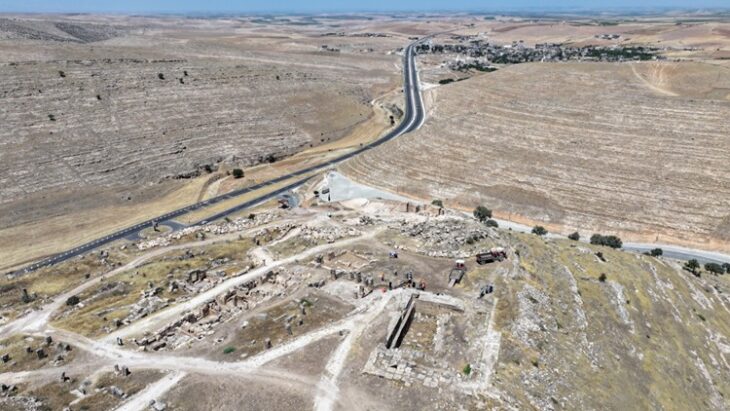
In 89 BC, Roman general Lucius Cornelius Sulla besieged the city, which had sided with Rome’s Italian allies in rebellion. The northern walls—particularly near the Vesuvio and Herculaneum gates—were among the most vulnerable points of attack.
The newly identified impact clusters are concentrated precisely in this sector, suggesting a targeted assault using advanced siege technology.
Researchers propose that the polybolos may have been used to suppress defenders positioned along the ramparts—especially archers who briefly exposed themselves between defensive structures. The weapon’s rapid-fire capability would have made it especially effective against moving targets.
Technology Transfer from the Greek World
The presence of such a weapon in a Roman siege raises intriguing questions about technological exchange.
The polybolos was developed in the Hellenistic world, particularly in centers like Rhodes, renowned for their expertise in artillery design. The study notes that Sulla himself had connections to the eastern Mediterranean, where such technologies were more advanced.
It is therefore plausible that Roman forces adopted—or even improved upon—Greek engineering innovations, integrating them into their military arsenal.
If confirmed, this would reshape our understanding of Roman warfare, highlighting a level of mechanical sophistication rarely associated with the Republic period.
Rewriting the History of Ancient Weapons
What makes this discovery particularly significant is not just the identification of a specific weapon, but the methodological breakthrough it represents.
For decades, the study of ancient warfare has relied heavily on texts and surviving artifacts. Pompeii offers something different: a preserved battlefield where physical traces can be measured, modeled, and interpreted with modern technology.
By combining archaeology, engineering, and digital analysis, researchers are now able to reconstruct not just what ancient weapons looked like, but how they functioned in real combat scenarios.
And in this case, the evidence points to something extraordinary—a weapon system that operated with a level of automation and precision that would not be seen again for nearly two millennia.
Rossi, A., Bertacchi, S., & Casadei, V. (2026). From Pompeii to Rhodes, from survey to sources: The use of polybolos. Heritage, 9(3), 96. https://doi.org/10.3390/heritage9030096
Cover Image Credit: Veronica Casadei. Rossi, A., et al., 2026