
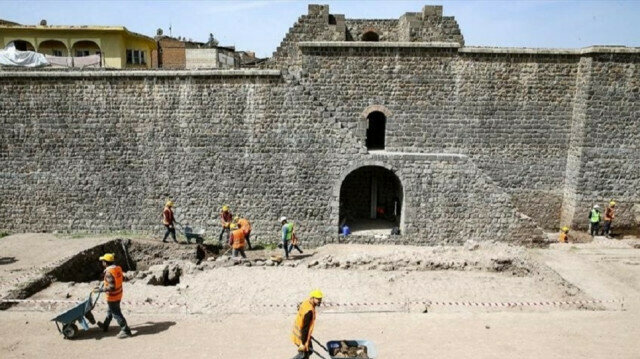
A 2,000-year-old street from the Roman period has been discovered in southeastern Turkey. Excavation to unearth historical street in the southeastern province of Diyarbakir ongoing.
Diyarbakır Amida Hoyuk excavations witness good developments. Despite the difficulties of the coronavirus epidemic, work continues with strict precaution.
Amida Hoyuk was home to many civilizations such as the Hurri-Mitannis, Urartians, Assyrians, Medes, Persians, Tigran the Great Kingdom, Romans, Sassanids, Byzantines, Umayyads, Abbasids, Safavids, Ayyubid dynasty, Marwanids, Seljuks, Ottomans, and Artuqids.
Professor Irfan Yildiz from Dicle University is heading the excavation amid strict measures against the coronavirus.
“Very interesting data continues to come from the west side of the mound we excavated. The street texture and structure of the period has started to emerge,” he said.
Over a year, Yildiz noted that they expect to unearth many historical artifacts in the excavation.
Yildiz said by 2022 tourists using the Roman street will be able to visit the historical region of Ickale and be able to see streets from the Roman, Ottoman, Republican periods.
Archeological work at the Amida Mound has been ongoing since 2018 with several exciting new findings made in the last two years.
Source: Yeni Şafak
