New University of Portsmouth research reveals how Samuel Pepys used the 1665 Bills of Mortality to navigate the Great Plague of London, reshaping public health policy, government power, and the use of death data in crisis.
What a 350-Year-Old Diary Tells Us About the Origins of Public Health Surveillance
New research from the University of Portsmouth reveals that during the Great Plague of 1665, Londoners relied on published death statistics to guide daily survival decisions—reshaping the relationship between citizens, data, and government power for the first time in history.
Drawing on the famous diary of Samuel Pepys, the study shows how weekly mortality reports known as the Worshipful Company of Parish Clerks’ Bills of Mortality functioned as an early form of public health data. Far from being passive records of the dead, these figures influenced where people traveled, whether they remained in the city, whom they met, and how they assessed personal risk.
According to the research, this moment marked a turning point in the development of modern public health governance—centuries before contemporary epidemiology or digital dashboards.
Counting Deaths in 17th-Century London
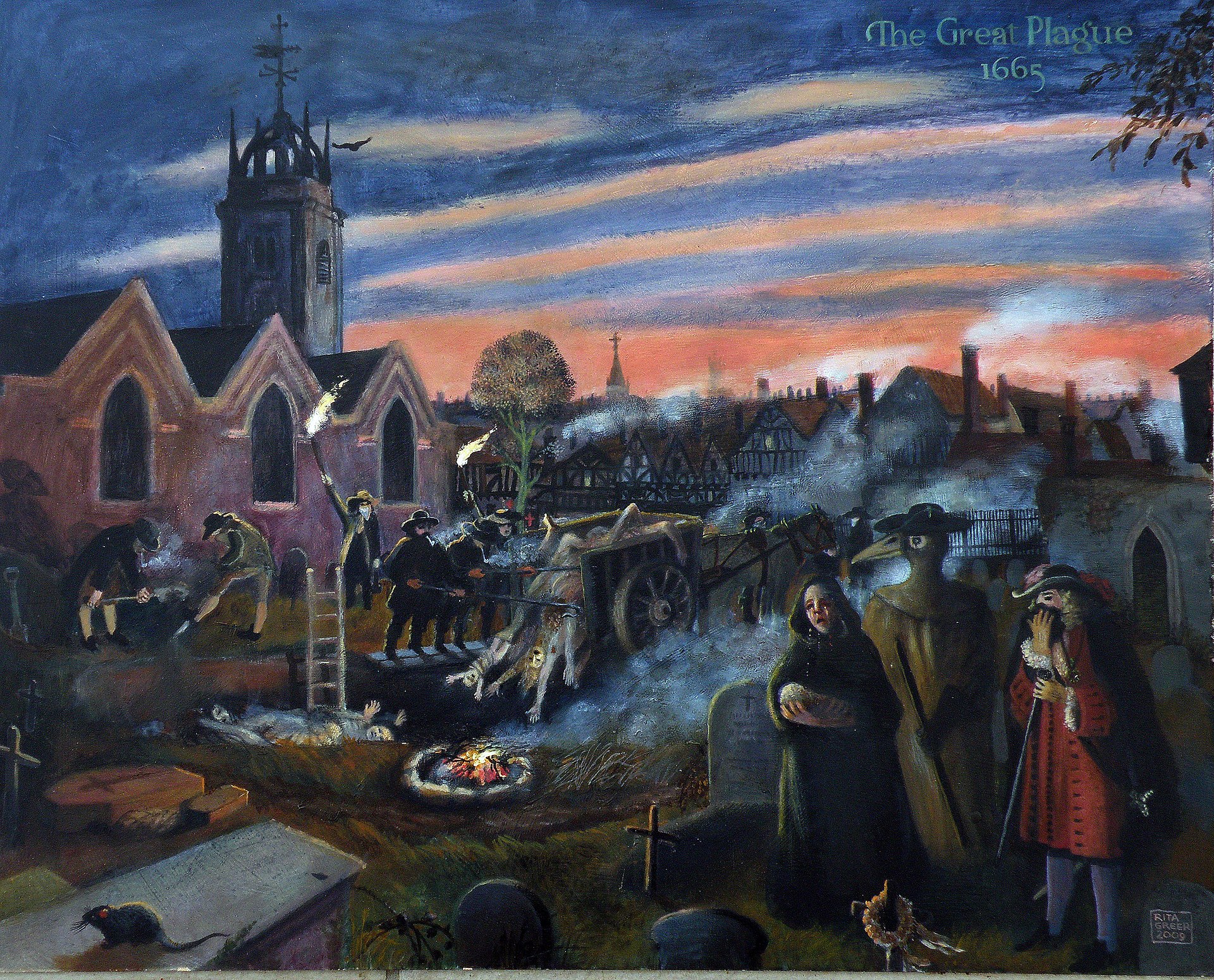
The Great Plague of 1665 devastated London, killing an estimated 68,596 people according to official records—though historians believe the true toll was closer to 100,000, nearly one-fifth of the city’s population.
📣 Our WhatsApp channel is now LIVE! Stay up-to-date with the latest news and updates, just click here to follow us on WhatsApp and never miss a thing!!
Each week, mortality data was compiled and distributed across London. These reports listed deaths parish by parish and specified causes, including plague. They were sold by subscription, posted in public places, and widely read. For Londoners, they became essential reading.
The new study, published in Accounting History, takes a microhistorical approach by examining how Pepys interpreted and used these weekly figures in real time. Rather than treating the Bills as abstract statistics, the research shows how they shaped individual behaviour and collective policy.
Professor Karen McBride of the University of Portsmouth explains that Pepys was not simply documenting events. He was actively using the numbers to make decisions that could determine whether he lived or died.
“Pepys wasn’t just recording history—he was using death figures to decide how to live,” Professor McBride notes. “His diary reveals, week by week, how published mortality numbers shaped fear, behaviour, and trust in government.”
Data-Driven Decisions: Life, Movement, and Fear
As plague deaths rose during the summer of 1665, Pepys monitored the Bills closely. When weekly figures spiked into the thousands, he sent his wife out of London to Woolwich. When numbers began to fall, he cautiously resumed social visits and returned to work.
His diary records precise weekly totals, comparisons between parishes, and reactions to sudden increases. He observed how empty the streets became, how businesses closed, and how social life contracted in response to the data.
This was one of the earliest documented examples of individuals using published statistical information to manage personal risk.
At the same time, government authorities relied on the same mortality data to justify sweeping public health measures. These included quarantining infected households, restricting travel, banning gatherings, and isolating the sick in pesthouses outside the city walls.
Such measures were controversial. Historically, the Crown had exercised authority largely through the church and royal decree. During the plague, however, the state expanded its responsibilities—taking direct control over public health, burial practices, and disease containment.
The Birth of Statistical Thinking
The study also situates the Bills of Mortality within the broader development of statistical reasoning. Contemporary thinkers such as John Graunt analyzed the mortality data to identify patterns in plague outbreaks. His work is often credited as one of the foundations of modern statistics.
But Professor McBride’s research shifts focus from aggregate analysis to lived experience. By examining Pepys’ diary entries alongside the weekly Bills, she demonstrates how accounting for death became both a political tool and a personal survival strategy.
The Bills did more than count the dead—they reshaped how people thought about risk, probability, and responsibility.
Inequality and Access to Information
However, access to this data—and the ability to act on it—was not equal.
Pepys was educated, wealthy, and well-connected. He could read the Bills, interpret the trends, and relocate his household when necessary. Poorer Londoners, by contrast, often lived in overcrowded conditions, had limited access to information, and lacked the means to flee.
The research highlights how public health measures disproportionately affected the poor. Infected houses were “shut up,” sometimes with watchmen posted outside. Movement was restricted. Work was disrupted. Meanwhile, wealthier residents escaped to the countryside.
In this way, the Bills of Mortality contributed to both protection and inequality. They empowered some while exposing the structural vulnerabilities of others.
Government Power and Personal Responsibility
The findings challenge the assumption that data-driven public health is a modern innovation. Instead, they show that the roots of surveillance, statistical governance, and policy justification stretch back to 17th-century London.
The plague accelerated a transformation in what the state was expected to do. Governments began taking responsibility for monitoring populations, recording deaths systematically, and managing collective health risks. At the same time, individuals were increasingly expected to regulate their own behaviour based on published data.
This balance between state authority and personal freedom remains a central tension in contemporary public health debates.
“This research reminds us that debates around accounts, accountability, trust, and public freedom are not new,” Professor McBride explains. “They were already playing out on the streets of 17th-century London.”
Lessons for Today
Although separated by 350 years, the parallels with modern health crises are striking. During contemporary outbreaks, citizens track case numbers, hospitalization rates, and regional statistics to make daily decisions—whether to travel, gather, or isolate.
Pepys did much the same in 1665.
By placing accounting at the centre of the story, the study highlights how numbers can shape emotions, behaviour, and power structures. Death data did not merely reflect reality; it helped create it.
In revealing how Londoners used mortality figures to survive the Great Plague, the University of Portsmouth research offers a powerful reminder: public health data has always been more than statistics. It is a tool of governance, a source of reassurance and fear, and, at times, a matter of life and death.
McBride, K. (2026). A journal of the plague year: Samuel Pepys and the Bills of Mortality as accounting. Accounting History, 31(1), 117-139. https://doi.org/10.1177/10323732251410550 (Original work published 2026)
Cover Image Credit: Great Plague of London in 1665 (painting by Rita Greer, 2009). Public Domain