A remarkable archaeological discovery in northern Germany is shedding new light on the spiritual world of early hunter-gatherer societies. Researchers investigating the prehistoric wetlands of the Duvensee Moor in Schleswig-Holstein have uncovered the skull of a wild aurochs that had once been mounted on a wooden post near what is believed to be the oldest known cremation burial in northern Germany.
The discovery, dating back roughly 10,500 years, suggests that early Mesolithic communities practiced complex funerary rituals involving animal symbolism and possibly spiritual protection for the dead. Archaeologists say the find offers rare evidence of belief systems at the dawn of the current warm period following the last Ice Age.
A Key Mesolithic Archaeological Site
The wetlands of Duvensee Moor, located in the district of Herzogtum Lauenburg in northern Germany, are considered one of the most important archaeological landscapes in northern Europe for studying the early Mesolithic period. The site contains numerous traces of human activity from the time when hunter-gatherer groups began settling near lakes formed after the retreat of the glaciers.
At the center of recent discoveries lies the excavation area known as “Lüchow LA 11.” Here, organic materials such as wood, plant remains, and bones have been exceptionally well preserved under peat deposits that formed over thousands of years.
The ongoing research is being conducted by the Leibniz Centre for Archaeology (LEIZA) in collaboration with the Archaeological State Office of Schleswig‑Holstein and the Museum for Archaeology Schloss Gottorf.
📣 Our WhatsApp channel is now LIVE! Stay up-to-date with the latest news and updates, just click here to follow us on WhatsApp and never miss a thing!!
Thanks to the unique preservation conditions in the peat bog environment, archaeologists are able to reconstruct not only the burial itself but also the surrounding ritual landscape—something rarely possible at prehistoric sites.
The Oldest Known Cremation Burial in Northern Germany
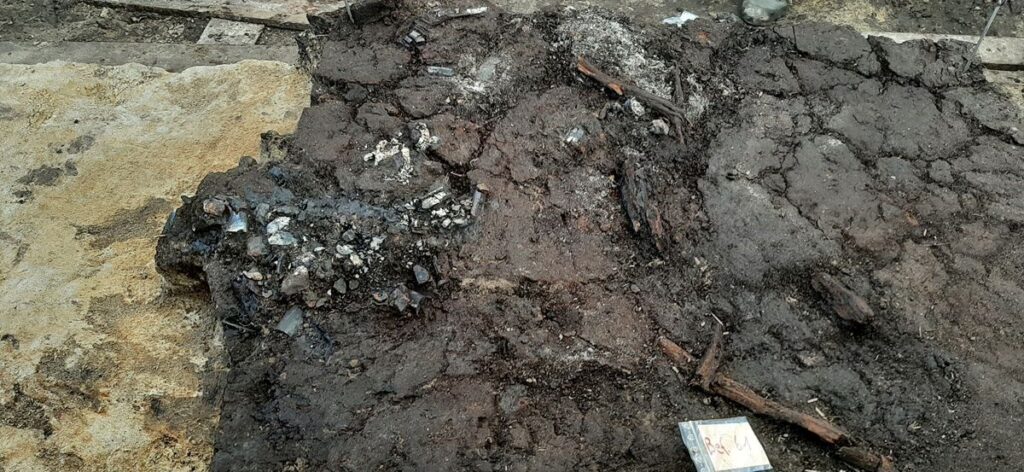
The story of the mysterious aurochs skull begins with an earlier discovery. During excavations in 2022 and 2023, archaeologists uncovered a cremation burial approximately 10,500 years old, making it the oldest known example of this funerary practice in northern Germany.
Cremation graves from this early phase of the Holocene are extremely rare across Europe. Only two comparable finds are known—one from the Netherlands and another from Denmark—and both are far less well preserved.
According to project leader Dr. Harald Lübke, the burial at Lüchow LA 11 is extraordinary because large parts of the ancient ground surface remained intact beneath the peat layer. This has allowed researchers to examine the burial context with unusual precision.
The evidence suggests that the cremated remains were placed in a shallow pit together with remnants of the funeral pyre. Importantly, the grave appears to have remained visible above ground for some time, indicating that it may have served as a focal point for ritual activities.
Aurochs Skull Mounted on a Wooden Post
During additional excavations in the summer of 2025, archaeologists discovered a complete aurochs skull in a former shallow-water area only a few meters from the cremation burial.
Aurochs—the massive wild cattle that are the ancestors of modern domestic cows—were once widespread across Europe and were known for their size and aggressive behavior.
What immediately caught the researchers’ attention was that the skull showed no signs of butchery or deliberate breakage, which would normally be expected if the animal had been processed for food.
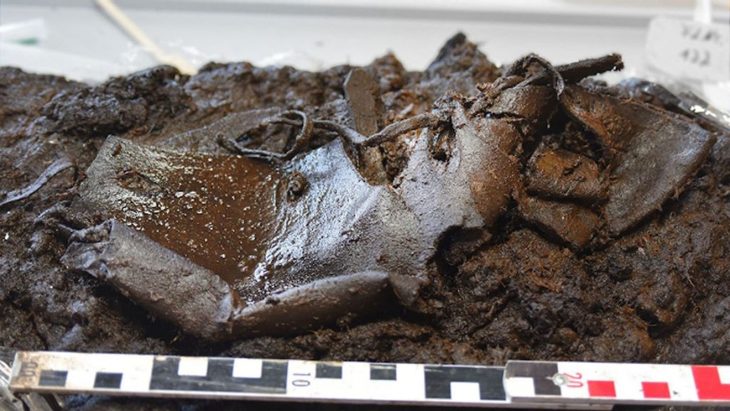
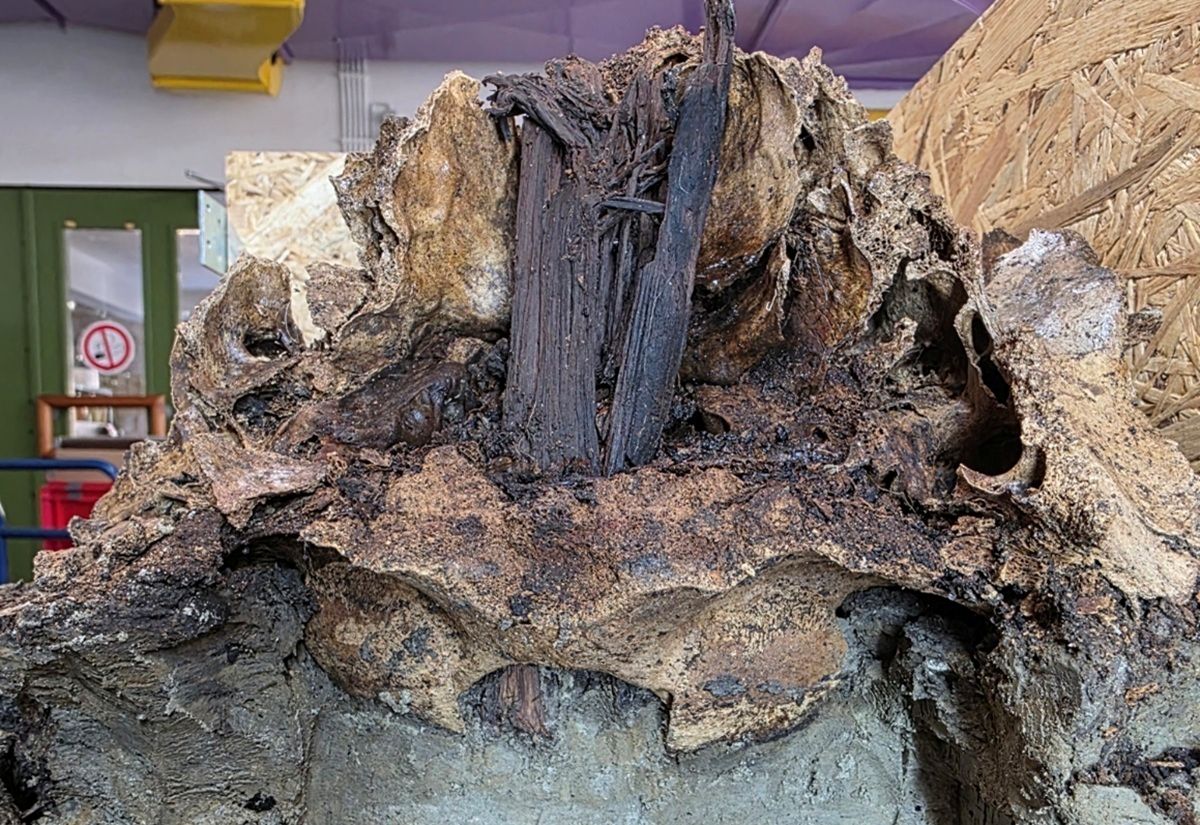
Because the bones were fragile, the entire find was carefully removed as a sediment block and transported to the museum laboratory at Schloss Gottorf for detailed analysis.
There, conservators made a surprising discovery. Hidden inside the skull was the fragment of a pinewood post. A computed tomography (CT) scan later confirmed that the skull had originally been mounted onto the wooden post through the occipital opening at the back of the skull. At some point in the distant past, the post broke off, leaving a piece trapped inside.
Evidence of Ritual Behavior
The unusual positioning of the skull has led archaeologists to believe that it was deliberately displayed near the burial as part of a ceremonial arrangement.
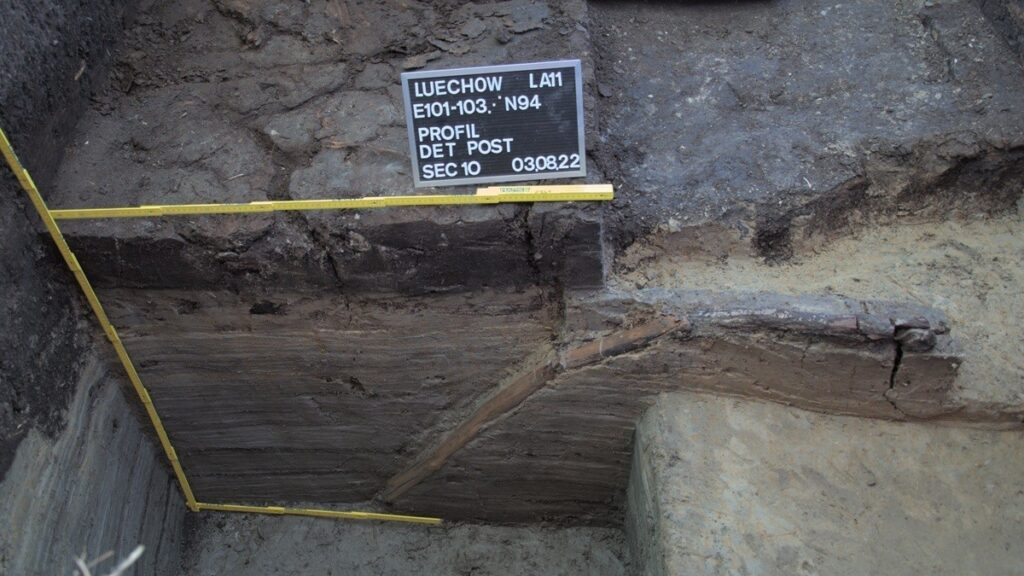
Interestingly, a separate wooden post made from poplar wood had already been found in the same area during earlier excavations. Since the wood species differ, researchers believe the posts served different functions and may have been part of a larger structure or ritual display.
One hypothesis is that the cremation burial was once surrounded by several animal skulls mounted on wooden posts, possibly forming a symbolic barrier or protective space around the grave.
Such practices may reflect animistic and totemistic belief systems, in which animals were seen as spiritual beings or ancestral symbols connected to human groups.
In many hunter-gatherer societies documented by ethnographers in Europe, Asia, and North America, animal skulls were displayed during rituals or used to mark sacred spaces connected with death and remembrance.
The finds from Lüchow LA 11 may represent the first clear archaeological evidence of similar ritual traditions in northern Europe at the beginning of the Holocene, offering a rare glimpse into the spiritual life of prehistoric communities.
Training Excavations and Ongoing Research
Because of the extraordinary preservation conditions at Duvensee Moor, the excavation has also become an important training site for students of archaeology. Since 2023, universities including Kiel, Rostock, and the Free University of Berlin have participated in field schools focusing on wetland archaeology techniques.
Researchers now plan to expand excavations in surrounding areas to determine whether additional posts or animal skulls were once part of the ritual landscape.
However, time is becoming a critical factor. Climate change and the gradual drying of peatlands threaten the preservation of organic materials that have survived for millennia beneath the bog surface.
For archaeologists, every excavation season may reveal new clues about how the earliest communities of post-Ice-Age Europe lived, hunted, honored their dead—and understood the spiritual forces they believed shaped the natural world.
The discoveries at Duvensee Moor suggest that 10,500 years ago, death rituals were already complex, symbolic, and deeply connected to animals and the environment, reminding us that spiritual traditions have accompanied human societies since the earliest chapters of our history.
Cover Image Credit: The aurochs skull during excavation and conservation work in the laboratory of the Museum of Archaeology at Schloss Gottorf. Credit: Museum of Archaeology, Schloss Gottorf / Corinna Mayer