15 January 2026 The Future is the Product of the Past

Mesolithic stone mace head found during excavation of a site near Buckingham

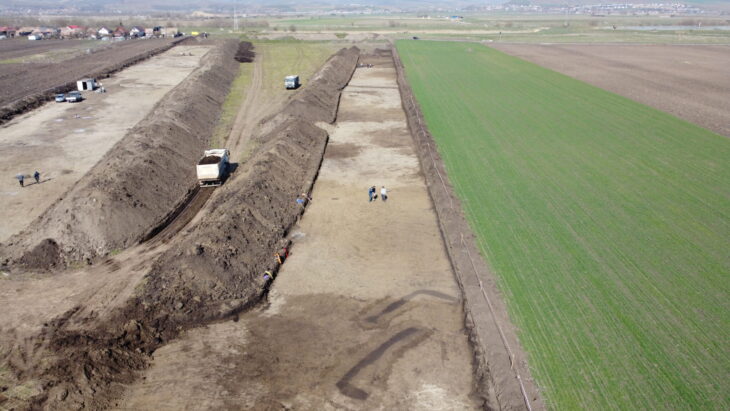
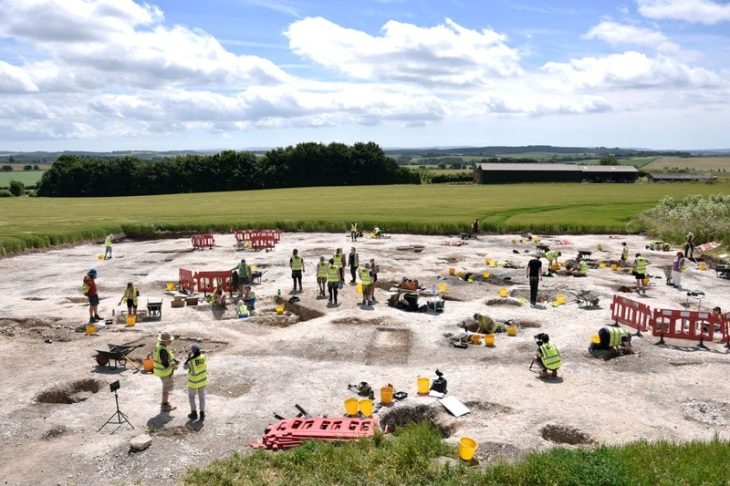
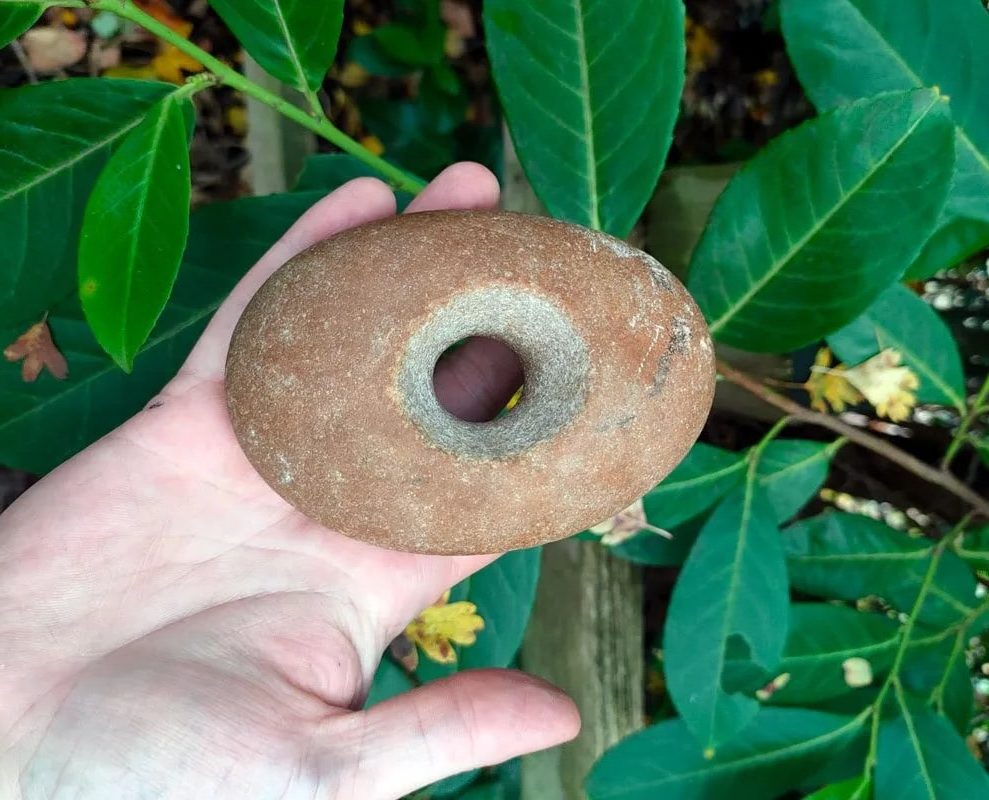
Archaeologists discovered an attractive Mesolithic stone mace head while excavation of a site near Buckingham. The work was done by Cotswold Archaeology as part of the work for the HS2 project.

The quartzite pebble mace head discovered at the site is roughly oval in plan (105mm x 74mm x 40mm) with a central hourglass perforation (approximately 35mm-20mm in diameter). Both ends of the mace head exhibit light impact damage, suggestive of use as a percussive tool.

The object was hafted, as evidenced by minor wear at the narrow point of the central perforation. Small chip marks around the circumference of the central perforation suggest that it was made using a technique known as pecking, rather than having been drilled.

Unlike later Neolithic mace heads, which are worked to take a specific shape, these Mesolithic objects take the shape of the raw material. Similar pebble mace heads have been found in Britain, including Eton Rowing Lake in Berkshire and Oakhanger in Hampshire, and they are thought to date from the Mesolithic period.
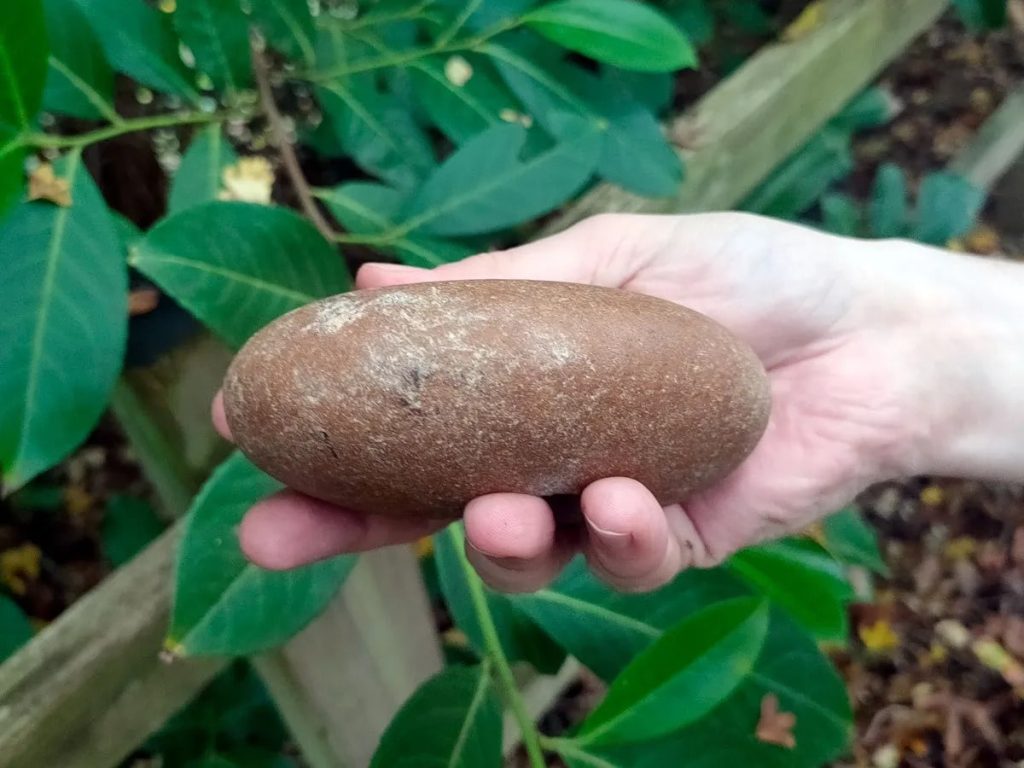
Photo: Cotswold Archaeology

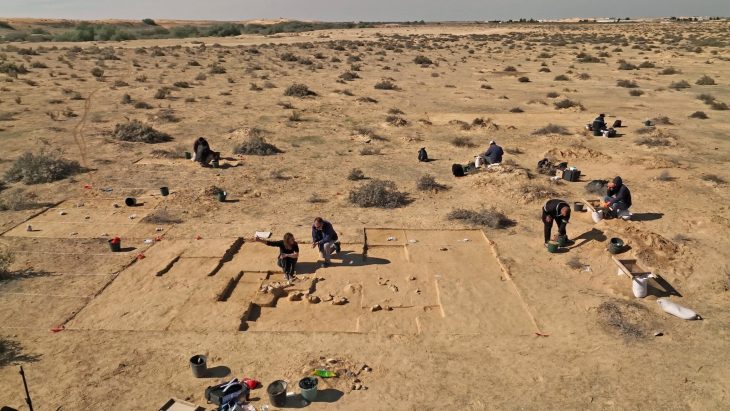
Mesolithic hunter-gatherer activity is thought to have been concentrated in resource-rich areas such as woodland and along watercourses, with recorded sites mostly located on dryer, rising ground. The site was in such a location, on a tributary of the River Great Ouse.


📣 Our WhatsApp channel is now LIVE! Stay up-to-date with the latest news and updates, just click here to follow us on WhatsApp and never miss a thing!!


The mace head was found in a post-medieval quarry fill that had cut off a curving ditch. With the mace head coming from a truncated internal deposit, it’s possible that this ditch was once part of a prehistoric ring ditch.

Using aerial photography, two more ring ditches, possibly representing Bronze Age round barrows, have been identified nearby, and two more ring ditches, as well as Bronze Age cremation burials, are known from the surrounding area.
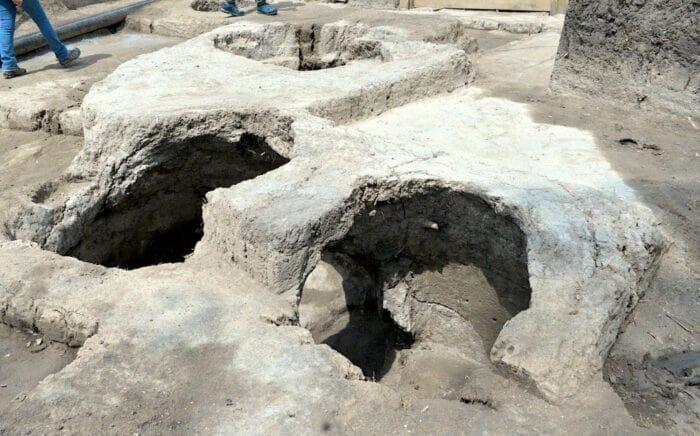
Cotswold Archaeology

Related Articles

Hussar Armor From The 17th Century Found By Metal Detectorist In Poland

8 April 2024

8 April 2024

A 17th-century Hussar armor was found in a field in the village of MikuƂowice in the Opatów region in southeastern...

Roman Bath and Magnificent Mosaics Used as Stables by the Villagers For Many Years

3 January 2025

3 January 2025

Archaeological excavations in the ancient city of Herakleia in Muğla’s Milas district in western TĂŒrkiye unearthed a striking discovery from...

A marble block depicting the mythological story of Actaeon, who was killed by his dogs, was found in the ancient city of Prusias ad Hypium

7 August 2022

7 August 2022

A marble block depicting the mythological story of Actaeon  (Akteon), who was killed by his dogs, was found during the...

Divine Punishment or Human Theft? 4,000-Year-Old Relief Missing from Egypt’s ‘Cursed’ Tomb

9 October 2025

9 October 2025

A haunting mystery is unfolding in Egypt’s Saqqara necropolis, where a 4,000-year-old limestone relief has vanished from one of the...

Elite Roman man buried with a silver crossbow brooch, first of its kind found in Wales

15 July 2023

15 July 2023

Archaeologists in Wales have made an intriguing discovery near a Roman villa. They have discovered the skeleton of a man...

3 mummified skeletons were found in Iznik, western Turkey

8 October 2021

8 October 2021

Archaeologists discovered mummified skeletons dating from the 2nd century A.D. within two sarcophagi at the Hisardere Necropolis in Bursa’s Iznik...

A 7,500-year-old settlement has been discovered in Turkey’s Domuztepe Mound

11 September 2021

11 September 2021

During the most recent excavations at Domuztepe Mound in the TĂŒrkoğlu district of southern Turkey’s Kahramanmaraß province, a settlement and...

This summer, a 2,000-year-old “thermopolium” fast-food restaurant in Pompeii will reopen to the public

8 August 2021

8 August 2021

Archaeologists excavated a 2000-year-old fast food and drink counter “termopolium” on the streets of the ancient Roman city of Pompeii...

Unique ancient Egyptian amulet seal discovered during archeological excavations in northern Turkey

11 November 2022

11 November 2022

During archaeological excavations in the ancient city of Amastris in the Amasra district of northern Turkey’s Bartın, an enchanted amulet...

2,300-year-old Punic tomb complex found during works on car park for staff

26 October 2024

26 October 2024

A 2,300-year-old Punic tomb was discovered during work in a car park near Mater Dei Hospital in Msida, Malta. The...

What Happens to Power When Bronze Loses Its Value? The Hastrup Hoard Holds the Answer

23 December 2025

23 December 2025

In late Bronze Age Europe, wealth was no longer buried with the dead. Instead, power was dismantled, recycled—and hidden in...

A new study reveals the Achaemenid Kingdom paid its workers silver

21 September 2021

21 September 2021

A new study on inscribed clay tablets that were used in the treasury archives of the Achaemenid Empire revealed that...

Two unique mid-14th-century shipwrecks discovered in Sweden

22 April 2023

22 April 2023

During an archaeological dig in western Sweden this summer, the remains of two medieval merchant vessels known as cogs were...

‘Bakery Prison’ found in Ancient Rome’s Pompeii

12 December 2023

12 December 2023

Archaeologists working on the ongoing excavations in Region IX, Insula 10, near the slopes of the ancient city of Pompeii,...

Metal Scraps were Used İnstead of Money in Bronze Age Europe

8 May 2021

8 May 2021

Bronze scrap uncovered in hoards in Europe was used as currency, according to researchers from the Universities of Göttingen and...