14 December 2025 The Future is the Product of the Past

In the ancient city of Syedra: a unique mosaic with the 12 labors of Heracles depicted on a single panel found

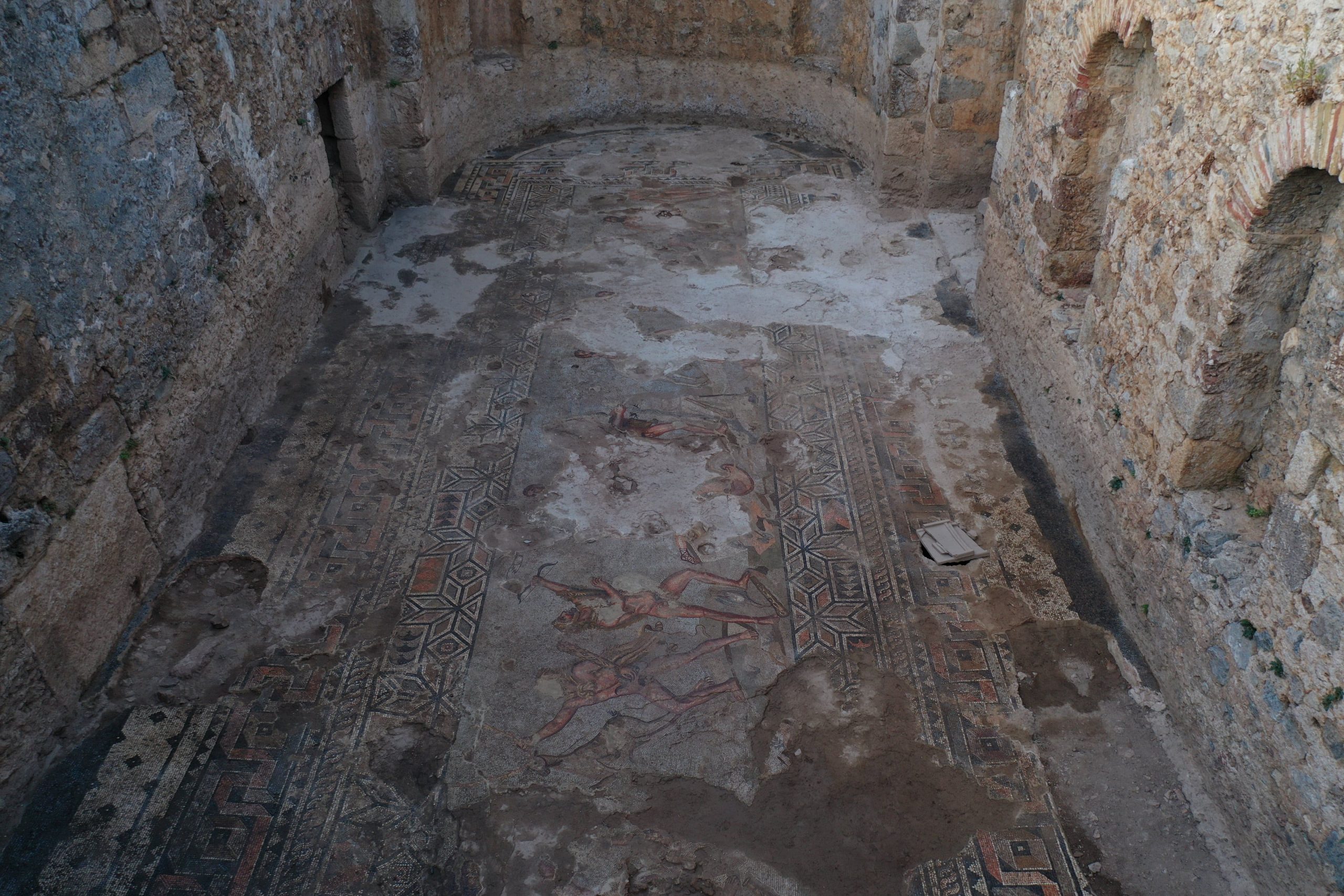
During the excavations in the ancient city of Syedra in the Alanya district of Antalya, approximately 164 square meters of floor mosaic depicting the 12 labors of the mythological hero Heracles (Hercules) were unearthed.

The discovery of the ancient mosaic was announced with a post made today from the official social account of the Department of Excavations and Researchs.

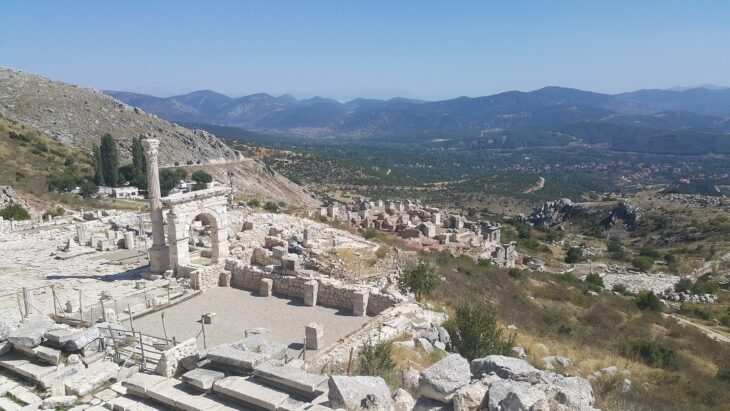
The remains of the ancient city of Syedra are located near Alanya, Turkey’s most famous tourist destination. The ancient city is 20 km east of the city center.

Karamanoğlu Mehmetbey University Faculty of Letters, Department of Archeology Faculty Member and Head of the Syedra Ancient City Excavations head Associate Professor Ertuğ Ergürer told Anadolu Agency (AA) that they have reached very good archaeological data in the studies they have been carrying out in the historical area since 2019.

Stating that the mosaic is very special artistically, Ergürer continued as follows:


📣 Our WhatsApp channel is now LIVE! Stay up-to-date with the latest news and updates, just click here to follow us on WhatsApp and never miss a thing!!


“We thought it was unhealthy to fully reveal our mosaic that we discovered in 2019 for that period. After the necessary preparations, we started to unearth our mosaic on the theme of ‘Heracles’ towards the end of 2020. In the mosaic, scenes called the 12 labors of Heracles were depicted and very well preserved,” he said.

Ergürer stated that the mosaic was completely covered with soil in order to preserve it and to obtain better results in future detailed studies.

Expressing that they deemed it appropriate to share with the public that the mosaic was found after the necessary protection measures were taken, Ergürer noted that they continue to work to unearth the mosaic and other artifacts in the area.
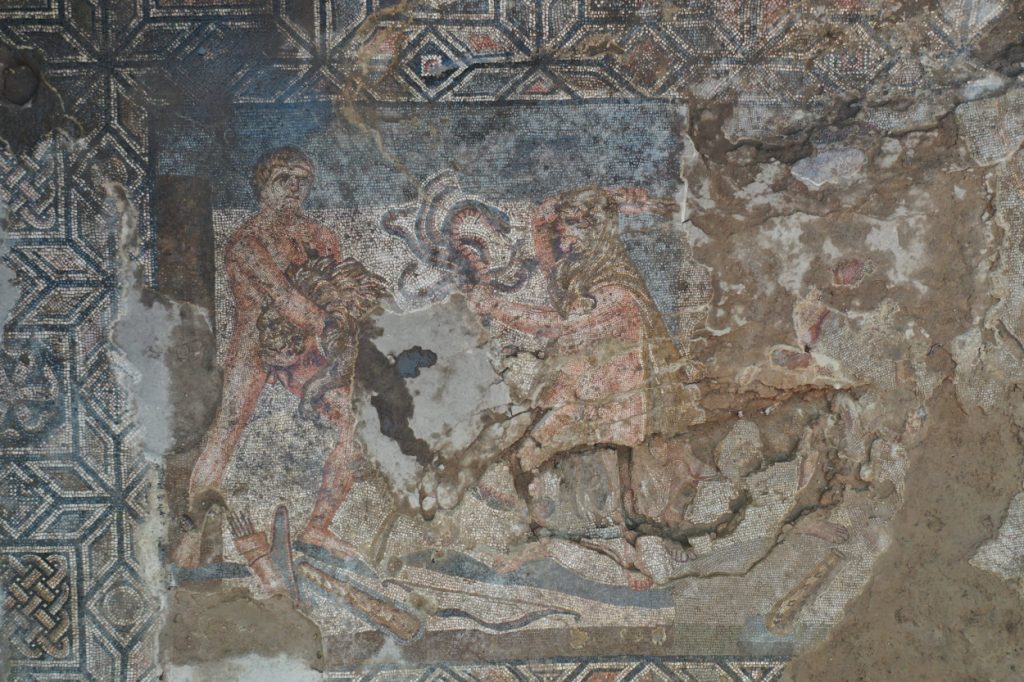
Photo: Department of Excavations and Researchs

Found in the great Roman bath

Pointing out that the historical artifact unearthed in the great Roman bath in the ancient city has no similar, Ergürer said:

The fact that the figures are made in human dimensions also stands out as the only example. In this sense, we are faced with a unique mosaic. The well-preserved mythological scenes in the mosaic add importance to the work.

The fact that the figures are made in human dimensions also stands out as the only example. In this sense, we are faced with a unique mosaic. The well-preserved mythological scenes in the mosaic add importance to the work.

Assoc. Dr. Ertuğ Ergürer stated that the floor mosaic, which is 7.9 meters in width and 21.91 meters in length, is considered to have been made in the 2nd century AD and spreads over an area of approximately 164 square meters.
Related Articles

Silver coins found near the ruins of the medieval monastery in Holy island

10 November 2021

10 November 2021

Archaeologists have discovered a silver coin on Lindisfarne, known as Holy Island, in the northeast of England. Dig Ventures is...

A 130,000-year-old Stingray Sand Sculpture on South Africa’s Coast May Be the World’s Oldest Animal Art

4 April 2024

4 April 2024

Analyzing this object, which at first glance looks like a symmetrical rock, the research team speculated that it could be...

Archaeology team discovers a 7,000-year-old and 13-hectare settlement in Serbia

30 April 2024

30 April 2024

Researchers have discovered a previously unknown Late Neolithic settlement near the Tamiš River in Northeast Serbia. The discovery was made...

Nearly 300-million-year-old Oldest known fossilized reptile skin found in Oklahoma cave resembles that of modern crocodiles

17 January 2024

17 January 2024

Paleontologists say they’ve identified and described the oldest fossilized reptile skin ever found. A team of paleontologists from the University...

Turkey’s Urartian Altıntepe Castle transforms into open museum

25 May 2022

25 May 2022

Altıntepe Castle, one of the most important centers of the Urartians and the Eastern Roman Empire, is now set to...

Researchers sequenced the DNA 1,600-year-old sheep mummy from an ancient Iranian salt mine, Chehrabad

16 July 2021

16 July 2021

A multinational team of geneticists and archaeologists sequenced the DNA from a 1,600-year-old sheep mummy discovered from Chehrabad, a salt...

Petalodus shark teeth found for the first time in China

29 August 2021

29 August 2021

A 290 million-year-old fossil of a shark with petal-shaped teeth has been discovered in China. Seven well-preserved Petalodus teeth were...

Persian plateau unveiled as crucial hub for early human migration out of Africa, study suggests

29 March 2024

29 March 2024

60,000 to 70,000 years ago, our species Homo sapiens walked out of Africa and began to find new homes around...

Mysterious Mongolian Arc in Eastern Mongolia Studied for the First Time

30 December 2023

30 December 2023

Researchers have studied the 405-km wall system in eastern Mongolia known as the Mongolian Arc to learn more about its...

An Urartian female executive grave was found at the Çavuştepe Mound

9 September 2021

9 September 2021

The grave of an Urartian, who was buried with his horse, cattle, and dog, had been found recently. Today, another...

An engraving on an almost 2,000-year-old knife believed to be the oldest runes ever found in Denmark has been discovered by archaeologists

22 January 2024

22 January 2024

Archaeologists have found a small knife with a completely unique runic inscription that can be dated almost 2000 years ago....

Remains of 240 people found beneath Ocky White department store in Wales

13 October 2022

13 October 2022

Archaeologists found skeletal remains of over more than 240 people, from beneath a former department store in Pembrokeshire in Wales,...

The Historical Building Next To The Million Stone Will Sell

6 February 2021

6 February 2021

Everyone has heard of the Million Stone, which was built during the Byzantine Empire and accepted as the zero points...

Royal-Memorial Inscription Attributed to King Sargon II Discovered in Western Iran

25 April 2021

25 April 2021

In western Iran, Iranian archaeologists discovered a part of a royal memorial inscription attributed to the Neo-Assyrian king Sargon II....

Remains of the summer palace of Genghis Khan’s grandson, Hulagu Khan, found in eastern Turkey

7 July 2022

7 July 2022

The archeology study team, consisting of Turkish and Mongolian scientists, found important findings in the study carried out to find...