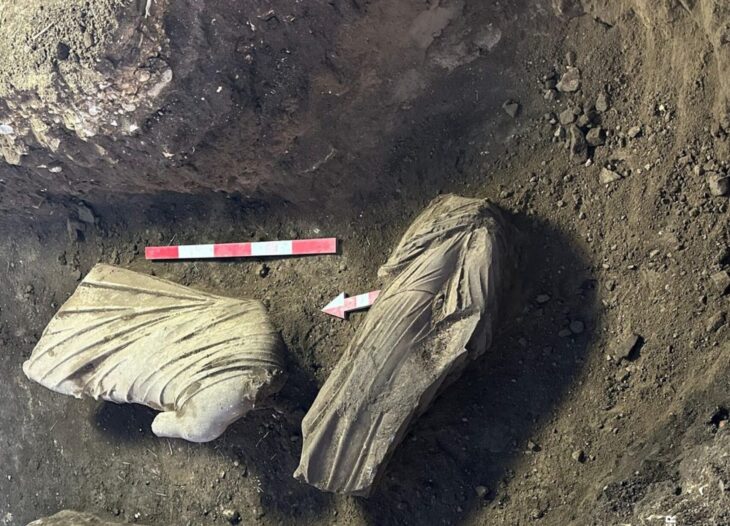
Archaeologists working in the eastern suburbs of Rome have uncovered a major archaeological complex that spans more than seven centuries of history. Excavations in the Acacia Park 2 area along Via di Pietralata have revealed Republican-era tombs, a cult building likely dedicated to Hercules, and two monumental basins, alongside a well-preserved ancient road.
The discoveries were made by the Special Superintendence of Rome, under the Italian Ministry of Culture, and are part of a broader urban planning project covering roughly four hectares. Excavations began in 2022 and continue to reveal a rich archaeological landscape that includes funerary, cultic, and infrastructural remains from the 5th century B.C. to the 1st century A.D.
A Road That Shaped the Ancient Landscape
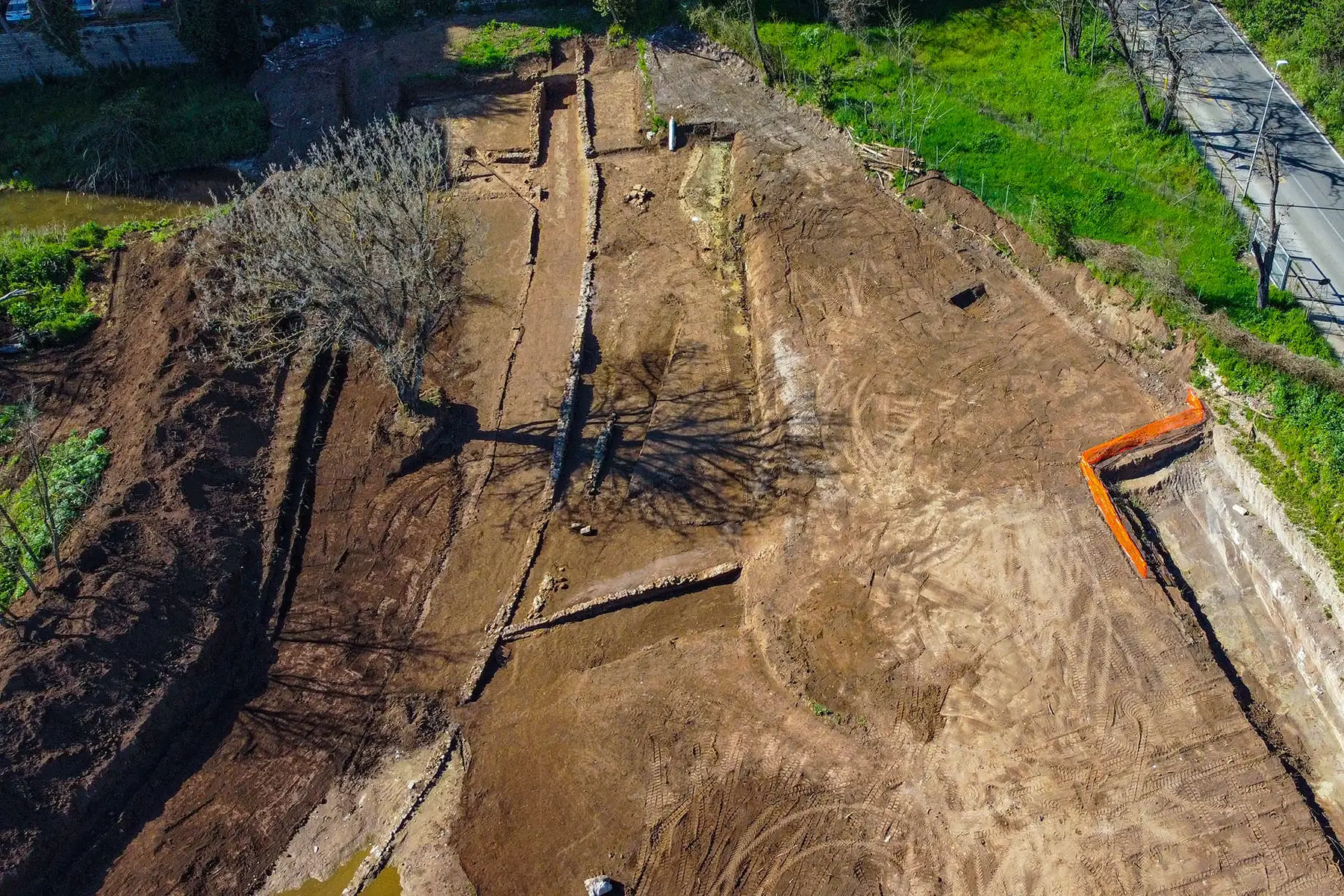
At the heart of the site is a long ancient road axis that once crossed the area and ran alongside a waterway flowing into the nearby Aniene River. Archaeologists say the road likely developed over an even older travel route, but the first major evidence of a structured roadway dates to the mid-Republican period (3rd century B.C.).
The road is divided into two sections. One is a beaten-earth route near today’s Via di Pietralata, while the other is cut directly into the tufa bank near Via Feronia. In the 1st century A.D., the road was upgraded with a new surface and bordered by opus reticulatum masonry, indicating a more monumental design. Carriage furrows still remain in the tufa, offering rare evidence of ancient traffic.
After the 1st century A.D., the road appears to have fallen into disuse. Archaeologists found pit burials from the 2nd and 3rd centuries A.D. along the route, suggesting a shift in the road’s function as the landscape changed.
📣 Our WhatsApp channel is now LIVE! Stay up-to-date with the latest news and updates, just click here to follow us on WhatsApp and never miss a thing!!
A Small Cult Building with Big Significance
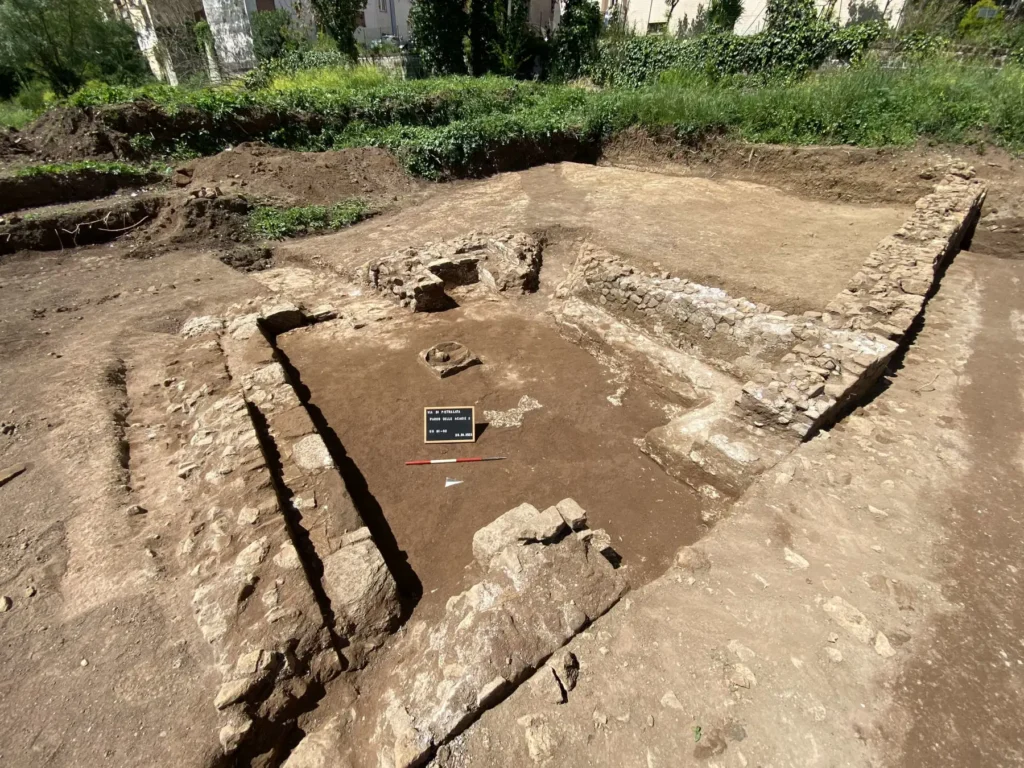
At the end of the road, archaeologists discovered a small cult building, or sacellum, measuring roughly 4.5 by 5.5 meters. The structure was built from tufa masonry and lined with plaster, and features a central altar base and a wall niche likely intended for a cult statue.
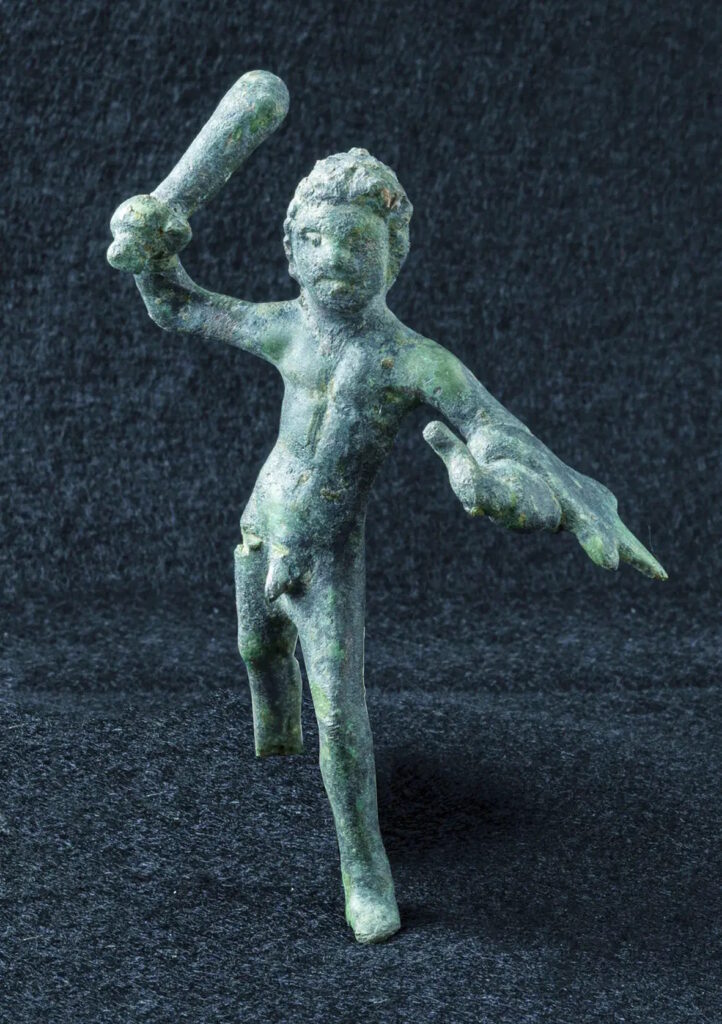
The sacellum was built atop a votive deposit, containing offerings such as figurines, terracotta body parts, and animal figures. These finds strongly suggest the site was dedicated to Hercules, a deity widely worshipped along the ancient Via Tiburtina, which connected Rome to Tibur (modern Tivoli).
Bronze coins found in the deposit date the sacellum to the late 3rd or 2nd century B.C., placing it firmly in the Republican era.
Monumental Republican Tombs Unearthed
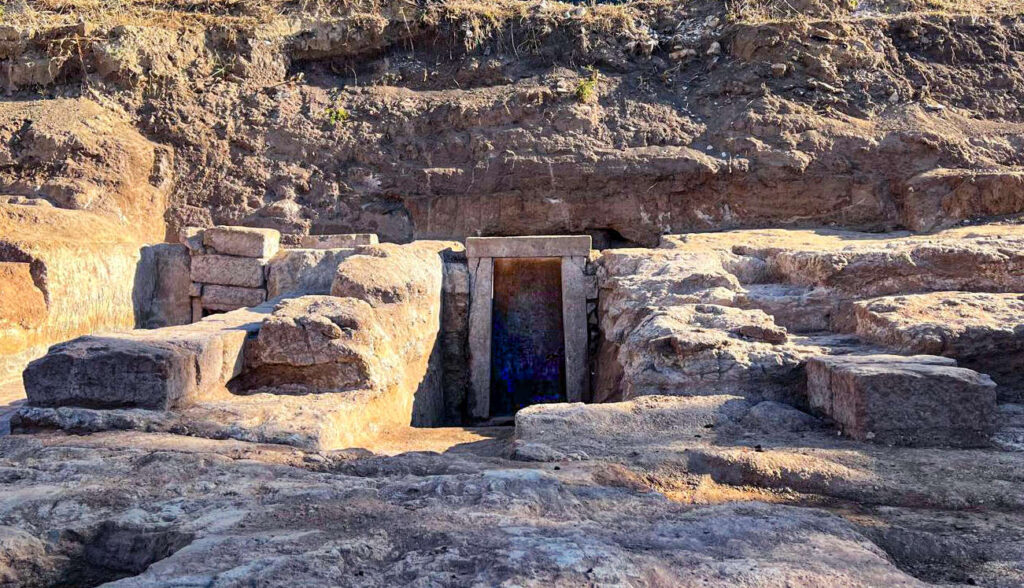
One of the most significant finds is a large Republican-era funerary complex carved into the tufa bank near Via di Pietralata. The complex includes two parallel corridors leading to two chamber tombs, both dating between the 4th and early 3rd centuries B.C.
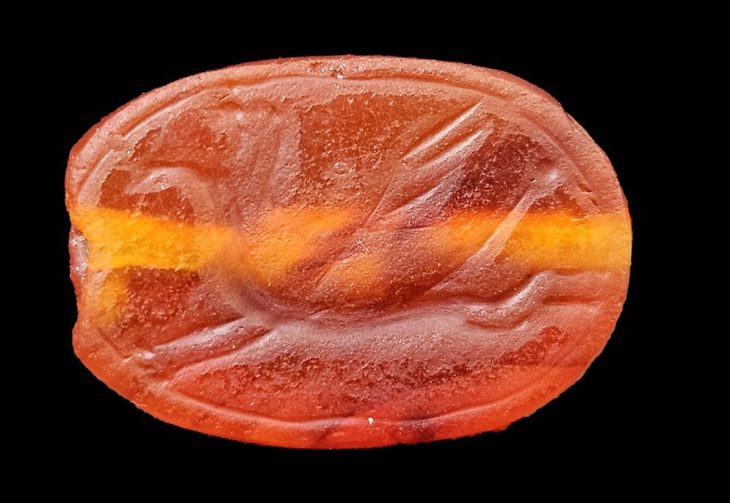
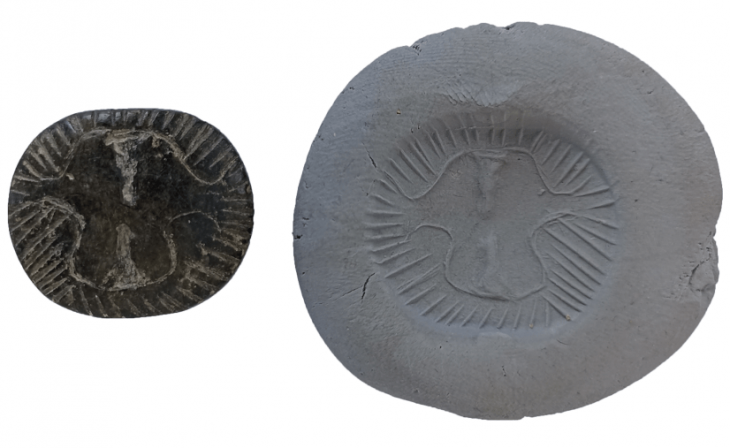
Tomb A features a monumental entrance carved into the rock, sealed by a large stone slab. Inside were a large peperino sarcophagus and three urns, along with grave goods such as vases, a black-painted bowl, a ceramic jug, a mirror, and a small cup.
Tomb B, likely constructed slightly later in the 3rd century B.C., contains benches along the walls for placing bodies. Archaeologists discovered the remains of an adult male whose skull shows evidence of ancient surgical drilling, a rare and valuable clue to early medical practices.
Researchers believe both tombs were once connected by a monumental façade of tufa blocks, suggesting the complex belonged to a wealthy and influential family in the suburban area.
Two Monumental Basins: Ritual or Utility?
Perhaps the most dramatic discoveries are two massive basins that remain difficult to interpret. The east basin measures approximately 28 meters long by 10 meters wide and reaches a depth of 2.1 meters. Built in the 2nd century B.C., it was later abandoned and finally sealed around the end of the 2nd century A.D.
The basin was lined with plaster and crowned with a tufa cornice, featuring niches on the long sides and a dolium (storage jar) embedded in one end. While the basin clearly held water, its purpose remains uncertain. Some scholars suggest a cultic function, while others argue it may have served a production or storage purpose.
Nearby, a south basin was discovered cut into the tufa bank. Measuring about 21 by 9.2 meters and reaching 4 meters deep, it is lined with irregular stone blocks and includes a double ramp system for access. Unlike the east basin, no clear water channels have been found, leaving its function even more mysterious.
Some scholars compare the Pietralata basin to similar structures found at Gabii, where researchers have suggested a sacred function. This comparison has raised the possibility that the Pietralata basins also served religious or ceremonial purposes.
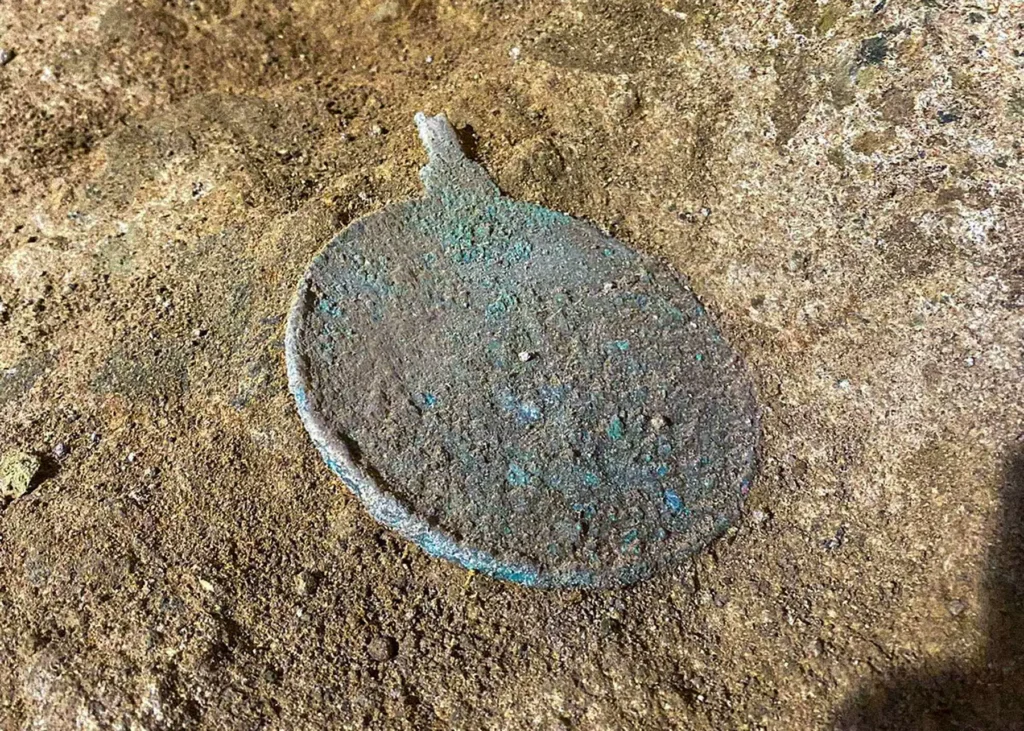
Tomb A, mirror. Credit: Special Superintendence of Rome.
Rome’s Suburbs Reveal Hidden History
“These discoveries show that Rome’s modern suburbs still hold deep historical memory,” said Daniela Porro, Special Superintendent of Rome. “Sites like this enrich the narrative of Rome as a diffuse city and highlight the importance of preventive archaeology for urban development.”
Archaeologist Fabrizio Santi added that the tombs and basins offer “exciting research scenarios” and may reveal how ancient Romans used the landscape for both ritual and daily life.
The excavation team plans to continue research and eventually develop a public enhancement plan to integrate these findings into Rome’s cultural heritage. For now, the discoveries in Acacia Park 2 offer a rare glimpse into Rome’s Republican past, revealing how ancient communities lived, worshipped, and died beyond the city’s famous core.
Special Superintendence of Rome
Cover Image Credit: Special Superintendence of Rome.