A genetic study has uncovered a previously unknown human lineage that survived the end of the last Ice Age, challenging long-held assumptions about how ancient populations evolved and interacted during one of the most transformative periods in human history.
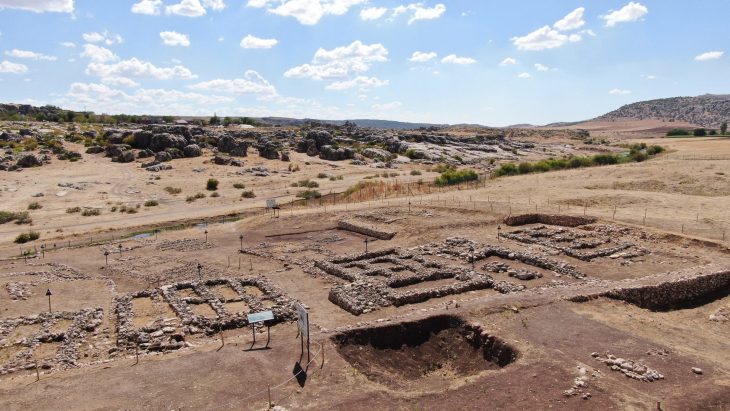
The discovery, published in the journal Current Biology, centers on ancient human remains unearthed at the Donghulin archaeological site near modern-day Beijing. By analyzing DNA extracted from these remains, scientists have revealed a complex and surprisingly resilient human story—one in which multiple lineages coexisted, adapted, and sometimes disappeared without leaving a lasting genetic trace.
A Hidden Branch of Humanity Emerges
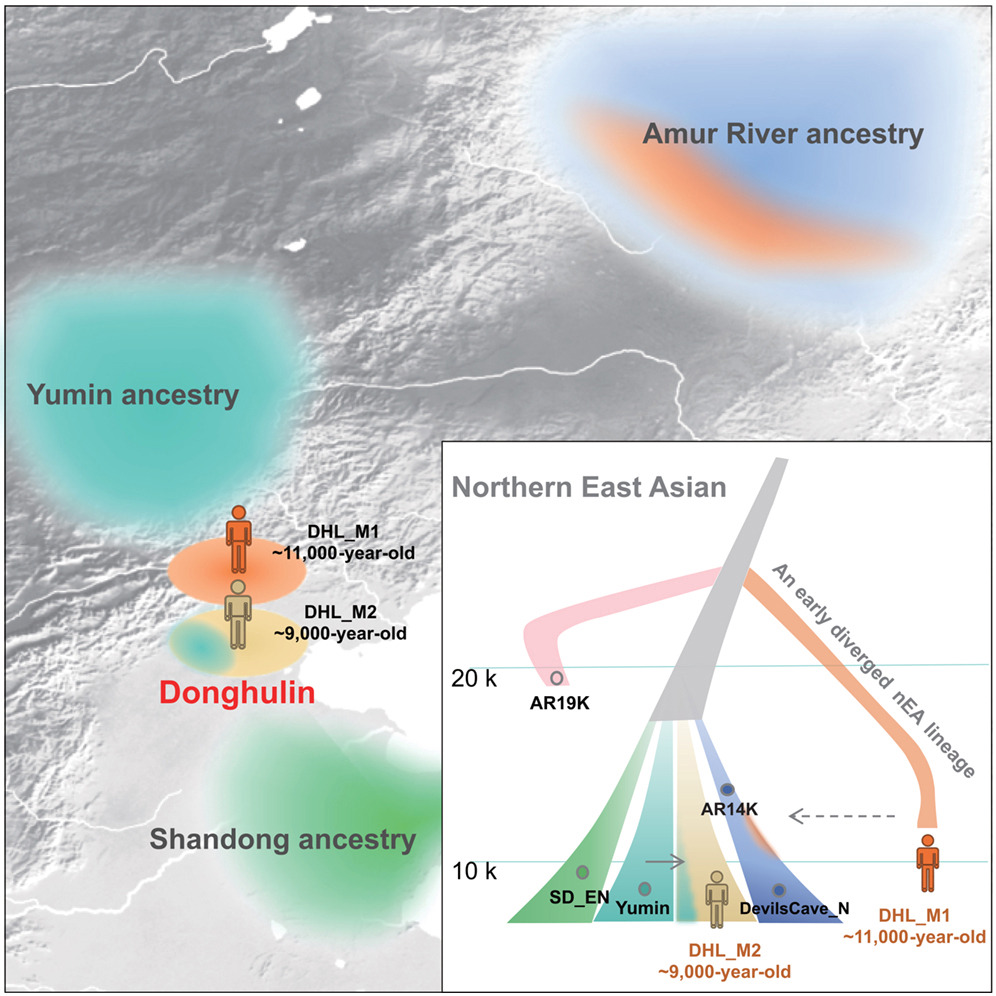
At the heart of the discovery is an approximately 11,000-year-old individual whose genetic profile does not match any previously identified human population. Researchers, led by Qiaomei Fu, found that this individual belonged to a deeply divergent northern East Asian lineage that likely split from other human groups tens of thousands of years earlier.
This lineage persisted well beyond the end of the Ice Age, a period marked by dramatic climate warming and sweeping cultural change. Rather than being replaced outright by newer populations—as seen in parts of Europe—the evidence suggests that ancient human diversity in East Asia was far more enduring and complex.
According to the study, this early-diverged lineage “may represent a previously unrecognized ancestry,” highlighting how little is still known about human population structures in prehistoric Asia.
📣 Our WhatsApp channel is now LIVE! Stay up-to-date with the latest news and updates, just click here to follow us on WhatsApp and never miss a thing!!
Life at the Edge of a Changing World
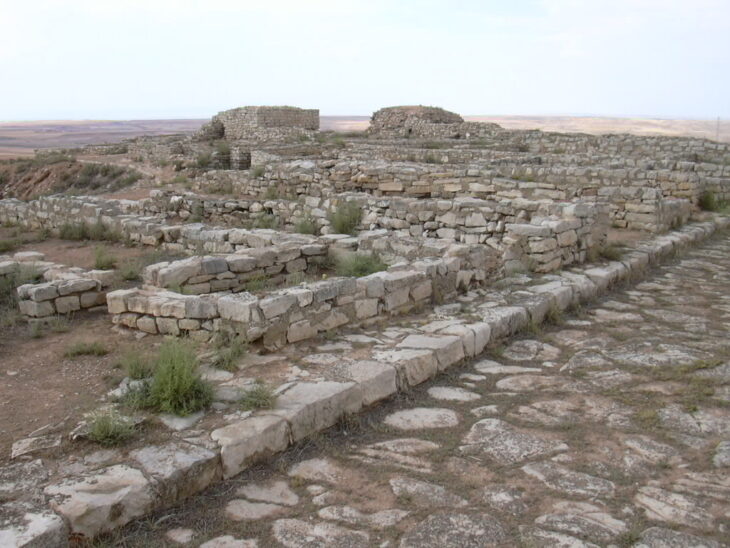
The Donghulin site offers a rare glimpse into life during the transition from the Paleolithic to the Neolithic era—a time when humans began shifting from hunting and gathering to more settled lifestyles.
Archaeological evidence shows that the community engaged in early forms of plant processing, pottery use, and millet domestication. Yet, strikingly, while cultural practices remained relatively consistent over time, the genetic makeup of the population changed significantly.
Roughly 2,000 years after the earlier individual, a younger man buried at the same site displayed a completely different genetic profile. His ancestry was more closely linked to populations from the Mongolian Plateau, suggesting that new groups had moved into the region.
This finding points to a key insight: cultural continuity does not necessarily mean population continuity.
A Complex Web of Human Interaction
The genetic data also reveal that ancient East Asia was not isolated. Instead, it was part of a broad network of human interaction stretching across vast distances.
The older lineage shows connections to populations from the Amur River region in northeastern Asia, while the younger individual shares ties with communities further west. These links are reinforced by archaeological finds, including ornaments made from marine shells and ostrich eggshells—materials that would have traveled long distances.
Such evidence suggests that prehistoric humans maintained extensive trade routes or migration pathways, even in challenging environments.
Climate Pressure and Human Innovation
The end of the Ice Age brought warmer temperatures, but also environmental instability. Changing rainfall patterns, shifting ecosystems, and fluctuating animal populations would have placed enormous pressure on human communities.
Researchers believe this pressure played a crucial role in driving innovation.
“Survival pressure forced populations to explore new resource utilization strategies,” Fu explained, linking environmental stress directly to the gradual emergence of agriculture and settled life.
Rather than a single, rapid transition, the transition to farming in northern East Asia appears to have been slow, uneven, and shaped by local conditions. Communities experimented with new technologies and food sources over thousands of years.
Survival Without Legacy
One of the most intriguing aspects of the discovery is that this ancient lineage, despite surviving a major climatic transition, left little trace in modern populations.
The younger individual’s genetic markers—both maternal and paternal—are rare today, appearing only sporadically in parts of China and Japan. Across the broader genome, there is no strong evidence that this lineage significantly contributed to later populations.
This suggests that entire branches of humanity can endure for millennia and still fade into near extinction, leaving behind only faint genetic echoes.
Rethinking Human History
For decades, scientists have often viewed human evolution as a series of replacements, where new populations sweep in and displace older ones. But the Donghulin findings paint a more nuanced picture.
In northern East Asia, multiple human groups appear to have coexisted, interacted, and adapted in parallel. Cultural ideas—such as pottery or plant cultivation—could spread independently of large-scale migrations.
This stands in contrast to regions like Europe, where the rise of farming is closely tied to major population shifts.
Instead, East Asia may represent a unique center of early human innovation, where diversity persisted and change unfolded gradually.
A Window Into the Unknown
The discovery raises as many questions as it answers. Was this hidden lineage widespread or limited to specific regions? How many other unknown human groups once existed? And why did some survive while others vanished?
Scientists say that more ancient DNA samples from across the region will be crucial in unraveling these mysteries.
For now, the Donghulin site stands as one of the clearest examples of how complex—and unpredictable—human history truly is.
As researchers continue to decode the genetic past, one thing is becoming increasingly clear: the story of humanity is not a straight line, but a tangled web of survival, adaptation, and forgotten ancestors waiting to be rediscovered.
Zhang, G., Zhao, C., Wang, T., Wang, T., Bennett, E. A., Cui, T., Guo, J., Yu, J., Liu, J., Cao, P., Ran, J., Dai, Q., Liu, T., Liu, F., Bai, F., Feng, X., Ping, W., Wang, W., & Fu, Q. (2026). Ancient genomes provide insight into the Paleolithic-to-Neolithic transition in northern East Asia. Current Biology, 36(6), 1399–1409.e7. https://doi.org/10.1016/j.cub.2026.02.004
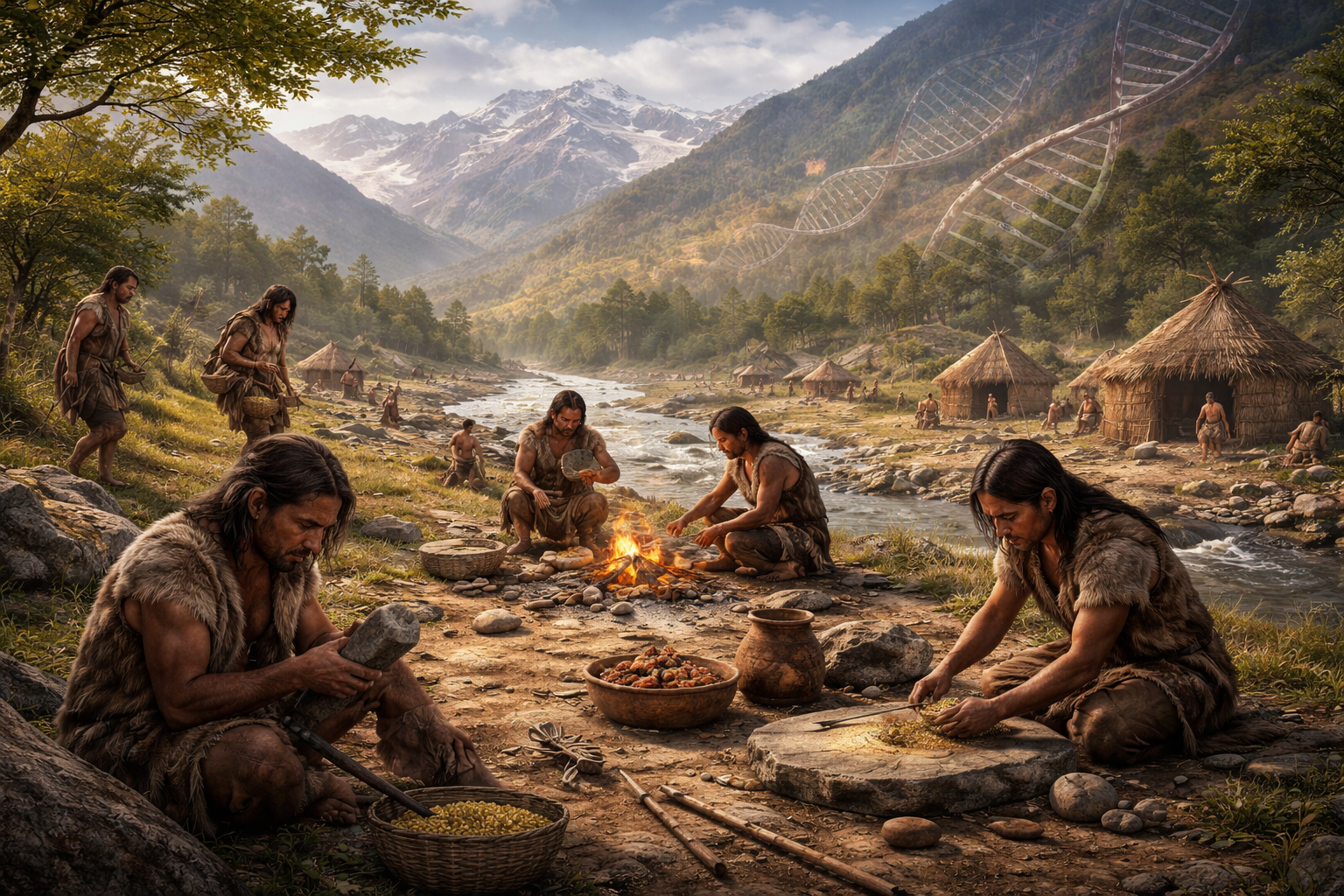
Cover Image Credit: AI-generated illustrative image depicting.