A remarkable archaeological discovery near the Sea of Galilee has revealed that psychological warfare on the battlefield is far older than previously imagined. Researchers have uncovered a 2,000-year-old sling bullet engraved with a mocking message to enemy soldiers — a find that sheds new light on the culture of warfare in the ancient world.
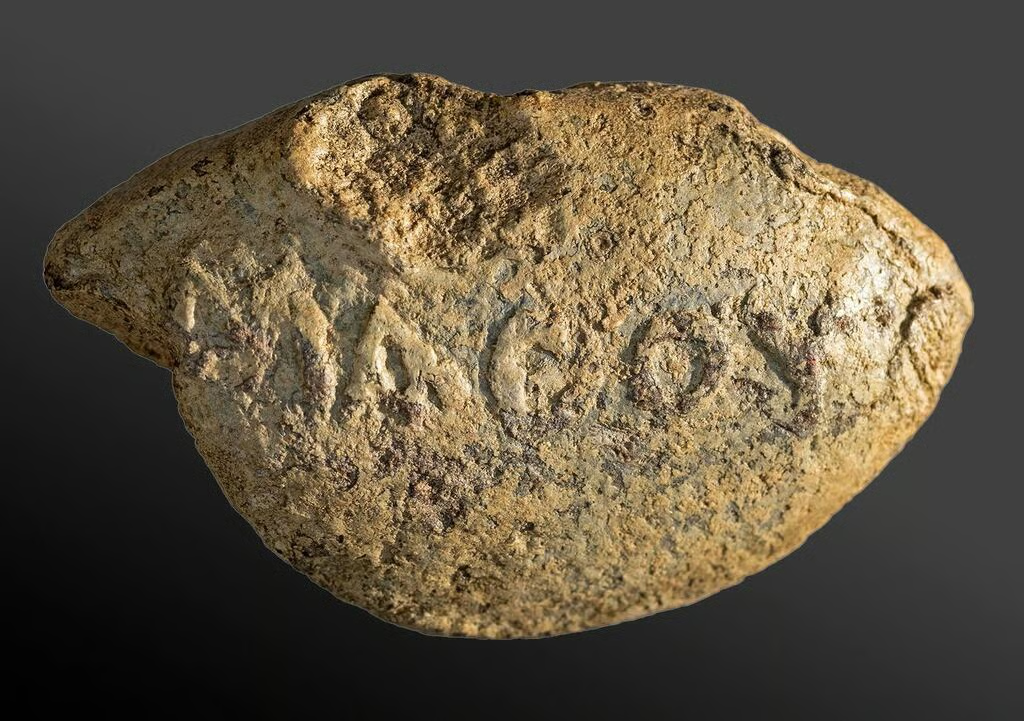
The artifact was discovered during excavations at the ancient city of Hippos (Sussita), part of the historic Decapolis region. The lead projectile carries a short inscription in ancient Greek that translates roughly as “Learn your lesson!” — a sarcastic taunt aimed at enemies advancing toward the city. Archaeologists say this is the first time such an inscription has ever been found on a sling bullet.
The discovery was detailed in a scientific article published in the journal Palestine Exploration Quarterly by archaeologists Michael Eisenberg and Arleta Kowalewska of the University of Haifa and Gregor Staab of the University of Cologne.
A Tiny Artifact With a Powerful Message
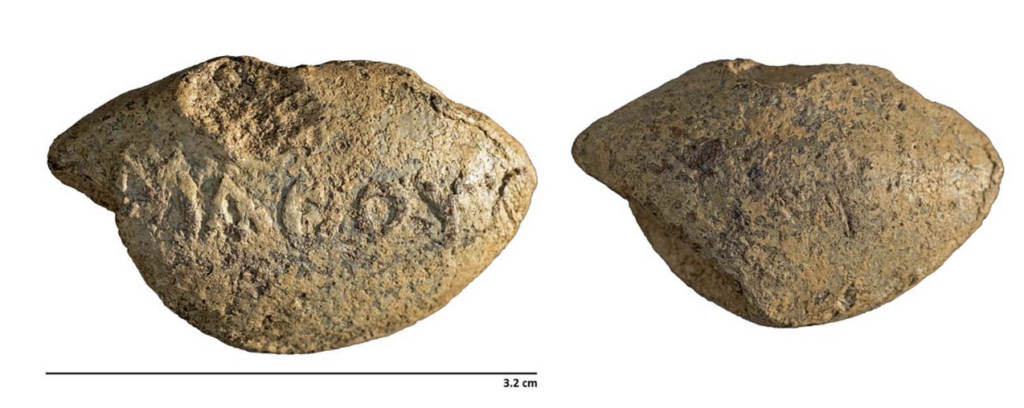
The sling bullet is small but striking. Measuring approximately 3.2 centimeters long and 1.95 centimeters wide, it weighs about 38 grams and was made from cast lead. One side of the almond-shaped projectile bears a five-letter Greek inscription: ΜΑΘΟΥ.
Scholars interpret this word as a sarcastic imperative derived from the Greek verb meaning “to learn.” In this context, it likely served as a taunt directed at the enemy — essentially telling them to “learn their lesson.”
📣 Our WhatsApp channel is now LIVE! Stay up-to-date with the latest news and updates, just click here to follow us on WhatsApp and never miss a thing!!
While inscriptions on ancient sling bullets are not unheard of, they usually feature the name of a commander, a military unit, or a symbol such as a scorpion or lightning bolt. The newly discovered inscription is different: it directly addresses the opponent with a mocking command.
According to the researchers, this makes the artifact unique in the archaeological record.

Found Near an Ancient Battlefield Route
The projectile was uncovered during the 2025 excavation season in the southern necropolis of Hippos. It was found near the bed of the Sussita Stream, close to the route of an ancient road that once led toward the city’s eastern gate.
The location suggests the sling bullet was fired by defenders positioned on the slopes or walls of the city at attackers advancing along the road below. The artifact was discovered about 260 meters from the city walls, supporting the idea that it was used during an actual battle rather than for training.
One edge of the bullet bears a noticeable impact mark, further indicating that it struck a hard surface after being launched.
Evidence of Ancient Psychological Warfare
Sling bullets were a common weapon in the Hellenistic period, particularly between the third and first centuries BCE. Skilled slingers could launch these small lead projectiles at remarkable distances.
Ancient military studies suggest that experienced slingers could hit targets more than 300 meters away, with typical combat distances ranging from 100 to 300 meters.
But the inscription on this bullet shows that warfare in antiquity was not purely physical. Soldiers also used language to intimidate and mock their opponents — much like modern troops sometimes write messages on artillery shells.
Other known sling bullets from antiquity contain sarcastic phrases such as “Take this!”, “Catch!”, or “Taste it!”. The newly discovered inscription, however, represents a new variation on this tradition.
By telling the enemy to “learn,” the defenders of Hippos may have been implying that the attackers were about to receive a painful lesson.
Hippos: A Strategic City of the Decapolis
The ancient city of Hippos stood on Mount Sussita, rising roughly 350 meters above the Sea of Galilee. It was founded in the second century BCE, likely after the Battle of Paneion when the Seleucid Empire gained control of the region.
From its elevated position, the city commanded strategic routes in the region, making it both a valuable stronghold and a frequent target during conflicts.
Excavations at Hippos have been ongoing for more than two decades. During that time, archaeologists have discovered 69 lead sling bullets in and around the site, but the newly inscribed example is the first of its kind.
Many of the previously found projectiles feature decorative symbols, but none contain written messages.
A Glimpse Into the Humor of Ancient Soldiers
For archaeologists, the tiny artifact offers a rare glimpse into the mindset of soldiers who lived more than two millennia ago.
War in the ancient world is often studied through large structures — fortifications, siege machines, and battlefields. But small objects like this sling bullet reveal the human side of conflict: the sarcasm, bravado, and psychological tactics that soldiers used against their enemies.
In a way, the message carved into the lead projectile bridges thousands of years of history. Just as modern soldiers sometimes leave notes or markings on weapons, the defenders of Hippos once fired a projectile carrying a blunt message to their opponents.
More than two thousand years later, that sarcastic command — “Learn your lesson!” — has finally been heard again.
Eisenberg, M., Kowalewska, A., & Staab, G. (2026). Learn! – A New Type of Inscription on a Sling Bullet from Hippos of the Decapolis. Palestine Exploration Quarterly, 1–5. https://doi.org/10.1080/00310328.2026.2641294
Cover Image Credit: Dr. Michael Eisenberg