A quiet plot of land in southern France has begun to tell a much larger story. Beneath the modern town of Gémenos, just 20 kilometers east of Marseille, archaeologists have uncovered what appears to be the entrance zone of a 2,000-year-old Roman settlement—complete with a road, bath structures, and traces of industry that once connected urban life with the surrounding countryside.
The discovery, led by Inrap, is part of a preventive excavation ahead of a development project. Yet what has emerged is not just a scatter of ruins, but a carefully organized landscape that sheds light on how movement, commerce, and daily life intersected at the edges of a Roman town.
A Road That Defined the Settlement’s Edge
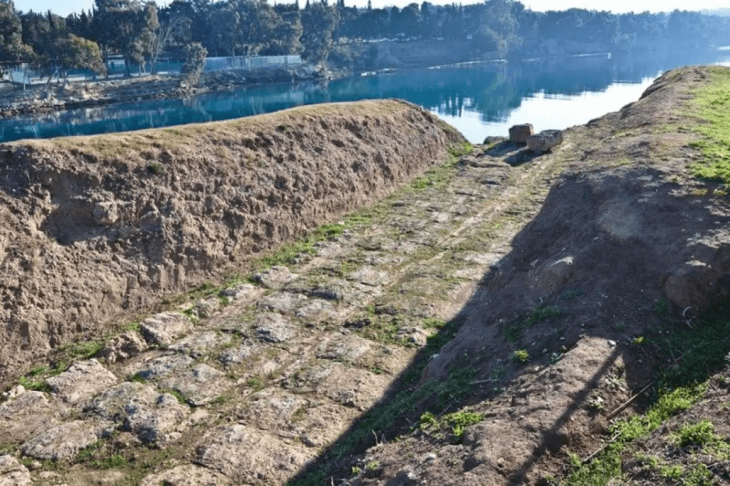
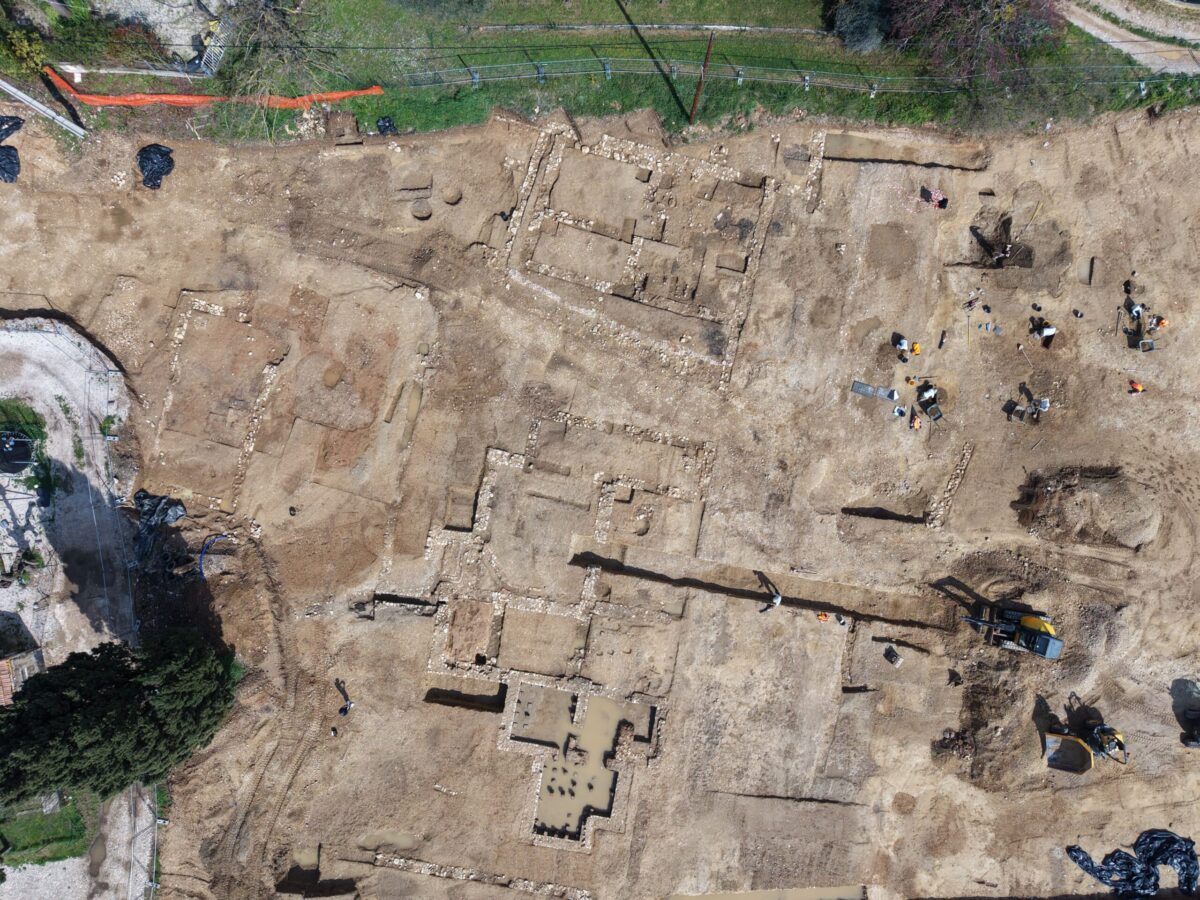
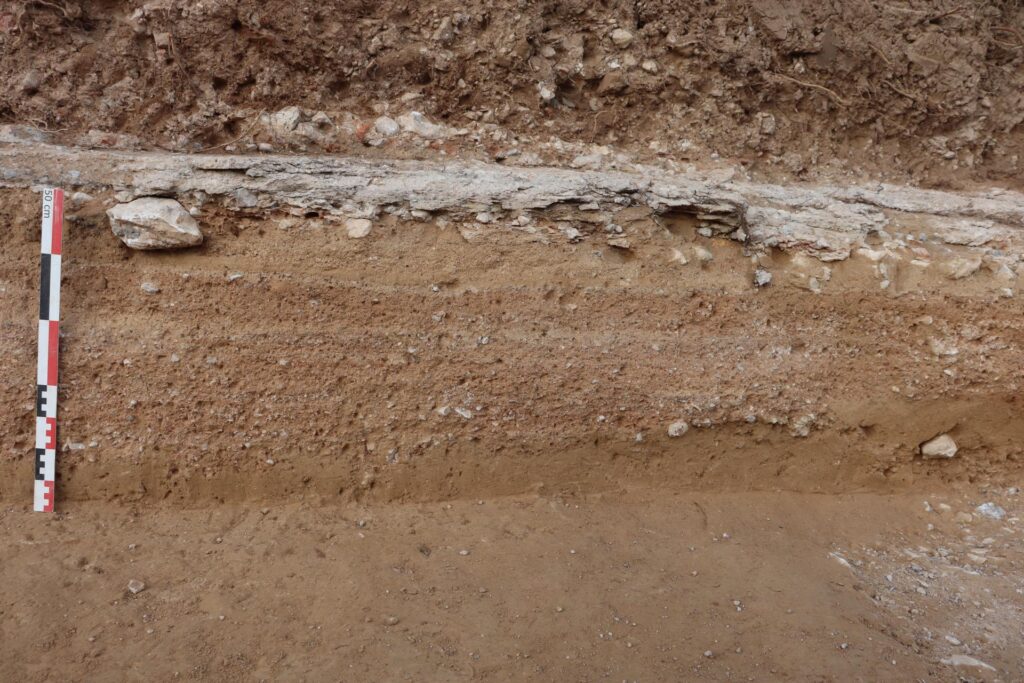
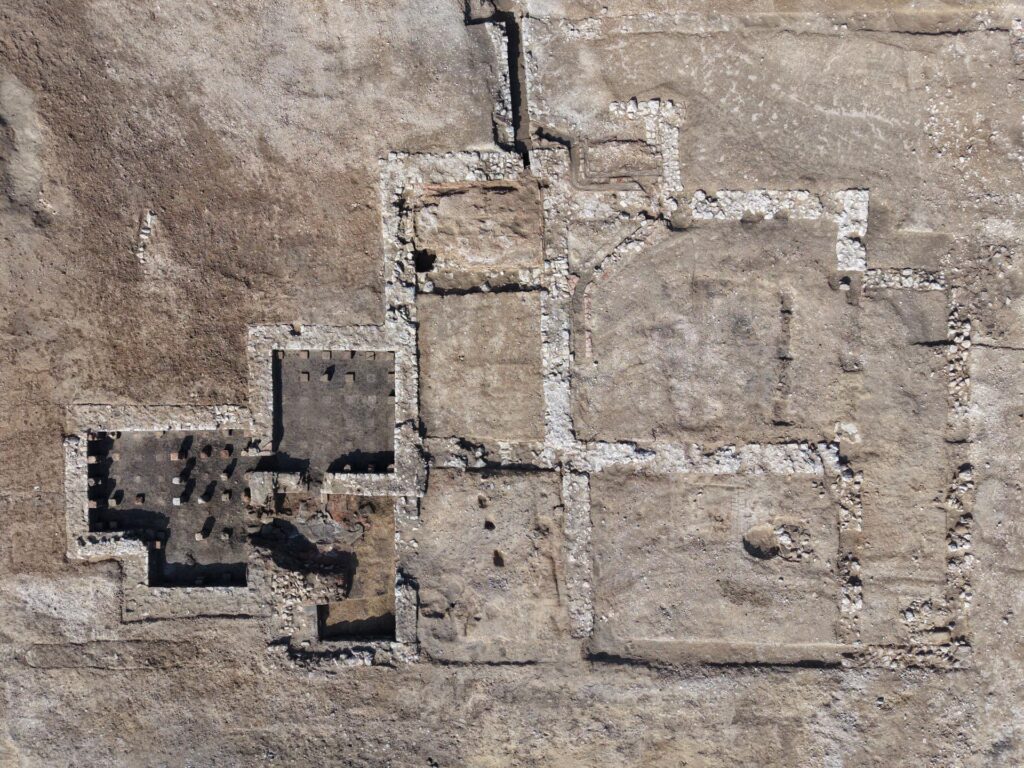
At the heart of the excavation lies a north–south Roman road, cutting cleanly through the 4,000-square-meter site. This axis appears to have acted as a boundary—one that divided two very different worlds.
To the east, archaeologists identified traces of vine cultivation, along with a series of circular pits roughly one meter in diameter. These features suggest agricultural activity tied to the settlement’s economy. Some of the pits yielded Roman-period artifacts, while others contained medieval ceramics, indicating that the land did not fall into complete disuse after antiquity.
To the west of the road, however, the landscape shifts dramatically. Here, the remains of stone-built structures cluster along the roadside, hinting at a more urbanized environment.
📣 Our WhatsApp channel is now LIVE! Stay up-to-date with the latest news and updates, just click here to follow us on WhatsApp and never miss a thing!!
A Bath Complex for Travelers?
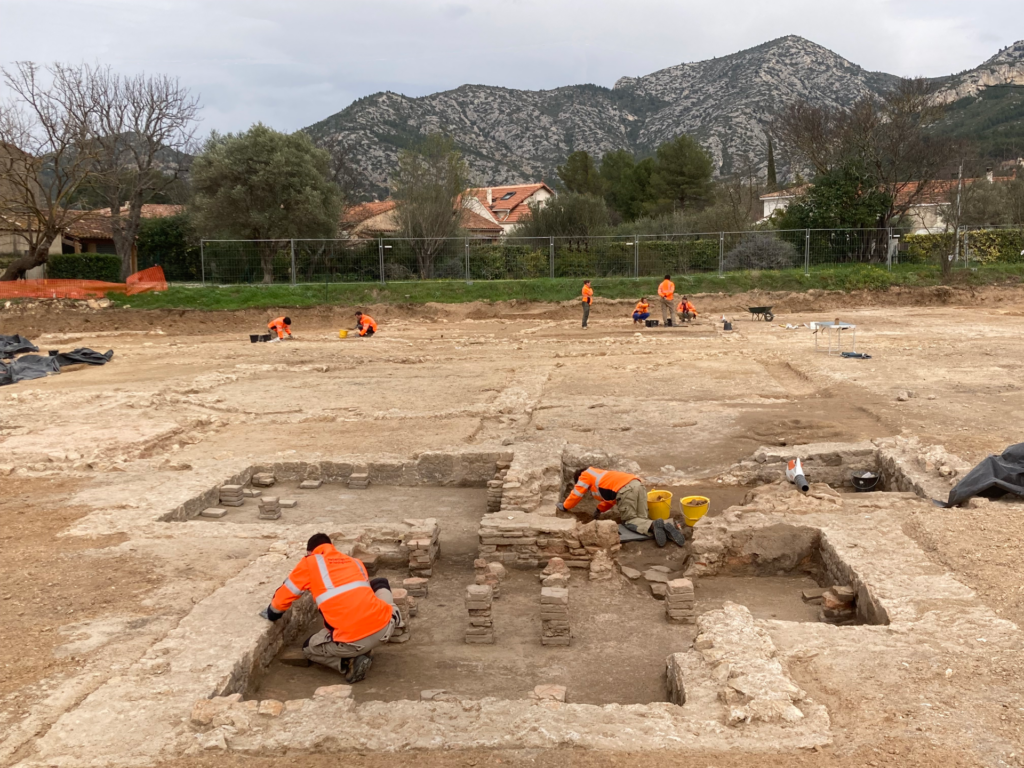
Among the most striking discoveries is a group of interconnected rooms that point to a bath complex equipped with hypocaust heating—a hallmark of Roman engineering. The remains include brick pilae (small pillars used to circulate hot air beneath floors), a furnace room, and a basin once lined with marble slabs.
Fragments recovered from the site suggest that some walls were decorated with painted plaster, adding a layer of refinement to the structure. Yet its scale raises intriguing questions. The complex appears too large to be a private residence, yet too modest to function as a full public bathhouse.
This ambiguity has led researchers to consider a compelling possibility: the structure may have been part of a roadside hospitality complex, designed to serve travelers entering the settlement. Positioned directly along the main route, it could have offered rest, bathing, and social interaction—a liminal space between journey and arrival.
Industry at the Urban-Rural Interface
The excavation also reveals a more practical side of life at the settlement’s edge. Just north of the bath complex, separated by a narrow lane, archaeologists uncovered evidence of metalworking activity.
Scattered across the area were hearths and fragments of iron and bronze waste—clear indicators of a metallurgical workshop. These findings suggest that production activities were deliberately placed at the margins of the settlement, balancing accessibility with separation from residential zones.
Further west, additional spaces built with raw earth materials point to other forms of craftsmanship, though their exact functions remain under investigation.
One particularly intriguing feature lies at the boundary between built space and farmland: a modest room with a floor made of crushed tile concrete. Inside, archaeologists found a hearth or oven constructed from reused ceramic fragments, including pieces of large storage jars (dolia). The structure is tentatively interpreted as a kitchen or food preparation area, possibly serving workers or travelers moving through the site.
A Settlement Reconsidered
The Gémenos site has long been known to archaeologists, with earlier excavations between 2013 and 2023 suggesting the presence of a small Roman agglomeration occupied between the 1st and 3rd centuries CE. What makes the current discovery significant is how it reframes that settlement—not as an isolated cluster of buildings, but as a dynamic threshold space where agriculture, industry, and mobility converged.
The coexistence of vineyards, workshops, and hospitality structures reveals a landscape organized not only for living, but for movement and exchange. It is a reminder that Roman settlements were not static entities; they were fluid systems, shaped by the rhythms of travel, trade, and seasonal activity.
Excavations Continue
Fieldwork at Gémenos is ongoing, with archaeologists expected to complete the current phase in early April before expanding into the western portion of the site—an area already known to contain ancient agricultural remains.
Once excavation concludes, the site will be returned for development, but the research itself is far from over. Specialists at Inrap will continue to analyze the findings, piecing together a more complete picture of how this settlement functioned at the crossroads of Roman Provence.
For now, what has emerged from beneath the soil is not just a fragment of the past, but a carefully structured entry point into a world where roads did more than connect places—they defined them.
Cover Image Credit: General view of the Gémenos excavation site. Laurent Vallieres, Inrap