
9 February 2026 The Future is the Product of the Past

An engraving on an almost 2,000-year-old knife believed to be the oldest runes ever found in Denmark has been discovered by archaeologists

Archaeologists have found a small knife with a completely unique runic inscription that can be dated almost 2000 years ago.

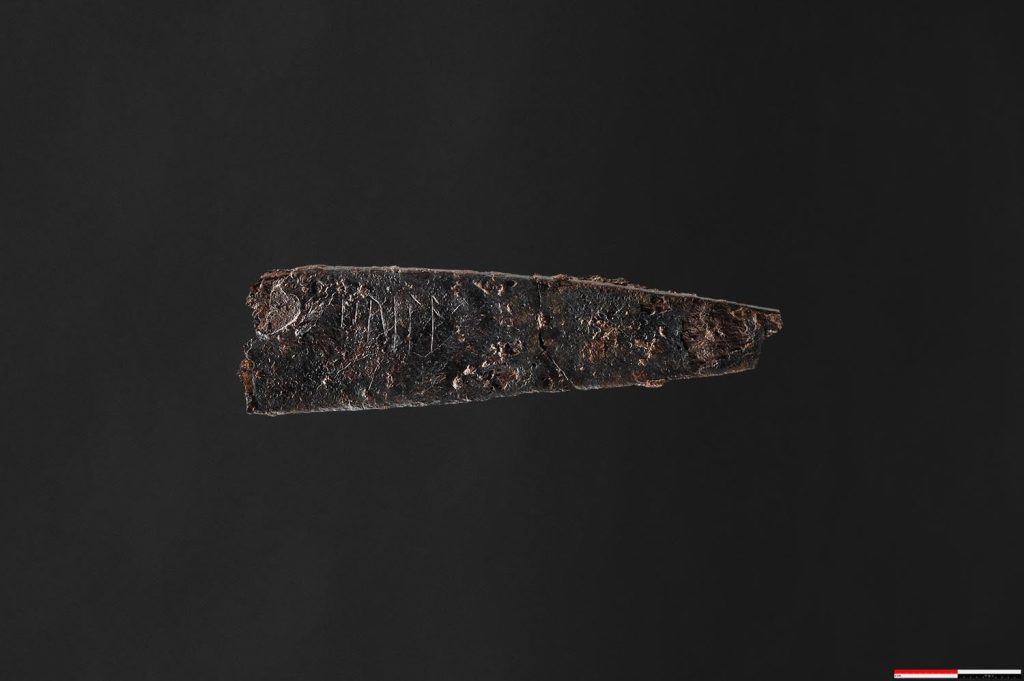
Archaeologists from Museum Odense have found Denmark’s oldest runic inscription, hirila, inscribed on a nearly 2000-year-old knife blade. The knife was found under the remains of an urn grave in a small burial ground east of Odense on the island of Funen and can be dated as far back as 150 AD.

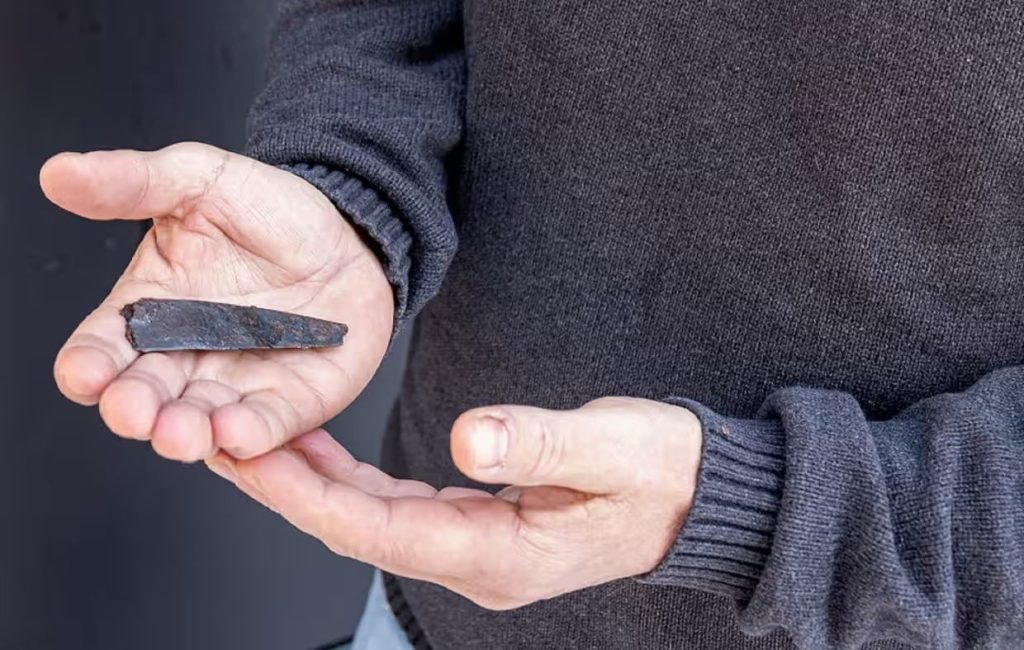
On the 8cm iron knife, the five characters, each about 0.5cm tall, followed by three grooves, spell out hirila, which means “little sword” in Old Norse.

They, along with an inscribed bone comb discovered nearby in 1865, are Denmark’s oldest runes. Jakob Bonde, the city’s museum curator and archeologist who made the discovery, said he initially thought it was an ordinary knife because the runes were not visible, but after conservators cleaned it, it was clear that it contained a word.

The runes on the knife are written with the oldest known runic alphabet, and therefore the new find is a very important part of the understanding and interpretation of the very oldest use of writing in Denmark and the Nordic region.


📣 Our WhatsApp channel is now LIVE! Stay up-to-date with the latest news and updates, just click here to follow us on WhatsApp and never miss a thing!!


Denmark's oldest runes found on Funen. Photo: Jakob Bond/Museum Odense
Denmark’s oldest runes found on Funen. Photo: Jakob Bond/Museum Odense

“It’s like getting a note from beyond, from the past. It’s an extraordinary find for us and it says something about the development of the earliest Scandinavian language,” Jakob Bonde said.

Whether hirila is the name of the knife itself, or whether it is the name of the knife’s owner, Museum Odense archaeologists cannot determine with certainty. But there is no doubt that it was a treasured possession.

Lisbeth Imer, a runologist from the National Museum of Denmark, said:

“It is incredibly rare that we find runes that are as old as on this knife, and it is a unique opportunity to learn more about Denmark’s earliest written language and thus also about the language that was actually spoken in the Iron Age. At that time in ancient times, literacy was not particularly widespread, and it was therefore associated with a special status and power to be able to read and write. At the beginning of the history of the runes, the scribes constituted a small intellectual elite, and the first traces of such people is to be found on Funen.”

The knife will be on display at Museum Odense in Møntergaarden starting February 2nd, alongside other artifacts discovered at the site.

Museum Odense

Cover Photo: Museum Odense

Related Articles

Rare Roman Articulated Terracotta Doll Unearthed at Torreparedones Archaeological Park

25 September 2025

25 September 2025

Archaeologists working at the Torreparedones Archaeological Park in Baena, Córdoba, Spain, have made a remarkable discovery: a rare Roman-era articulated...

Otto the Great’s Tomb Marble Did Not Come from Italy or Greece, New Research Reveals

19 December 2025

19 December 2025

A major archaeological discovery in Germany is reshaping long-held assumptions about one of Europe’s most iconic imperial monuments. The tomb...

Denisovans or Homo Sapiens: Who Were the First to Settle Permanently on the Tibetan Plateau?

8 December 2021

8 December 2021

The Tibetan Plateau has long been considered one of the last places to be populated by people in their migration...

Secrets of the Skull Room: 12 Ancient Human Skulls Unearthed in Sefertepe Excavations

16 September 2025

16 September 2025

Archaeologists have uncovered 12 new human skulls during ongoing excavations at Sefertepe, one of the most important sites of the...

Roman-era marble sundial found for the first time in Turkey’s second Ephesus

26 September 2022

26 September 2022

Archaeologists have unearthed a Roman-era marble sundial in the ancient city of Aizanoi in the Çavdarhisar district of Kütahya province...

13th-Century skeletons Unearthed in Annaea Mound

8 May 2021

8 May 2021

At the historical Kadıkalesi archaeological site in Turkey’s western Aydin province’s Kuşadası district, a total of five skeletons thought to...

Woodhenge Found in Denmark: A Link Between Denmark and Britain’s Neolithic Past

1 March 2025

1 March 2025

In a stunning revelation, archaeologists have unearthed a remarkable structure dubbed “woodhenge” in Denmark, a discovery that not only illuminates...

Archaeologists Found Seal Impressions That Could Change Hittite History in Kayalıpınar

15 September 2023

15 September 2023

A seal impression belonging to Hattusili III was found during the excavations carried out near the village of Kayalıpınar in...

8,500-year-old buildings discovered on Abu Dhabi’s Ghagha island

17 February 2022

17 February 2022

Archaeologists in Abu Dhabi have discovered startling new evidence of the Emirates’ first known structures, which date back more than...

A 1,000-Year-Old Bronze Wheel Cross Discovered in Brandenburg

24 January 2026

24 January 2026

A small bronze cross, recently unearthed in western Brandenburg, is reshaping how archaeologists understand the spread of Christianity in early...

Key Silla Kingdom Palace Site Found in South Korea After Decade-Long Probe

11 February 2025

11 February 2025

A decade-long investigation conducted by the Korea Heritage Service has uncovered a crucial palace site of the Silla Kingdom (57...

Who really fought in the Battle of Himera? Researchers found the answer to the question

14 May 2021

14 May 2021

According to the Ancient Greek Historians, victory over the Carthaginians in the Battle of Himera was won by the alliance...

Archaeologists unearth a portrait of a king carved into stone in a 4,300-year-old Chinese Pyramid

9 August 2022

9 August 2022

A team of archaeologists say they have found what could be the portrait of a king carved into stone at...

Burials covered in red dye discovered in Serbian barrows

18 February 2022

18 February 2022

Polish archaeologists excavating two barrow mounds in Vojvodina, in the northern part of the Republic of Serbia, have uncovered the...

A Mysterious Partially Submerged Structure in Ireland is a Prehistoric Tomb, archaeologist says

25 October 2022

25 October 2022

New research has revealed that a mysterious structure found many years ago on the eastern shore of Cork Harbor in...