3 February 2026 The Future is the Product of the Past

Turkey Adds New Sites to UNESCO World Heritage Tentative List

Two additional cultural objects have been added to Turkey’s World Heritage Tentative List, bringing the total number of cultural assets on the list to 85. The late antique and medieval churches and monasteries of Midyat and the surrounding region (Tur Abdin) in southeastern Mardin province, as well as the historical town of Kemaliye (Eğin) in eastern Erzincan province, were recently added to the list.

Turkey had 83 assets on the list in 2020.

The Kemaliye district, situated on the Silk Road and caravan roads, is notable for its distinct urban texture, architecture, and initial settlements. The Euphrates had an impact on the region’s design space and architecture, and settlements were built in response.

Karanlık (Dark) Canyon, which is about 35 kilometers (21.75 miles) long, is a part of the Kemaliye settlement. Dark Canyon is one of the top five deepest canyons in the world, with a height difference of up to 1000 meters (3280.84 feet) between the river’s mouth and the valley’s floor. According to the UNESCO website, remnants of the Turkish population were also be found 4 to 5 kilometers northwest of Kemaliye in the Dilli Valley. Photometric scans and ethnographic techniques were used to collect evidence from petroglyphs and carvings in the valley, resulting in considerable information about Turkish culture’s past.
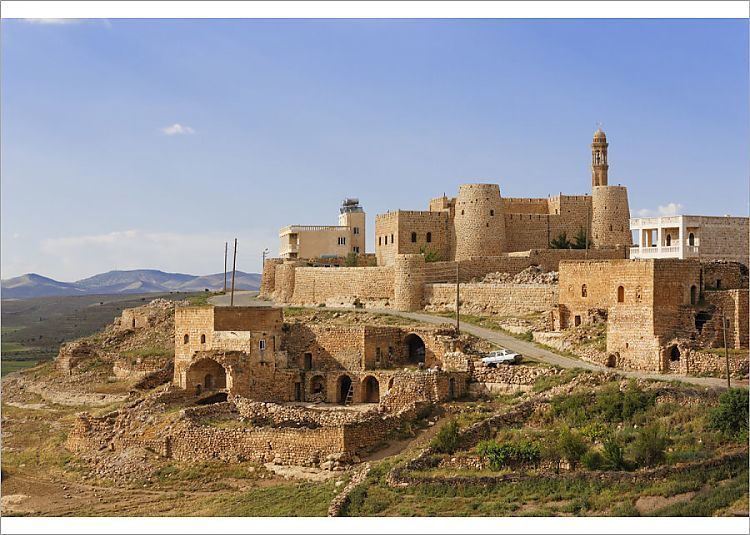
The Tur Abdin (meaning “the Mountain of the Servants of God” in Syriac)

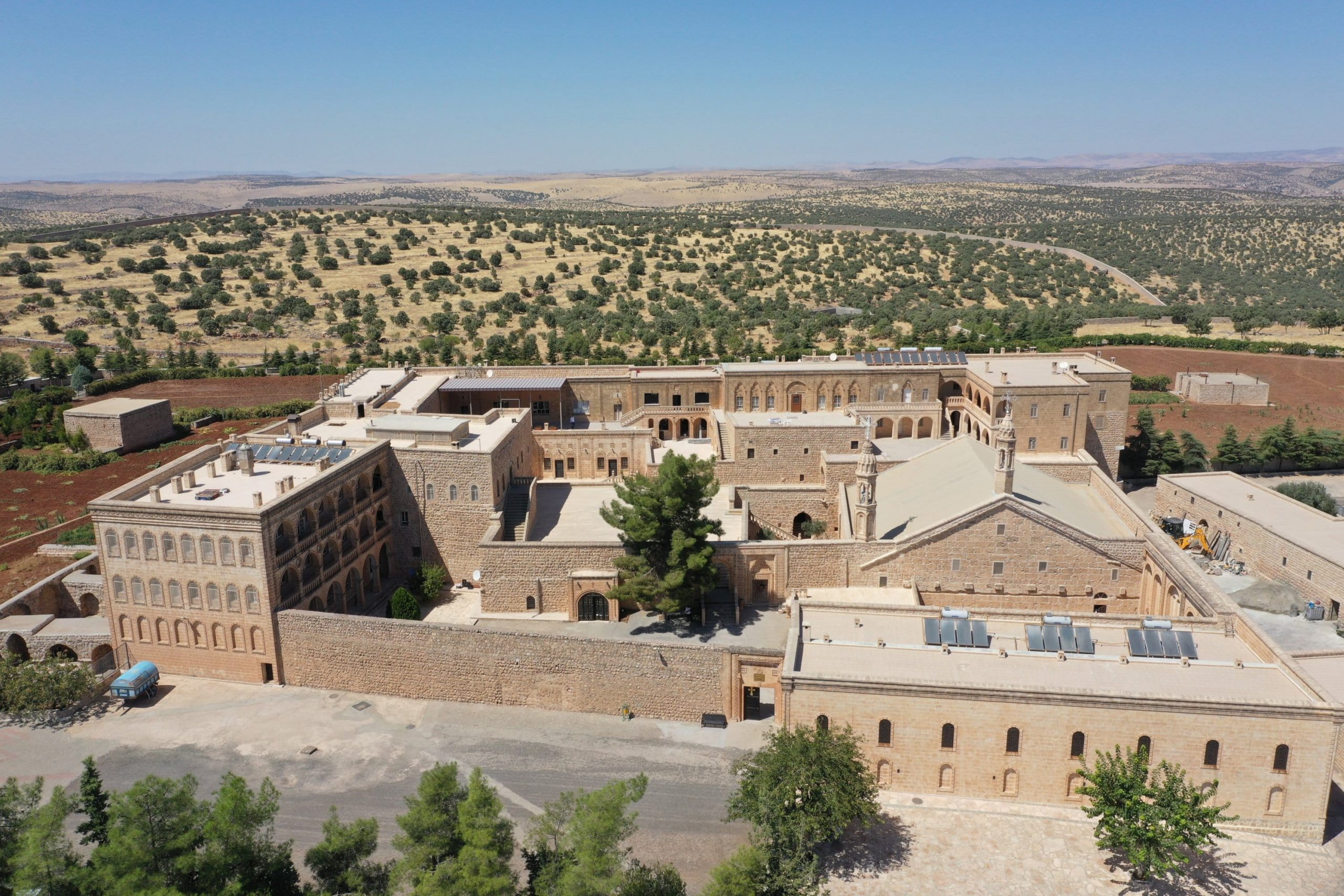
The Tur Abdin (meaning “the Mountain of the Servants of God” in Syriac) area, which contains early examples of monastic architecture, witnesses the appearance of a modern and distinct architectural language that has been synonymous with the Syriac Orthodox community throughout history. Tur Abdin, a limestone plateau, has a distinct cultural landscape that includes nearly 80 villages and 70 monasteries from different eras.


📣 Our WhatsApp channel is now LIVE! Stay up-to-date with the latest news and updates, just click here to follow us on WhatsApp and never miss a thing!!


The Church of Mor Sobo, the Church of Yoldat Aloho, the Monastery of Deyrul Zafaran, the Monastery of Mor Gabriel, the Monasteries of Mor Abai near Qelleth, Mor Loozor near Habsenas, the Monastery of Mor Yakup at Salah, and the Churches of Mor Quryaqos at Urdnus and Mor Azozo el at Kfarze were chosen for nomination.

These structures, which share similar characteristics and dates from the sixth and eighth centuries, help to understand the character of the country as a whole. They are also a significant example of Turkey’s rich cultural history with various beliefs.
Related Articles

Mystery ax discovered off the coast of Arendal of Norway

26 July 2021

26 July 2021

Researchers have discovered a find that could be a first for Norwegian archeology. A hollow ax, which researchers believe dates...

Archaeologists Uncover Remarkably Preserved 2,600-Year-Old Monumental Grave in Switzerland

8 December 2025

8 December 2025

A newly uncovered monumental burial mound in the Swiss canton of Fribourg is rewriting what researchers know about social hierarchy...

DNA Elucidates Mysteries of the Iron Age Log Coffin Culture in Thailand

9 February 2024

9 February 2024

The Northwestern Thailand highlands region of Pang Mapha is dotted with dozens of caves that contain some incredibly odd prehistoric...

A Large Roman Pottery Production Center was Found in Poland

2 April 2021

2 April 2021

A large Roman pottery production center was found in Poland. The production center was discovered near the village of Wrzepia,...

Sensational find in Ephesus: more than 1,400-year-old district discovered

29 October 2022

29 October 2022

During this year’s excavations at Ephesus in Turkey, archaeologists from the Austrian Academy of Sciences (AW) discovered an incredibly well-preserved...

No Ancient Super-Highway: The Reality of Europe’s Erdstall and the Scotland-Türkiye Tunnel

28 April 2025

28 April 2025

The internet continues to buzz with the captivating notion of an immense, prehistoric tunnel network stretching from the Scottish Highlands,...

Evidence of the Birth of Archaic Monotheism in Anatolia found at Oluz Höyük, “Havangah prayer at Oluz Höyük”

27 March 2022

27 March 2022

Oluz Höyük, located 25 kilometres west of Amasya, is an ancient city which has rich findings of religious structuring. During...

Roman soldier’s 1,900-year-old payslip uncovered in Masada

16 February 2023

16 February 2023

During excavations at Masada, archaeologists from the Israel Antiquities (IAA) uncovered a papyrus payslip dated to 72 BC belonging to...

Two Altars Used for Blood Sacrifices and Divinations Discovered in the Ancient Thracian City of Perperikon

14 September 2024

14 September 2024

In the ancient Thracian city of Perperikon, partly carved into the rock in the Eastern Rhodope Mountains of Bulgaria, two...

Viking Dentistry Was Surprisingly Advanced And Not Unlike Today’s Treatments

15 December 2023

15 December 2023

Viking Age teeth at Varnhem indicate surprisingly advanced dentistry, according to the results of a study conducted at the University...

New evidence pushes the origins of the Great Wall back by 300 years

19 February 2025

19 February 2025

Recently discovered evidence from the Changqing district of Jinan, located in East China’s Shandong Province, reveals that the origins of...

Two monumental sculpted Roman heads unearthed in Carlisle, northern England

25 May 2023

25 May 2023

Two monumental statue heads believed to be dated to the early 3rd century have been unearthed during excavations at a...

The Half of the Rare Oil Lamp Found in Jerusalem May be in Budapest

9 May 2021

9 May 2021

We had recently reported on a grotesque lamp found in Jerusalem. The other half of the oil lamp, which is...

At a dig site in western Turkey, a centuries-old Byzantine fortress will be revealed

24 December 2021

24 December 2021

Excavation of vast Byzantine-era fortifications considered to be about 900 years old has begun at a dig site in western...

Researchers may have found 3,000-year-old evidence of Yue (Amputation), one of the five punishments practiced in ancient China

4 May 2022

4 May 2022

According to the South China Morning Post, researchers in China believe a skeleton discovered in a tomb in the country’s...