21 January 2026 The Future is the Product of the Past

Roman ‘ritual center’ discovered in England

Archaeologists from have discovered a Roman ritual centre during excavations near Northampton, England.

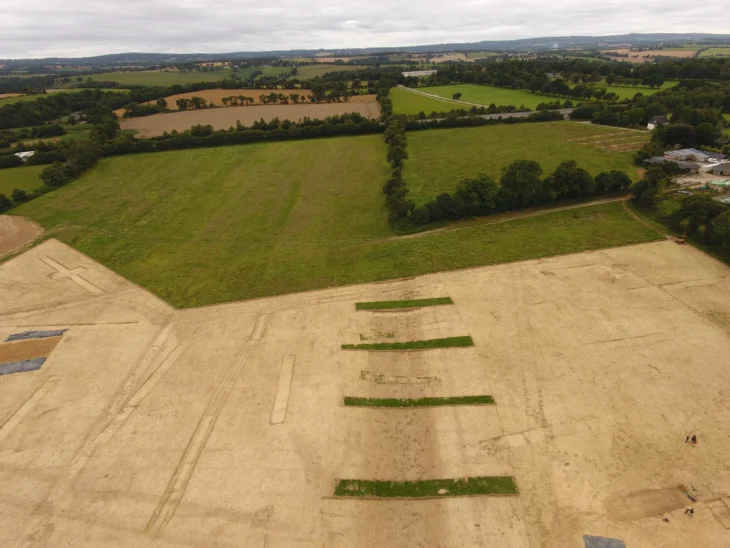
The find was made by the Museum of London Archaeology (MOLA) in Overstone near Northampton. The team has been excavating the site in preparation for a new housing development in Overstone, a village four miles north of Northampton.

According to experts, the site was in use for more than 2,000 years and both Bronze Age and Roman artifacts have been found.

The oldest find is a Bronze Age barrow, a type of burial mound that was constructed between 1,500 and 2,000 BC. The team did find five Bronze Age burial urns in the barrow, but no associated grave goods or human remains were found there either.
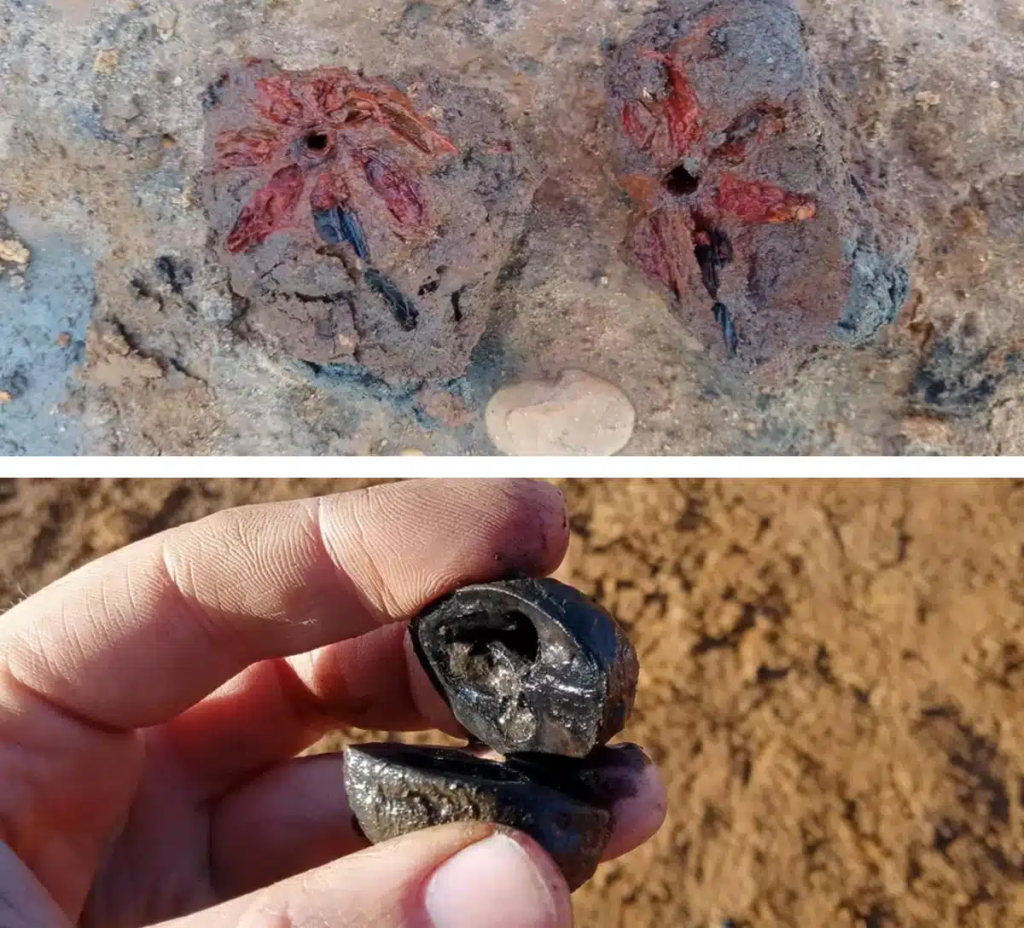
2000-year-old flower and a walnut shell from the Roman period. Photo: MOLA

Simon Markus from MOLA told the BBC: “a highly significant place for local ancient communities. The fact no human remains were placed within the barrow suggests it may have had a more symbolic rather than functional use.”


📣 Our WhatsApp channel is now LIVE! Stay up-to-date with the latest news and updates, just click here to follow us on WhatsApp and never miss a thing!!


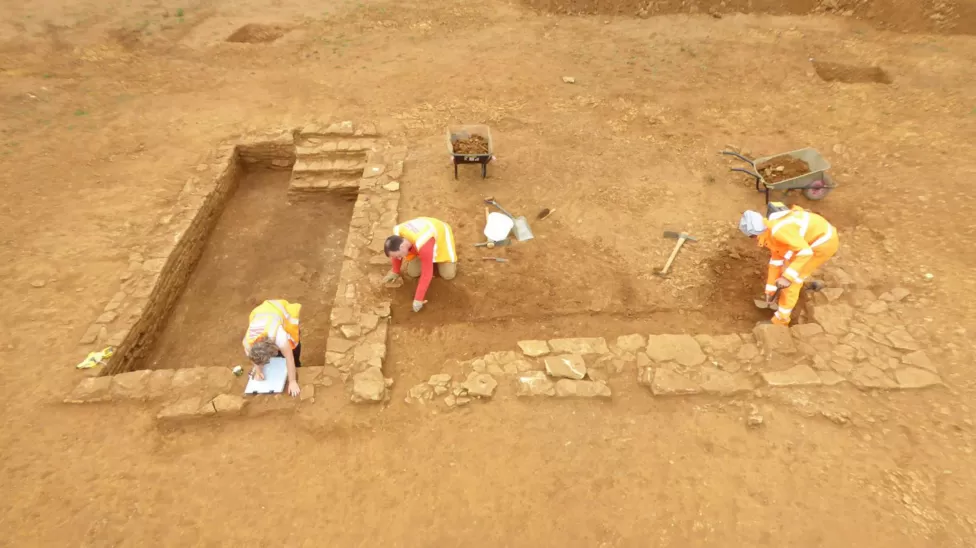
The team also found the remains of a Roman structure that stood between AD 43 and 410. There are two distinguishable rooms in the building, one of which has stairs and was embellished with elaborately painted plasterwork.

According to the researchers, the structure had no functional purpose and could have been a shrine associated with a nearby spring. Throughout Britain, the Romans frequently built shrines and temples on prehistoric sacred sites.

The researchers also large water tanks were also found and at the bottom of these were 2,000-year-old organic remains of willow tree blossoms, pinecones, walnut shells, and a complete leather shoe.

MOLA

Roman structure – Image Credit: MOLA
Related Articles

Palau’s green pyramids: could be a geo-archaeological project

19 February 2022

19 February 2022

Archaeologists from Kiel University’s Institute for Ecosystem Research (CAU) and the German Archaeological Institute (DAI) studied the so-called “Pyramids of...

Archaeologists Discovered a Fragmentary Inscription in Cypriot Syllabary Found Dating to the Cypro-Archaic Period

1 December 2024

1 December 2024

During excavations at Palaepaphos, located within the municipal boundaries of the modern village of Kouklia-Martsello on the southwest coast of...

Family Looking for Lost Gold Earring Finds Viking Age Artifacts in Their Garden on the Island Of Jomfruland

2 October 2023

2 October 2023

A family in Norway was searching for a lost gold earring in their yard on the island of Jomfruland when...

6000-Year-Old Salt Production House Rewrites Europe’s History

31 March 2021

31 March 2021

Archaeologists in the UK have found an ancient stone age-era salt-production house in North Yorkshire, estimated to be older even...

4,500-Year-Old Dog Teeth-Adorned Bags Found in Germany May Have Been Elite Baby Carriers

11 July 2025

11 July 2025

Archaeological excavations near Krauschwitz reveal rare decorated leather bags buried with women and infants—shining new light on Neolithic burial customs...

Fragments of ‘unique’ 17th-century iconostasis discovered in Polish church

28 October 2023

28 October 2023

Researchers from the Institute of Art at the Polish Academy of Sciences (IS PAN) have discovered substantial fragments of a...

Archaeologists discovered the first evidence of early administrative management in eastern Iran

21 June 2022

21 June 2022

Iranian archaeologists believe they have discovered the first evidence of early administrative management in an eastern Iranian province, which they...

A mosaic made by the freed slave to thank God was found in the church excavation

10 January 2022

10 January 2022

During the season excavation of the 6th-century Holy Apostles Church, located in an orange grove in the Arsuz district of...

A 3,600-Year-Old Bronze Minoan Dagger Discovered in Antalya Underwater Excavation

29 August 2024

29 August 2024

A bronze dagger with silver rivets that dates to the Minoan civilization approximately 3,600 years ago was discovered during an...

Unique finds unearthed in the ancient city of Olba in southern TĂźrkiye

16 August 2023

16 August 2023

In the excavations carried out in the ancient city of Olba, located in the Silifke district of Mersin, in the...

Archaeologists discovered the secret ingredient that made Mayan plaster durable

20 April 2023

20 April 2023

Ancient Mayan masons had their own secrets for making lime plasters, mortars, and plasters, which they used to build their...

Archaeologists Uncover Exceptional Roman Mausoleum Near Lyon, Modeled After Augustus’ Tomb

23 August 2025

23 August 2025

Archaeologists in France have unearthed a remarkably well-preserved Roman mausoleum in Saint-Romain-en-Gal, near Lyon, that was modeled on the famous...

Secrets of the Ancient Walls: 1,700-Year-Old Roman Altar Unearthed at Vuçak Castle in Kosovo

19 April 2025

19 April 2025

Excavations at Vuçak Castle in the Kosovo countryside have led to a remarkable discovery: a Roman altar dating back to...

Scottish Archaeologists unearth ‘missing’ Aberdeenshire monastery linked to first written Gaelic

19 November 2023

19 November 2023

One of the biggest mysteries in Scottish archaeological history has been solved with the discovery of the monastery site where...

Archaeologists have found a previously unknown Roman city with buildings of monumental proportions in Spain’s Aragon Region

17 July 2022

17 July 2022

Archaeologists from the University of Zaragoza in Spain have discovered a previously unknown Roman city with buildings of monumental proportions....