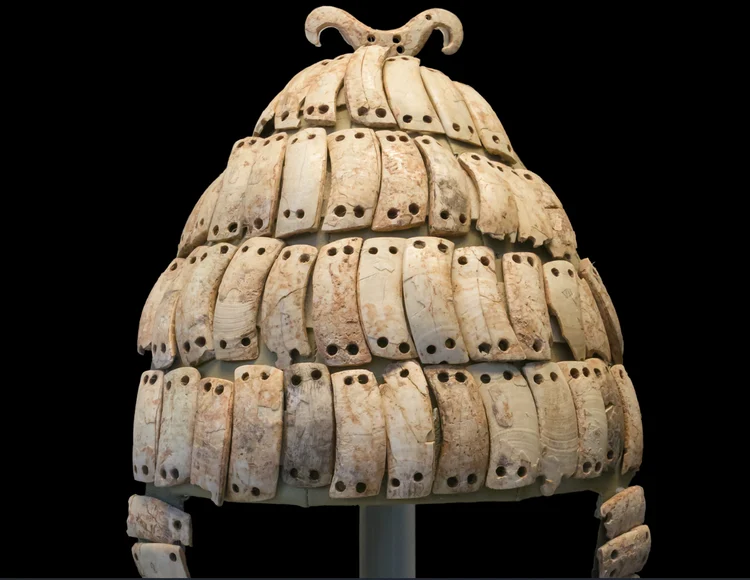
A remarkable boar tusk helmet discovered in a vaulted tomb near Pylos, Greece, is shedding new light on Mycenaean warrior culture and elite craftsmanship dating back to around 1500 BC. The artifact, made from dozens of carefully shaped wild boar tusks sewn onto a conical leather cap, represents one of the most distinctive forms of head protection in Bronze Age Greece.
Archaeologists explain that the helmet was constructed by stitching polished boar tusks onto fabric or leather strips arranged around a felt-lined cap. The design provided coverage for the wearer’s jaw and neck, though it offered less impact resistance than later bronze helmets. Despite this, its symbolic value appears to have far outweighed its practical limitations.
The significance of these helmets is reinforced by literary evidence. In Book Ten of Homer’s Iliad, the hero Odysseus is equipped with a helmet adorned with rows of gleaming white tusks, arranged in alternating directions. The detailed description closely matches archaeological finds from Mycenaean sites such as Dendra, where ivory fragments and bronze armor have been uncovered.
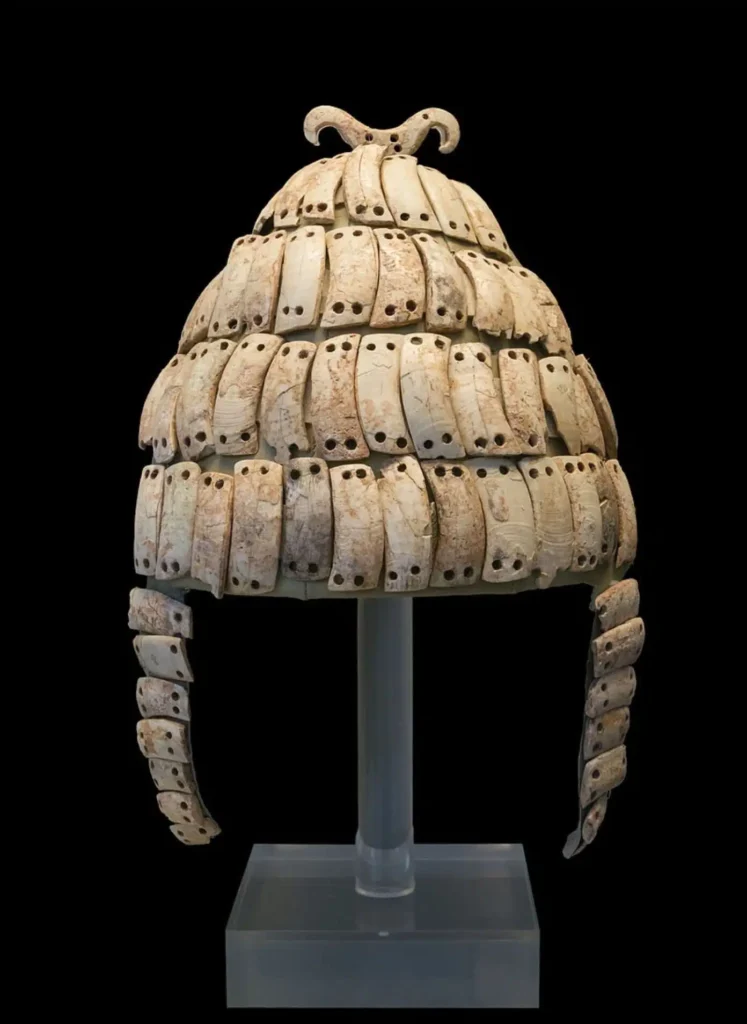
Crafting a single boar tusk helmet required the tusks of up to 40 or 50 wild boars, highlighting its exclusivity. Such investment suggests these helmets functioned as prestige symbols—likely worn by elite warriors or leaders. Homer even describes them as heirlooms passed down through generations, reinforcing their cultural importance.
Today, examples and related artifacts are displayed at the Archaeological Museum of Pylos, alongside gold jewelry, vases, and weapons recovered from monumental tombs in the region. These discoveries not only illuminate ancient Greek warfare but also reveal a society where craftsmanship, status, and myth were deeply intertwined.
📣 Our WhatsApp channel is now LIVE! Stay up-to-date with the latest news and updates, just click here to follow us on WhatsApp and never miss a thing!!
Cover Image Credit: Public Domain