A remarkable archaeological discovery in southwestern China has shed new light on the spiritual life and craftsmanship of ancient civilizations. A farmer working in the fields of Wenxing Village in Weixin County, Yunnan Province, unexpectedly uncovered a bronze drum dating back nearly 2,000 years to the Eastern Han Dynasty (25–220 AD). The artifact, now confirmed by archaeologists as a ceremonial object, provides valuable insights into ancient ritual traditions and advanced bronze-casting techniques in the region.
The discovery occurred when local villager Wang Deqiang was plowing farmland and noticed a solid object beneath the soil. After carefully digging it out, he reported the find to local authorities and later donated it to the Weixin County Cultural Relics Management Department. Experts from the Yunnan Provincial Institute of Cultural Relics and Archaeology soon arrived to evaluate the artifact and confirm its historical significance.
A Well-Preserved Bronze Masterpiece
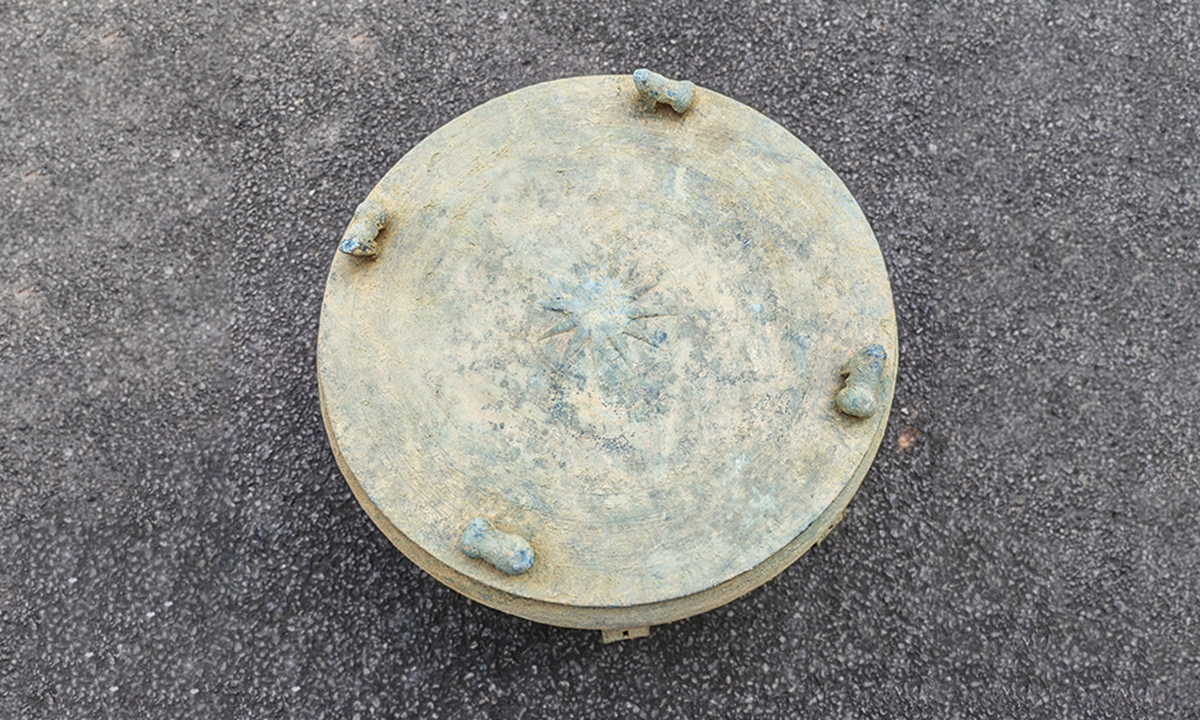
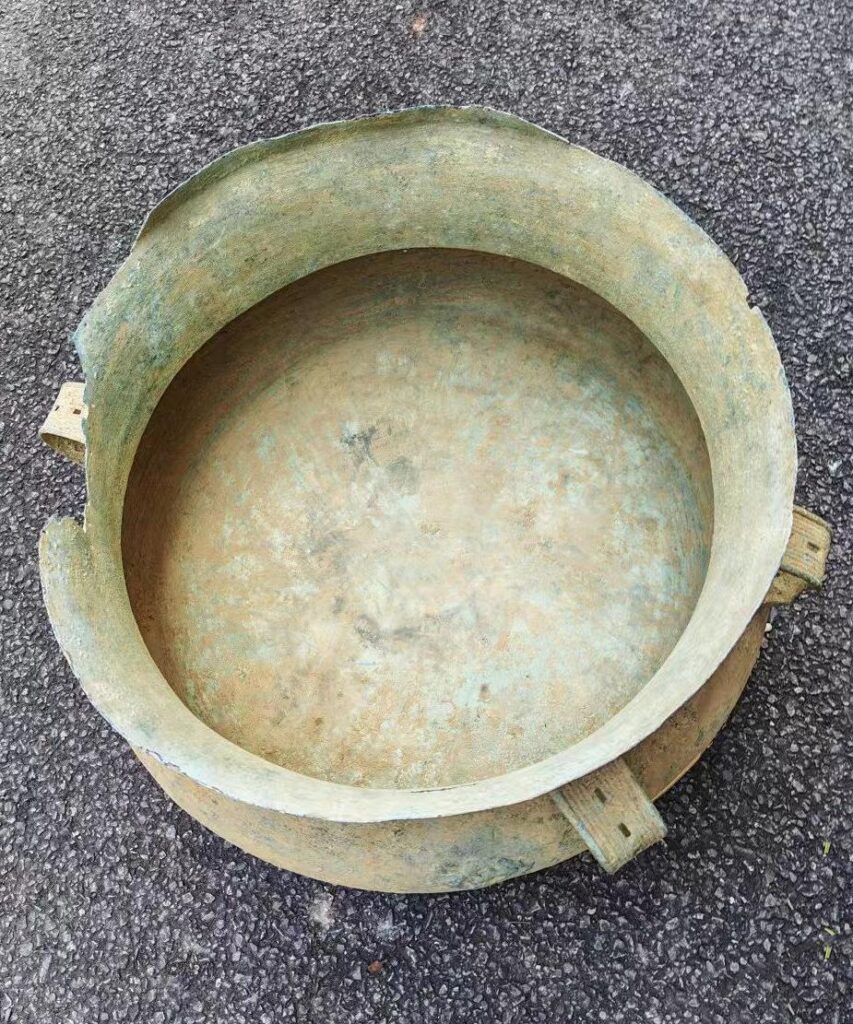
The newly discovered drum is in relatively good condition and displays distinctive structural features typical of ceremonial bronze drums from the period. Cast entirely from bronze, it measures approximately 58.5 centimeters in drumhead diameter, 65 centimeters across the body, and 29 centimeters in height, with a total weight of around 15 kilograms.
At the center of the drumhead lies a striking 12-pointed sun motif, a common symbol found on ancient bronze drums across southern China and neighboring regions. Surrounding the central design are concentric bands of short linear patterns carved around the rim.
One of the most distinctive features of the drum is the presence of four sculpted toads placed evenly around the edge of the drumhead. Each toad measures about 7 centimeters in length. In many ancient southwestern Chinese cultures, the toad symbolized fertility, prosperity, and abundance, suggesting the drum had powerful symbolic meaning.
📣 Our WhatsApp channel is now LIVE! Stay up-to-date with the latest news and updates, just click here to follow us on WhatsApp and never miss a thing!!
Two pairs of flat strap-like handles are attached symmetrically around the waist of the drum. Each handle measures approximately 17 centimeters long and 5 centimeters wide and is decorated with rope-like patterns and small square perforations, demonstrating the advanced decorative metalworking skills of the time.
Evidence of Ancient Ritual Practices
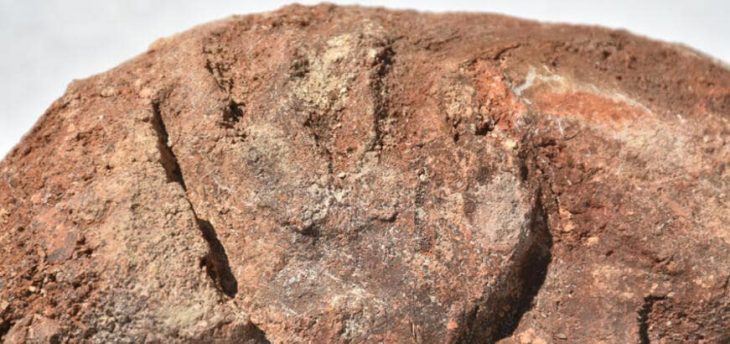
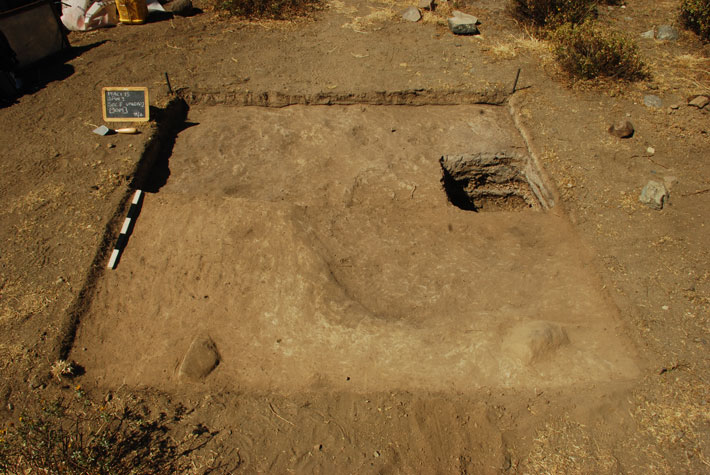
Archaeologists conducted a detailed investigation at the discovery site and uncovered the burial pit where the drum had been placed centuries ago. The cavity matched the shape of the drum precisely, and impressions left by the toad decorations were clearly visible at the bottom of the pit.
These clues revealed that the drum had been buried upside down. Researchers believe this orientation was intentional and held ritual meaning. According to cultural heritage experts, placing the drum upside down may have symbolized a ceremonial act in which prayers, blessings, or offerings were metaphorically “poured” into the earth.
Zhang Qiyu, director of the Weixin County Cultural Relics Management Department, told the Global Times that the drum was far more than a musical instrument.
“It served as a sacred vessel believed to communicate between Heaven and Earth and symbolized social power and ritual authority,” Zhang said.
In ancient societies of southwestern China, bronze drums often played key roles in religious ceremonies, elite gatherings, and ritual celebrations. Their elaborate decorations and symbolic imagery reflect the spiritual worldview and social hierarchy of the time.
A Discovery Near an Earlier Bronze Drum Site
Interestingly, the newly discovered drum was found only about 25 meters from another bronze drum unearthed in the same area in 1980. However, decades of farming and road construction have erased most archaeological traces from that earlier discovery.
Despite their close proximity, archaeologists believe the two drums were independent ritual deposits rather than part of a single burial or ceremonial complex. Excavations at both sites yielded no additional artifacts or accompanying relics.
Preserving a Piece of Ancient History
The bronze drum is currently under the care of the Weixin County Cultural Relics Management Department, where it will undergo conservation and further study. Researchers hope the artifact will eventually be displayed in a museum collection, allowing the public to appreciate this extraordinary relic of ancient Chinese civilization.
As archaeologists continue to study the drum, the discovery stands as a powerful reminder that even ordinary farmland can conceal extraordinary pieces of human history—waiting patiently beneath the soil for centuries until chance brings them back into the light.
Cover Image Credit: Weixin County Cultural Relics Management Department