5 April 2026 The Future is the Product of the Past

Unique and Mysterious 9th-Century Coin Pendant Featuring John the Baptist Discovered in England

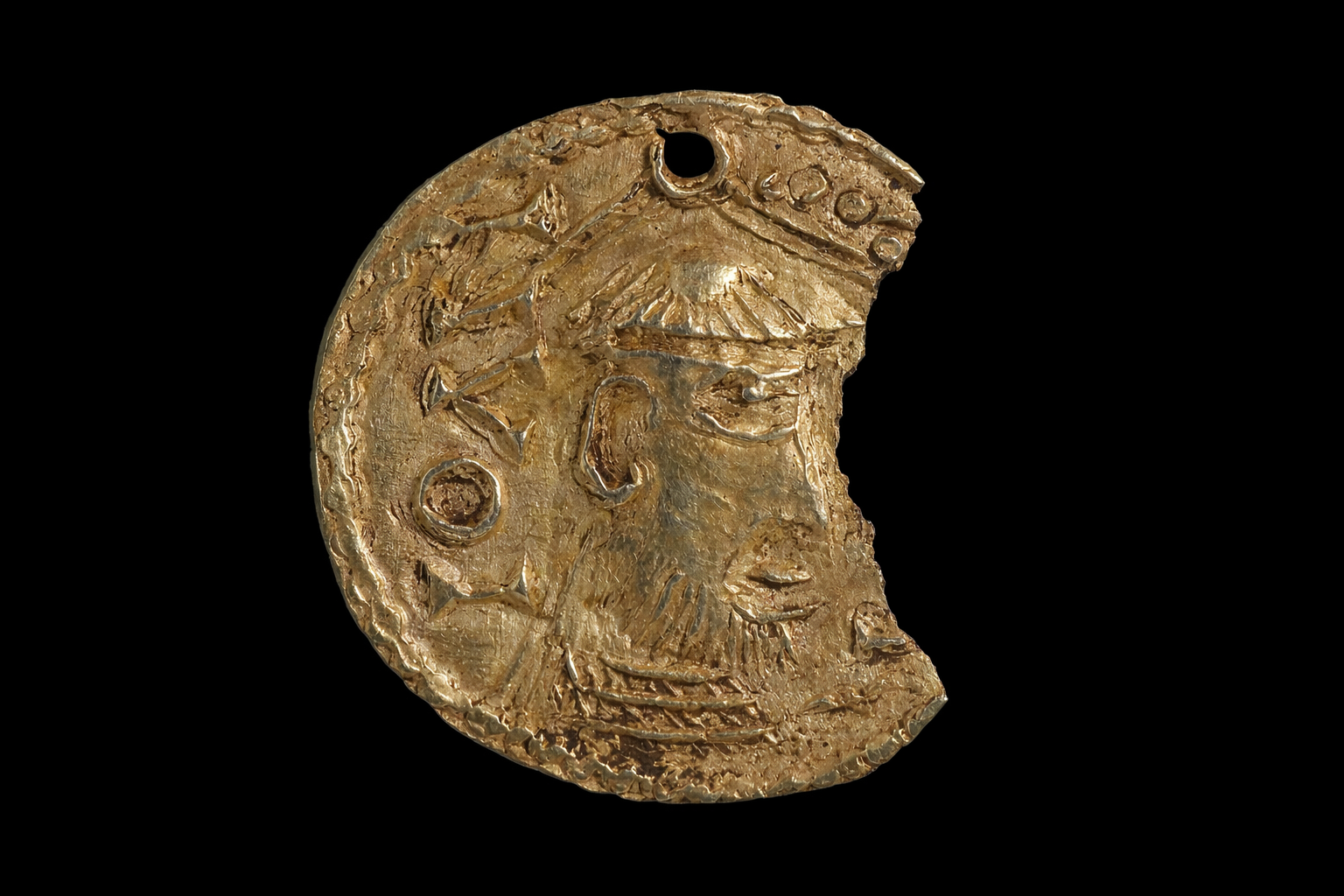
A rare gold coin pendant dating to the 9th century has been discovered in Norfolk, offering an unusual glimpse into the religious and cultural landscape of early medieval Europe. A rare gold coin pendant depicting John the Baptist has been described as “unique and mysterious,” raising significant questions about its origins and cultural context.

According to an interview given to the BBC, numismatics expert Simon Coupland emphasized the unusual nature of the artifact, calling it “bizarre” and unlike anything previously documented from the period.

A Rare and Puzzling Discovery

The artifact was uncovered by a metal detectorist near Dunton, west of Fakenham. It consists of a pierced gold pendant modeled after a solidus coin, a type of currency originally used in the late Roman and Byzantine periods. Although incomplete, the piece retains enough detail to reveal its extraordinary features.

One side of the coin shows a bearded figure in profile, identified through a Latin inscription as John the Baptist. The reverse includes partially preserved text interpreted as “Baptist and Evangelist.” This alone makes the coin exceptionally rare.

During the 9th century, coins minted in Western Europe—especially under the Carolingian dynasty—typically featured kings or emperors, not religious figures. Depictions of saints or Christ were more commonly associated with the Byzantine Empire.


📣 Our WhatsApp channel is now LIVE! Stay up-to-date with the latest news and updates, just click here to follow us on WhatsApp and never miss a thing!!
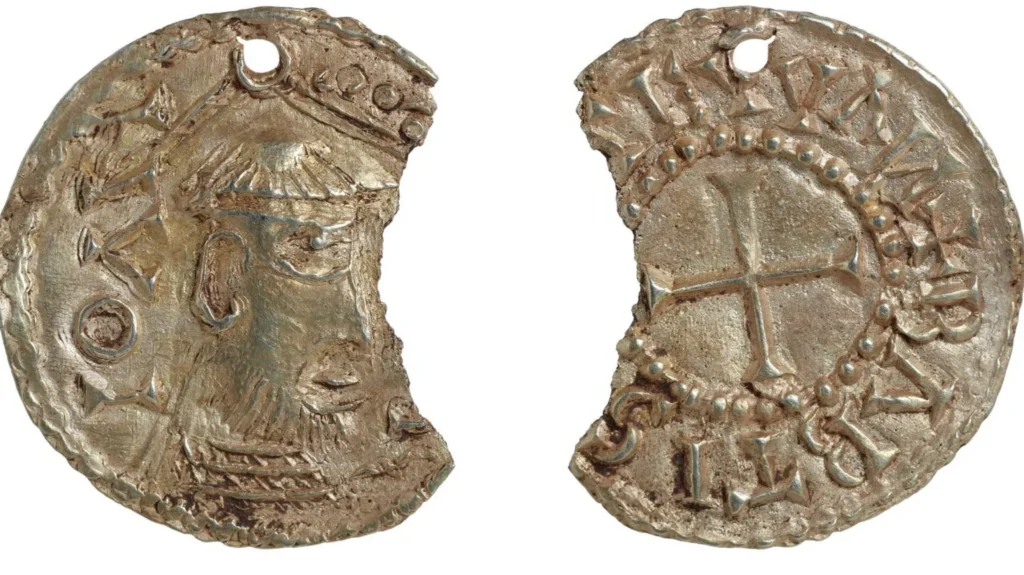


One side of the coin shows the profile of a bearded man with the Latin for John and the other has part of a Latin inscription translating as baptist and evangelist. Credit: Andrew Williams/Norfolk County Council

One side of the coin shows the profile of a bearded man with the Latin for John and the other has part of a Latin inscription translating as baptist and evangelist. Credit: Andrew Williams/Norfolk County Council

Why This Coin Defies Expectations

What makes this discovery particularly intriguing is how it challenges established historical patterns. Coupland noted that he is unaware of any other Carolingian-era coin featuring John the Baptist, making this piece potentially one of a kind.

The lettering style suggests the coin dates back to the late 9th century, aligning with coins minted in the 860s or 870s. However, its iconography does not fit the norms of the time.

Adding to the mystery is the historical context. By around AD 870, the kingdom of East Anglia had been conquered by Vikings. These Scandinavian settlers were not yet Christian, which raises an important question: why would they produce or wear an object depicting a prominent Christian figure?

This contradiction has led experts to speculate about possible cultural exchanges or unknown influences between Viking and Christian communities.

A Symbol That Doesn’t Fit Its Time

Coupland described the artifact as something that simply doesn’t align with existing historical frameworks. In his BBC interview, he compared it to “a child trying to fit a hexagonal object into a square hole”—a vivid analogy illustrating how the pendant resists easy classification.

The presence of John the Baptist is particularly significant. In Christian tradition, he is known as the forerunner of Jesus, responsible for baptizing him in the River Jordan and introducing his ministry to the public. Despite his importance, his depiction on coins from this era is virtually unheard of in Western Europe.
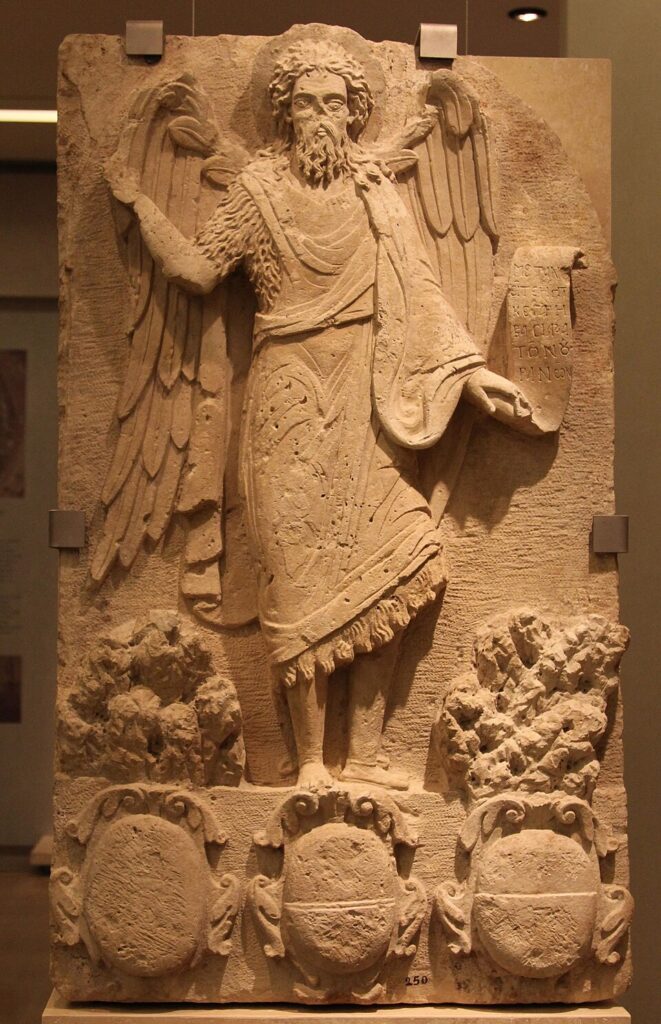
Limestone relief of John the Baptist from Zakynthos, Byzantine and Christian Museum, Greece. Credit: Public Domain

What Happens Next?

The coin pendant is currently undergoing the UK’s official treasure evaluation process. A coroner will determine whether it qualifies as legal treasure under British law. If declared treasure, it may be acquired by the Norwich Castle Museum, which has already expressed strong interest in adding the piece to its collection.

Despite its incomplete condition, the artifact is considered a highly valuable and significant find. It offers a rare glimpse into a period of cultural transition and raises new questions about religious symbolism, trade, and artistic expression in early medieval Europe.

A Discovery That Rewrites History?

This mysterious coin pendant may ultimately reshape how historians understand the interaction between Viking and Christian societies. Its unusual design and unexpected iconography suggest that the cultural landscape of 9th-century Europe was more complex than previously believed.

As researchers continue to study the piece, one thing is certain: this small gold pendant has opened the door to a much larger historical mystery.

Cover Image Credit: Andrew Williams/Norfolk County Council

Related Articles

Bronze Age burial chamber discovered on Dartmoor, England

14 May 2024

14 May 2024

Excitement has been felt among archaeologists over the discovery of a Bronze Age burial chamber on Dartmoor, which may provide...

New evidence for early regional exchanges in Eurasia: Ice skates made of animal bones over 3,000 years old

9 March 2023

9 March 2023

Chinese archaeologists have discovered ancient ice skates made of animal bones at the Gaotai Ruins in the Xinjiang Uygur Autonomous...

A 3800-year-old cylinder seal was discovered at Turkey’s Tepebag Mound excavations

8 July 2022

8 July 2022

In the 2022 excavations of Tepebag Mound, located around Taşköprü, the center of Adana province in Turkey’s Mediterranean Region, a...

Ancient Qin Dynasty Inscription Found on Qinghai-Xizang Plateau Links the Kunlun Legend to Real History

5 January 2026

5 January 2026

An ancient Qin Dynasty inscription discovered on the Qinghai-Xizang Plateau links the Kunlun legend to real geography, reshaping the western...

Archaeologists uncovered over 100,000 ancient coins, some more than 2,000 years old

4 November 2023

4 November 2023

In an excavation at the Sosha Village East 03 archaeological site in Maebashi City, Japan, archaeologists stumbled upon a remarkable...

Sensational Discovery in Kazakhstan: Rare Turko-Sughd Early Medieval Coin Discovered in Almaty Region

24 June 2024

24 June 2024

A sensational discovery was made in the Kogaly Valley, two hours from Almaty, Kazakhstan. For the first time in Kazakhstan,...

Mystery Under the Moss: 3,000-Year-Old Rock Carvings Discovered in Norway

3 February 2026

3 February 2026

A recent discovery beneath Kolsåstoppen, a hill located in Bærum in Eastern Norway, has brought renewed attention to Norway’s prehistoric...

Hellenistic cremation tomb found in Istanbul’s Haydarpasa excavations

11 April 2022

11 April 2022

A brick tomb belonging to the Hellenistic period (330 BC – 30 BC) was found during the Haydarpaşa excavations, which...

As a result of an operation in western Turkey, 4 skulls belonging to the Jivaro tribe of South American origin were seized

14 December 2021

14 December 2021

In the operation held in the Aliağa district of İzmir, 400 historical artifacts belonging to various periods were seized, including...

An extraordinary archaeological discovery in Spain: A new decorated stela has been found in context, in the 3000-year-old funerary complex

15 October 2023

15 October 2023 2

Archaeologists have discovered a new decorated stela in the 3000-year-old burial complex of Las Capellanías in Cañaveral de León (Huelva,...

New Research Reveals How Londoners Used Death Data to Survive the Great Plague

20 February 2026

20 February 2026

New University of Portsmouth research reveals how Samuel Pepys used the 1665 Bills of Mortality to navigate the Great Plague...

Medallion of Emperor Caracalla Minted in Pergamon Found in Roman Tombs in Bulgaria

13 February 2024

13 February 2024

One of the valuable discoveries from the Roman tombs discovered near the village of Nova Varbovka in Strazhitsa municipality in...

Archaeologists discover rare Caanite inscription on ancient ivory comb

12 November 2022

12 November 2022

Israeli archaeologists discovered a rare inscription on an ivory comb that sheds new light on the Canaanite language’s use some...

New study: Humans engaged in large-scale warfare in Europe 5,000 years ago ‘1,000 years earlier than previously thought’

3 November 2023

3 November 2023

Hundreds of human remains unearthed from a burial site point to a  warfare between Stone Age people long before the...

A Mysterious Ring and a Viking Pin: Novgorod’s Archaeology Reveals a Hidden War Route

26 January 2026

26 January 2026

Two rare artifacts found at Novgorod’s Knyazhya Gora—an ancient spiral ring and a Viking-era iron pin—may be war trophies from...

Comments
Leave a Reply

Your email address will not be published. Required fields are marked *