5 March 2026 The Future is the Product of the Past

The Dispilio Tablet: may be the earliest known written text

Although traditional archeology claims that writing was not invented in Sumer between 3000 and 4000 BC, an artifact that contradicted this belief was found in 1993 in the northern Greek province of Kastoria.

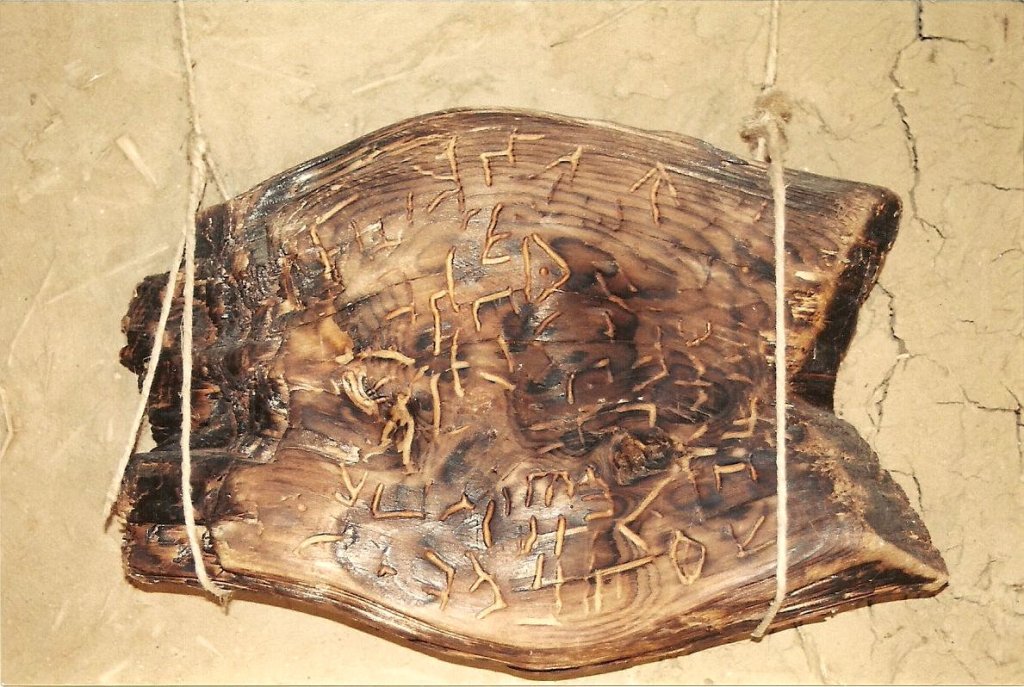
The Dispilio Tablet is a wooden tablet bearing inscribed symbols dated between 7260 BC and 5250 BC; the table was discovered in Dispilio Lake settlement, Makednos municipality of Kastoria, by professor of prehistoric archaeology George Chourmouziadis.

A group of people used to occupy the Dispilio Lake settlement and the Dispilio tablet was one of many artifacts that were found in the area.

The Dispilio Tablet (also known as the Dispilio Scripture or Disk) is a wooden tablet bearing inscribed symbols (charagmata), dated (according to the carbon 14 method) to about 7300 years (5260 BC) before present.
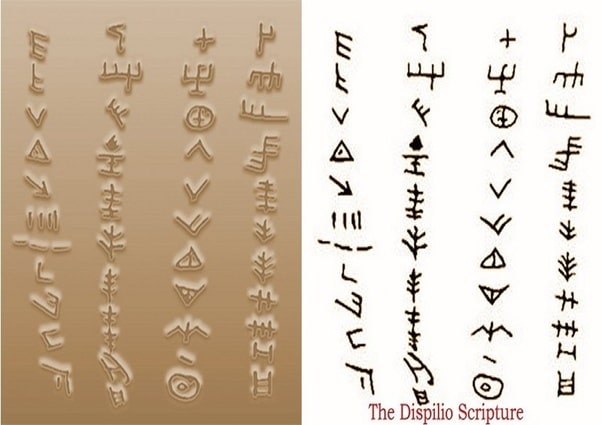
Ancient Dispilio Disk And Traditional History Of Writing | Ancient Pages

Antonios Keramopoulos, a Greek university professor, coincidence discovered the lake town of Dispilio by accident in 1932. Archaeological excavations at the site began in 1992, supervised by George Chourmouziadis, a professor of prehistoric archaeology at Aristotle University in Thessaloniki.


📣 Our WhatsApp channel is now LIVE! Stay up-to-date with the latest news and updates, just click here to follow us on WhatsApp and never miss a thing!!


A multitude of artifacts was discovered in the Dispilio lake community, including ceramics, structural elements, fruits, bones, figurines, the first Neolithic flute discovered in Europe, and the most important discovery, the Dispilio Tablet.

Photo: Greekreporter.com

The text on the tablet includes a type of engraved writing which probably consists of a form of writing that pre-existed Linear B writing used by the Mycenaean.

Professor Hourmouziadis suggested that such writings, yet to be deciphered, could be any form of communication, including symbols representing counting goods. But unfortunately, we don’t have a Rosetta stone to decipher the pre-existed Linear B writing yet!

There was some damage to the tablet when it was abruptly exposed to the oxygen-rich environment outside of the mud and water it was immersed in for a long period of time. The tablet is now under preservation. As of 2021, the full academic publication of the tablet apparently awaits the completion of conservation work.

The Dispilio tablet. Source: Roptron
Related Articles

Delikkemer Aqueduct: A Roman Engineering Wonder Along the Lycian Way

17 May 2025

17 May 2025

Hidden among the lush forests of southwestern Turkey, the Delikkemer Aqueduct stands as a testament to ancient Roman ingenuity. Located...

The Kyrgyz epic ‘Manas’ manuscripts were included in the UNESCO Memory of the World

10 June 2023

10 June 2023

Manuscripts of the Kyrgyz epic “Manas” by narrator Sagymbay Orozbakov have been inscribed on the UNESCO Memory of the World...

The Oldest “Book” of Europe: Derveni Papyrus

4 September 2022

4 September 2022

The Derveni papyrus is considered Europe’s oldest legible manuscript still in existence today. It is an ancient Greek papyrus roll...

Bujeok: Korea’s Ancient Magic That Still Shapes Modern Beliefs

4 October 2025

4 October 2025

How centuries-old talismans bridge archaeology, shamanism, and digital life in one of the world’s most advanced nations. South Korea, a...

Mount Ararat and Noah’s Ark: Three Faiths, One Mountain, A Story That Still Echoes

26 February 2026

26 February 2026

At sunrise, when the first light hits the snow on Mount Ararat, the mountain does something strange: it looks close...

Portugal’s Enigmatic Roman Building “Tower of Centum Cellas”

4 February 2024

4 February 2024

The Tower of Centum Cellas (also known as the “Tower of St. Cornelius”), located in the Mount of Santo Antão...

The World’s oldest and first swords ever discovered

11 March 2023

11 March 2023

The 5,000-year-old swords found 43 years ago during the excavations in the old mud-brick palace structure in Malatya Arslantepe Mound...

Saudi Arabia’s “Gates of Hell” and Mysterious Structures

30 March 2024

30 March 2024

The region of Saudi Arabia, where the mysterious neolithic structures called the “Gates of Hell” are located, has around 400...

The Mysterious Figure of Anatolia: Alexander of Abonoteichus, the False Prophet of Rome

12 February 2025

12 February 2025

In the annals of history, few figures are as intriguing as Alexander of Abonoteichus, the self-proclaimed prophet who captivated the...

Life continues in Iran’s 12,000-year-old settlement “Meymand village”

8 February 2022

8 February 2022

At the south-eastern Iranian province of Kerman near Shahr-Babak city, there is a village dating back to the Stone Age....

The mystery of Cathedral of Salamanca’s astronaut figure, isn’t what people think it is

10 March 2022

10 March 2022

There is a photograph of an “astronaut” carved in a 16th century Spanish cathedral in Salamanca. Known as the Catedral...

Georgia’s Queen of Kings “Tamar the Great”

17 August 2021

17 August 2021

Queen Tamar (1160-1235 CE) reigned during Georgia’s Golden Age, when the country’s frontiers stretched from the Black Sea to the...

The Nightmare of the Roman Soldiers “Carnyx”

9 July 2023

9 July 2023

The Carnyx was a brass musical instrument used as a psychological weapon of war by the ancient Celts between 300...

“Nikasitimos Was Here Mounting Timiona,” 2,500-year-old erotic graffiti on Astypalaia, Greece

7 April 2024

7 April 2024

In 2014, an archaeologist working on Astypalaia, a remote Greek island of the Dodecanese discovered one of the world’s oldest...

Vampires Were Born Here: The Forgotten Serbian Village Behind the World’s Oldest Vampire Legend

18 July 2025

18 July 2025

Picture a quiet Balkan village at dusk: the sun dips behind dense forests, mist curls around forgotten gravestones, and the...