1 March 2026 The Future is the Product of the Past

Shocking Images Appeared As The Waters Recede

As the dams recede, the remains of the flooded settlements come to light. This time Kayseri witnessed these images that emerged when the water of the dams decreased in the dry years. When the waters of Kayseri’s Yamula Dam decreased, the images that emerged stunned the villagers.

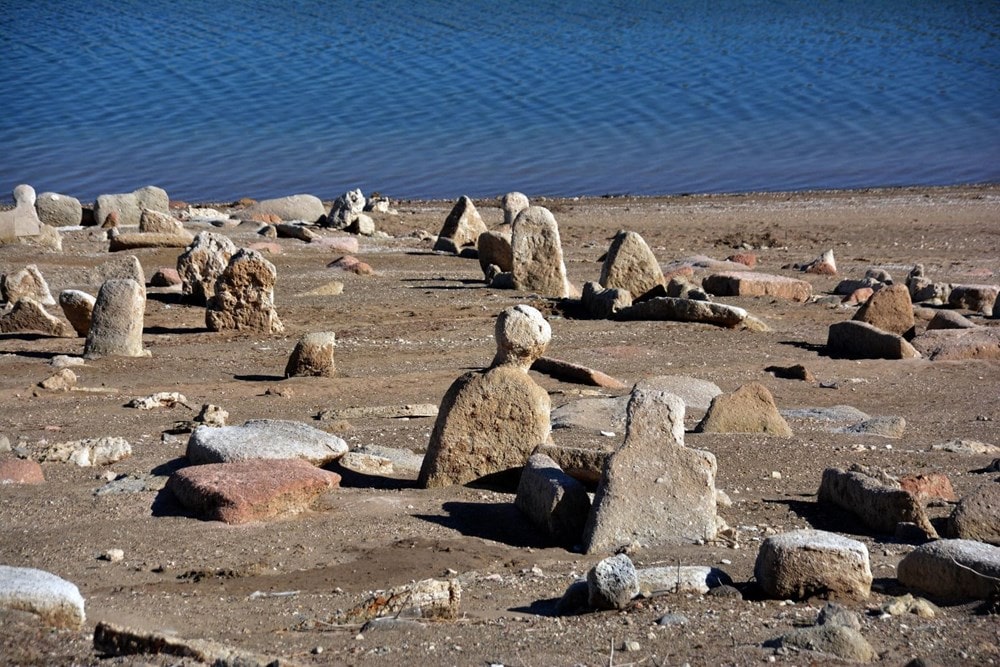
According to the news of the İHA; Cemeteries, skeletons and houses have emerged in the old Taşhan District, which was flooded by the Yamula Dam in Kayseri.

Taşhan District of Kocasinan district was moved to the area 6 kilometers away within the scope of Yamula Dam project in 2003. Some citizens, whose homes were in higher elevations, continued to live in the neighborhood.

The part of the neighborhood was flooded with the activation of the dam. Due to the low amount of precipitation lately, waters have receded in Yamula Dam. With the fall of the water level, the cemeteries and houses of the old Taşhan District emerged. While the skulls and bones of people were also unearthed in the cemetery, they were collected by the municipality officials and buried in the cemetery in the new neighborhood.
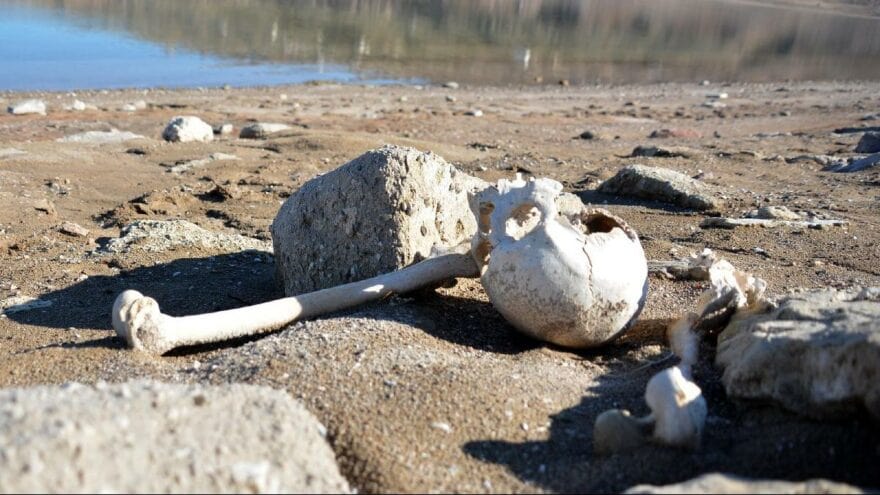
yamula dam cemetery
In the Yamula Dam, the cemeteries and houses of the old Taşhan District appeared. The resulting human bones were collected by the authorities and buried in the cemetery.

Abdullah Özdemir, who lives in the neighborhood, said, “The old Taşhan District was flooded in 2003 due to the Yamula Dam. Later, our village was the expropriation. Our neighborhood has moved to another area, about 6 kilometers away.Most of the citizens living here moved there. İf those with no place, about 15 people reside here. He said that most of the houses here are underwater.


📣 Our WhatsApp channel is now LIVE! Stay up-to-date with the latest news and updates, just click here to follow us on WhatsApp and never miss a thing!!


Noting graves were unearth because of withdrawal of waters, Özdemir said:

The low amount of rain-affected this place very much. Almost half of our flooded neighborhood has emerged. When the waters receded, the tombs and houses here became visible. When the waters receded, skeletons in the cemetery were revealed. The officials who came with my notice took the bones to the cemetery of the new neighborhood. Now it continues to go out as the water is drawn. As a citizen, I suffer remorse here. Tomorrow I will be like them. I’m telling you out of conscience. They come and take it away. It’s here’s a very old cemetery. (İHA)
Related Articles

The altar of Zeus Temple discovered in western Turkey

1 September 2023

1 September 2023

Archaeological excavations in the ancient city of Magnesia, located in the western province of Aydın’s Germencik district, have uncovered the...

Cuneiform Clues Reveal Körzüt as “The Sacred City of Haldi,” in Urartu Kingdom

6 August 2025

6 August 2025

Excavations in eastern Türkiye uncover a major religious center of the Urartian Kingdom—The Sacred City of Haldi, shedding new light...

Czech Discovery Reveals One of the Largest Celtic Settlements in Central Europe

8 July 2025

8 July 2025

Over 13,000 artifacts, including gold coins and Baltic amber, discovered in one of Central Europe’s largest Celtic settlements. A groundbreaking...

Petalodus shark teeth found for the first time in China

29 August 2021

29 August 2021

A 290 million-year-old fossil of a shark with petal-shaped teeth has been discovered in China. Seven well-preserved Petalodus teeth were...

Ancient tools discovered in Maryland show the first humans came to America 7,000 years earlier than previously thought

23 May 2024

23 May 2024

When and how humans first settled in the Americas is a subject of considerable controversy. A Smithsonian Institution geologist now...

76 Ancient Stone Traps Unearthed in Chile’s Andes Reveal Ingenious Prehistoric Hunting System

14 October 2025

14 October 2025

High in Chile’s northern Andes, where icy winds sweep across the desert ridges of the Camarones River Basin, archaeologist Dr....

A rare medieval Christogram Tattoo from Ghazali, Sudan

22 October 2023

22 October 2023

A Polish-Sudanese research team investigating the medieval African monastery of Ghazali discovered a rare medieval religious tattoo in a tomb...

The free online course from the Colchester Museums and University of Reading Department of Archeology

12 July 2021

12 July 2021

The opportunity to be among the first to examine 2,000-year-old cremated remains from Roman Britain and learn about the origins...

Native American artifacts from 1100 AD found in North America’s First City

20 June 2024

20 June 2024

Cahokia is the largest and most significant urban settlement of the Mississippian culture, known for creating massive earthen platform mounds...

Uncovering the People of the Sunken Land: Homo erectus Rises Again in the Madura Strait

13 October 2025

13 October 2025

Beneath the waves between Java and Madura, scientists have unearthed the first underwater fossils of Homo erectus— revealing a lost...

2000-year-old dagger reveals the site of a long-forgotten battle between the Roman Empire and tribal warriors

16 December 2023

16 December 2023

In Switzerland, a volunteer archaeologist and dental student Lucas Schmid discovered in 2019 a 2000-year-old silver and brass dagger. It...

Rare Beetle Ornament Found in 2,500-Year-Old Hallstatt Period Child’s Burial

9 September 2025

9 September 2025

Archaeologists working in south-west Poland have made a remarkable discovery: a funerary ornament crafted from beetle parts, buried with a...

Standing Swords, Beads, and Magnificent Horse Gear: Viking Treasures Unearthed Along Sweden’s E18

5 November 2025

5 November 2025

Two upright swords thrust into Viking graves, strings of glittering beads, and richly decorated horse equipment have emerged from the...

High-status Macedonian tomb discovered in ancient Aegae, Central Macedonia

2 April 2024

2 April 2024

In the ancient city of Aegae (present-day Vergina) in Imathia, Central Macedonia, during the construction of the sewerage network, tomb...

Neanderthals used glue to make stone tools 40,000 years ago, a new study suggests “Earliest evidence of a multi-component adhesive in Europe”

22 February 2024

22 February 2024

More than 40,000 years ago, Neanderthals in what is now France used a multi-component adhesive to make handles for stone...