Archaeologists working in southwestern Türkiye have uncovered one of the most compelling examples of architectural continuity in the eastern Mediterranean: a Roman hospital later transformed into a Byzantine church within the ancient city of Kaunos. The discovery sheds new light on how urban spaces in antiquity were adapted to meet shifting medical, religious, and social needs across more than a millennium.
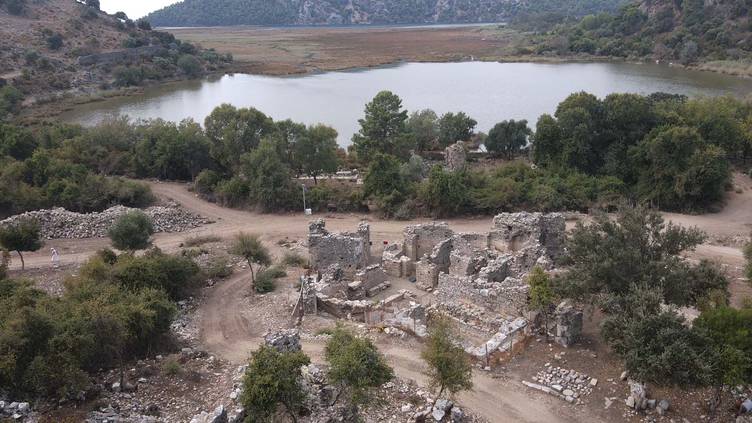
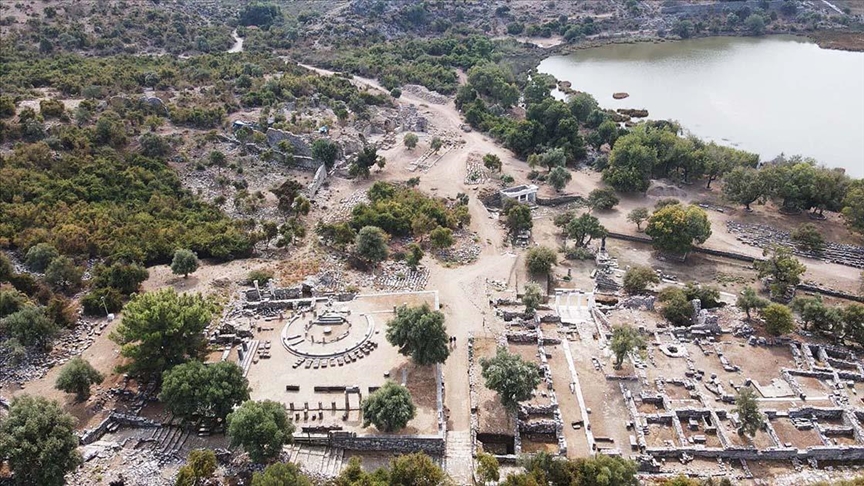
The excavation site lies near Kaunos’ ancient harbor, a strategic zone that once served merchants, sailors, soldiers, and pilgrims moving along the Carian coast. While the city is already renowned for its dramatic rock-cut tombs, well-preserved theater, Roman baths, and mosaic floors, the newly identified complex introduces a different dimension of urban life—organized healthcare and its later integration into Christian religious architecture.
From Healing to Worship
Excavations in the so-called “walled monastery area” have been led by Associate Professor Ufuk Çörtük of Muğla Sıtkı Koçman University. Over several seasons, archaeologists gradually exposed a layered architectural sequence beginning in the Roman Imperial period. The earliest phase, dated to the second and third centuries CE, consisted of a rectangular complex arranged around a central courtyard, flanked by multiple rooms.
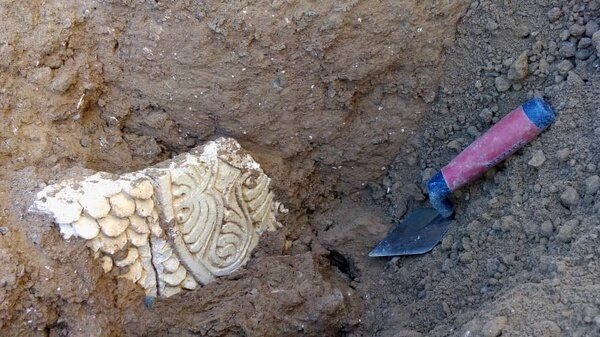
What distinguishes this structure from ordinary domestic or administrative buildings is the remarkable concentration of medical instruments recovered from its rooms and courtyards. Scalpels, probes, tweezers, and other surgical tools point to a specialized medical function. Researchers believe the complex initially operated as a military hospital serving Roman troops stationed near the harbor, before expanding its role to treat civilians and travelers passing through the busy port.
Roman hospitals of this type are relatively rare in Anatolia, making the Kaunos example particularly significant. Its location suggests that healthcare was closely integrated into the city’s commercial and maritime life, offering treatment to those arriving by sea as well as to residents.
📣 Our WhatsApp channel is now LIVE! Stay up-to-date with the latest news and updates, just click here to follow us on WhatsApp and never miss a thing!!
A Byzantine Transformation
By the sixth century CE, the function of the site changed dramatically. Excavations revealed that a large Christian church was constructed directly atop the earlier Roman foundations. The church, remarkably intact, features a well-defined nave, apse, and associated architectural elements typical of early Byzantine ecclesiastical design.
Rather than erasing the Roman structure, the Byzantine builders reused its walls and terraces, creating a layered monument that reflects both continuity and transformation. Archaeologists interpret this shift as part of the broader Christianization of Asia Minor, when civic and utilitarian spaces were frequently repurposed into religious complexes.
The church appears to have been part of a larger monastic enclosure, indicating that Kaunos had become not only a port city but also a spiritual center during Late Antiquity. This reuse of a former hospital for Christian worship also carries symbolic weight, reflecting changing concepts of healing—from physical medicine to spiritual care.
Evidence of Long-Term Use
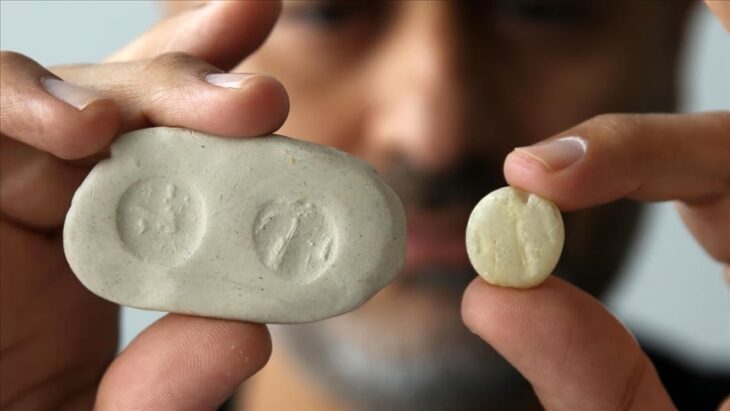
The story of the site does not end with Byzantium. Finds from later periods demonstrate that the complex continued to attract activity well into the medieval era. Among the most notable discoveries is a coin belonging to the Aydınoğulları Beylik, a Turkish principality that ruled parts of western Anatolia in the 13th and 14th centuries.
This evidence confirms that the area remained integrated into local settlement patterns long after Kaunos had lost its prominence as a classical port. In total, archaeologists estimate that the site experienced at least four or five major phases of use, spanning Roman, Byzantine, and Turkish-Islamic periods.
Kaunos in Historical Context
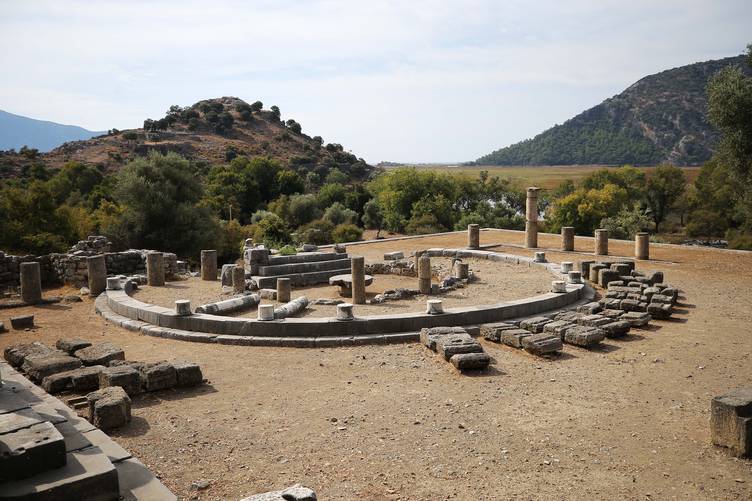
Founded in antiquity on the border between Caria and Lycia, Kaunos occupied a unique cultural crossroads. The city’s harbor once opened directly to the Mediterranean, though silting from the Dalyan Delta gradually pushed the coastline away, contributing to its eventual decline. Despite this, Kaunos remained inhabited for centuries, adapting to environmental change as well as political and religious transformation.
Today, the site is included on the UNESCO World Heritage Tentative List, recognized for its exceptional preservation and historical significance. The discovery of the Roman hospital-turned-church strengthens Kaunos’ claim as a key case study for understanding long-term urban continuity in Anatolia.
A Living Timeline of the Ancient Mediterranean
Researchers describe the newly uncovered complex as a “living timeline,” encapsulating the shifting priorities of ancient societies. From Roman military medicine to Byzantine monastic life, and finally to medieval Turkish presence, the site illustrates how architecture was repeatedly reinterpreted rather than abandoned.
As excavations continue, scholars expect further insights into daily life, healthcare practices, and religious transformation in ancient Caria. For now, the Kaunos hospital-church stands as a rare and powerful testament to how cities of the ancient Mediterranean evolved—layer by layer—without losing their connection to the past.
Cover Image Credit: AA