15 February 2026 The Future is the Product of the Past

God Pan statue unearthed at Istanbul’s historical church of St. Polyeuctus

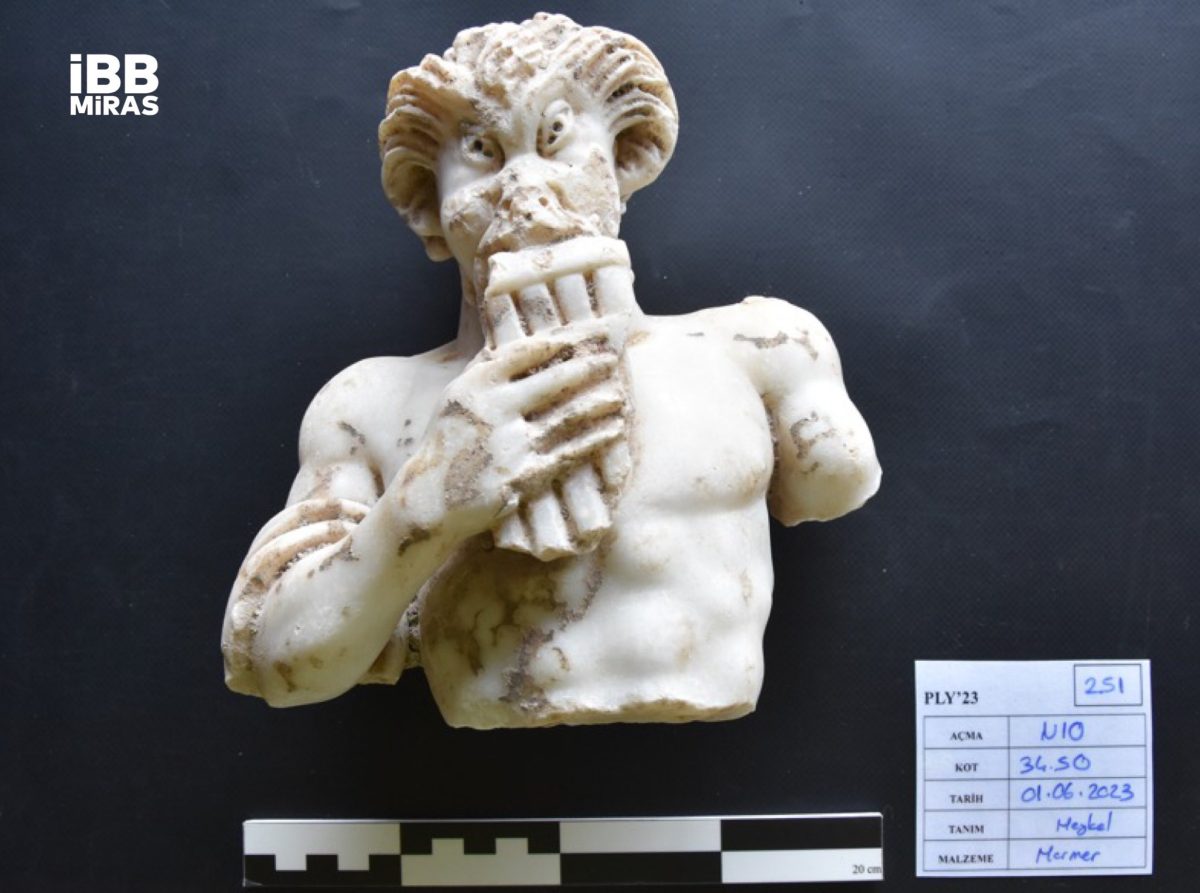
A Pan statue thought to belong to the Roman period was recovered during excavation works carried out by Istanbul Metropolitan Municipality (IBB) teams at Saraçhane Archaeology Park, where the Church of St. Polyeuctus is located.

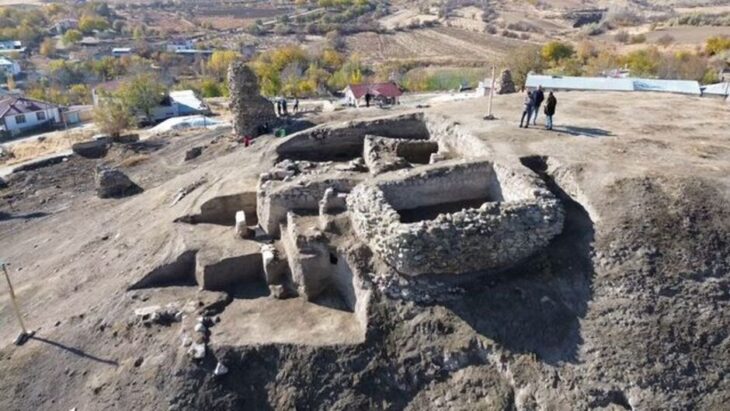
There are modest ruins of a structure that was once the largest church in Constantinople and was constructed to resemble the Solomon Temple in Jerusalem in a small park right in the middle of Istanbul’s Fatih neighborhood, close to the location of the Istanbul Metropolitan Municipality.

Before the erection of the new Hagia Sophia by Emperor Justinian in 537, the Church of Saint Polyeuctus was the largest temple in Constantinople.

The church in the Saraçhane district of Istanbul was destroyed after being used for various purposes. However, after some historical artifacts belonging to the church were discovered during the construction of an underpass in the 1960s, excavation works were carried out in the church. After six years of hiatus, the excavation work was paced by the IBB Heritage teams affiliated with the Cultural Affairs Directorate.
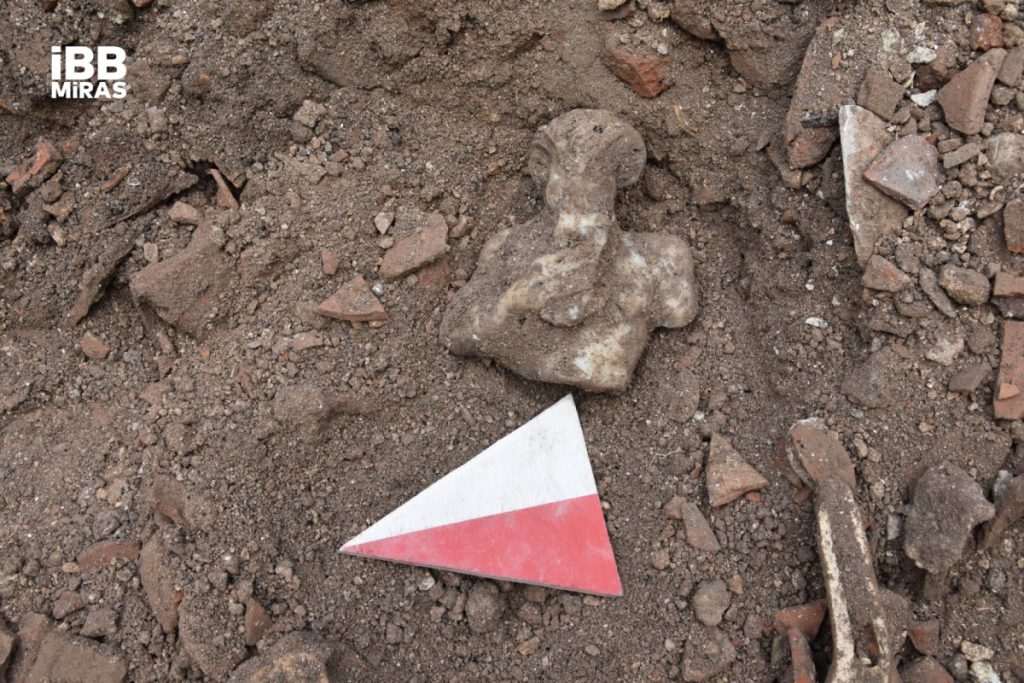
Photo: İBB

During the excavations carried out by archaeologists, the Statue of Pan, which is considered to be 1700 years old, was found 2 meters 60 centimeters below the ground. The left arm and underbody parts of the 20-centimeter-high, 18-cm-wide statue were found to be broken.


📣 Our WhatsApp channel is now LIVE! Stay up-to-date with the latest news and updates, just click here to follow us on WhatsApp and never miss a thing!!


While the statue is estimated to belong to the Roman period, the exact period to which it belongs will be determined after the examinations. The found part of the Pan statue was taken to the warehouse of the Archeology Museums Directorate.
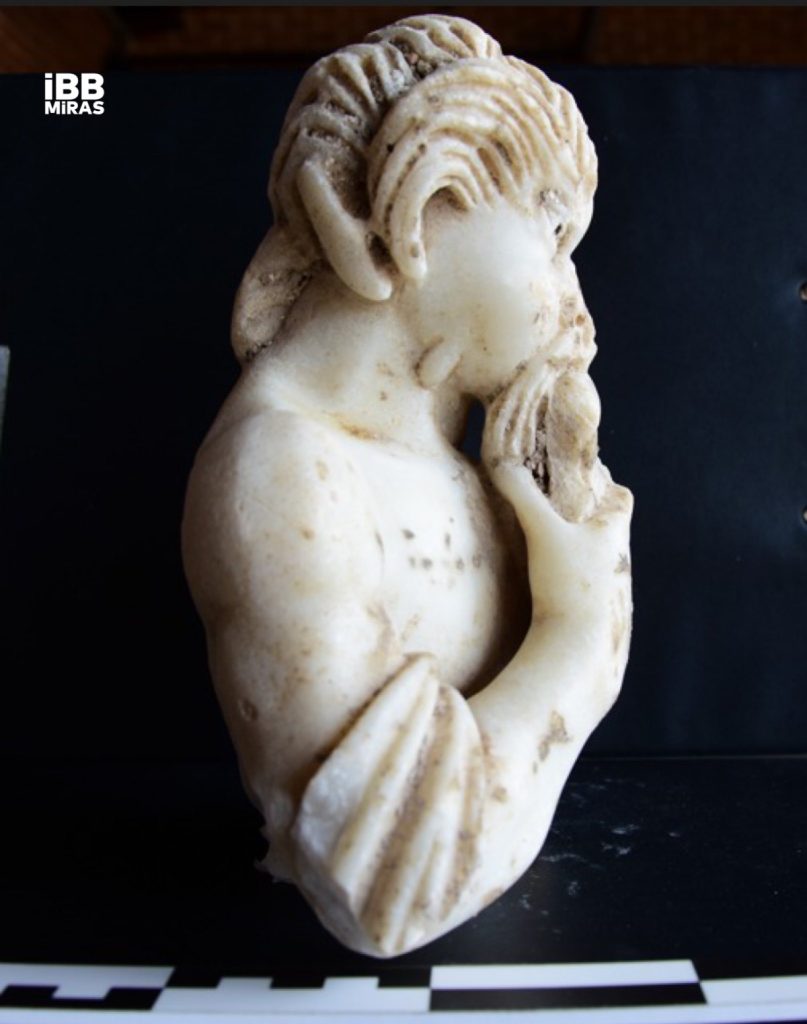
Photo: İBB

Although it is said that there are many palaces and structures belonging to the Theodosius family in the Saraçhane or Constantinianae region, a palace structure whose location has been determined has not been found until today, except for the Church of St Polyeuctus.

In a statement made by İBB Deputy Secretary General Mahir Polat on his social media account, he said that they had reached the lost Roman Palace section of Istanbul together with another Roman statue that was unearthed recently.

Pan is considered to be one of the oldest of Greek Gods. He is associated with nature, wooded areas, and pasturelands, which is where his name comes from. Pan worship began in rural areas far from populated city centers. As a result, he did not construct large temples to worship him. Pan worship was instead centered in nature, often in caves or grottos. He ruled over shepherds, hunters, and rustic music.

Cover Photo: İBB
Related Articles

In a Wisconsin lake, archaeologists discover a 1,200-year-old dugout canoe

6 November 2021

6 November 2021

Maritime archaeologists from the Wisconsin Historical Society have discovered a dugout wooden canoe in Lake Mendota, Wisconsin, USA. Carbon analysis...

Rare Egyptian-Iconography Relief Discovered at Sagalassos: Afyon Marble Panels Depict God Tutu

5 October 2025

5 October 2025

Archaeologists excavating the ancient site of Sagalassos in the Ağlasun district of Burdur have made a striking discovery: a relief...

Rare 2nd–3rd Century Roman Intaglios Unearthed at Bremenium Fort in England

6 November 2025

6 November 2025

Archaeologists excavating the remote Bremenium Roman Fort in High Rochester, Northumberland, have uncovered two exquisite intaglios—engraved gemstones once set into...

Archaeologists Discover Assyrian-Style Leather Armor 2,700 Years Old in China

11 December 2021

11 December 2021

The new research shows that the unique leather armor found in a horse rider’s tomb in Northwest China was made...

World’s Oldest Settlement Plan Found in “Çatalhöyük”

15 February 2021

15 February 2021

With the beginning of the Holocene period, many lakes have dried up and have become suitable for settlement. It is...

1,000-Year-Old Kufic-Inscribed Tombstone Unearthed at Dowlatshahi Mosque in UNESCO-Listed Yazd, Iran

29 July 2025

29 July 2025

In a remarkable archaeological discovery, a nearly 1,000-year-old Kufic-Inscribed tombstone has been unearthed during restoration efforts at the Dowlatshahi Mosque,...

Scandinavia’s Oldest Identified Ship Burial in Trøndelag “Rewrites History”

14 November 2023

14 November 2023

In Leka, a municipality in Norway’s Trøndelag county, archaeologists have uncovered Scandinavia’s oldest identified ship burial, dating back to around...

10 Ancient Shipwrecks and Finds from Prehistoric to Ottoman Periods Discovered οff Kasos Island in Greece

14 March 2024

14 March 2024

The research team of the National Hellenic Research Foundation, in collaboration with the Ministry of Culture, has identified ten shipwrecks...

3700 years old Brain and skin remnants discovered at Bronze Age settlement in western Türkiye

5 September 2023

5 September 2023

Archaeologists discovered, well-preserved brain and skin remnants of two individuals dating to the Bronze Age during excavations at Tavşanlı Höyük...

A spectacular rare ancient Roman bronze coin depicting the moon goddess was discovered off the coast of Israel

25 July 2022

25 July 2022

A rare 1850-year-old exceptionally well-preserved bronze coin depicting the Roman moon goddess Luna has been found off the coast of...

5000-year-old jewelry factory found in Rakhi Garhi in India’s Indus Valley region

9 May 2022

9 May 2022

The Archaeological Survey of India (ASI) has made an important discovery by finding the remains of a 5000-year-old jewelry factory...

Study Reveals Córdoba’s Advanced Sanitation System: A Medieval Model Unmatched in Europe for Centuries

25 April 2025

25 April 2025

Recent research has unveiled the impressive sanitation systems of medieval Córdoba, revealing that the city’s infrastructure was so advanced that...

Scientists recreate Stone Age cave lighting

17 June 2021

17 June 2021

For early hunter-gatherer societies that were lucky enough to live near caves, these natural underground homes provided ideal protection from...

2,500-year-old Salt Production and Rare Germanic Settlement Discovered in Werl, Germany

7 February 2026

7 February 2026

Archaeological excavations in Werl-Westönnen uncover a 2,500-year-old salt production site and a unique Germanic farmstead Nearly two years of archaeological...

A pendant made of mammoth bone with ‘mysterious dots’ could be the oldest known example of ornate jewelry in Eurasia

26 November 2021

26 November 2021

The fragments of an ancient pendant made of mammoth ivory were unearthed in Poland, and are regarded to be the...