28 January 2026 The Future is the Product of the Past

First Female Viking Grave Discovered In Swedish Mountains

A mountain hiker in Jämtland, in central Sweden, on his way camping in Kalffällen, made a surprising discovery.

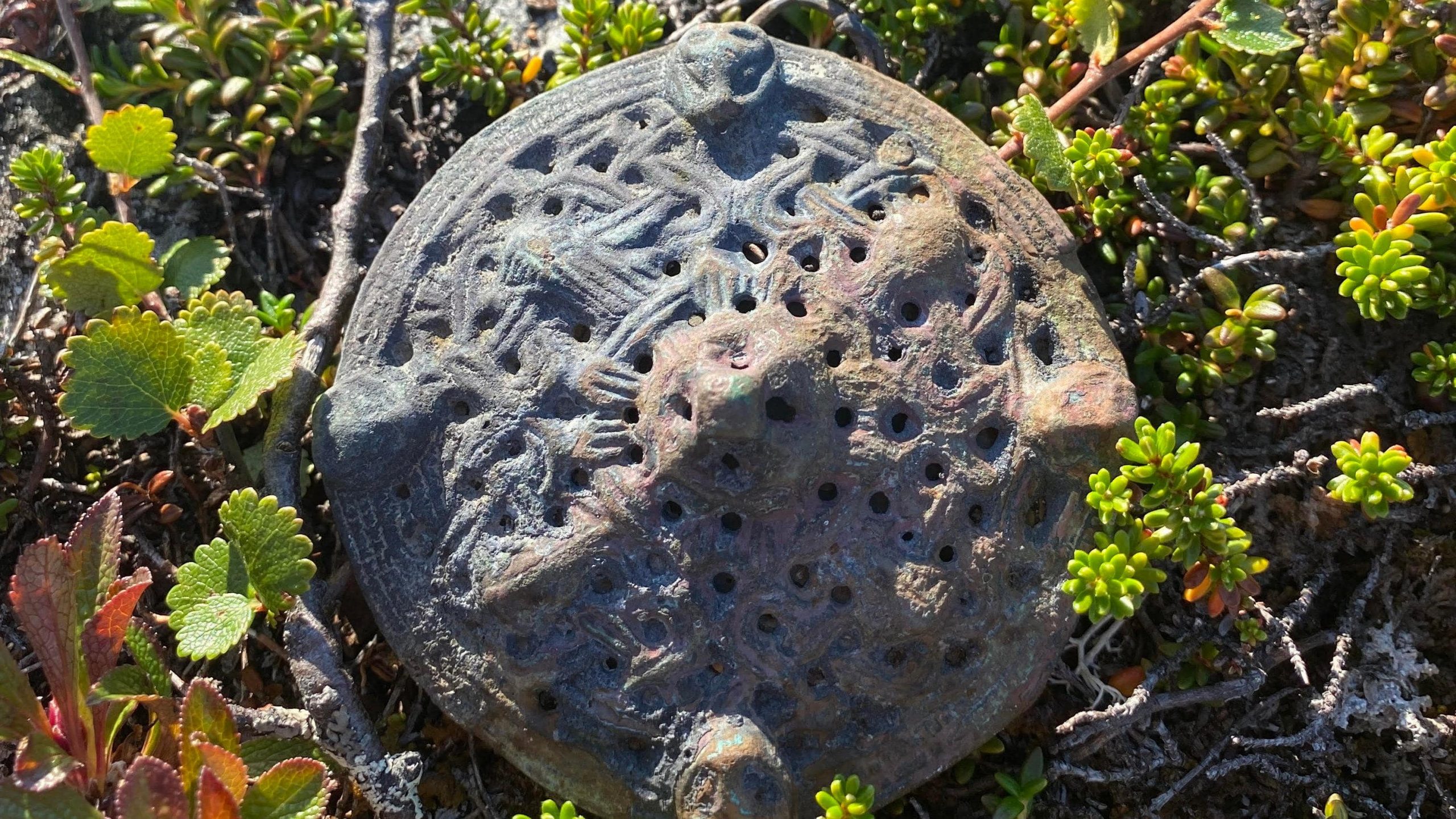
The discovery excited archaeologists in Sweden. Mountain hiker Eskil Nyström discovered a brooch 1 year ago. Nyströn discovered something strange sticking up from the ground as he was erecting and securing his tent.

“My first thought was that I had found a mine, but then when I had dug around, I understood that it can’t be, Eskil Nyström told TT.

It has now turned out to be a 1200-year-old brooch, possibly the first female tomb from the Viking Age found in the Swedish mountains.
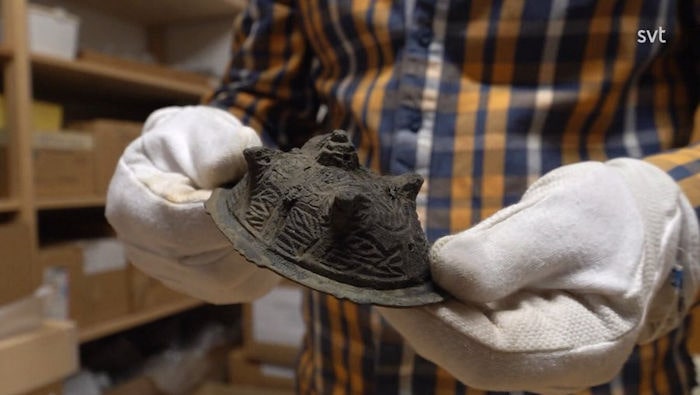
Examination of the Viking brooch. Photo: Svt

Eskil Nyström brought the brooch home and asked around, but no one knew what it was or where it came from. One year later, he made contact with the museum Jamtli in Östersund and realized the archaeological and historical significance of the brooch he had discovered.


📣 Our WhatsApp channel is now LIVE! Stay up-to-date with the latest news and updates, just click here to follow us on WhatsApp and never miss a thing!!


Archaeologist Anders Hansson in Jamtli examined the find site for the first time Wednesday morning. There they found soot and burnt bones. Hansson also found another oval brooch which is not much of a surprise because such pins are usually unearthed in pairs.

Researchers have uncovered burnt bones at the site, and they suggest it is a cremation burial.

“What has been established is that it is a cremation grave from the Viking Age and “most likely” a woman’s grave, Hansson says. Previously, only five other Viking graves have been found in the mountains, and all have belonged to men.

“You get the feeling that these people were on their way somewhere when the woman died. The burial took place here, where the woman took her last breath. They could have taken the woman home where they lived, but instead, they make a cremation pit on the mountain,” Hansson told TT.

Hansson says the female Viking tomb is richly equipped.
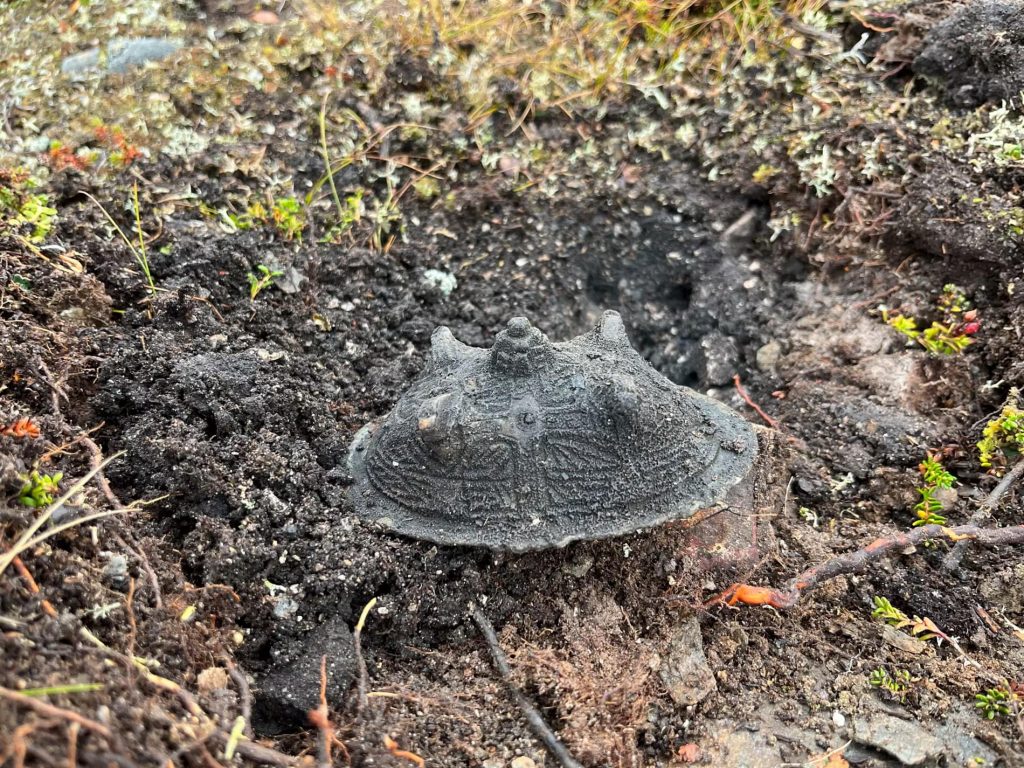
“It’s really pretty. It is completely socially and religiously correct. The Viking woman took all her most precious objects to the grave, but there are no monuments, burial mounds, or cairns. It’s just flat hill. This grave is thus different compared to Viking graves in Iron Age settlements,” Hansson explained, adding excavations of the grave are not planned this year.

The Vikings had intricate burial rituals, and each discovery adds to our understanding of how people sent their loved ones to the afterlife. When a great Viking chieftain died, he was buried on a ship or burned.

Fire played a central role in spectacular burial rituals practiced by the Vikings. Cremation was common during the early Viking Age. Ashes were later spread over the waters. The vast majority of the burial finds throughout the Viking world are cremations.

There won’t be any major excavations until next summer.

Archaeology is a world full of surprises, and we have frequently witnessed how small discoveries can lead to much larger treasures. This time, a tiny brooch from the ninth century might start a new chapter in the tale of the Vikings in Sweden.

Related Articles

Are the skeletons found in the restoration of the Bukoleon Palace the victims of the Crusader army massacre in Constantinople?

29 November 2021

29 November 2021

It is thought that the 7 skeletons messy found in the Bukoleon Palace excavations may be the victims of the...

After 1,300 years, water to again flow from monumental fountain in the City of Gladiators in Turkey

30 December 2022

30 December 2022

The approximately 2,000-year-old monumental fountain in the ancient city of Kibyra in Golhisar, Burdur in southwestern Turkey will start flowing...

46 Ice Age Animals Found in a Northern Norway Cave: “Extremely Rare” Discovery Reveals a Frozen Past

22 October 2025

22 October 2025

A remarkable discovery in northern Norway has uncovered the remains of 46 species from the last Ice Age — from...

Britain’s First Discovery of Its Kind: A 2,000-Year-Old Carnyx and Boar Standard Unearthed in Norfolk

7 January 2026

7 January 2026

A groundbreaking archaeological discovery in Norfolk has revealed one of the most complete Iron Age war trumpets ever found in...

Ancient Babylon Excavation Uncovers 478 Artifacts Including Cuneiform Tablets, and Cylindrical Seals

16 October 2024

16 October 2024

The Iraqi State Board of Antiquities and Heritage (SBAH) announced that 478 artifacts were uncovered during an excavation expedition in...

An Elamite inscription attributed to Xerxes the Great was found at Persepolis

26 February 2022

26 February 2022

During the classification and documentation project of inscribed objects and fragmentary inscriptions in the Persepolis Museum reserves, experts discovered a...

Homo Sapiens are older than we previously thought

16 January 2022

16 January 2022

Researchers have discovered that Omo I skeletons, previously thought to be less than 200,000 years old, are 230,000 years old....

Ushabti figurines on display at Izmir Archeology Museum

18 September 2021

18 September 2021

The 2,700-year-old “Ushabti” statuettes, discovered in archaeological digs in western Turkey and used in Egyptian burial ceremonies, are being shown...

Archaeologist Reconstructs 2,000-Year-Old Roman Frescoes from Thousands of Fragments in ‘World’s Toughest Jigsaw’

19 June 2025

19 June 2025

What started as a pile of broken plaster fragments has become one of the most remarkable reconstruction projects in British...

Archaeologists unearth hidden tunnels under the 3,000-year-old temple complex

6 June 2022

6 June 2022

Archaeologists have discovered a system of hidden tunnels beneath the 3,000-year-old Chavín de Huántar temple complex in the Ancash Region...

The 1000-year Curse of the Croatian King Zvonimir

26 September 2023

26 September 2023

Croatia is a fascinating country that continually rises up people’s must-visit lists thanks to its sparkling Adriatic coastline, 1,244 islands,...

Ancient Balkan genomes trace the rise and fall of the Roman Empire’s frontier, reveal Slavic migrations to southeastern Europe

7 January 2024

7 January 2024

The genomic history of the Balkan Peninsula during the first millennium of the common era—a period marked by significant changes...

A rare 3,300-year-old wooden yoke found in northern Italy

30 October 2023

30 October 2023

After eight years of complex excavation, recovery, and restoration, a rare 3,300-year-old wooden yoke discovered in a Late Bronze Age...

An inscription containing the Turk name was discovered for the first time in Anatolia

3 September 2022

3 September 2022

For the first time in the pre-Islamic Early period Turkish history, an inscription bearing the inscription expression “Turk” and written...

Archaeologists have found seven pairs of Anglo-Saxon brooches in seven graves during an excavation in Gloucestershire

5 April 2022

5 April 2022

Archaeologists have found seven pairs of Anglo-Saxon saucer brooches, one pair in each of seven burials unearthed in an excavation...