24 March 2026 The Future is the Product of the Past

Ancient shipwreck dating back to the 2nd century BC was discovered off the coast of Croatia

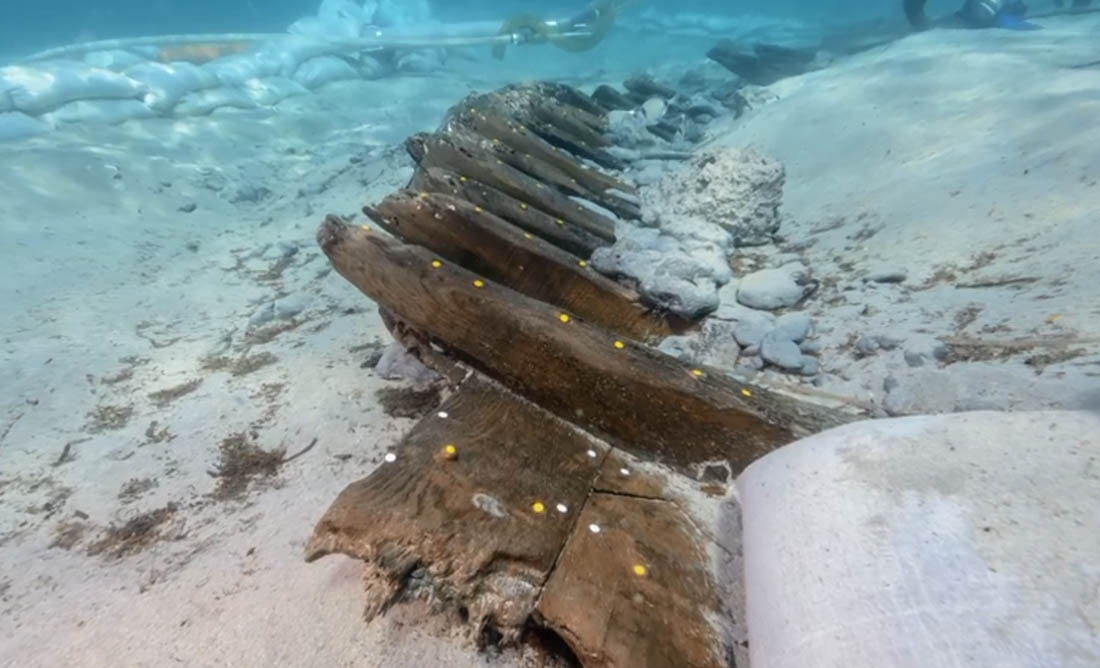
A shipwreck dating to the 2nd century BC has been discovered in the shallow waters of the Adriatic Sea near the Croatian island of Ilovik.

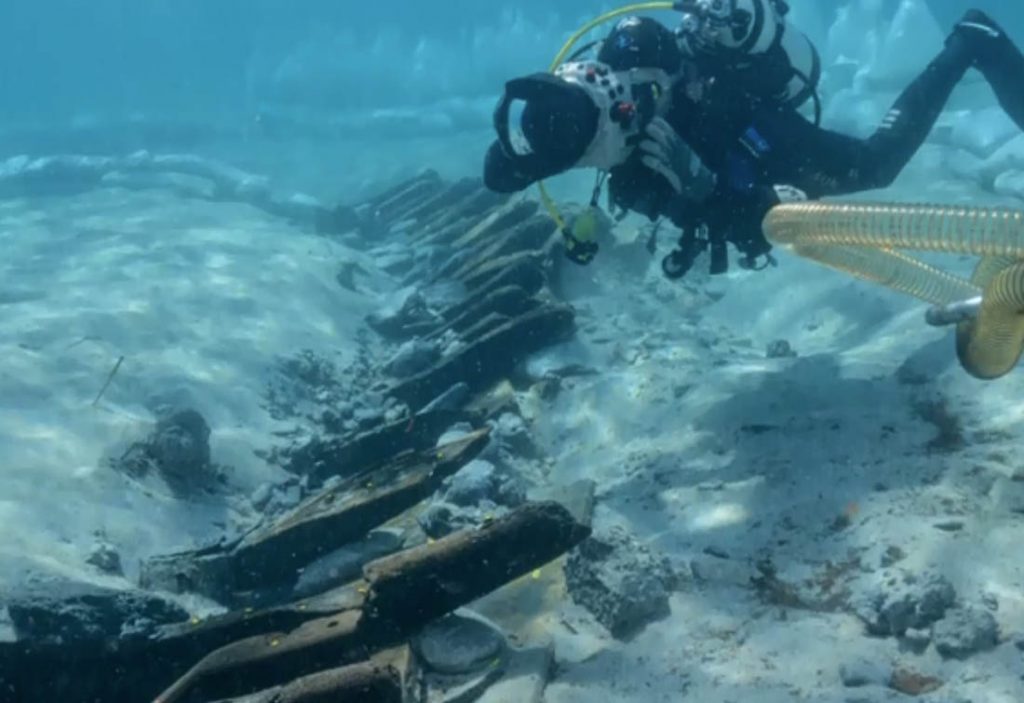
According to Morski, this ancient wooden ship was created using the technique of “joining grooves and tabs,” and the formwork was built first, followed by the skeleton of the ship, all of which was joined by wooden wedges.

The wooden ship measured about 70 feet long and it is a merchant ship that sailed along an important maritime route, right next to the island of Ilovik in Croatia.

Archaeologist Milan Eric found the ship by chance while mooring in this specific Ilovik harbor.
the Croatian Restoration Institute. Photo: Nenad Starčić.
The Croatian Restoration Institute. Photo: Nenad Starčić.
Following that, the research began, which has been carried out since 2018 by the Croatian Restoration Institute’s Department of Underwater Archeology, in collaboration with French colleagues from the University of Marseille (Aix-Marseille University, the French National Centre for Scientific Research (CNRS), and the Camille Jullian Centre), and the Losinj Museum. The Diving Centre of the Special Police of the Ministry of the Interior of the Republic of Croatia (MUP) and the Subseason Diving Centre is assisting with logistics.


📣 Our WhatsApp channel is now LIVE! Stay up-to-date with the latest news and updates, just click here to follow us on WhatsApp and never miss a thing!!


Archaeologist Milan Eric and colleagues from the Lošinj Museum said that the wreck rested on loose sand, requiring the construction of a dam around the site to prevent it from being continually backfilled during the investigation.

Although some artifacts were brought to the surface for desalination and conservation, the remains of the Ilovik ship were then recovered with sand, geotextiles, more sand, and iron nets connected to concrete blocks.

The finds from the Ilovik wreck will be housed at the Losinj Museum after the conservation and restoration work is completed.

MORSKİ

Cover Photo: The Croatian Restoration Institute. Photo: Nenad Starčić.
Related Articles

Ancient helmets, temple ruins found at a dig in Velia southern Italy

1 February 2022

1 February 2022

A discovery that “sheds new light on the history of the mighty Greek colony” by Velia. Archaeologists in southern Italy...

‘Incredibly Rare’ Roman Mausoleum Unearthed Near London Bridge Station

13 June 2023

13 June 2023

Archaeologists report discovering an “incredibly rare” and featured preserved floors and walls Roman mausoleum near London Bridge Station, UK. Archaeologists...

Sicilian Seas Yield Rare Roman Helmet from 241 BC Naval Clash

5 September 2025

5 September 2025

In a remarkable underwater archaeological recovery that highlights Sicily’s rich cultural heritage, a bronze Montefortino‐type helmet was retrieved from the...

Archaeologists Use Song to Unveil the Legendary End of West Africa’s Kaabu Kingdom

19 March 2025

19 March 2025

As the archaeological discoveries at Kansala, located in present-day Guinea-Bissau, reveal the tangible remnants of the once-mighty Kaabu Kingdom, the...

Isles of Scilly Iron Age warrior buried with a mirror and sword was probably a woman

27 July 2023

27 July 2023

Archaeologists conducted a DNA analysis of the tooth enamel of a person who died more than two millennia ago on...

Archaeologists discovered a Thracian tomb from the time of the Odrysian kingdom in southern Bulgaria

13 September 2023

13 September 2023

Archaeologists from the Haskovo Regional Museum of History discovered a third Thracian tomb with murals the likes of those in...

Yes — Camels Really Lived in Basel During the Roman Era!

4 January 2026

4 January 2026

Archaeologists in Switzerland have uncovered compelling evidence that reshapes our understanding of everyday life in Roman-era Europe: camels — yes,...

Archaeologists Discovered 8,200-year-old Eyeliner in Türkiye’s Yeşilova Höyük

16 September 2024

16 September 2024

During the archaeological excavations in Yeşilova Höyük (Yeşilova Mound) in Bornova district of Izmir, an 8,200-year-old kohl made of stone...

16 New Ancient Rock Art Sites Discovered In Jalapão, Brazil

13 March 2024

13 March 2024

Archaeologists at Brazil’s National Institute of Historical and Artistic Heritage (Iphan) discovered 16 new archaeological sites while surveying a large...

Ancient necropolis of stillborn babies and very young children found in Auxerre, France

8 June 2024

8 June 2024

A team from INRAP, France’s national archaeology and preservation agency, unearthed a necropolis dedicated to stillborn and very young children...

From Researchers, a New İnterpretation of Norse Religion

26 February 2021

26 February 2021

Recent research on pre-Christian Norse religions shows that the variation in Norse religions is far greater than previously imagined. Ten...

New research reveals the true function of Bronze Age daggers

30 April 2022

30 April 2022

A new study led by Newcastle University has revealed that the analysis of Bronze Age daggers has shown that they...

7,000-Year-Old Human Footprints in Anatolia: Unearthed at Hatay’s Tell Kurdu Höyük

30 September 2025

30 September 2025

In a rare and captivating discovery, archaeologists have uncovered ancient human footprints dating back approximately 7,000 years at the site...

148 Ancient Tombs Spanning 2,100 Years Unearthed in the Construction Area of the Zoo

18 August 2024

18 August 2024

An ancient burial site with 148 tombs,  spanning over 2,100 years, has been discovered on the construction site of the...

Excavations at Sheffield Castle Reveal the First Surviving Examples of 17th-Century Civil War Abatis

9 March 2025

9 March 2025

Excavations at Sheffield Castle, part of the Castlegate regeneration project by Sheffield City Council, have revealed the first known surviving...