For decades, scientists have debated why Neanderthals vanished from the Earth roughly 40,000 years ago. Climate instability, competition with early modern humans, and limited genetic diversity have all been cited as possible causes of their extinction.
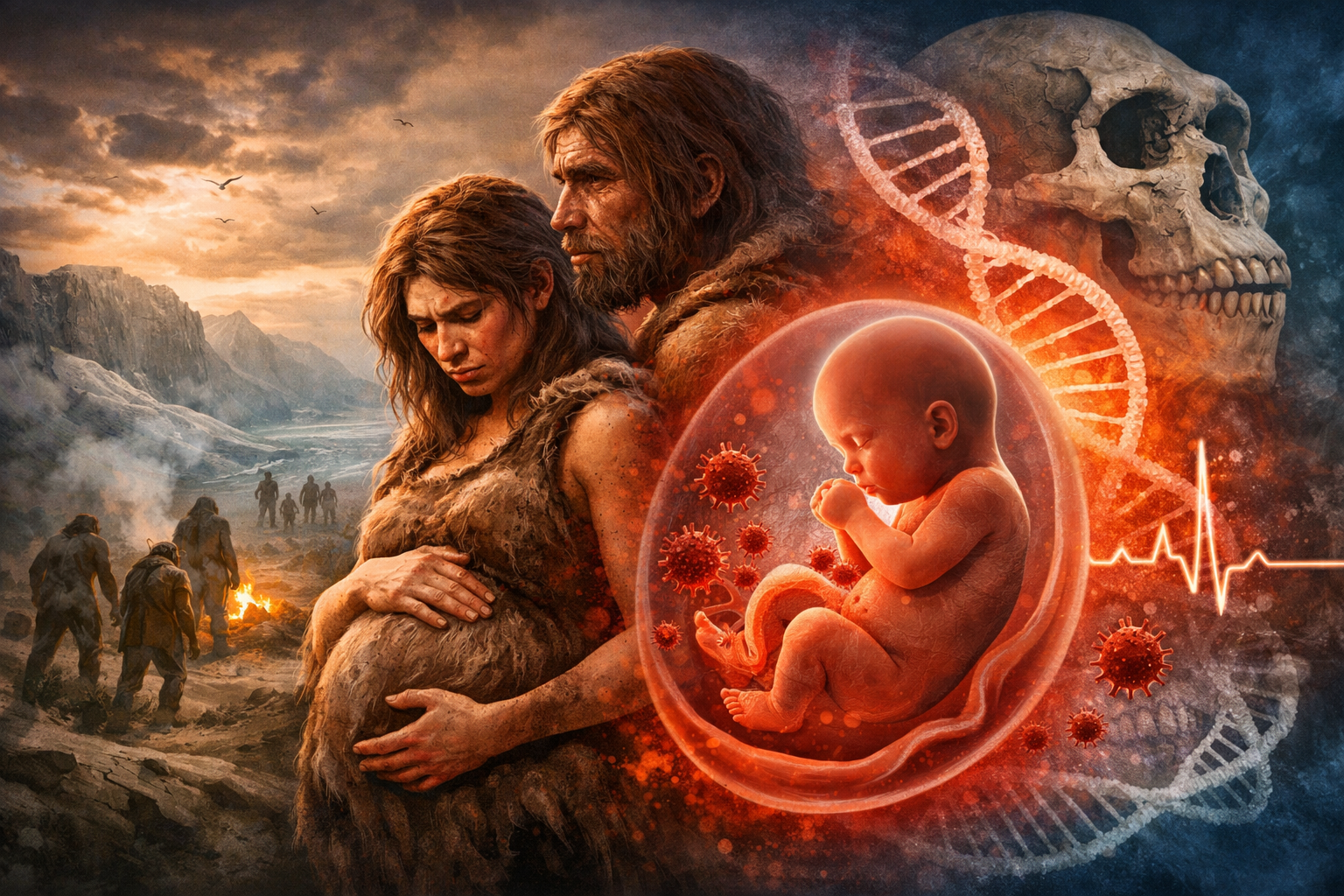
Now, a new study published in the Journal of Reproductive Immunology introduces a striking medical perspective: pregnancy complications such as preeclampsia and eclampsia may have quietly undermined Neanderthal survival. By combining modern clinical data with ancient DNA analysis, researchers suggest that reproductive biology—not just environmental pressure—could have played a critical role in the gradual disappearance of Homo neanderthalensis.
According to the research, life-threatening conditions such as preeclampsia and eclampsia—serious hypertensive disorders of pregnancy—could have reduced maternal survival and reproductive success in Neanderthal populations.
The Biological Challenge of Large Brains
One of the defining characteristics shared by Neanderthals and modern humans was their large brain size. In fact, Homo neanderthalensis had brain volumes comparable to, and sometimes even larger than, those of Homo sapiens.
Large brains come at a high biological cost. Human fetuses require immense energy during development, particularly in the third trimester. To meet this demand, the placenta must deeply invade the mother’s uterine wall and remodel her arteries to ensure adequate blood flow.
📣 Our WhatsApp channel is now LIVE! Stay up-to-date with the latest news and updates, just click here to follow us on WhatsApp and never miss a thing!!
When placental invasion is insufficient, blood supply to the fetus becomes restricted. The stressed placenta then releases microscopic particles into the mother’s bloodstream, triggering inflammatory responses. In modern humans, this process can lead to preeclampsia—characterized by high blood pressure—and in severe cases, eclampsia, which involves seizures and can be fatal.
A Protective Mechanism in Modern Humans
Interestingly, not all cases of poor placental development result in preeclampsia. Clinical data show that roughly 75% of fetuses with vascular growth-restricted placentas are carried by women who do not develop preeclampsia. This suggests the presence of a protective biological mechanism.
In many cases, the maternal immune system appears to dampen or ignore inflammatory signals from the stressed placenta. Although the baby may be born smaller than average, the mother avoids dangerous spikes in blood pressure.
The new study proposes that Neanderthal women may have lacked this protective adaptation—or that it functioned less effectively. Without such a buffer, problematic pregnancies could have triggered severe hypertensive responses, increasing maternal mortality and reducing successful births.
Genetic Clues from Ancient DNA
The research team reached its conclusions by comparing modern clinical data with sequenced Neanderthal genomes. They identified genetic variants that may have influenced how blood pressure and immune responses were regulated during pregnancy.
Low genetic diversity may have compounded the issue. Fossil and genomic evidence suggests that Neanderthals lived in small, isolated populations. Limited gene flow likely resulted in high levels of relatedness between parents.
This genetic similarity could have disrupted maternal-fetal immune tolerance. During pregnancy, the mother’s immune system must recognize the fetus—genetically half foreign—as non-threatening. If immune tolerance mechanisms were weaker in Neanderthals, the maternal body may have reacted more aggressively to placental signals, increasing the likelihood of preeclampsia-like conditions.
Previous genetic studies have already highlighted the limited diversity within Neanderthal populations, with some research suggesting inbreeding episodes. Reduced genetic variation is known to increase susceptibility to disease and reproductive complications in small populations.
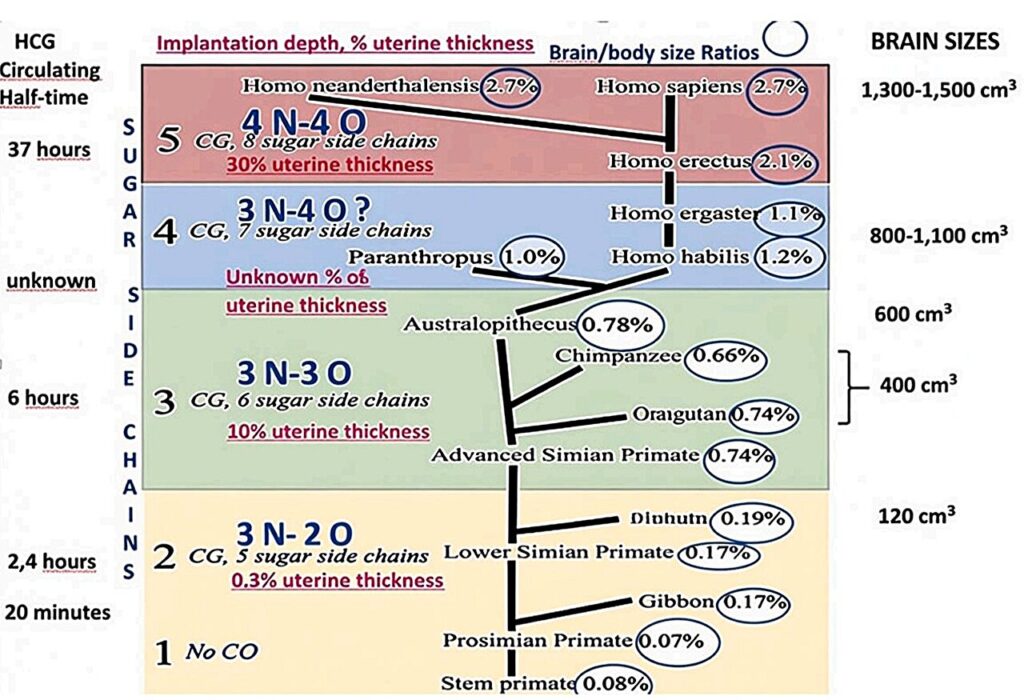
Modeling Demographic Decline
To assess the broader impact, researchers used modern clinical data to model how elevated maternal mortality could affect small prehistoric populations.
Even a modest increase in pregnancy-related deaths can destabilize a population when numbers are already low. The loss of women of reproductive age has long-term demographic consequences, particularly in small, slow-growing groups.
Over thousands of years, repeated reproductive losses could have contributed to a gradual population decline. This mechanism would not necessarily replace existing extinction theories but could have acted alongside them.
Competition with Homo sapiens, environmental stress, and possible resource scarcity may have already strained Neanderthal survival. Increased maternal mortality would have further reduced their ability to recover from ecological and social pressures.
No Direct Fossil Evidence—Yet
At present, there is no direct paleontological evidence confirming higher rates of preeclampsia in Neanderthals. Soft tissue conditions rarely leave clear traces in the fossil record. However, the genetic hypothesis offers a testable pathway.
Researchers propose laboratory testing of Neanderthal gene variants to determine whether they trigger inflammatory pathways associated with preeclampsia in modern humans. If these variants produce stronger hypertensive responses, the theory would gain significant support.
A Multidisciplinary Perspective on Human Evolution
This study represents a growing trend in paleoanthropology: integrating medicine, genetics, and evolutionary biology to understand ancient population dynamics.
Historically, extinction models have focused on external factors—climate shifts, competition, and migration patterns. This new hypothesis shifts attention inward, toward biological vulnerability.
If confirmed, the findings would suggest that Neanderthals were not only challenged by environmental and competitive pressures but also by their own reproductive biology.
Reframing the Neanderthal Story
The idea that pregnancy complications contributed to Neanderthal extinction does not diminish other explanations. Instead, it adds nuance to an already complex narrative.
Human evolution is rarely driven by a single cause. More likely, multiple stressors—climatic, ecological, social, and biological—interacted over thousands of years.
By examining maternal health and reproductive success, scientists are uncovering a new layer of vulnerability in small, genetically isolated populations. The extinction of Homo neanderthalensis may have been shaped not only by encounters with modern humans, but also by silent physiological challenges during pregnancy.
As researchers continue testing ancient gene variants, we may soon learn whether one of the most pivotal chapters in human evolution was influenced not just by survival of the fittest—but by survival in the womb.
Pierre-Yves Robillard et al, Why reproduction has probably been very problematic in Neanderthals: The fabulous history of (pre)eclampsia, Journal of Reproductive Immunology (2026). DOI: 10.1016/j.jri.2026.104852
Cover Image Credit: AI-generated illustration created by the author for representational purposes.