5 February 2026 The Future is the Product of the Past

3500-year-old ceramic oven discovered in Turkey’s Tepecik Mound

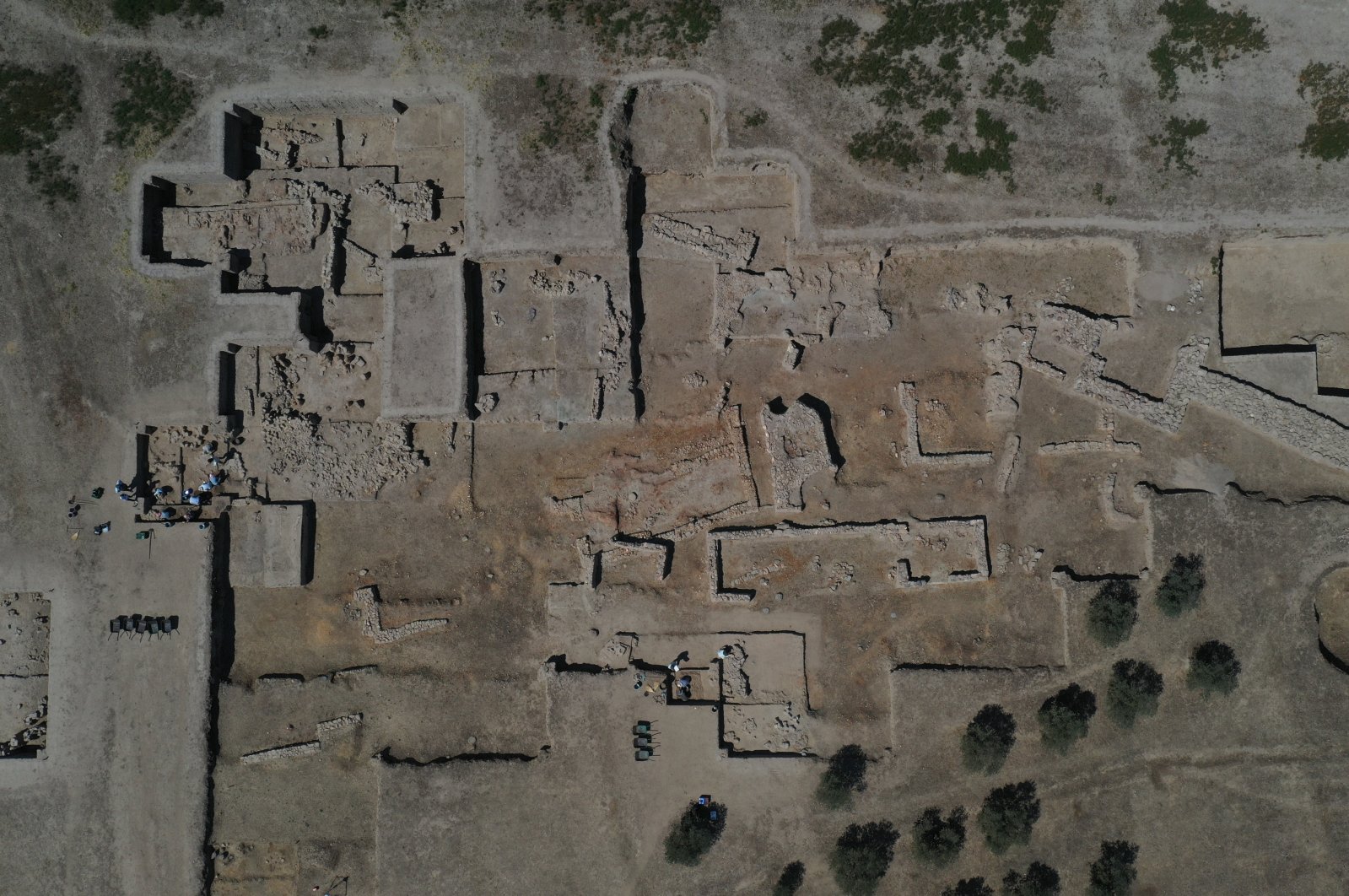
A 3,500-year-old ceramic oven was unearthed in Tepecik Mound in the Çine district of Aydın, in western Turkey.

Tepecik Höyük, which is 36 km away from Aydın, is a settlement where trade is intense, apart from being on a road that has strategic importance in every age due to its location.

Since 2004, professor Sevinç Günel of Hacettepe University’s archaeology department has presided over excavations at Tepecik Mound in the Çine Plain.

Three towers, a chamber containing goods used by the kings of the time for official visits, and obsidian used in tool manufacture were discovered as part of the 17-year excavations at the archaeological site, which was formerly recognized as a trading center. In the mound, archaeologists recently discovered an oven with ceramic tiles.

Günel, the excavation leader, told Anadolu Agency (AA) that the region had settlements back-to-back for 7,500 years. Noting that they discovered evidence of life from every time in the mound, Günel noted that this demonstrated that the site was a significant economic hub in its geography.


📣 Our WhatsApp channel is now LIVE! Stay up-to-date with the latest news and updates, just click here to follow us on WhatsApp and never miss a thing!!
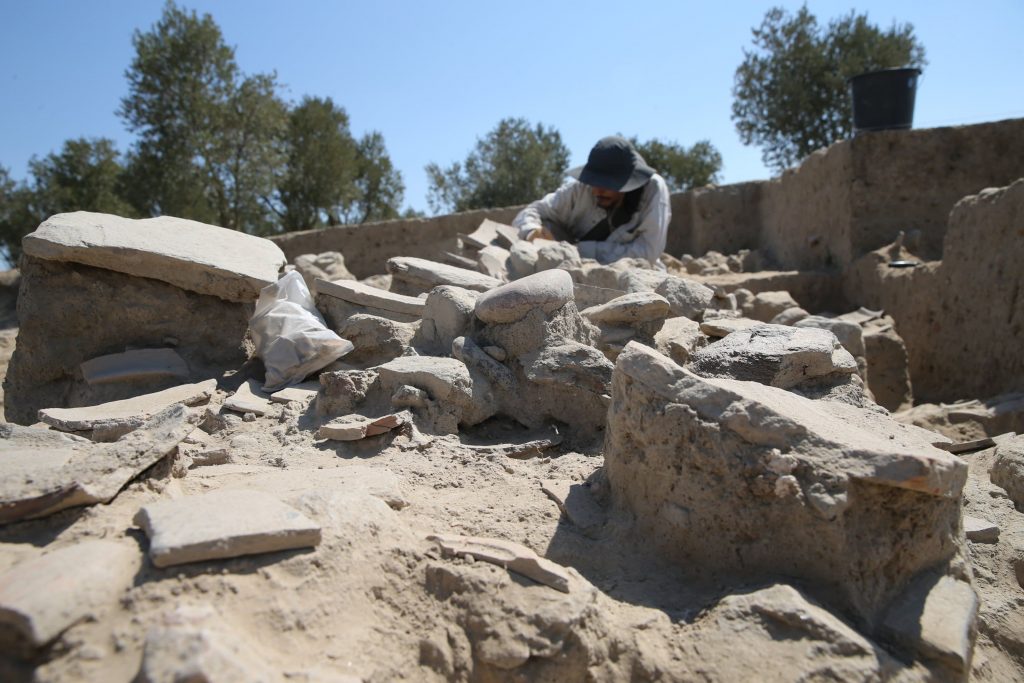


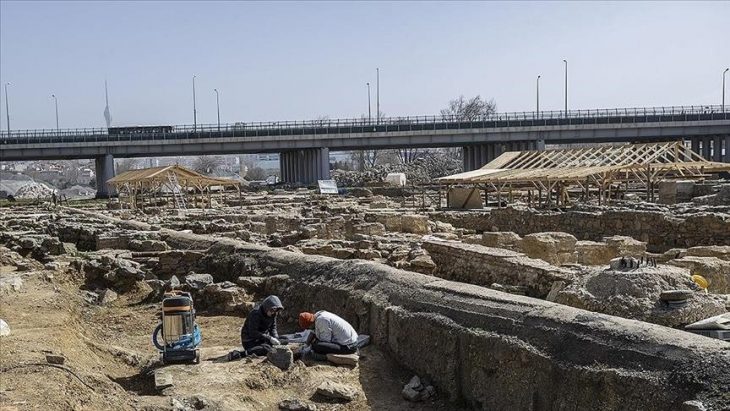
An archaeologist work in the area of the oven in Tepecik Mound, Aydın, western Turkey. (AA Photo)

“The area where we have been recently working has architectural remains and finds from 3,500 years ago. We think it is a ceramic oven. It has ceramic pieces on its tiling and a hard-filled mud-brick floor. There are also ceramic pots around it. We have samples of these pots that prove mass production was conducted here. We will have clearer information as our work will spread in the area more in the upcoming days.”

Stating that they also found a warehouse 20 meters (65 feet) away from the area of the oven, Günel said, “We found broken pieces of jars and vessels containing products in this warehouse. However, it was heavily damaged. The reason for such damage was a flood that occurred at that time. Recently we have been cleaning the broken pots in the area.”

Related Articles

Scientists find the oldest evidence of humans in Israel -a 1.5 million-year-old Human vertebra

3 February 2022

3 February 2022

An international group of Israeli and American researchers, an ancient human vertebra has been uncovered in Israel’s Jordan Valley that...

3,200-Year-Old Temple Mural of Spider God in Peru

25 March 2021

25 March 2021

Archaeologists in northern Peru have discovered a 3200-year-old mural. The mural was painted on the side of an ancient adobe...

2,000-Year-Old Dancing Man Statuette Unearthed in Siberia

6 May 2021

6 May 2021

During excavations for a new bridge over the Ob River in Novosibirsk, Russia’s third-largest district, a ten-centimeter-tall figurine was discovered....

New Archaeological Discoveries at Lystra — the Sacred Anatolian City Cited Eight Times in the Bible

8 October 2025

8 October 2025

Hidden amid the rolling plains of central Anatolia, the ancient city of Lystra is once again stirring after centuries of...

A Circular Structure Linked to the Cult of Kukulcán Discovered in Mexico

2 November 2023

2 November 2023

A team of researchers with the Mexican National Institute of Anthropology and History (INAH) has unearthed the remains of a...

The oldest evidence of human cannibalism as a funerary practice in Europe

7 October 2023

7 October 2023

According to a new study, cannibalism was a common funerary practice in northern Europe around 15,000 years ago, with people...

Human Activity on Curaçao Began Centuries Earlier Than Previously Believed

28 March 2024

28 March 2024

New research co-led by Simon Fraser University and the National Archaeological Anthropological Memory Management (NAAM Foundation) in Curaçao extends the...

New Archaeological Discoveries may Confirm What is Written in the Bible

22 March 2021

22 March 2021

The importance of what is written in the scriptures in the development of archeology is really great. It is possible...

A rare 3,300-year-old wooden yoke found in northern Italy

30 October 2023

30 October 2023

After eight years of complex excavation, recovery, and restoration, a rare 3,300-year-old wooden yoke discovered in a Late Bronze Age...

The ability to produce ceramic vessels came to Europe via Siberia and the Caspian Sea region

6 January 2023

6 January 2023

A new study suggests that the knowledge for making ceramic vessels came to Europe from the Middle East and the...

Before Rome, Before Greece: Anatolia’s Oldest Glass Revealed in Hittite Büklükale

28 July 2025

28 July 2025

Nestled along the western bank of the Kızılırmak River in central Turkey, the archaeological site of Büklükale continues to astonish...

Archaeologists uncover Europe’s oldest lakeside stilt village behind a fortress of defensive spikes

11 August 2023

11 August 2023

Under the turquoise waters of Lake Ohrid, the “Pearl of the Balkans” Scientists have uncovered what may be one of...

Unique 6,000-Year-Old Sacred Hearths and Karaz Pottery Discovered at Tadım Mound in Elazığ

28 March 2025

28 March 2025

Archaeological excavations at Tadım Castle and Tadım Mound (Tadım Höyük), located within the borders of Tadım Village in Elazığ, continue...

The Longest Greek Papyrus from the Judean Desert Sheds Light on a Pivotal Roman Court Case

31 January 2025

31 January 2025

New research by a group of Austrian and Israeli scholars has finally deciphered a 1,900-year-old scroll describing a tense court...

In Ryazan, the first birch bark letters were discovered

13 September 2021

13 September 2021

The first birch bark letters were found at the Vvedensky excavation site in the Kremlin in Pereyaslavl Ryazan (modern Ryazan)....