16 December 2025 The Future is the Product of the Past

2,500-Year-Old Archaeological Site Discovered in Eastern Afghanistan’s Laghman Province

Archaeologists in eastern Afghanistan have identified a previously unknown archaeological site dating back more than 2,500 years, offering rare insights into life in the region long before Christianity reached Central and South Asia.

Local officials from Laghman’s Directorate of Information and Culture announced that the site was documented in the Alingar district, within the Saw Valley, near a settlement locally known as Situn village. Initial assessments suggest the remains date to between roughly 1000 and 500 BCE, corresponding to the early Iron Age in eastern Afghanistan.

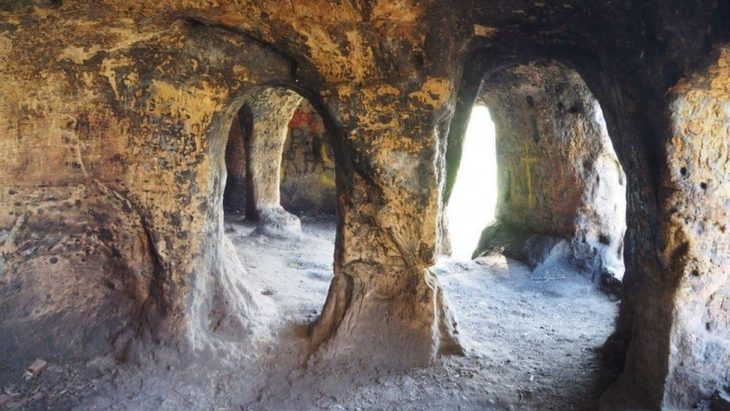
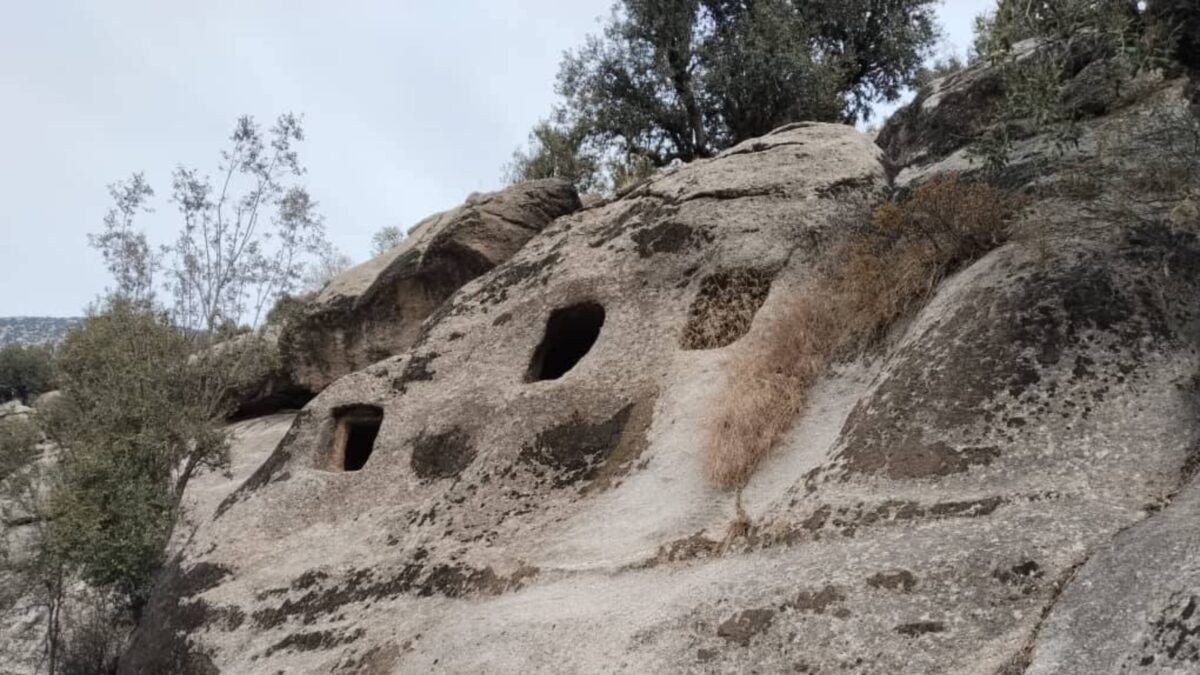
According to cultural heritage authorities, preliminary fieldwork has revealed a carefully constructed stone staircase alongside up to twelve rock-cut chambers carved directly into the hillside. These hand-hewn spaces are accompanied by additional architectural traces, indicating planned construction rather than temporary shelter or sporadic use.

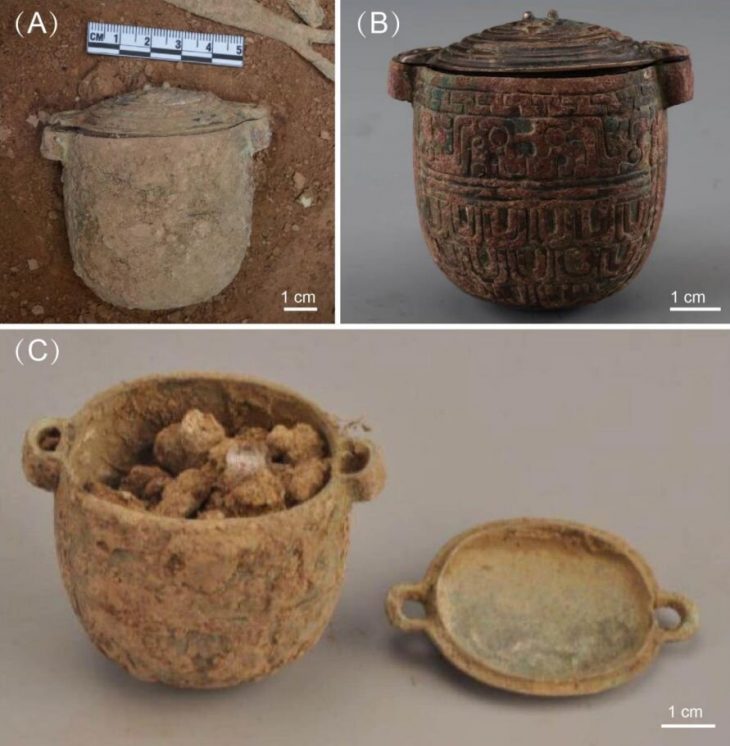
Archaeologists also recovered a ceramic vessel believed to have been used for drinking liquids. Although modest in appearance, such everyday objects are considered key indicators of sustained human activity and may help clarify whether the site functioned as a residential area, a ceremonial complex, or a combination of both.

Laghman’s Role in Early Regional History

Laghman province occupies a geographically strategic zone linking the Kabul Valley with eastern Afghanistan and the broader Indus region. During the centuries around 1000 BCE, this corridor played a significant role in regional movement, trade, and cultural exchange.


📣 Our WhatsApp channel is now LIVE! Stay up-to-date with the latest news and updates, just click here to follow us on WhatsApp and never miss a thing!!


Historical and archaeological evidence suggests that eastern Afghanistan was home to early Iranian-speaking communities during this period, later becoming integrated into larger political frameworks such as the Achaemenid Empire by the 6th century BCE. The fertile valleys and river systems of Laghman would have supported agriculture, seasonal settlement, and small population centers long before the emergence of formal urban life.

Rock-cut architecture similar to that identified in Alingar is known from several ancient sites across eastern Afghanistan and neighboring regions. Such features often reflect long-term occupation or ritual use, particularly during the early Iron Age, when communities increasingly invested in durable architectural forms.
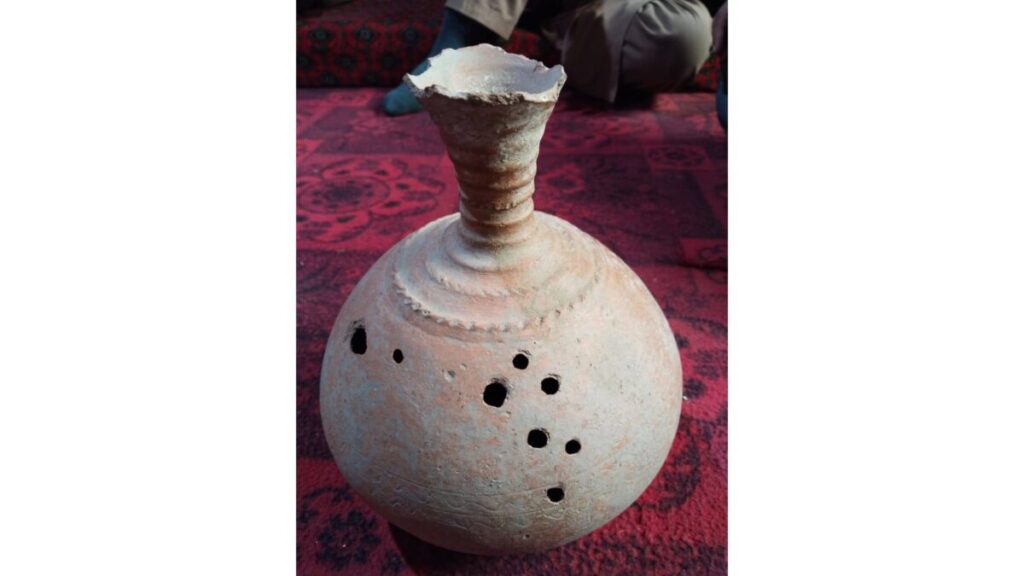
Archaeologists also recovered a ceramic vessel believed to have been used for drinking liquids.
Archaeologists also recovered a ceramic vessel believed to have been used for drinking liquids. Credit: AMU

Significance and Next Steps

Cultural officials emphasize that the newly identified site remains in an early documentation phase. No extensive excavation has yet been conducted, and specialists caution that further archaeological surveys will be necessary to establish a precise chronology and cultural attribution.

Nevertheless, authorities believe the discovery could significantly enhance understanding of Laghman’s ancient settlement patterns and its role in early regional civilizations. In recent years, multiple historical sites have been identified and registered across the province, highlighting its archaeological richness despite decades of conflict and limited research access.

As systematic study continues, the Alingar site may provide rare material evidence of daily life, architectural traditions, and social organization in eastern Afghanistan more than two millennia ago—at a time when the region served as a vital bridge between Central Asia, the Iranian plateau, and South Asia.

Cover Image Credit: AMU
Related Articles

Hidden for Millennia, Limyra’s Long-Lost Temple of Zeus Has Finally Been Found After 43 Years of Searching

3 December 2025

3 December 2025

A significant breakthrough has reshaped archaeological understanding of Limyra, one of eastern Lycia’s most storied ancient cities. Excavations in Finike,...

2,700-Year-Old Rare Bronze Knives from the Early Saka Period Unearthed in Kazakhstan

17 July 2025

17 July 2025

In a remarkable archaeological breakthrough, researchers and students from Margulan University have unearthed two rare bronze knives dating back over...

A prehistoric monument consisting of three round enclosures, one of which resembles a horseshoe, was discovered in France

7 April 2024

7 April 2024

Archaeologists from the French National Institute for Preventive Archaeological Research (INRAP) unearthed an unusual, prehistoric monument in the shape of...

Researchers extract ancient DNA from a 2,900-year-old clay brick

6 September 2023

6 September 2023

Researchers have successfully extracted ancient DNA from a 2,900-year-old clay brick, uncovering a wealth of information about the plant life...

Grave Dig Uncovers 1,500-Year-Old Mosaic with Star of David and Cryptic Greek Petition in Türkiye

3 August 2025

3 August 2025

During a routine grave dig in Türkiye’s Diyarbakır province, archaeologists uncovered a remarkable 1,500-year-old mosaic featuring the Star of David...

The Catacombs of Commodilla in Rome will open to the public for the first time

21 September 2022

21 September 2022

The fourth-century Catacombs of Commodilla in Rome’s Garbatella district will reopen to the public soon after the Vatican’s Pontifical Commission...

3,000-year-old weavings discovered in Alaska’s Alutiiq settlement

3 September 2023

3 September 2023

Archaeologists have uncovered fragments of woven grass artifacts estimated to be 3,000 years old during excavations at an ancestral sod...

2-Meter-Long Stone Block Found at 12,000-Year-Old Boncuklu Tarla Site in Southeastern Türkiye

18 December 2024

18 December 2024

A remarkable 2-meter by 20-centimeter processed stone block was discovered during the archaeological excavations at Boncuklu Tarla (Beaded Field), which...

‘Lost’ 4,000-year-old wedge tomb rediscovered in Ireland

22 January 2024

22 January 2024

A “lost” 4,000-year-old wedge tomb has been rediscovered in County Kerry, in the peninsular southwest region of Ireland. The megalithic...

Scientists find the oldest evidence of humans in Israel -a 1.5 million-year-old Human vertebra

3 February 2022

3 February 2022

An international group of Israeli and American researchers, an ancient human vertebra has been uncovered in Israel’s Jordan Valley that...

Researchers measure the impact of Population Pressure on Prehistoric Violence in Japan’s Yayoi Period

23 August 2021

23 August 2021

Are wars part of human nature? Do people tend to fight instinctively or do they war as a result of...

Before the Hittites: 8,000-Year-Old Rock Art Discovered in Kayseri, Türkiye

6 November 2025

6 November 2025

An extraordinary archaeological discovery in Kayseri’s Develi district has revealed 8,000-year-old rock art engravings, offering new insight into how early...

2600-year-old Med period artifacts found in Oluz Höyük, in Turkey

17 October 2022

17 October 2022

During the Oluz Höyük excavations in Amasya, artifacts dating back to the Med Kingdom period were found, dating back to...

Scandinavia’s Oldest Identified Ship Burial in Trøndelag “Rewrites History”

14 November 2023

14 November 2023

In Leka, a municipality in Norway’s Trøndelag county, archaeologists have uncovered Scandinavia’s oldest identified ship burial, dating back to around...

Aspendos Excavation Reveals Rare 1,700-Year-Old Roman Emperor’s Statue Head

9 August 2025

9 August 2025

Archaeologists have uncovered a remarkable marble head believed to depict a Roman emperor during excavations in the ancient city of...

Comments
Leave a Reply

Your email address will not be published. Required fields are marked *