
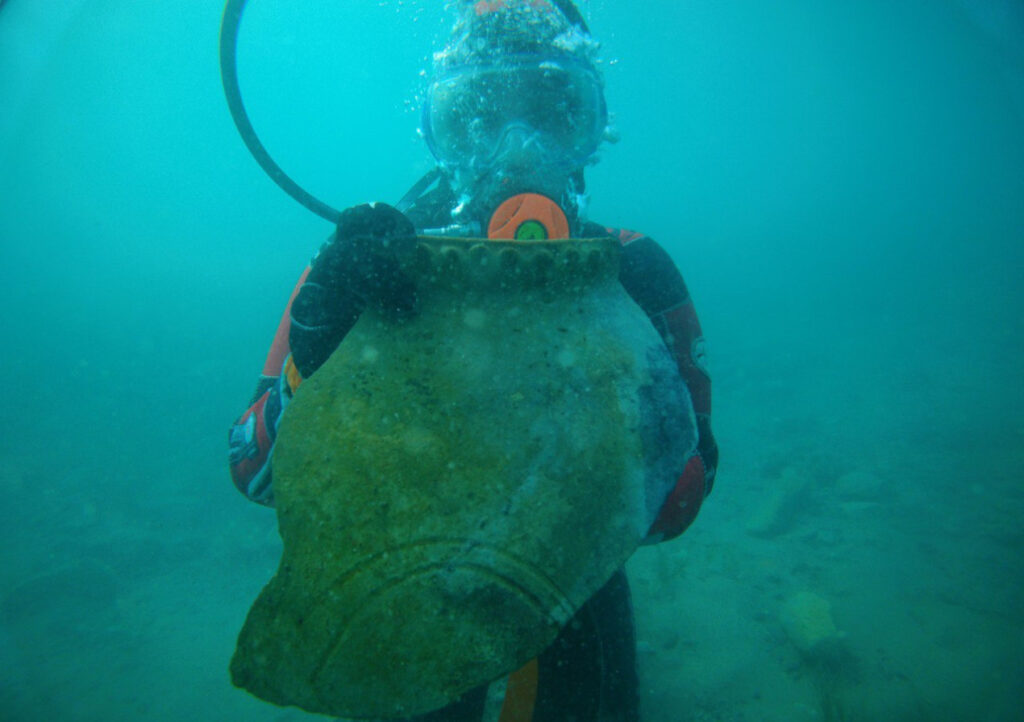
Underwater archaeologists investigating a submerged medieval settlement in Kyrgyzstan’s Lake Issyk-Kul have discovered rare coins dating to the Karakhanid period, along with evidence of substantial brick-built structures. The discoveries offer new insights into a Silk Road trading center that disappeared beneath the lake centuries ago, while geological investigations are helping researchers determine how the settlement was flooded.
The latest finds come from the Toru-Aygyr archaeological complex in the northwestern part of Lake Issyk-Kul, where an international expedition has been investigating the remains of a medieval settlement since 2023. Despite several years of research, the expedition has examined only an estimated 15–20 percent of the archaeological complex.
Archaeologists have identified buildings, ceramics, burial grounds, and other evidence of a community that once occupied an important section of the northern Silk Road.
The settlement existed from at least the 10th to the 13th centuries, although later activity is also documented in the surrounding archaeological complex. Today, much of its surviving architecture lies beneath approximately four meters of water, preserving evidence of a trading community whose historical name remains uncertain.
Rare Coins Reveal an Unusual Monetary Tradition
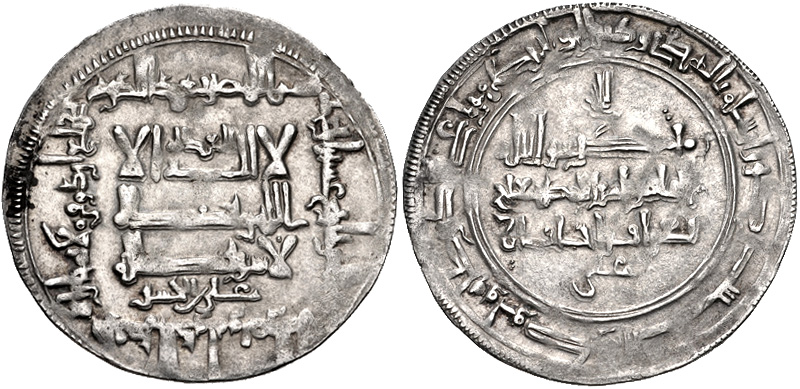
Among the discoveries are coins attributed to the Karakhanid dynasty, which ruled territories across Central Asia during the medieval period. Dating to the 10th and 11th centuries, the coins are particularly unusual because researchers suspect they contain exceptionally high concentrations of lead.
Maxim Menshikov, an archaeologist with the Russian Academy of Sciences and a leader of the underwater investigations, suggested that lead may account for as much as 90 percent of the metal in some examples. Such an unusual composition could reflect difficulties obtaining copper, although laboratory analysis is needed to establish the coins’ precise metal content.
Their fragile condition presents another challenge. The metal has deteriorated significantly, leaving inscriptions difficult to decipher and complicating efforts to determine where the coins were minted.
The finds nevertheless provide material evidence of monetary circulation during the Karakhanid period. The dynasty played an important role in the development of medieval Central Asia, and the new discoveries offer another perspective on economic activity along the region’s extensive commercial networks.
Seven Brick Structures Beneath the Lake
The coins represent only part of the archaeological evidence recovered from Toru-Aygyr. Investigators have also identified seven medieval structures built from fired bricks, an unusually high concentration compared with other known examples in Kyrgyzstan.
According to Menshikov, approximately six comparable medieval brick structures had previously been documented elsewhere in the country. The seven structures at Toru-Aygyr therefore suggest that the settlement possessed a substantial architectural infrastructure, although the functions of individual buildings remain under investigation.
Other finds include a fragment of a cast-iron cauldron and pieces of large ceramic vessels. Earlier fieldwork documented architectural elements that may have belonged to an important public building, along with a brick structure associated with a millstone.
Archaeologists have also identified a submerged Muslim cemetery dating to the 13th and 14th centuries. Some burials have been exposed by underwater erosion, requiring the recovery of human remains for further anthropological study.
These discoveries suggest that Toru-Aygyr was more than a small lakeside community. Its combination of monumental architecture, domestic objects, burial grounds, and commercial material is consistent with a substantial settlement connected to the Silk Road.
An Ancient Settlement Lost to Geological Change
One of the most important questions concerns the circumstances that caused the settlement to disappear beneath Lake Issyk-Kul. Researchers are investigating whether a powerful earthquake caused part of the shoreline to collapse or whether longer-term tectonic changes gradually raised the lake’s water level.
The investigation involves specialists from the Schmidt Institute of Physics of the Earth at the Russian Academy of Sciences. Their work combines archaeological evidence with paleoseismological research, allowing scientists to examine the relationship between settlement history and geological activity in the northern Tian Shan region.
Underwater drilling has provided samples of buried soil and ancient mudbrick walls, offering an opportunity to reconstruct the sequence of flooding. Scientists are also using radiocarbon dating, dendrochronological analysis, and other methods to investigate the settlement’s history and environmental transformation.
Schmidt Institute of Physics of the Earth, Russian Academy of Sciences (IPE RAS), Rossiyskaya Gazeta (Russian Gazette)
