
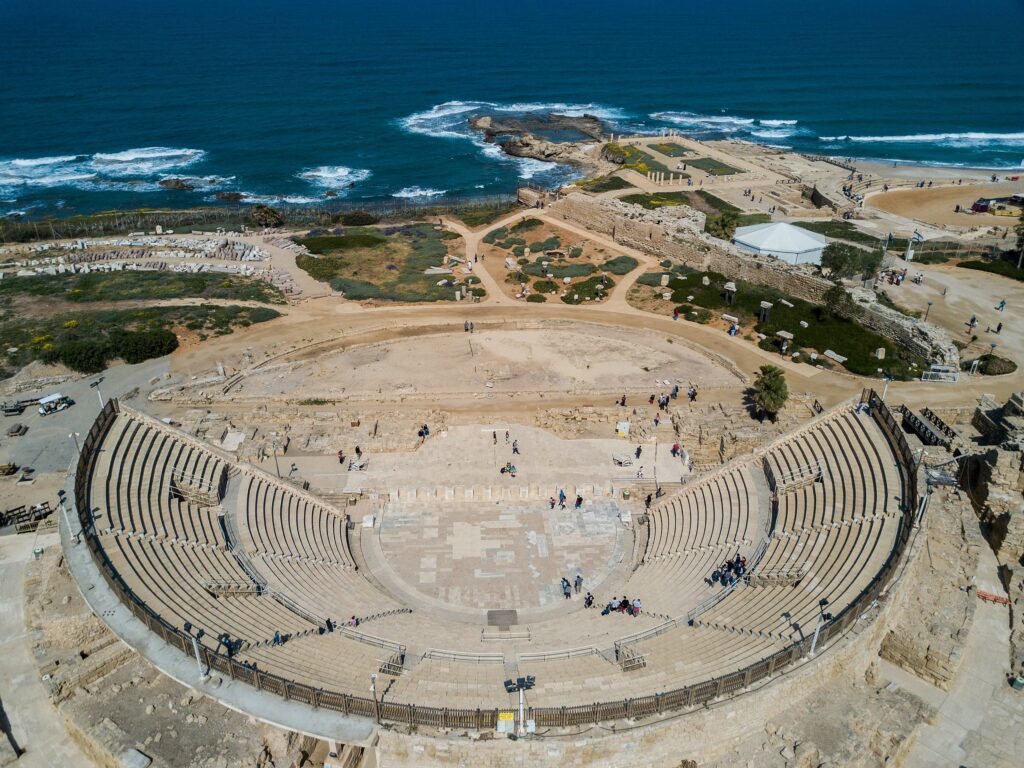
Along the Mediterranean coast of modern Israel lies Caesarea Maritima—a Roman city that stands at the crossroads of imperial power and early Christian history. More than a monumental ruin, Caesarea is one of the most compelling archaeological sites for evaluating the historical reliability of the New Testament. Unlike many ancient locations known only through texts, this city offers physical, measurable evidence that aligns closely with the people, places, and events described in the Bible. Built by Herod the Great and later ruled by Roman governors, Caesarea forms a tangible bridge between scripture and history.
Rather than offering sensational claims, Caesarea’s significance lies in how archaeology independently confirms biblical accounts written in the first century AD.
A Roman Capital Exactly Where the Bible Places It
The Book of Acts repeatedly identifies Caesarea as the administrative capital of Roman Judea. Archaeological excavations fully support this description. The city contains a praetorium, governor’s palace, military installations, and court structures consistent with Roman provincial governance.
Acts 23–26 describes the apostle Paul being transferred to Caesarea, where he was imprisoned for two years and placed on trial before Roman governors Felix and Festus. The uncovered administrative complexes match what would be expected of a Roman judicial center, confirming that Caesarea functioned precisely as Acts portrays it: the seat of Roman authority in the region.
This alignment between text and material culture strongly supports the historical framework of the New Testament.
![The Pilate Stone. The words [...]TIVS PILATVS[...] can be clearly seen on the second line. Credit: Marion Doss - Wikipedia](https://arkeonews.net/wp-content/uploads/2026/01/Pontius-Pilate-1024x768.jpeg)
Pontius Pilate: From Gospel Figure to Historical Official
One of the most decisive pieces of evidence linking Caesarea to the Bible is the Pilate Stone. Discovered in 1961 during excavations of the Roman theater, the limestone inscription names Pontius Pilate as “prefect of Judea” and references a dedication to Emperor Tiberius.
This find is critical because Pontius Pilate is a central figure in the Gospels, identified as the Roman official who authorized the crucifixion of Jesus. Prior to this discovery, Pilate was known only from literary sources, including the New Testament, the Jewish historian Josephus, and the Roman historian Tacitus.
The inscription not only confirms Pilate’s existence but also verifies his official title and timeframe, aligning exactly with Luke 3:1, which situates Pilate’s governorship during the reign of Tiberius Caesar. Few biblical figures are so clearly validated by archaeology.
Herod the Great and the World Behind the Gospels
Herod the Great, another key biblical figure, is described in the Gospels as the ruler of Judea during Jesus’ birth. Archaeological remains at Caesarea confirm Herod’s vast building projects and political ambitions.
Josephus records that Herod constructed Caesarea as a massive artificial harbor, complete with breakwaters, temples, and statues honoring Rome. Modern underwater archaeology has verified the use of Roman hydraulic concrete, confirming the historical accuracy of these descriptions.
This matters for biblical studies because it demonstrates that the Gospel narratives emerge from a historically precise setting, shaped by Herodian politics and Roman imperial control.
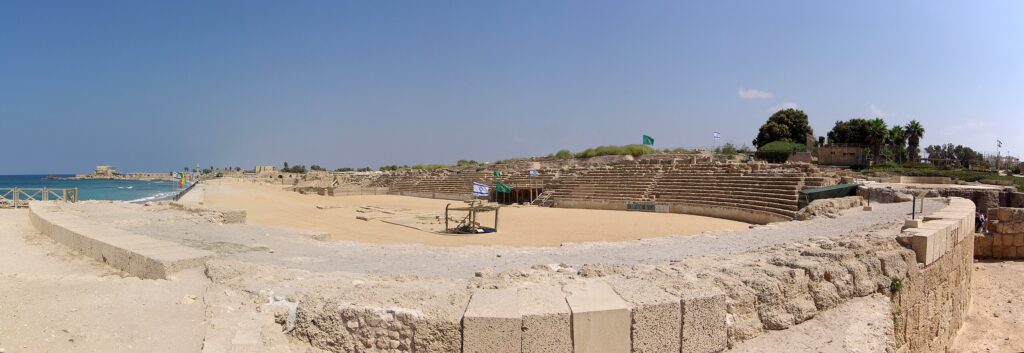
Caesarea and the Birth of Gentile Christianity
The Book of Acts presents Caesarea as the location of a pivotal theological breakthrough: the baptism of Cornelius, a Roman centurion, by the apostle Peter (Acts 10). This event marks the first recorded conversion of a non-Jew to Christianity.
The city’s Roman military presence, confirmed by archaeological evidence, makes this account historically plausible. Caesarea was home to Roman officers, administrators, and soldiers—exactly the type of population described in Acts.
Rather than being symbolic storytelling, the narrative fits the known social and political makeup of the city.
Early Christian Presence Confirmed by Archaeology
Archaeological discoveries at Caesarea include Christian mosaics and inscriptions dating to the second and third centuries AD. Some contain biblical quotations and references to apostolic teachings, indicating an early and organized Christian community.
One mosaic inscription echoes themes found in Paul’s letters, reinforcing Acts’ claim that Caesarea was a major center for early Christian teaching and refuge. These findings support the view that Christianity spread rapidly within historically documented urban centers, rather than emerging centuries later.
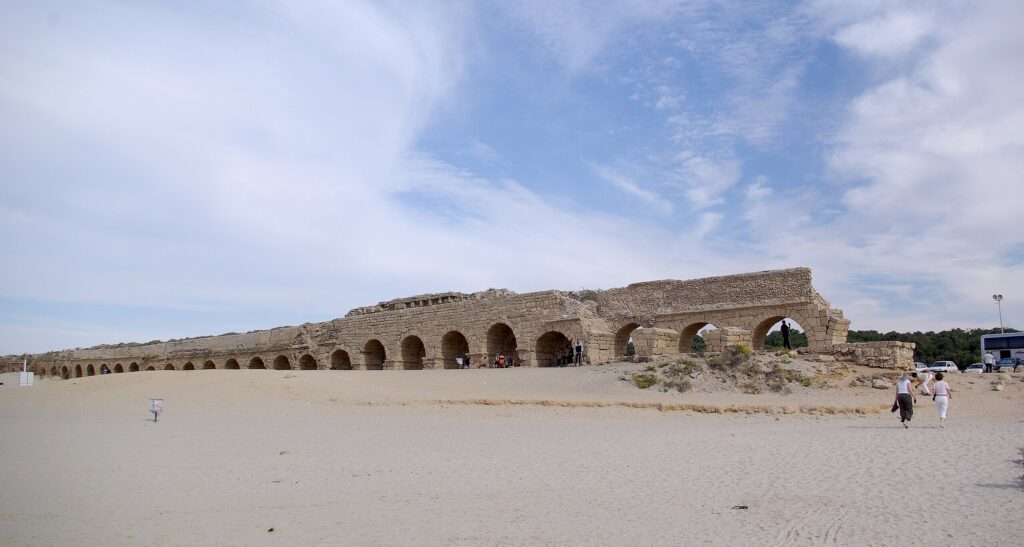
Scholarly Tradition and Biblical Transmission
Caesarea later became a hub of Christian scholarship. The theologian Origen lived and worked in the city during the third century, producing the Hexapla—an extensive comparison of Hebrew and Greek biblical texts. This underscores Caesarea’s role in preserving and transmitting scripture, further strengthening its connection to the biblical world.
Archaeology as an Independent Witness
What makes Caesarea Maritima unique is not that it “proves faith,” but that it independently confirms the historical environment described in the New Testament. Roman governors, judicial proceedings, military officers, and urban infrastructure all align with biblical accounts without relying on religious assumptions.
The convergence of archaeology and scripture at Caesarea provides one of the strongest cases that the New Testament was written within a real, verifiable historical context.
For scholars, believers, and historians alike, Caesarea Maritima remains a rare site where stone inscriptions, architectural remains, and ancient texts speak with a remarkably unified voice.
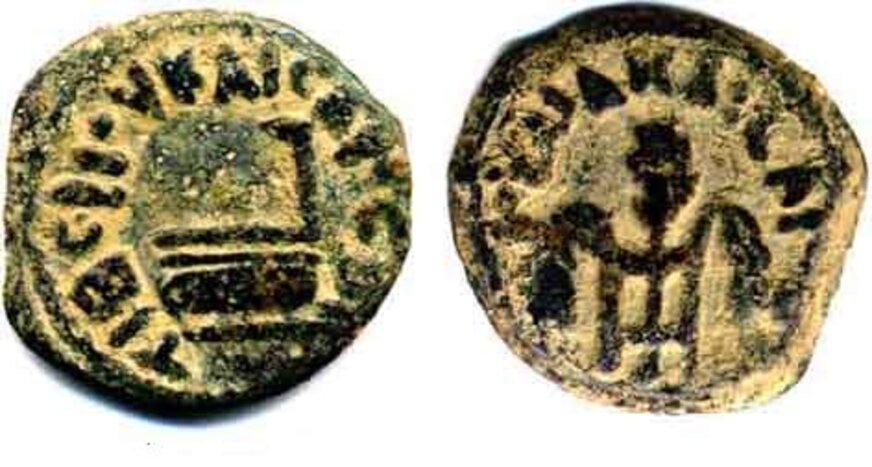
A Living Archaeological Testament
Although Caesarea was largely abandoned after its destruction in the medieval period, modern excavations beginning in the 20th century have transformed it into one of the most informative archaeological parks in the region. Today, visitors walk through the same streets once traversed by Roman soldiers, governors, apostles, and scholars.
Rather than “proving” faith, Caesarea Maritima offers something more compelling: a tangible historical context in which biblical narratives unfold. Through inscriptions, architecture, and urban planning, the city connects figures like Herod the Great and Pontius Pilate to the physical world they inhabited—demonstrating how archaeology and scripture can illuminate one another.
For historians, archaeologists, and readers of the Bible alike, Caesarea remains a powerful reminder that the New Testament emerged not in myth, but within the concrete realities of the Roman world.
Cover Image Credit: Gilad Topaz – Wikipedia
