At the eastern entrance of the Singapore Strait, divers recovering fragments from the seabed did not expect to challenge a long-standing historical narrative. Yet nearly four years of excavation have done precisely that.
The discovery and analysis of the Temasek Wreck, a mid-14th-century shipwreck found in Singapore waters, is reshaping how historians understand Singapore’s pre-colonial past. Far from a quiet fishing outpost, archaeological evidence now points to a sophisticated and well-connected maritime center deeply embedded in the trade networks of Yuan-era Asia.
The findings were formally presented in the Journal of International Ceramic Studies, offering the most detailed examination yet of the wreck’s extraordinary ceramic cargo.
A Maritime Archive Preserved in Clay
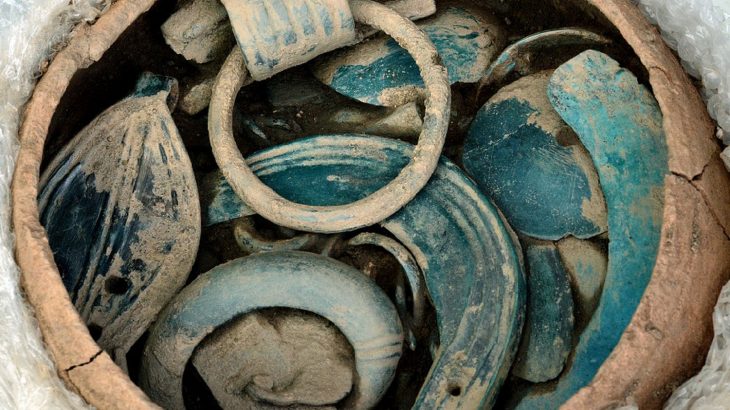
The ship itself did not survive. No hull timbers remain — likely consumed by marine organisms and scattered by currents over centuries. What endured instead was the cargo: approximately 3.5 tonnes of ceramic fragments, alongside a small number of intact or nearly intact vessels.
The scale alone is remarkable. But it is the composition of the cargo that elevates this wreck from an archaeological curiosity to a historical turning point.
📣 Our WhatsApp channel is now LIVE! Stay up-to-date with the latest news and updates, just click here to follow us on WhatsApp and never miss a thing!!
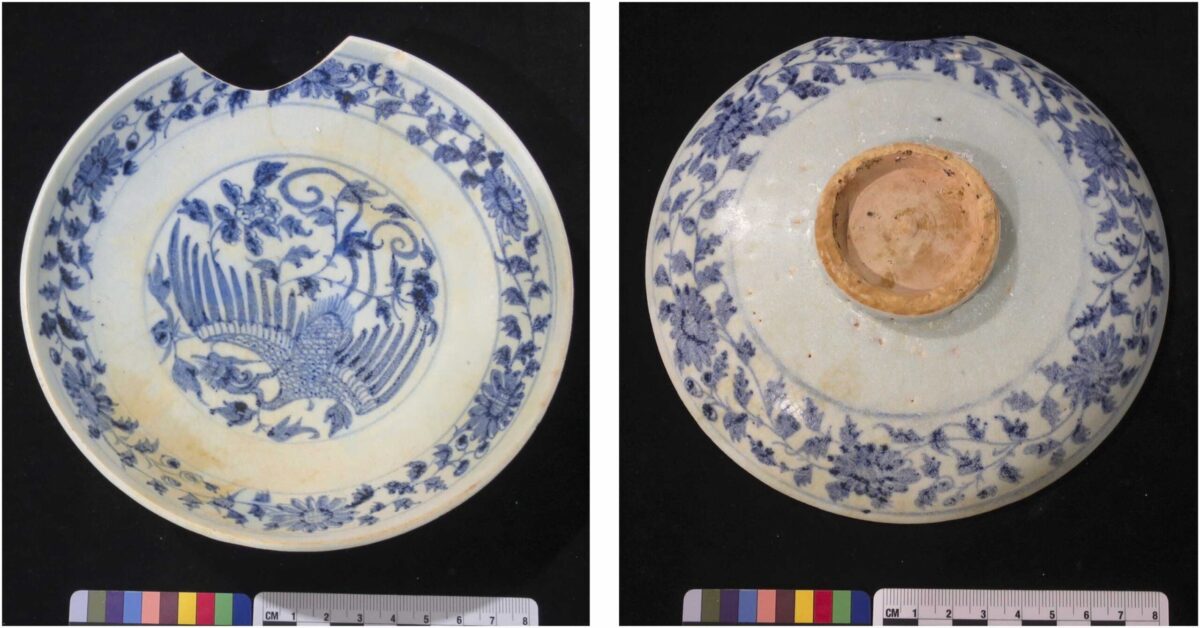
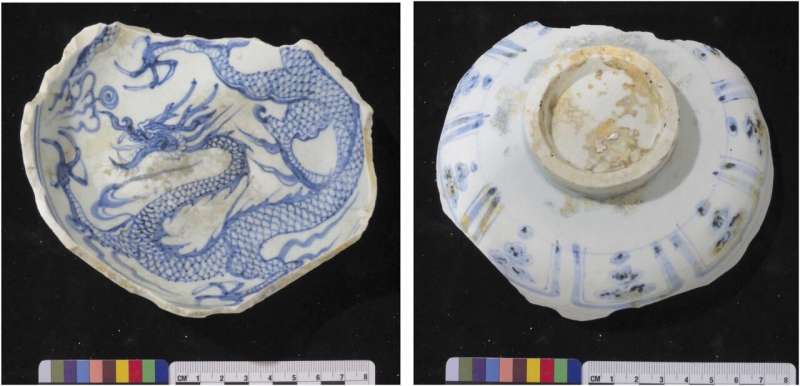
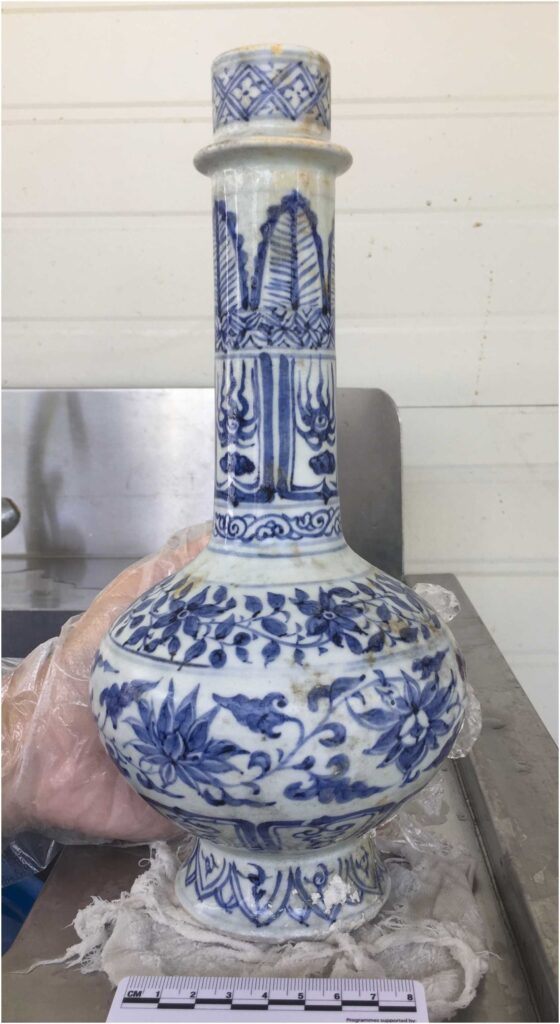
The assemblage includes the largest documented cargo of Yuan dynasty blue-and-white porcelain ever recovered from a controlled shipwreck excavation. In total, around 136 kilograms of blue-and-white ceramics — more than 2,350 shards — were retrieved.
Such quantities immediately suggest a commercial operation of considerable magnitude.
Dating the Final Voyage
Determining when the ship sailed required careful stylistic and historical analysis. Blue-and-white porcelain was first produced in Jingdezhen kilns in the late 1320s to early 1330s. One decorative motif in particular — mandarin ducks swimming among lotus blooms — provides a crucial chronological anchor.
This design became widespread after 1340, when restrictions on imperial imagery relaxed under the Yuan emperor Shundi. Production appears to have been severely disrupted by the Red Turban uprisings beginning around 1352.
The tight convergence of stylistic evidence places the wreck’s final voyage between 1340 and 1352, at the height of Singapore’s historical Temasek period.
This was not an era of obscurity. It was a moment of intense maritime activity across East and Southeast Asia.
A Cargo Reflecting Multiple Kiln Centers
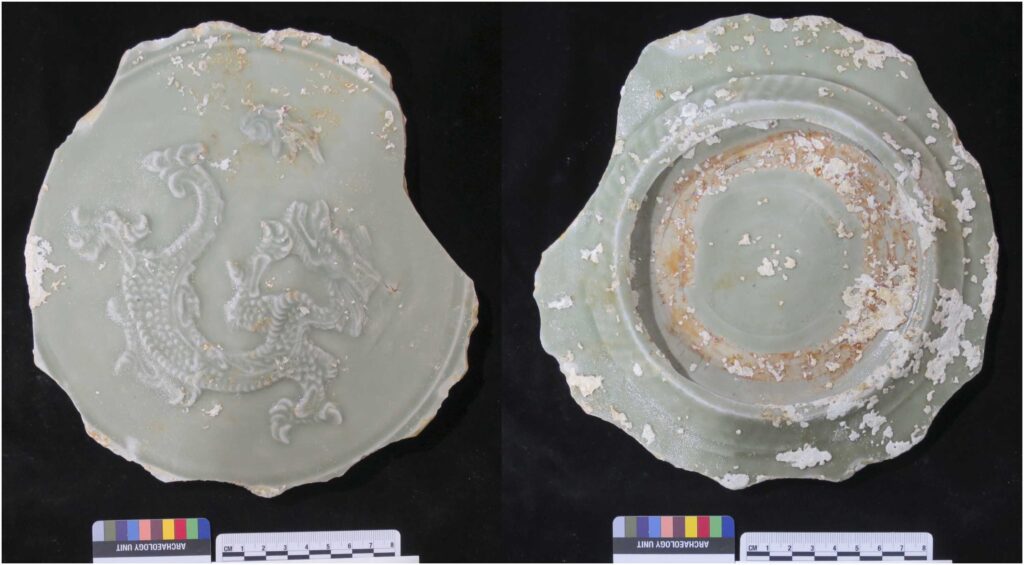
Although the blue-and-white porcelain attracts attention, it represents only a small portion — roughly 3.9% by weight — of the total cargo. The majority consisted of Longquan celadon, accounting for approximately 44.5% of the ceramics recovered. Produced in Zhejiang province, these green-glazed wares were highly valued across Asia. Some dishes bear elaborate moulded dragons, peonies, and double-fish motifs.
Another substantial component was qingbai, also known as shufu ware, from Jingdezhen. Interestingly, some pieces bear the characters “shufu,” often translated as “Privy Council,” suggesting connections to official or elite production. Yet their presence in bulk — around 12.2% of the cargo — indicates they were not restricted to imperial use but actively traded abroad.
The wreck also yielded: Dehua whiteware, Olive-toned greenware likely from Fujian provincial kilns, Stoneware storage jars and small-mouth jars from Cizao, probably used as containers for goods such as wine.
Taken together, the cargo reflects a coordinated export system drawing from multiple kiln complexes in Fujian, Zhejiang, and Jiangxi provinces. This was not random trade. It was organized, large-scale commerce.
Where Was the Ship Headed?
One of the most significant questions concerns the destination. Yuan blue-and-white porcelain is famously found in large quantities in Turkey, the Middle East, and India. Many surviving museum pieces from those regions are large dishes measuring 40–50 centimetres in diameter.
Yet such oversized dishes are conspicuously absent from the Temasek Wreck. The largest plates recovered measure under 35 centimetres.
This absence is telling.
If the ship had been bound for Indian Ocean markets, one would expect larger ceremonial dishes typical of those destinations. Instead, the cargo profile aligns more closely with finds from terrestrial archaeological sites within Singapore itself.
Excavations at Fort Canning and other local sites have produced parallel forms and motifs — including blue-and-white bowls, Longquan celadon dishes, and similar glass beads.
Additionally, comparable Yuan blue-and-white ceramics have not been documented in northern Sumatra or along the eastern shores of the Melaka Strait in equivalent contexts.
The cumulative evidence points strongly toward a local conclusion: Temasek was the intended destination.
A Chinese Vessel in Southeast Asian Waters
Without surviving hull remains, certainty is impossible. However, the overwhelmingly Chinese cargo and absence of distinctly foreign shipboard artifacts suggest the vessel was likely a Chinese junk.
Southern Chinese ports such as Quanzhou are considered probable loading points, given the geographic distribution of kiln production and established maritime routes of the 14th century.
The wreck therefore represents not just a shipment of ceramics, but a direct maritime connection between southern China and Temasek during the Yuan dynasty.
Reframing Early Singapore
For decades, popular narratives portrayed pre-1819 Singapore as a minor settlement. Archaeology has been steadily dismantling that image, but the Temasek Wreck provides one of the most decisive pieces of material evidence yet.
The quantity, quality, and diversity of ceramics demonstrate access to elite export wares. The dating aligns with a period when the Singapore River and its hinterland functioned as an active port-city. The cargo suggests both local consumption and possible redistribution.
In other words, Singapore was not waiting to be discovered in 1819. It was already integrated into regional trade centuries earlier.
The Temasek Wreck does more than add a chapter to maritime archaeology. It forces a reconsideration of Southeast Asia’s trading geography in the 14th century.
Beneath modern shipping lanes lies proof that Singapore’s global story began long before colonial maps drew its outlines.
Flecker, M. (2025). The Temasek wreck ceramics cargo: Yuan blue-and-white porcelain, celadon and other ceramics found in Singapore waters. Journal of International Ceramic Studies, 1, 100013. https://doi.org/10.1016/j.joics.2025.100013
Cover Image Credit: Flecker, 2025, Journal of International Ceramic Studies