
15 February 2026 The Future is the Product of the Past

Rich Bronze Age Chamber Tombs Preserved for Over 3,000 Years Discovered at Cyprus’ Ancient Trade Hub Hala Sultan Tekke

New archaeological discoveries at Hala Sultan Tekke, one of the most important harbor cities of the Late Bronze Age, are shedding remarkable new light on Cyprus’ role as a major economic and cultural hub in the ancient Mediterranean. Excavations conducted in May–June 2025 have revealed richly furnished 14th-century BC chamber tombs, preserved almost intact for more than three millennia.

The excavation campaign was carried out by the Department of Antiquities of the Deputy Ministry of Culture of the Republic of Cyprus, under the direction of Professor Peter M. Fischer of the University of Gothenburg (Sweden). Research focused on Area A, the city’s extramural cemetery, following earlier geophysical surveys and surface investigations.

A Thriving Bronze Age Port City

Located near the Larnaca Salt Lake, Hala Sultan Tekke (Dromolaxia–Vyzakia) covered at least 25 hectares and was founded around 1650–1630 BC, during the transition from the Middle to the Late Bronze Age. For nearly five centuries, the city flourished as a strategically positioned harbor before its destruction and abandonment around 1150 BC.

Its prosperity was built primarily on copper production and export, using raw materials from the nearby Troodos Mountains. Archaeological remains—including slag heaps, furnaces, crucibles, and ore fragments—confirm large-scale, urban metalworking activities. The city’s well-protected harbor enabled copper to be shipped across the Mediterranean, making Hala Sultan Tekke a magnet for international merchants between the 15th and 13th centuries BC.

Tombs Sealed by Time

The 2025 excavation uncovered a long-abandoned well and two chamber tombs, both dating to the 14th century BC. Geological drilling next to the well revealed high groundwater salinity at a depth of approximately ten meters, likely explaining why the well was already abandoned in antiquity.


📣 Our WhatsApp channel is now LIVE! Stay up-to-date with the latest news and updates, just click here to follow us on WhatsApp and never miss a thing!!


Crucially, the tombs’ ceilings had collapsed in ancient times, unintentionally sealing the burial chambers and protecting their contents from later disturbance. Despite some damage, the archaeological contexts remained exceptionally well preserved, allowing researchers to reconstruct burial customs with unprecedented clarity.
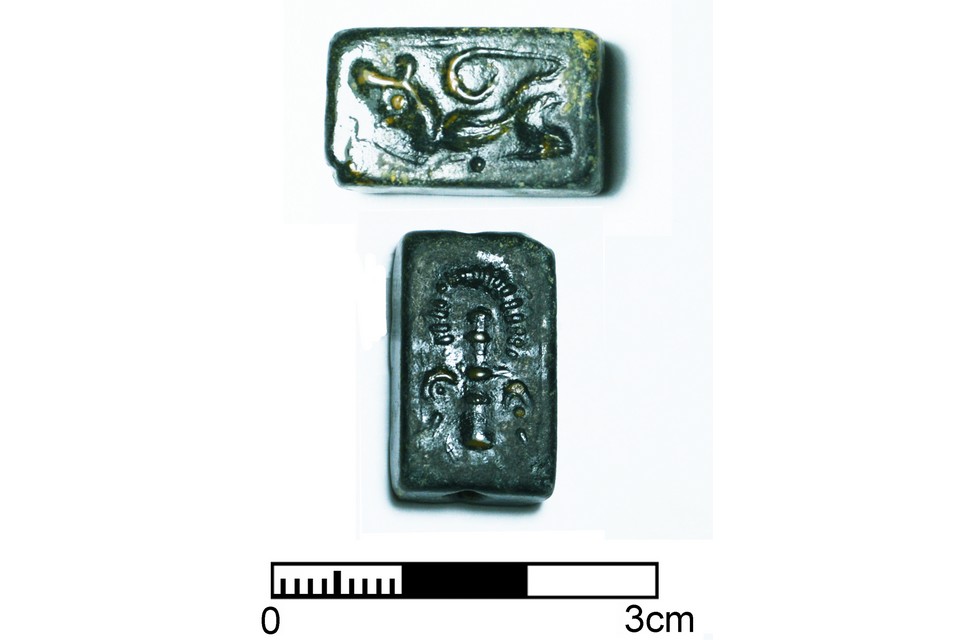
Cypriot sealstone. Credit: Ministry of Culture of the Republic of Cyprus, Department of Antiquities

Luxury Goods from Across the Ancient World

The tombs yielded a rich assemblage of grave goods, including finely crafted local Cypriot pottery, tools, and personal ornaments. Most striking, however, is the extensive collection of imported luxury items, offering compelling evidence of long-distance trade networks.

Artifacts uncovered originate from:

Mainland Greece (notably Berbati and Tiryns),

Crete and the Aegean islands,

Egypt, including ivory objects and high-quality alabaster vessels,

Afghanistan, in the form of deep-blue lapis lazuli (Sar-i-Sang mine),

India, represented by red-brown carnelian from Gujarat,

and the Baltic region, through amber beads and even an amber scarab.

Additionally, Nuragic pottery from Sardinia confirms previously documented trade routes linking Cyprus with the western Mediterranean, where Cypriot copper—often cast as distinctive oxhide ingots—was exchanged across vast distances.

Insights into Bronze Age Society and Ritual

Stratigraphic evidence shows that the tombs were reused over multiple generations, often for more than a century. Older remains were carefully rearranged to make space for new burials, reflecting strong concepts of family continuity and kinship.

Preliminary bioarchaeological analysis indicates that individuals of all ages—from newborns to adults—were interred, with few living beyond the age of 40, consistent with life expectancy patterns of the era. Ongoing studies, including ancient DNA analysis, aim to further illuminate family relationships, health conditions, demographics, and lifestyles within this elite Bronze Age community.
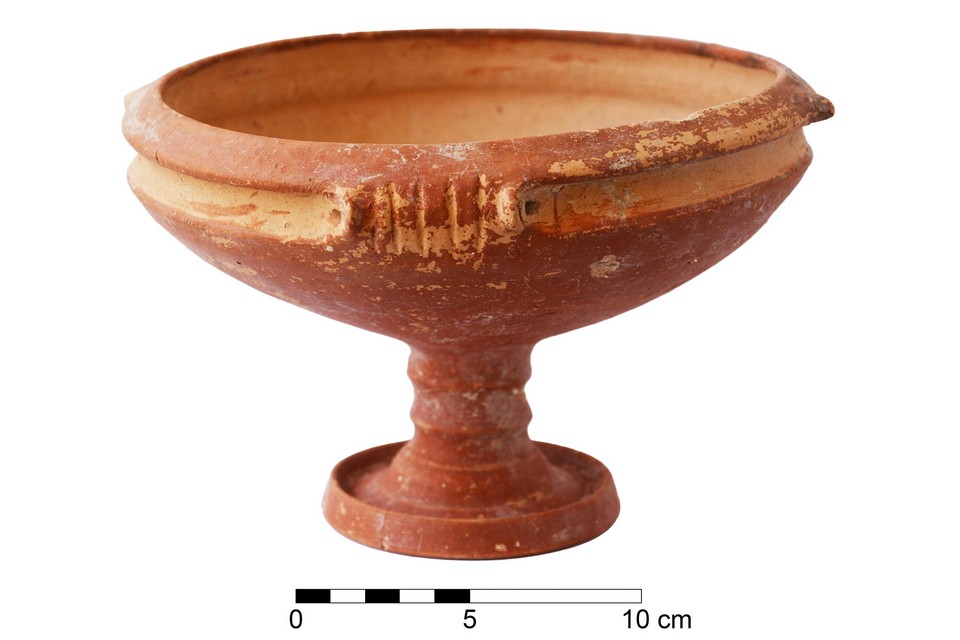
 Kylix from Anatolia. Credit: Ministry of Culture of the Republic of Cyprus, Department of Antiquities
Kylix from Anatolia. Credit: Ministry of Culture of the Republic of Cyprus, Department of Antiquities

A Major Center of Power and Exchange

The findings strongly reaffirm Hala Sultan Tekke’s status as a major economic and cultural center of the Late Bronze Age. The wealth and diversity of imported goods suggest that the tombs belonged to members of a ruling elite deeply involved in copper export and international commerce. Variations in foreign objects between tombs may even point to specialized trading roles or the presence of migrant communities within the city.

As the Republic of Cyprus announces further excavation campaigns at the site, Hala Sultan Tekke continues to transform our understanding of Cyprus as a pivotal crossroads of ancient global trade, connecting Europe, the Near East, Africa, and Asia more than 3,000 years ago.

Deputy Ministry of Culture, Republic of Cyprus

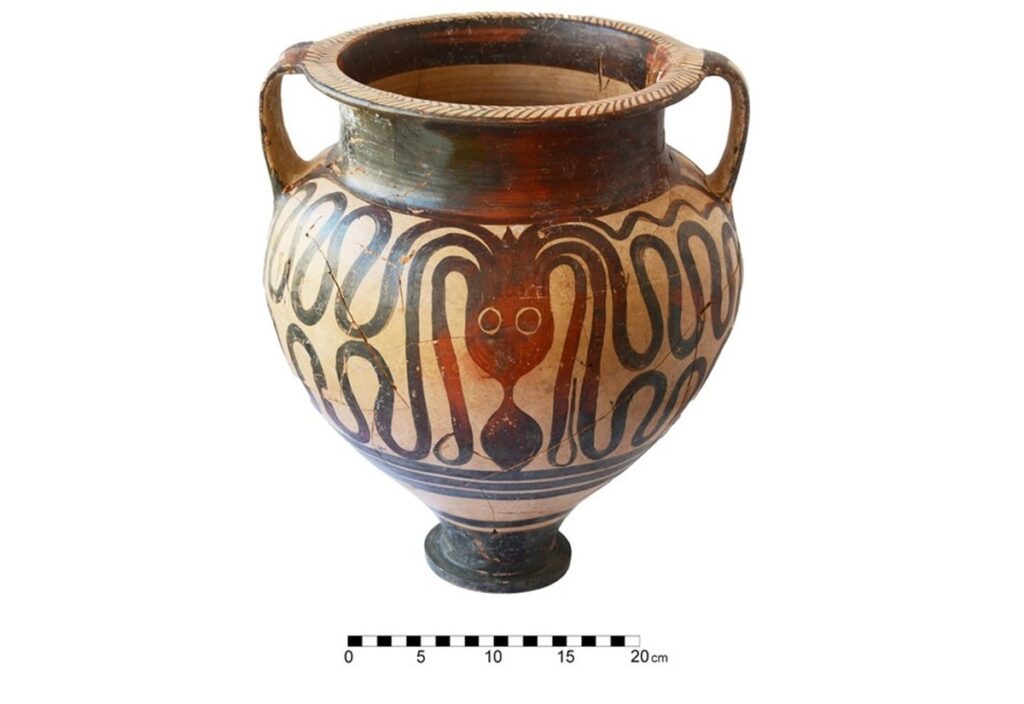
Cover Image Credit: Large Minoan octopus krater. Ministry of Culture of the Republic of Cyprus, Department of Antiquities

Related Articles

Dutch Shrimp Fishermen caught a centuries-old carved wooden statue off the coast of Texel

17 August 2022

17 August 2022

A carved wooden statue in exceptional condition has been attached to fishing nets off the coast of Texel, one of...

Archaeology Team Uncovers Major Ancient Settlement Site on University Grounds

15 February 2026

15 February 2026

A routine construction project at Technische Universität Dortmund (TU Dortmund, Germany) has led to a remarkable archaeological discovery: traces of...

New Discoveries Made in World’s Oldest Ancient Shipyard

11 June 2024

11 June 2024

Associate Professor Hakan Öniz, who discovered the world’s largest and oldest shipyard dating back to the Bronze Age in 2015...

Archaeologists may have found the Sanctuary of Samian Poseidon described in ancient texts

11 October 2022

11 October 2022

During excavations in the foothills at the ancient acropolis of Samicum in Greece, archaeologists may have found the sanctuary of...

Significant Archaeological Discovery on Failaka Island: Hellenistic Courtyard and Building Unearthed

17 February 2025

17 February 2025

The National Council for Culture, Arts and Letters (NCCAL) has announced a remarkable archaeological find on Failaka Island, revealing a...

Rare Astrolabe Discovered in Verona Sheds Light On Islamic, Jewish, and Christian Scientific Exchange

6 March 2024

6 March 2024

An eleventh-century rare astrolabe bearing Arabic and Hebrew inscriptions was recently discovered in a museum in Verona, Italy. It dates...

A Rare Find That Stuns Archaeologists: Ancient 3,500-Year-Old Dagger Found in Germany’s Heartland

22 August 2025

22 August 2025

A simple family walk near the village of Gudersleben in Nordhausen County, in Thuringia, central Germany, has turned into a...

Extraordinary Polychrome Mural Reveals 1,400-Year-Old Zapotec Tomb in Oaxaca

25 January 2026

25 January 2026

An extraordinary polychrome mural uncovered in a 1,400-year-old Zapotec tomb in Oaxaca reveals new insights into ancient rituals, art, and...

Britain’s first Roman funerary bed is discovered in central London after 2,000 years

7 February 2024

7 February 2024

Archaeologists excavating a construction site in London have unearthed the first Roman “flat-packed” funerary furniture – a fully intact Roman...

An Etruscan Home Discovered in Corsica “First-Of-Its-Kind Find for the Island”

11 July 2024

11 July 2024

Archaeologists have discovered the first Etruscan domestic structure, dating to the 6th to 4th centuries BC, off the east coast...

Anatolia’s Trade Secrets: The Unveiling of a Rare Neolithic Obsidian Mirror Manufacturing Hub

25 February 2025

25 February 2025

A recent study has applied a techno-functional approach to investigate the production and use of obsidian mirrors found at Tepecik...

4,900-year-old Copper Age Fortress with a Violent Past and Odd Roman Burial Found in Spain

13 February 2025

13 February 2025

A remarkable 4,900-year-old Copper Age fortress, featuring a pentagon shape, three concentric walls, 25 bastions, and three ditches, has been...

Archaeologists unearth first archaeological evidence about Anatolia’s mysterious Kaska community, sworn enemies of the Hittites

16 January 2025

16 January 2025

In the course of the excavations conducted by Zonguldak Bülent Ecevit University‘s Department of Archaeology, artifacts from the Late Bronze...

Mapped for the First Time: The Hidden Underground Tunnels of Veio, the Etruscan City That Once Defied Rome

17 November 2025

17 November 2025

For the first time, archaeologists have completed a full technological mapping of the underground tunnel system beneath the ancient Etruscan...

A woman who had brain surgery 9500 years ago will be brought revived

12 September 2021

12 September 2021

A “revival” effort is underway on a woman’s skull unearthed in 1989 during archaeological digs at the Aşıklı Mound in...

Comments
Leave a Reply

Your email address will not be published. Required fields are marked *