
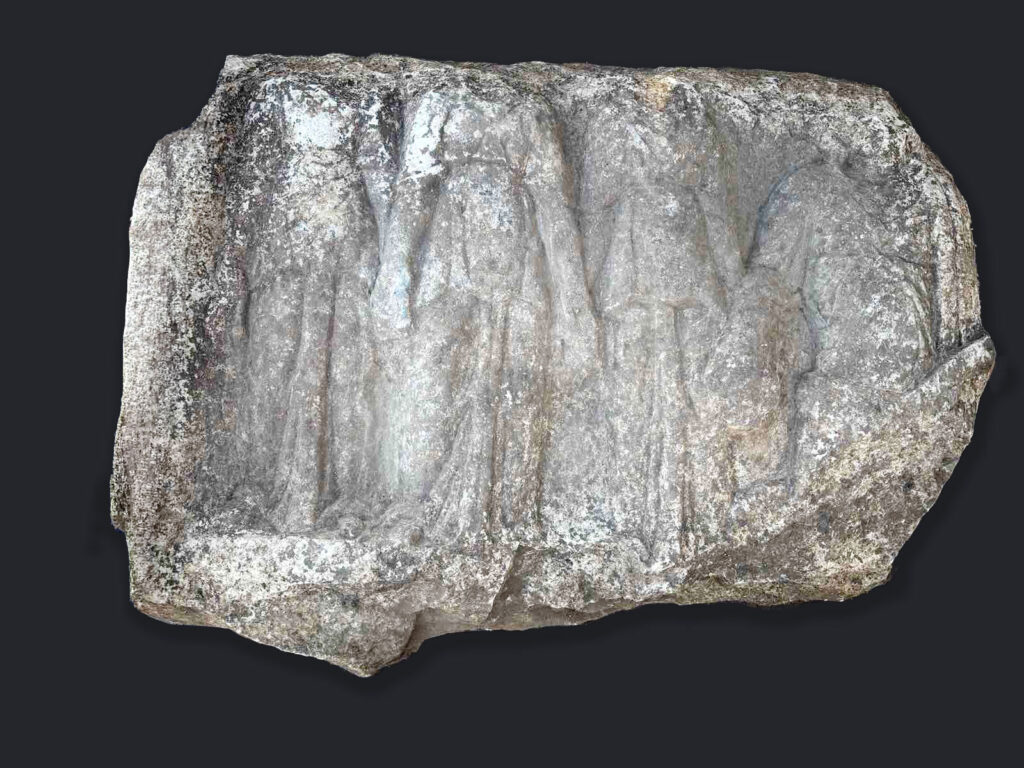
Archaeologists excavating an ancient temple in southeastern Bulgaria have discovered a rare marble relief depicting the mother goddess Cybele alongside three nymphs, revealing new evidence of pagan religious practices that survived into the Christian era of the Roman Empire. The sanctuary, located near Ivaylovgrad in the historic region of Thrace, may have remained active until the mid-fifth century AD, making it a possible example of one of the last pagan temples used by Thracian communities in the region.
The discovery comes from the Balak Dere archaeological site, near the Arda River in the Eastern Rhodope Mountains. Researchers from Bulgaria’s National Museum of History completed their latest excavation season in October, uncovering additional sections of a Late Antique temple complex and identifying architectural features associated with ritual activities.
The excavations, directed by archaeologist Ivaylo Kanev, have strengthened an earlier interpretation that religious activity played an important role in the development of the ancient settlement. The newly documented architecture and marble relief now provide more detailed evidence of the sanctuary’s organization and the deities its worshippers may have honored.
A Rare Relief Linking Cybele and the Three Nymphs
The excavations also revealed a marble relief depicting Cybele, the ancient mother goddess, alongside three nymphs. According to the excavation team, this unusual combination of deities has not previously been identified in comparable archaeological material.
Cybele occupied an important place in the religious traditions of ancient Anatolia and later became widely worshipped throughout the Greek and Roman worlds. Her cult originated in Phrygia, where she was associated with mountains, nature, fertility, and divine protection. Over time, different communities incorporated the goddess into their own religious traditions.
The nymphs, meanwhile, were female divinities associated with the natural world, particularly springs, rivers, and other sources of water. Their worship frequently connected religious activity with particular landscapes and natural features.
The presence of Cybele and the three nymphs on the same relief suggests that worshippers at Balak Dere may have combined different religious traditions within a shared sacred setting. However, researchers have not yet established the precise ritual significance of this unusual composition.
Another architectural feature may help explain the connection. Archaeologists identified a water channel surrounding the temple, while the nearby Arda River reinforces the site’s relationship with the surrounding landscape.
Together, these discoveries have led researchers to suggest that the complex may have included a nymphaeum, a sanctuary associated with the worship of nymphs. The interpretation remains preliminary, but the combination of divine imagery, water infrastructure, and ritual architecture provides a promising basis for further investigation.
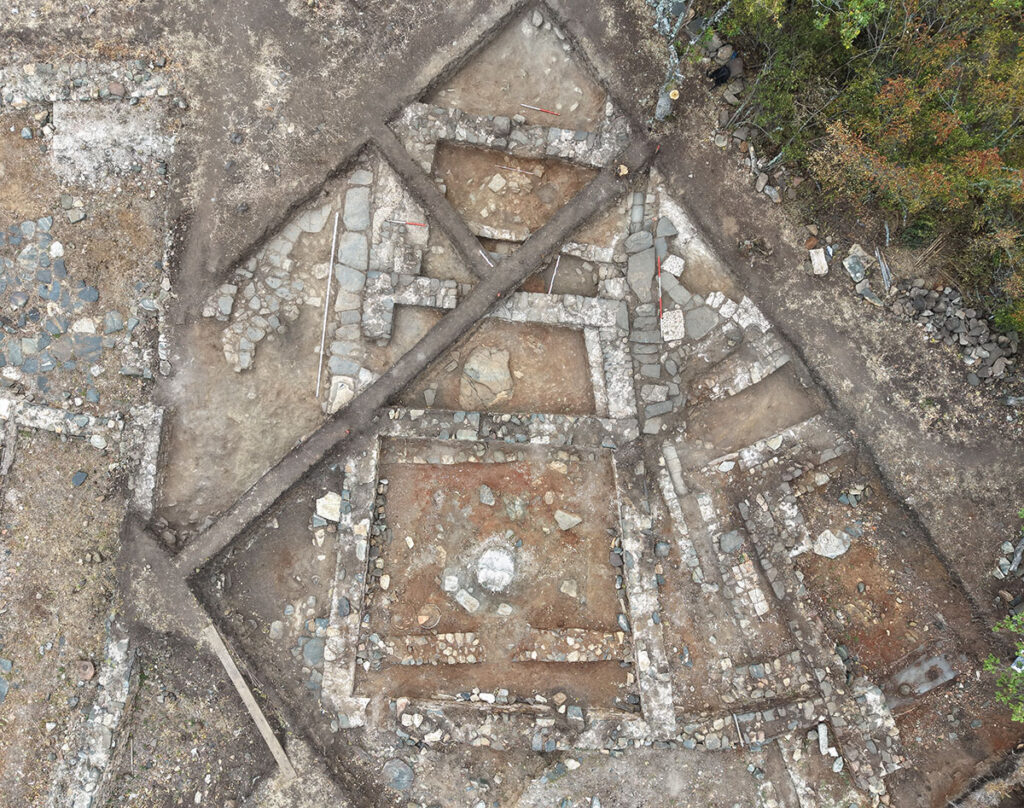
Inside the Ancient Thracian Pagan Temple
The temple measures approximately 15 meters in length and follows an unusual trapezoidal ground plan, oriented along a southeast–northwest axis. Archaeologists have identified three interconnected rooms, each apparently associated with a different aspect of religious activity.
The largest chamber contains an altar, while the central room includes a structure interpreted as a place for sacrifices. Researchers believe the third room served as a space for storing offerings presented to the deities.
The arrangement places several essential elements of religious practice within a sequence of connected spaces. According to the National Museum of History, this organization makes the temple particularly valuable for understanding how pagan worshippers structured sacred buildings during Late Antiquity.
Earlier archaeological investigations suggested that the sanctuary began functioning around the third century AD. The latest discoveries support the interpretation that the surrounding settlement developed in close connection with the religious complex, which may have served as an important spiritual center in Western Thrace.
The building’s architectural organization also offers evidence of how local religious traditions continued during a period of major political and cultural transformation across the Roman Empire.
One of the Last Pagan Temples of Ancient Thrace
Perhaps the most historically significant aspect of the discovery concerns the sanctuary’s final period of use. Archaeologists believe pagan rituals continued at Balak Dere after Christianity had become increasingly dominant within the Roman Empire.
During the fourth century AD, imperial religious policy underwent major changes. Christianity received growing imperial support, while traditional sacrifices and other pagan religious ceremonies faced increasingly restrictive legislation. In AD 392, Emperor Theodosius I issued measures prohibiting important forms of traditional pagan worship.
Despite these developments, archaeological evidence suggests that established religious traditions did not disappear simultaneously throughout the empire. Local communities sometimes maintained older practices, particularly in regions where sacred places had served generations of worshippers.
At Balak Dere, the excavation team has identified evidence of a major fire that destroyed the temple complex around the middle of the fifth century AD. Researchers have proposed that the destruction may have resulted from religious tensions associated with the suppression of pagan worship.
However, the evidence does not yet establish who caused the fire or whether deliberate religious violence was responsible. The building’s destruction and its apparent late use therefore require careful interpretation.
Based on the temple’s chronology, architecture, and religious imagery, the excavators suggest that Balak Dere may represent one of the last pagan sanctuaries associated with Thracian religious traditions in Western Thrace.
Rather than establishing the existence of a single final pagan temple, the findings offer evidence for the persistence of traditional cult practices during the region’s gradual religious transformation.
Balak Dere: A Settlement with a History Spanning Ten Centuries
The temple forms part of a much larger archaeological landscape whose history extends well beyond the Roman period. Balak Dere lies near the village of Huhla, in the municipality of Ivaylovgrad, overlooking the Arda River in the lower Eastern Rhodope Mountains.
Archaeologists began investigating the site in 2004, and subsequent excavation campaigns have identified occupation phases extending from the third to the thirteenth centuries AD. The location occupied a strategic position within a landscape connected to routes between the interior of Thrace and the wider region around Edirne.
Research into the site’s Late Antique and medieval fortress has shown that the settlement underwent substantial changes over the centuries. During the sixth century, the fortified community experienced a period of development before suffering destruction in the early seventh century, which researchers have associated with Slavic and Avar incursions.
The archaeological record indicates a long interruption in occupation before renewed activity in the tenth century. Excavations have recovered evidence suggesting that a Bulgarian military presence may have occupied the former fortress during the reign of Tsar Simeon I.
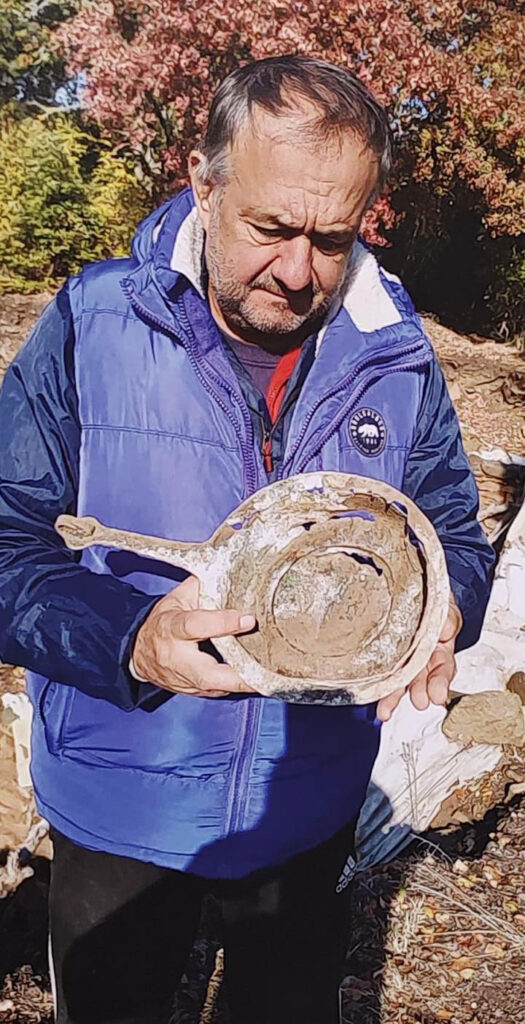
Among the medieval finds are architectural remains, belt fittings, coins, bells, and a lead amulet bearing a Cyrillic inscription. These discoveries demonstrate how a settlement that once contained an important pagan religious complex later became part of the military and cultural landscape of medieval Bulgaria.
