15 January 2026 The Future is the Product of the Past

It is Thought That an Ancient Port will be Reached in Istanbul Metro Excavations

New findings were found in the Kabataş excavations, which started a year ago under the presidency of the Istanbul Archeology Museums Directorate. Archaeologist Mehmet Ali Polat said that “an ancient harbor can be reached in Kabataş excavations.

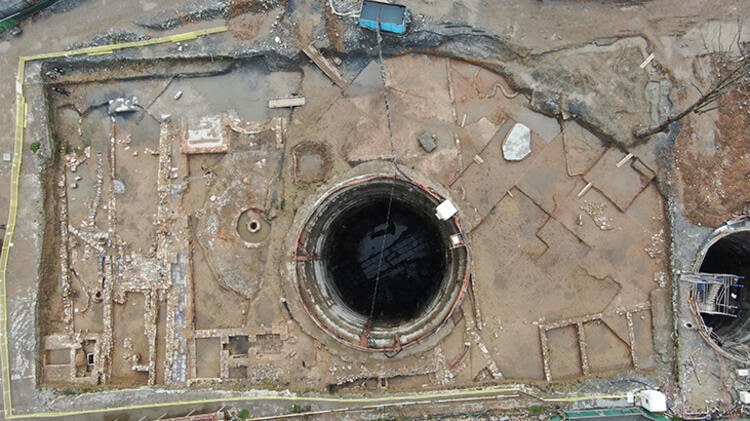
Archaeological excavations started a year ago by the Istanbul Archeology Museums continue in the Kabataş station area of the Kabataş-Beşiktaş-Mecidiyeköy-Mahmutbey metro line, initiated by the Istanbul Metropolitan Municipality. It was noteworthy that remains were unearthed just 1 meter below the surface during the Kabataş excavations.

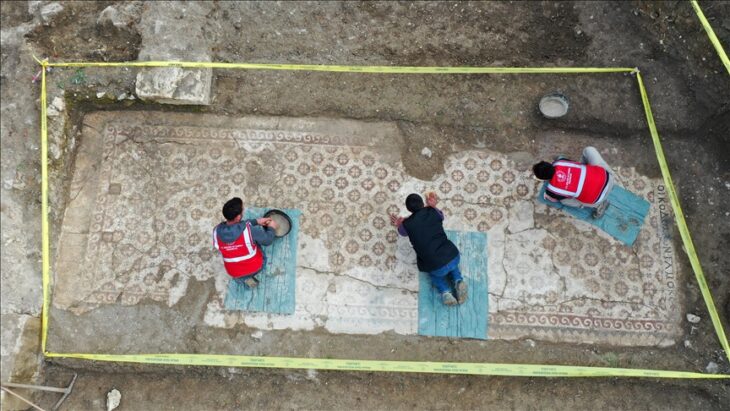
During the excavations, mosaics with podima floors were found in the area where the remains of Europe’s first canning factory, built at the end of the 19th century. At 4 meters below sea level, small finds from the classical period of the 6th century BC were unearthed. In the continuation of the studies, archaeologists predict to come across the ancient harbor fill.

Archaeologist Mehmet Al Polat said that the Kabataş excavations will be reached an ancient port, albeit of small size, in the region.

Archaeologist Mehmet Ali Polat gave information about the remains reached in one year of the Kabataş excavations in the news published on the Halk TV website.


📣 Our WhatsApp channel is now LIVE! Stay up-to-date with the latest news and updates, just click here to follow us on WhatsApp and never miss a thing!!


Archaeologist Mehmet Ali Polat, who explained how they came across ruins in archaeological excavations that lasted for a year, “Here, the building, whose foundations you see right behind me, was built in the late 19th century, in 1891, and has the foundations of Europe’s first canned food factory. Its name is Ermys Canned Food Factory. It seems from historical records that he mostly made tomatoes and peas. This is Europe’s first canned food factory. The second factory is opened to Ayvansaray by the same firm. We found the stone foundations of that canning factory. The factory is actually made of wood on stone and with a hipped roof and a truss roof. Of course, since it collapsed over time, only the foundations remaining under the surface have survived to the present day ”.
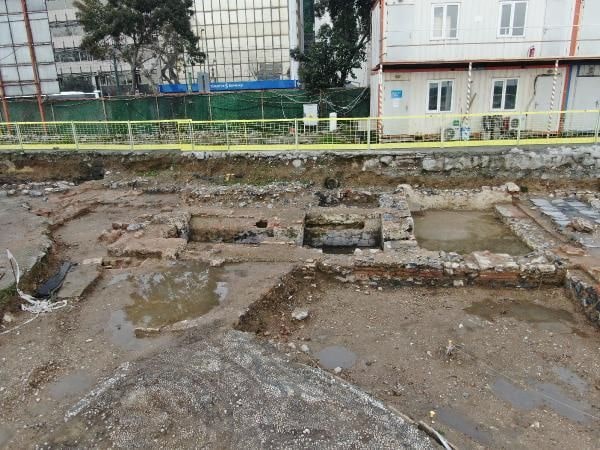
İstanbul Kabataş excavation.
Archaeologist Mehmet Ali Polat said that with the Kabataş excavations, a small ancient harbor will emerge in the region.

A courtyard with a mosaic floor of Podima was unearthed 

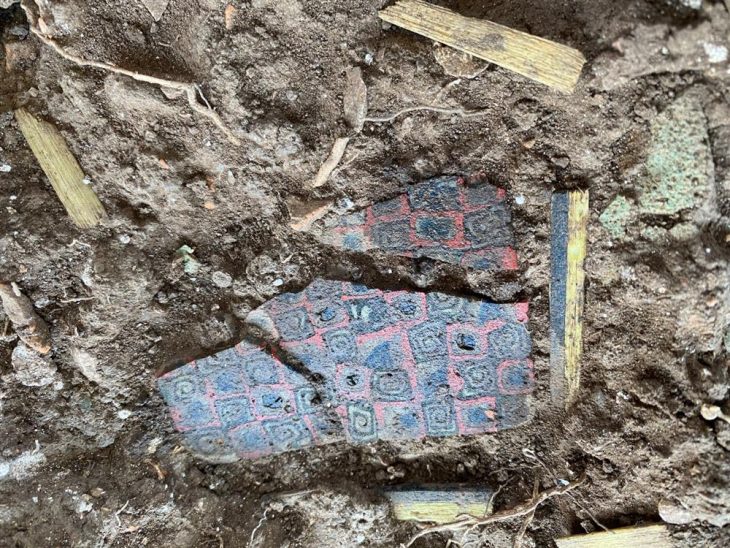
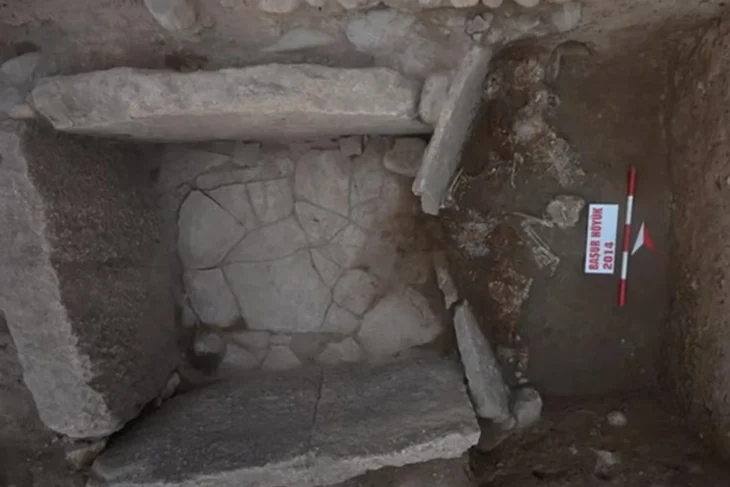
Polat, who stated that they found the podima mosaic floor belonging to earlier years right next to the factory, said, “There is a large courtyard right next to the canned food factory. This is a podima mosaic-floored courtyard dating back to the 1800s, a little earlier than the factory. There is also an ornamental pool right in the middle of the Podima mosaics. In other words, social space was created. In addition, there are also foundation remains from the late 1700s and early 1800s. Documentation studies of these remains continue. After the documentation and excavations are completed, all of the findings will be presented to the relevant committee. As a result of the decision of the board, the fate of the work here will be determined. In other words, whether they will be lifted, moved or not, whether to go deep or not… ”used expressions.

There are small finds in the area belonging to the 6th century BC”

Stating that they also found small finds from the 6th century BC, 4 meters below sea level, Mehmet Ali Polat said that these finds were taken to Istanbul Archeology museums. Polat said, “Here, there was a depth of 25-30 meters. The subway works are already underway below. If we look at our findings there, after these ruins, we will come across an old harbor fill just after sea level. The oldest data we have obtained there are small pottery and small finds from the 6th century BC, the period we call the Greek period. Probably, we have gone deep here, we will come across with finds from the 5th-6th century BC, from the Roman period, ”he said.

Source: Halktv.com.tr
Related Articles

The inhabitants of Pınarbaşı Höyük in central Turkey may be the ancestors of the Boncuklu Höyük and Çatalhöyük neolithic human communities

27 July 2022

27 July 2022

The Department of Excavations and Researchs, which is affiliated with the Ministry of Culture of the Republic of Turkey, attracted...

A 11,000-Year-Old Neolithic “Amphitheater” Discovered at Karahantepe

28 November 2025

28 November 2025

Archaeologists working in the arid hills of southeastern Türkiye have uncovered one of the most intriguing architectural discoveries of the...

A Forgotten Capital in Anatolia: 2,000-Year-Old Bone Pen Unearthed at Türkmen-Karahöyük

19 August 2025

19 August 2025

The unearthing of a 2,000-year-old bone pen at Türkmen-Karahöyük offers a rare glimpse into the sophisticated bureaucracy and daily life...

Sacred Sanctuary of Phrygian Mother Goddess Matar Unearthed in Attouda Ancient City

2 October 2025

2 October 2025

A groundbreaking archaeological discovery has been made in Attouda Ancient City, located in the Sarayköy district of Denizli, Turkey. Excavations...

A Dice Game board from 5th century BC found in western Turkey’s Daskyleion

6 September 2023

6 September 2023

Archaeologists found a terracotta dice game tabla dating back to the fifth century B.C. during the excavations of the ancient...

The excavation, which started in a cave in Turkey’s Mardin, turned into a huge underground city

19 April 2022

19 April 2022

In an underground city known used as a settlement in the early Christian era, in the Midyat district of Mardin,...

Maltaş Temple Revealed

10 August 2021

10 August 2021

Phrygian Valley, 10 meters high monument with Phrygian scriptures inscriptions on it discovered. The unearthed Maltaş monument is actually the...

Life in Trabzon Started in This Cave 13,000 Years Ago

12 March 2021

12 March 2021

Karadeniz Technical University Archeology Department academicians found that life in Trabzon started 13,000 years ago in the Koskarlı Cave. Koskarlı...

Turkey’s Urartian Altıntepe Castle transforms into open museum

25 May 2022

25 May 2022

Altıntepe Castle, one of the most important centers of the Urartians and the Eastern Roman Empire, is now set to...

Gürcütepe’s 9,000-Year-Old Figurines Offer Rare Clues to Life After Taş Tepeler’s Monumental Age

11 December 2025

11 December 2025

Just southeast of Şanlıurfa, on the northwestern edge of the vast Harran Plain, a small but exceptionally informative archaeological site...

The statue head of Hygieia, the Greek goddess of health, found stuck between two rocks in Laodikeia

21 May 2024

21 May 2024

A 2100-year-old statue head of the Hygieia (Health) Goddess was found during the excavations in the ancient city of Laodikeia...

2,050-Year-Old Assembly Building Discovered in Ancient City of Laodicea Marks Architectural First in Anatolia

2 August 2025

2 August 2025

During the 2025 excavation season, archaeologists in the ancient city of Laodicea have unearthed a 2,050-year-old Roman-era assembly building with...

A stone bathtub, which is considered to be the first example of ‘water birth’, was found in Ani Ruins

7 September 2022

7 September 2022

A stone tub was found in the large bath, whose birth was mentioned in a work by the Turkish scholar...

The unknown importance of Göllü Dağ on the route of the first humans’ Transition from Africa to Europe

4 October 2021

4 October 2021

The researches conducted in Göllü Dağ and its surroundings, located within the borders of Niğde province in Central Anatolia, and...

After 150 years, Schliemann’s destruction in Troy was repaired

8 August 2021

8 August 2021

Heinrich Schliemann, a German businessman, excavated the ancient city of Troy in northwest Canakkale province 150 years ago. Archaeologists are...