A groundbreaking archaeological discovery in Norfolk has revealed one of the most complete Iron Age war trumpets ever found in Europe, alongside a rare bronze boar standard. The remarkable hoard, uncovered during routine excavation work ahead of a housing development, is already being hailed as one of the most significant finds in British pre-Roman archaeology.
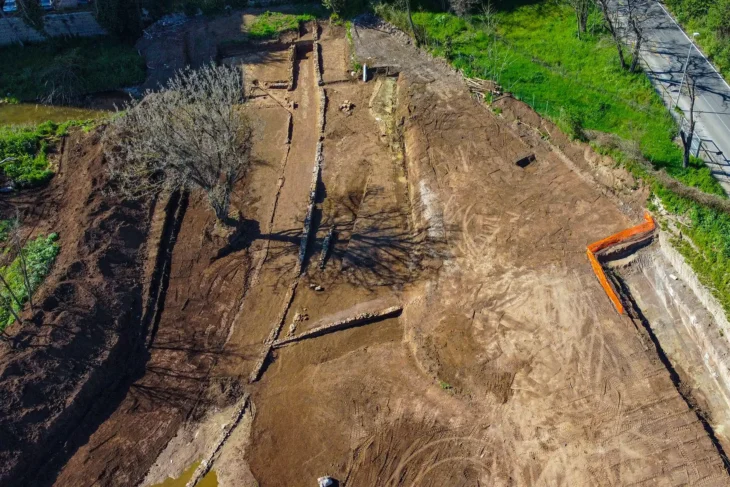
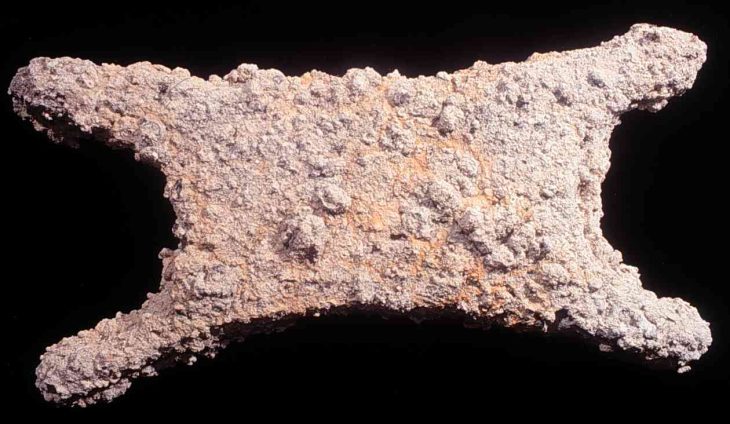
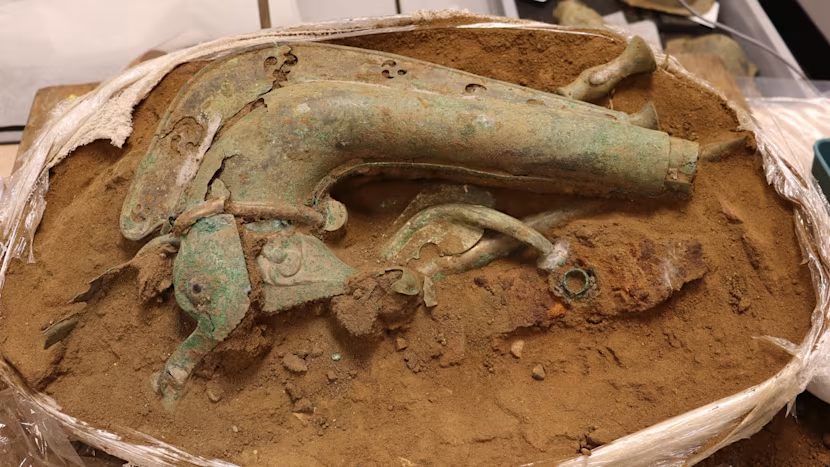
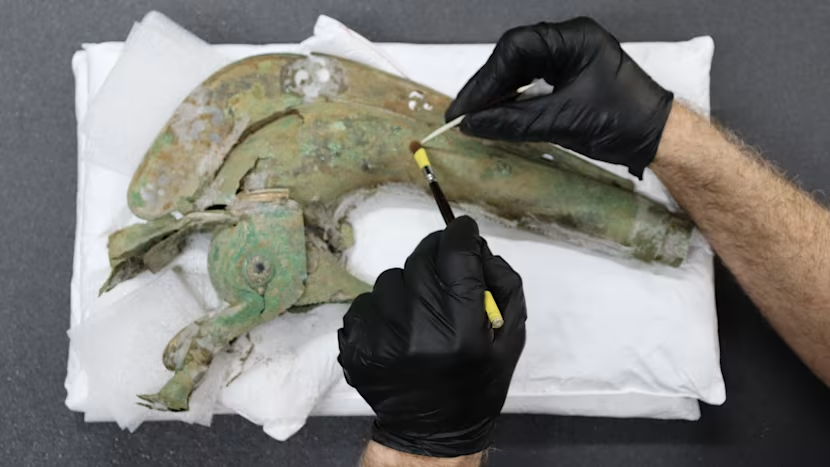
Archaeologists from Pre-Construct Archaeology made the discovery near Thetford in west Norfolk, where a carefully preserved soil block revealed a near-intact carnyx — the iconic Celtic battle trumpet — along with a sheet-bronze boar’s head standard, five shield bosses, and an iron object of unknown function. Experts believe the hoard dates from around 50 BC to AD 50, a turbulent period that saw growing tension between native tribes and Rome.
A Rare Glimpse Into Celtic Warfare
The carnyx, distinguished by its elongated vertical shape and animal-headed bell, was used by Celtic tribes across Europe to intimidate enemies and rally warriors during battle. Standing up to two meters tall, the instrument produced a loud, brassy, almost roaring sound designed to echo across battlefields.
Only three carnyces have ever been found in Britain, but this example is the most complete yet uncovered, retaining its mouthpiece, pipe, and decorative bell. Conservators described the instrument as being made from exceptionally thin metal sheets that survived over two millennia underground — a rarity given how fragile such objects are.
The discovery is particularly meaningful to East Anglia, once home to the Iceni tribe, famously led by Queen Boudica in her revolt against Roman rule in AD 60–61. While the hoard predates the uprising, it offers a powerful link to the martial traditions and symbolism of Iron Age Britain.
📣 Our WhatsApp channel is now LIVE! Stay up-to-date with the latest news and updates, just click here to follow us on WhatsApp and never miss a thing!!
Symbolism of the Boar Standard
Equally significant is the bronze boar’s head standard found alongside the carnyx — the first of its kind ever discovered in Britain. Military standards served as battlefield rallying points, and the boar was a potent Celtic symbol representing strength, courage, and ferocity.
Boars were respected both as dangerous animals and as spiritual emblems associated with protection and warrior identity. The presence of both the carnyx and the boar standard suggests that the hoard may have belonged to a high-status warrior, chieftain, or ceremonial retinue.
Conservation and Research Underway
To preserve the delicate artefacts, specialists removed them inside a solid block of soil before scanning and conservation began. Historic England is now working closely with Norfolk Museums Service and the National Museum of Scotland — a leading authority on carnyx research — to study the objects in detail.
Scholars believe the find could transform our understanding of Iron Age soundscapes, ritual practice, and warfare. The trumpet’s unique completeness will allow researchers to examine how it was constructed and possibly even reconstruct the sounds that once echoed across Celtic battle lines.
Why the Carnyx Matters in European History
The carnyx was widely used across Celtic Europe between 300 BC and AD 200 and appears in Roman reliefs as a captured war trophy. Examples have previously been discovered in France, Switzerland, and Scotland, but intact finds remain extremely rare. The most famous reconstruction, the Deskford Carnyx from Scotland, has already demonstrated how powerful and haunting the instrument’s sound could be.
This new Norfolk discovery adds vital data to that growing picture, helping historians interpret how music, ritual, and warfare intertwined in ancient societies.
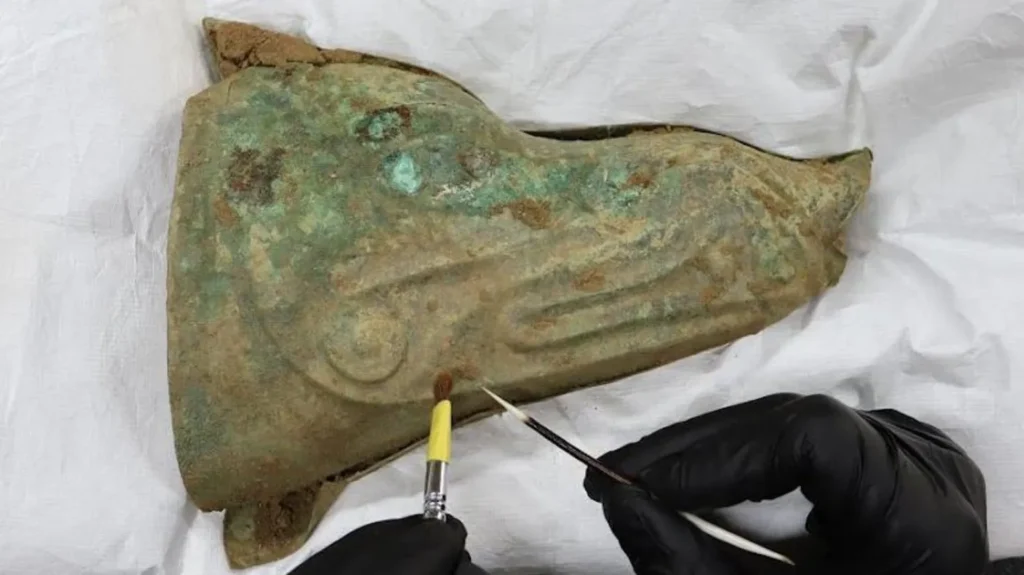
The boar’s head standard, crafted from exceptionally thin sheets of bronze, was discovered alongside the carnyx and is considered even rarer than the musical instrument itself. Likely carried aloft as a battlefield emblem and rallying symbol for Iron Age warriors, the piece survives in remarkable condition after more than 2,000 years underground. Credit: Norfolk Museums Service.
Next Steps for the Norfolk Carnyx Hoard
A coroner’s inquest will determine whether the hoard will legally be declared treasure, after which decisions will be made regarding its long-term home. Museums and researchers are hopeful the artefacts will eventually be displayed publicly so the community that once lived on the land can share its rediscovered story.
Experts agree that the Norfolk Carnyx Hoard is more than an isolated discovery — it is a vivid reminder of a culturally rich and militarily sophisticated Iron Age world that continues to shape Britain’s historical identity.
Cover ımage credit: Norfolk Museums Service.