
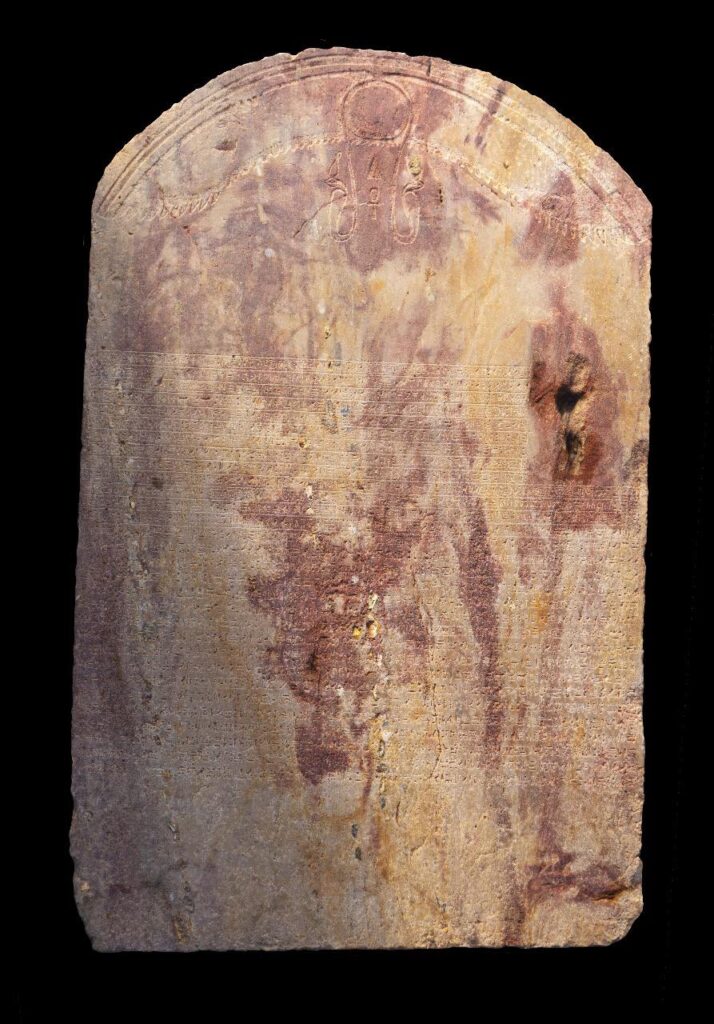
Archaeologists in Egypt uncover a rare and complete hieroglyphic version of the Canopus Decree of King Ptolemy III at Tell el-Pharaeen, Sharqia Governorate—the first of its kind in over 150 years.
In what experts are calling one of the most significant archaeological finds of the century, an Egyptian mission from the Supreme Council of Antiquities has unearthed a sandstone stela at Tell el-Pharaeen in Sharqia Governorate. The artifact represents a new and complete version of the Canopus Decree, originally issued by Pharaoh Ptolemy III Euergetes in 238 B.C.
This discovery marks the first complete copy of the decree in over 150 years and stands apart for its unique feature: it is inscribed entirely in hieroglyphs, unlike the previously known trilingual versions that combined hieroglyphic, Demotic, and Greek texts.
The find promises to revolutionize the study of ancient Egyptian language, religion, and governance during the Ptolemaic era, offering scholars a uniform text of exceptional philological value.
Official Reactions and National Significance
Sherif Fathy, Egypt’s Minister of Tourism and Antiquities, praised the discovery as a new chapter in the history of ancient Egypt.
“The continuous achievements of Egyptian archaeological missions add new layers to our knowledge of Egypt’s civilization,” Fathy said. “This discovery highlights the hidden treasures of Sharqia Governorate, which continue to astonish the world.”
He further emphasized the Ministry’s commitment to supporting ongoing archaeological missions to ensure the best possible environment for future groundbreaking discoveries.
Dr. Mohamed Ismail Khaled, Secretary General of the Supreme Council of Antiquities, underscored the unique importance of this find.
“The fact that this is a complete version of the Canopus Decree, uncovered more than a century and a half after the last, makes it an extraordinary addition,” he explained. “It enriches our understanding of Ptolemaic royal and religious texts, while also deepening our grasp of ancient Egyptian language.”
The Stele: Dimensions, Design, and Inscription
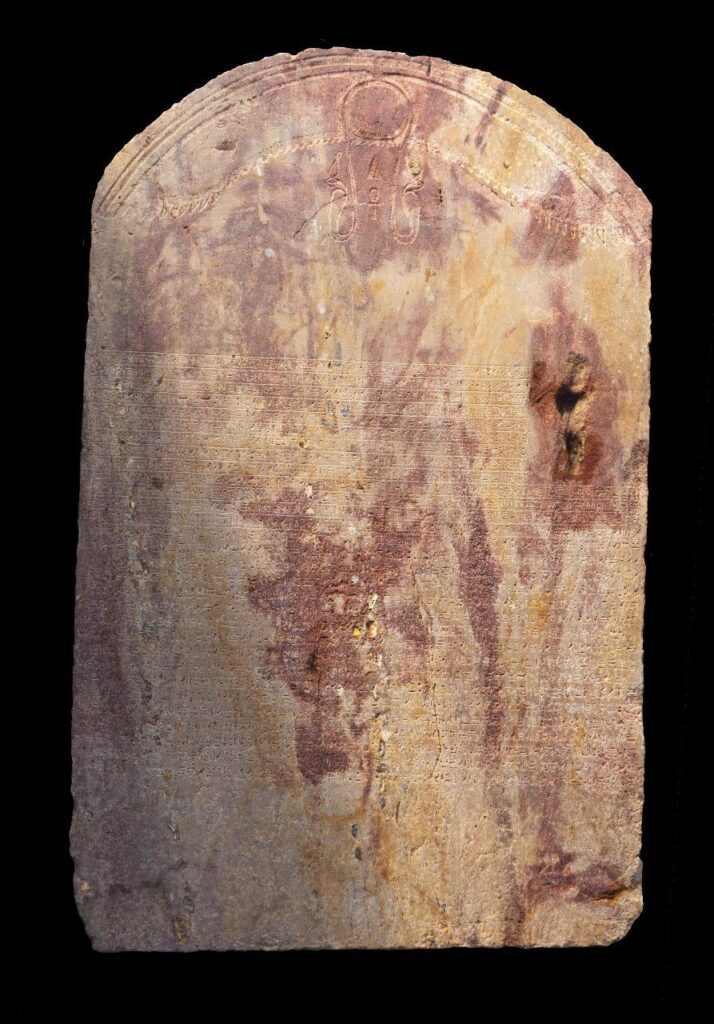
The newly discovered stela is made of sandstone with a rounded top, measuring 127.5 centimeters high, 83 centimeters wide, and about 48 centimeters thick.
Its upper section is adorned with a winged solar disk flanked by two royal cobras wearing the White and Red Crowns of Upper and Lower Egypt, with the hieroglyph “Di-Ankh” (“given life”) carved between them.
The central panel features 30 lines of hieroglyphic text, carved in sunk relief of medium quality. This monolingual inscription offers Egyptologists a coherent, uninterrupted text—something rarely preserved in ancient decrees.
Content of the Canopus Decree
The Canopus Decree was originally issued in 238 B.C. by a synod of priests convened in the city of Canopus, east of Alexandria. The priests gathered to honor King Ptolemy III, his wife Queen Berenice, and their daughter.
According to Dr. Hisham Hussein, Head of the Central Administration for Lower Egypt, the inscriptions celebrate the king and queen as “the beneficent gods” and detail their contributions to the Egyptian state and religion. These include:
Donations to temples across Egypt
Maintaining peace and stability within the kingdom
Reducing taxes during years of low Nile flooding
Instituting a new priestly rank in their names
Establishing a festival tied to the heliacal rising of Sirius (the star Sothis)
Introducing the leap year system by adding one day every four years dedicated to their cult
Deifying their daughter Berenice in Egyptian temples
The original decree ordered that stelae be inscribed in hieroglyphs, Demotic, and Greek, and distributed to the most important temples across Egypt. The fact that this newly found version is solely in hieroglyphs suggests possible regional variations in how the decree was executed.
Historical and Scholarly Impact
The Canopus Decree is the second oldest of the Ptolemaic decrees and holds unique historical importance. It introduced the concept of the leap year—centuries before its formal adoption in the Julian calendar by the Romans.
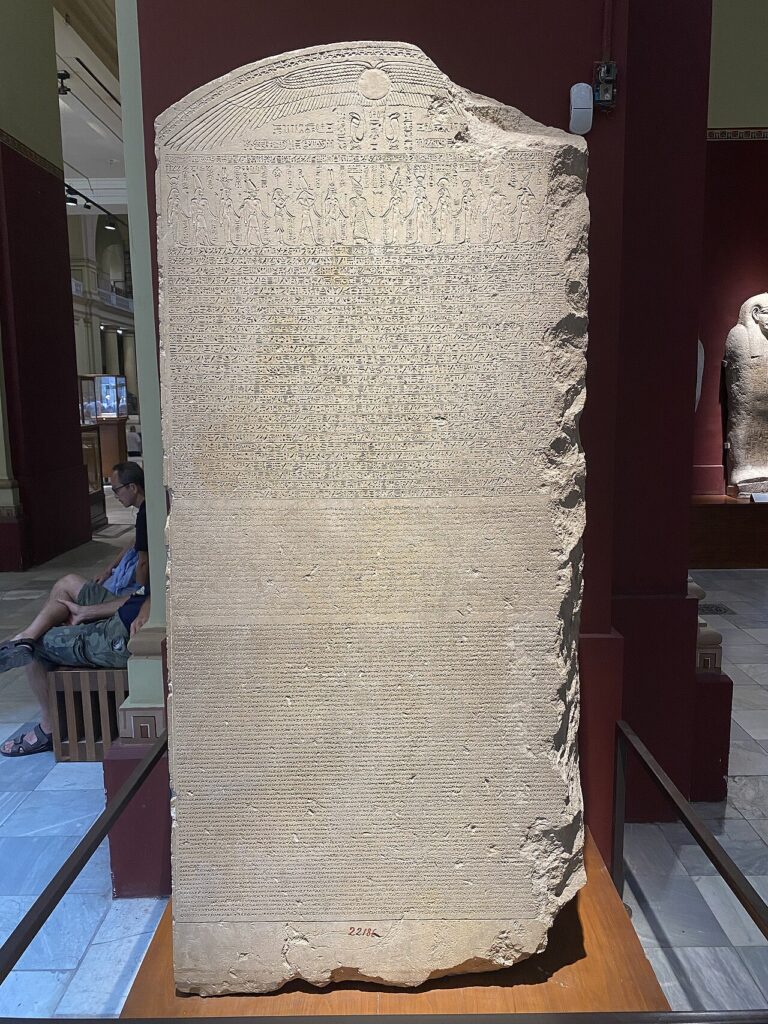
It also played a pivotal role in the modern decipherment of hieroglyphs. A copy discovered in Tanis in 1866 provided more hieroglyphic signs than the Rosetta Stone, greatly aiding scholars like Karl Richard Lepsius in cracking the code of Egypt’s sacred writing system.
The newly unearthed stela at Tell el-Pharaeen offers scholars an even more valuable resource. Unlike fragmented or trilingual versions, its monolingual hieroglyphic text allows linguists to refine their understanding of Late Egyptian grammar, vocabulary, and syntax without interference from parallel translations.
Tell el-Pharaeen: Ancient Imet
The site of Tell el-Pharaeen, known in antiquity as Imet, was a significant urban center as early as the Middle Kingdom. Excavations have revealed Ptolemaic temples and luxurious residences, including a sanctuary dedicated to the cobra goddess Wadjet, protector of Lower Egypt.
The discovery of the Canopus Decree here underscores the city’s religious and political importance. It suggests that Imet was considered influential enough to house a royal decree of national significance.
Looking Ahead
For Egyptologists and historians, the discovery of this complete hieroglyphic Canopus Decree is more than just another archaeological milestone. It reshapes how scholars view the transmission of royal decrees, the development of Egyptian calendrical systems, and the interplay between Greek and Egyptian traditions under Ptolemaic rule.
As Egypt continues to reveal its hidden heritage, this remarkable find in Sharqia Governorate not only strengthens Egypt’s cultural legacy but also opens new pathways for understanding one of the world’s most enduring civilizations.
Ministry of Tourism and Antiquities of Egypt
Cover Image Credit: Ministry of Tourism and Antiquities of Egypt
